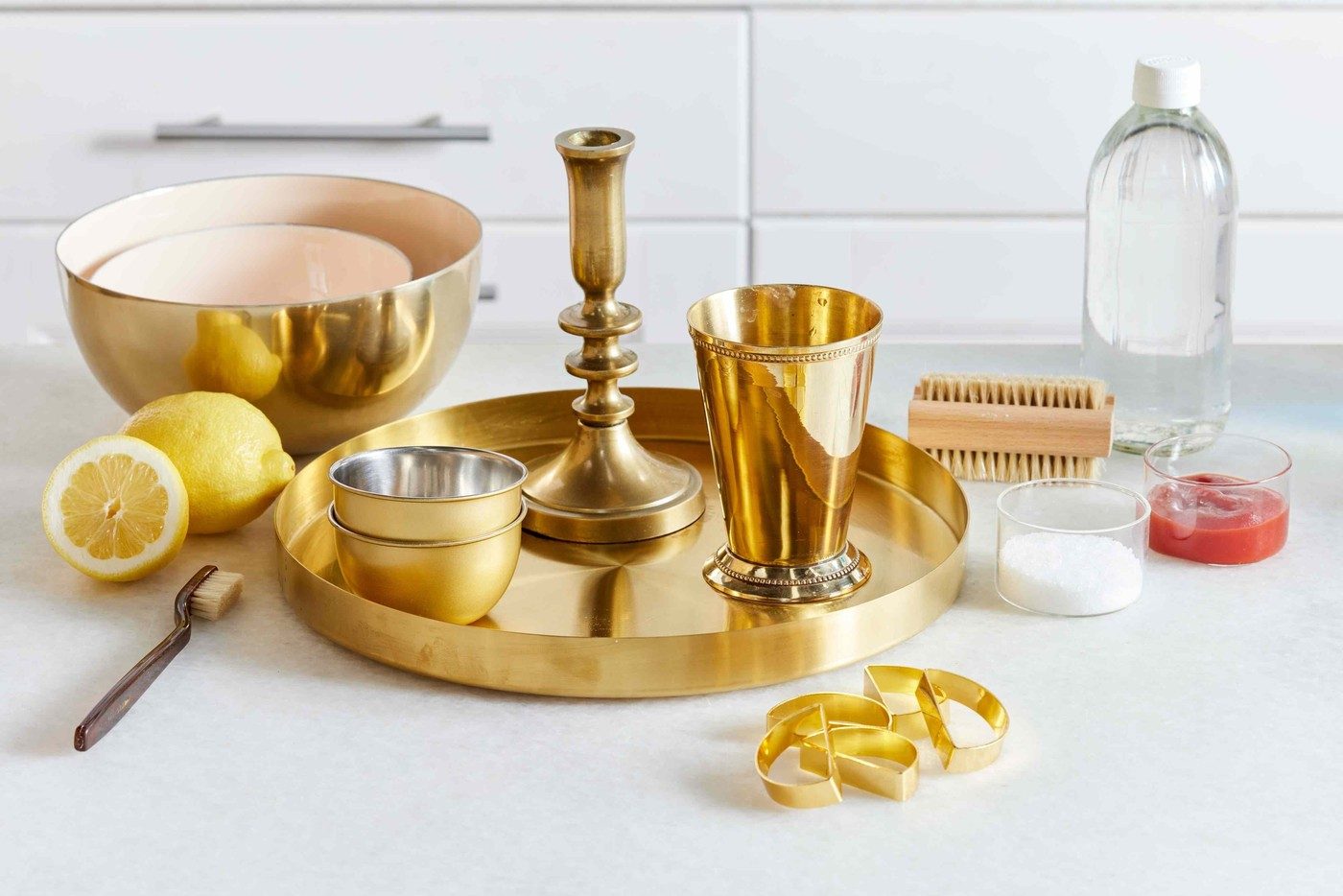
Test Brass-Decor Cleaning on a Hidden Area First
BHG recommends checking plating and lacquer, removing ordinary dirt and drying fully after a suitable cleaner.
Find out what the ornament is made of
Better Homes and Gardens warns that a brass-colored item may be plated rather than solid. A magnet that sticks suggests a base metal beneath a thin brass layer, which can be damaged by methods intended for solid brass. Lacquer is another important distinction because harsh treatment can harm the protective film. The guide recommends a small hidden test and professional advice for uncertain lacquered pieces.
Make residue removal part of the polish
Before a suitable commercial brass cleaner is used, the article recommends removing dust and debris with mild soap and water. Follow the product's instructions rather than combining several methods at once. Afterward, remove the residue, rinse as appropriate and dry completely with a soft cloth. Decorative pieces can often be maintained with gentle dusting between fuller cleans, and limiting unnecessary handling reduces skin oils that accelerate tarnish on exposed brass.
Use the hidden test to answer a specific question
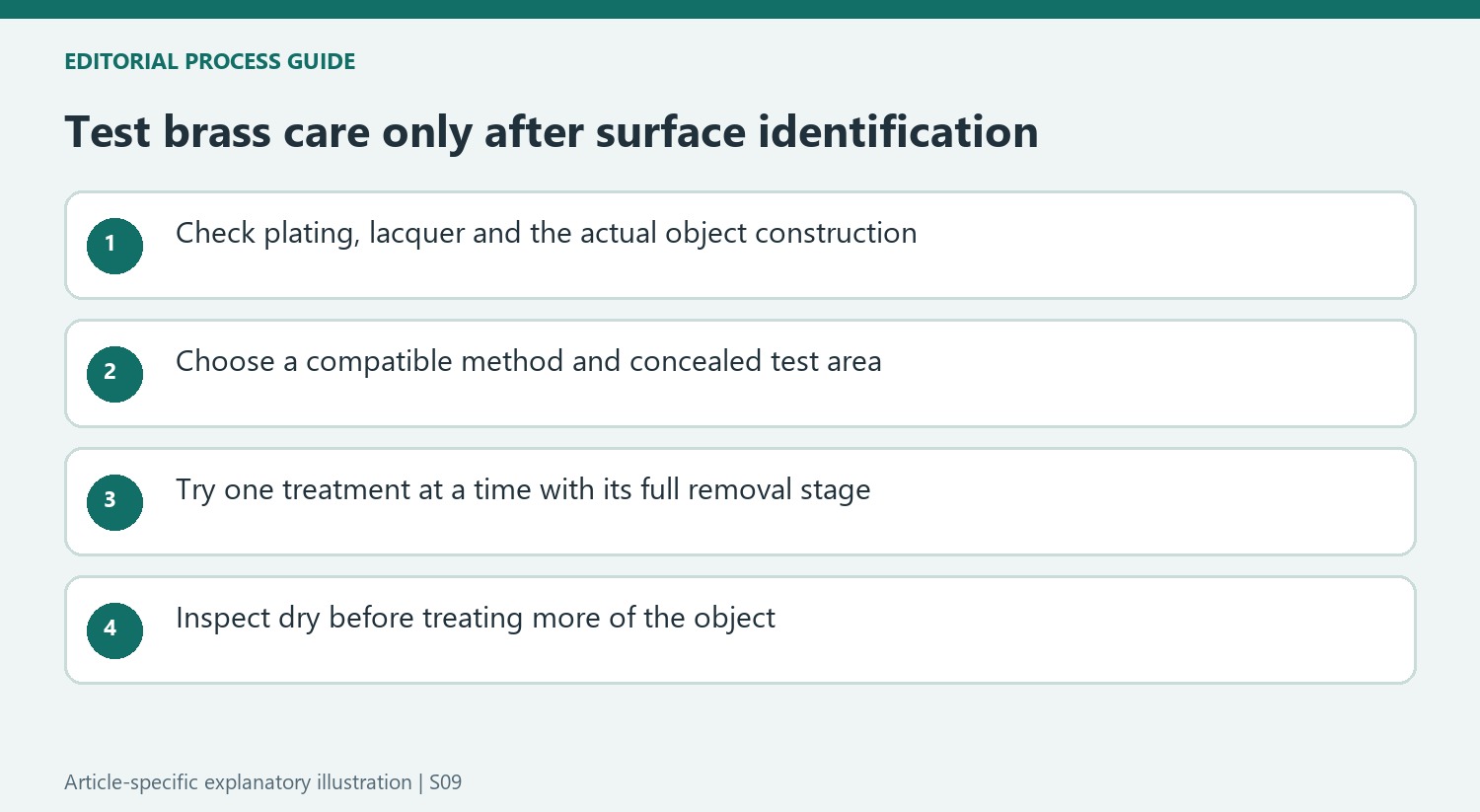
BHG's test-first instruction is most useful after the object has been identified. Inspect a small concealed area for an unwanted change in color, sheen or coating, rather than assuming visible dirt removal proves the whole method is suitable. Its plated-brass advice stays with soft-cloth soap and water, while uncertain lacquered pieces warrant professional guidance. The article presents household methods as alternatives used one at a time, not a list to mix together. For suitable commercial treatment, the label controls the application and residue removal. Finish with a clean soft cloth and complete drying so a decorative object does not return to display carrying cleaner in its details.
Use the hidden test after identifying the surface
Better Homes & Gardens recommends a small concealed-area test, but its preceding identification warnings remain essential. Determine whether the piece is plated or lacquered before selecting the test method. A reaction on an unimportant-looking base cannot make a known-incompatible treatment acceptable for the rest of the object. Valuable pieces or uncertain protective finishes may need professional advice rather than an experiment with the strongest household ingredients available.
The guide uses a magnet as one identification clue. Attraction can suggest an underlying magnetic material, while no attraction does not by itself prove that the entire object is solid brass. Keep product information and construction details part of the assessment. The practical consequence is restraint: a thin plated surface or clear coating can be harmed by a method that produces a quick bright result on a different uncoated solid-brass object.
Try alternatives one at a time rather than combining them
The source offers several separate household options and explicitly recommends trying methods individually on a spot. Preserve that separation. A failed first attempt is not a reason to spread another paste over residue still present from the previous one. Complete the supported removal and drying stage before evaluating what remains or changing methods. This makes the effect attributable to one process and avoids unnecessary exposure to an improvised mixture.
For ordinary dust and grease, compatible soap-and-water cleaning may be sufficient before any tarnish-specific product is considered. A familiar condiment or toothpaste still brings acids or abrasive ingredients to the surface, so its everyday use elsewhere does not prove finish compatibility. Commercial brass-polish examples likewise require the current label. Select a product for the actual metal, coating and object purpose rather than assuming that every shine-related bottle is interchangeable.
Keep access and drying limits attached to the object
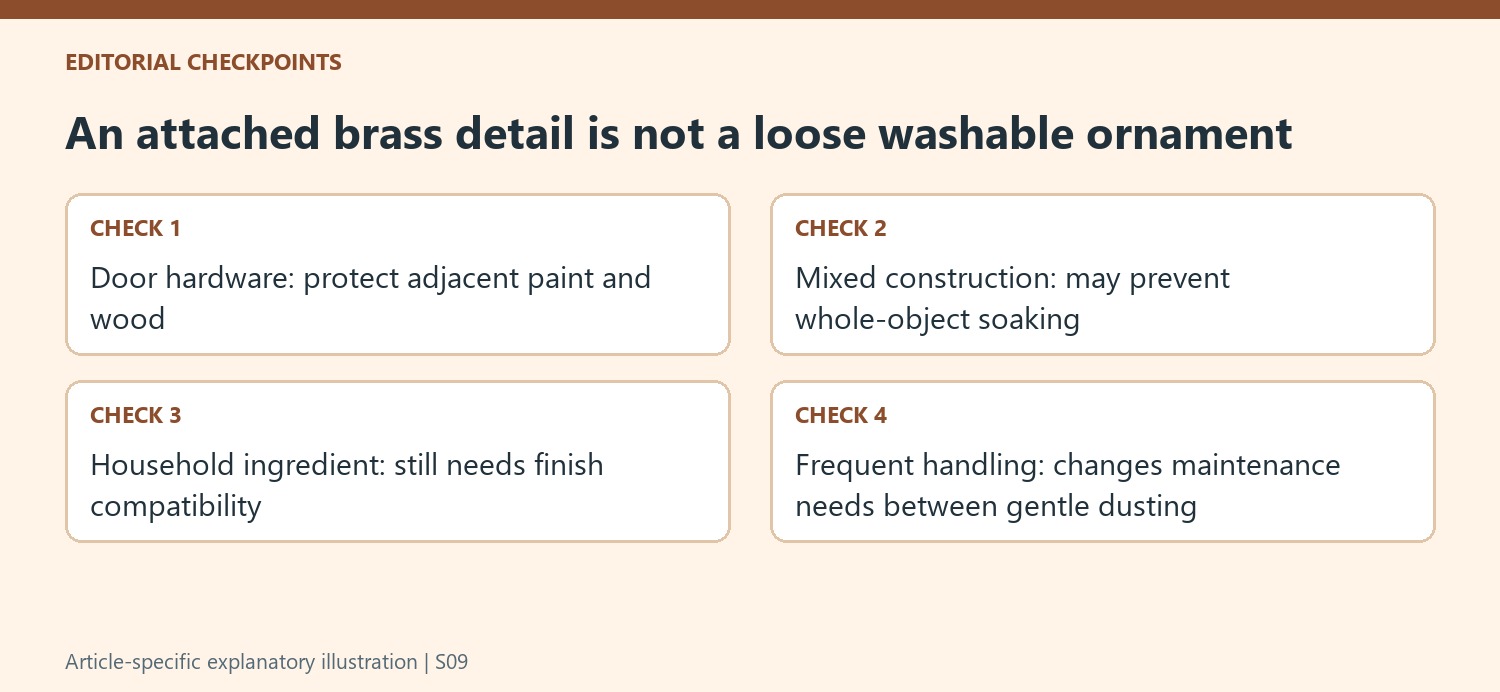
BHG distinguishes a controlled wiping method for attached hardware from immersion methods for suitable loose items. That matters for doorknobs, door knockers and decorative pieces with mixed materials. A brass exterior does not authorize soaking the whole assembly or allowing cleaner to run onto painted wood. Protect the neighboring surfaces and use a compatible local process where removal or immersion is inappropriate for the particular object.
The source's repeated rinse-and-dry endings are part of the method, not optional tidying. Remove product from details before drying with clean soft fabric, and inspect the dry result before returning the piece to use. Adjust frequency to handling: a frequently touched pull and an undisturbed display ornament have different exposure. Between more involved treatments, gentle compatible dusting can maintain appearance without repeatedly stripping the surface toward a brightness that may not be needed.
References
- How to Clean Brass and Restore Shine With Household Products. Better Homes & Gardens; Jessica Bennett.
BHG recommends checking plating and lacquer, removing ordinary dirt and drying fully after a suitable cleaner.


Leave a Comment
Comments (0)