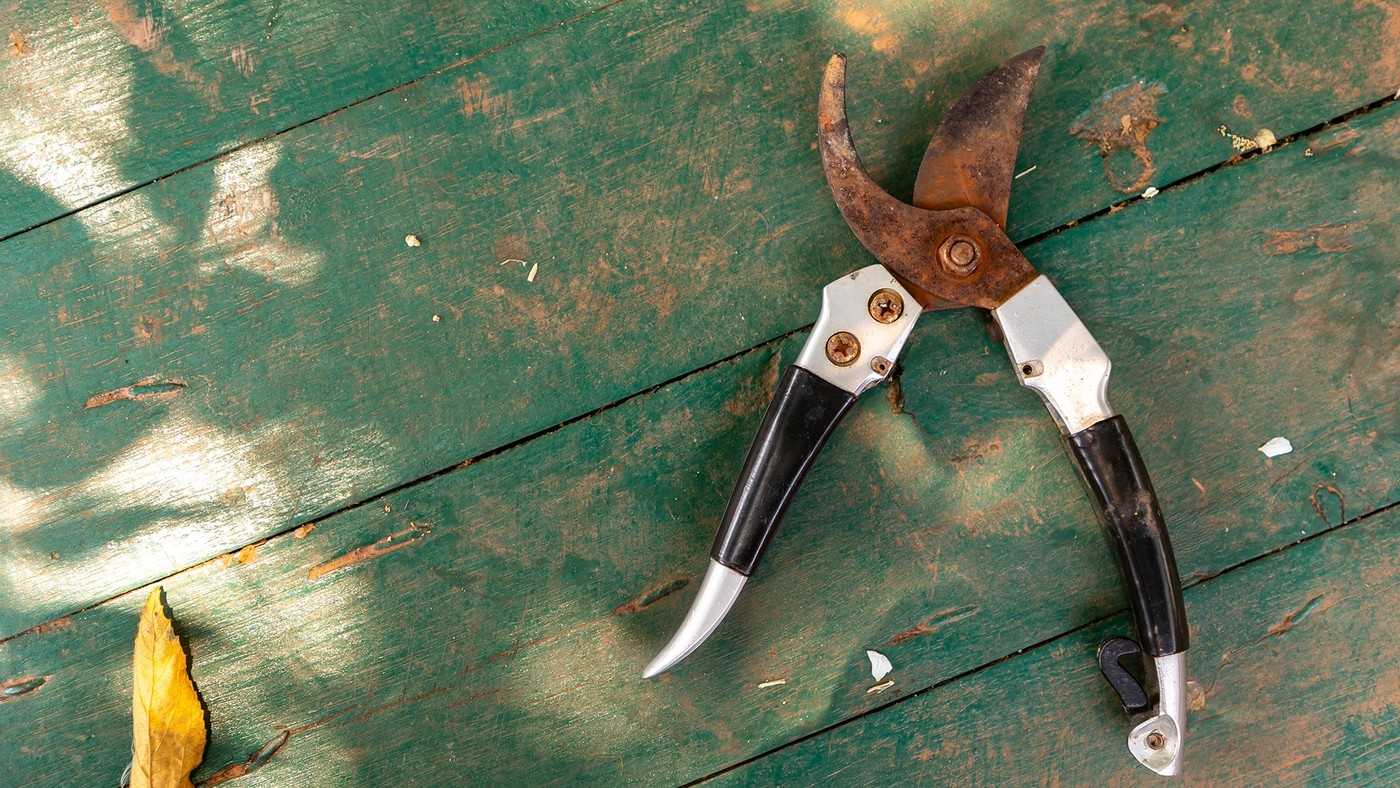
Inspect Metal Garden Tools before the Growing Season
The source recommends checking garden tools and metal furniture before they are needed for spring work. Rust or tarnish may be noticed only when pruning or planting begins, making maintenance inconvenient. Assess the material and condition while there is time for proper cleaning.
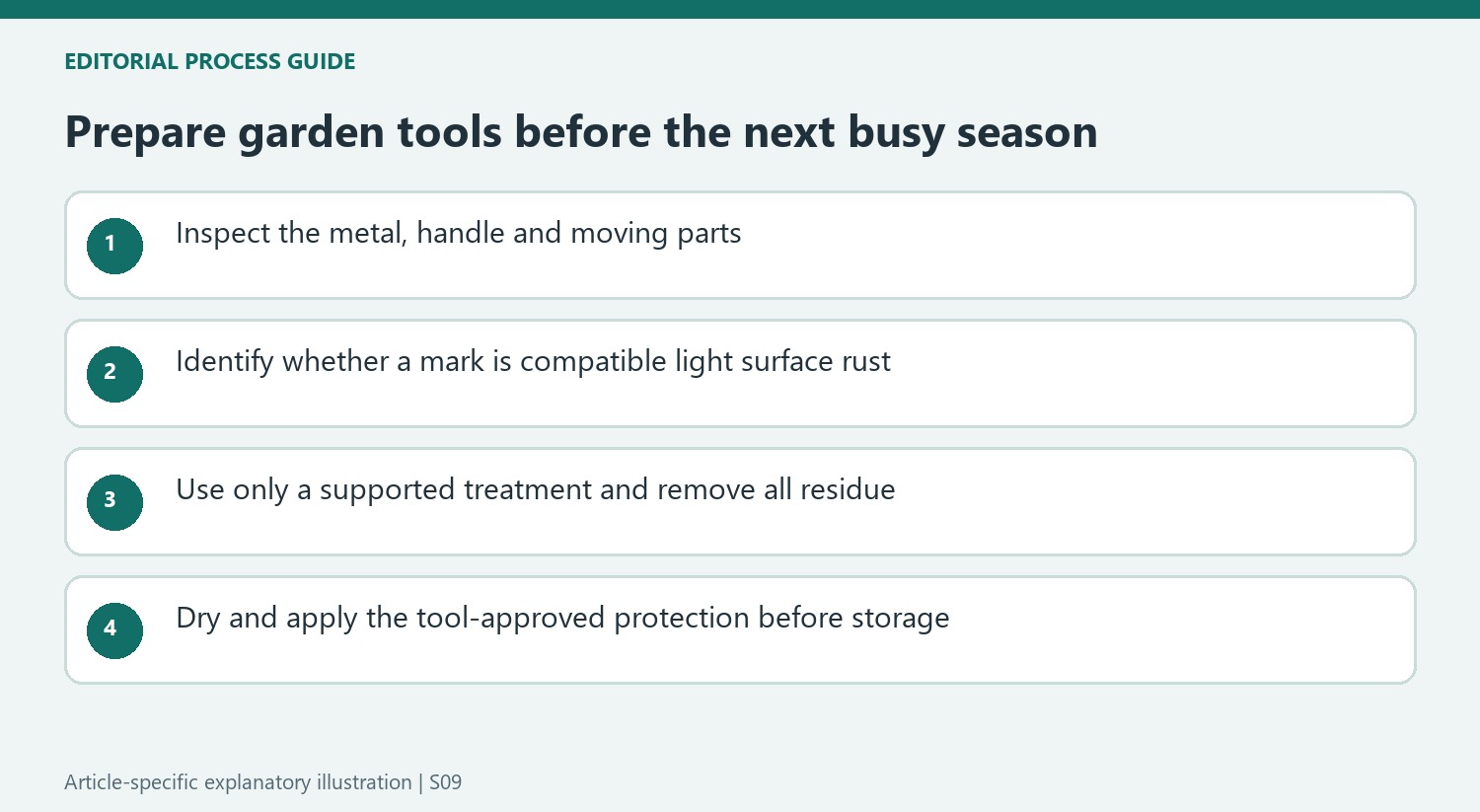
It discusses ketchup as a household option for some surface deposits, but acidic ingredients still need compatible materials. Follow the tool maker for cleaning, drying, and protective treatment. Do not mistake reduced discoloration for restored strength in badly corroded metal.
Use seasonal preparation to inspect function
Tom's Guide quotes gardening expert Ali Lijee recommending a check before tools are needed for spring work. That creates time to examine hinges, blades, handles and corrosion without interrupting the first pruning job. A tool can look brighter yet still have a damaged joint or weakened component. Identify those issues separately from ordinary surface soil and follow the maker for any repair or adjustment.
Keep the condiment suggestion within its limits
The article proposes a thin ketchup treatment for small compatible surface deposits, followed by gentle work with a soft brush or cloth. It attributes the effect to the condiment's mild acids. That does not establish permission for coated tools, mixed-material handles or every decorative metal. Check compatibility first and do not interpret a pantry ingredient as a reason to skip the product's care restrictions.
Finish with residue removal and dry storage
The source emphasizes thorough rinsing and complete drying after the proposed treatment, then a suitable light protective oil for tools where approved. Use the tool manufacturer's specified product and keep it off surfaces that should not be oiled. Dry storage matters after cleanup because fresh moisture can restart corrosion. Cleaning ahead of the season is most useful when the tool returns to storage ready for its intended work.
Use the seasonal check to find more than surface discoloration
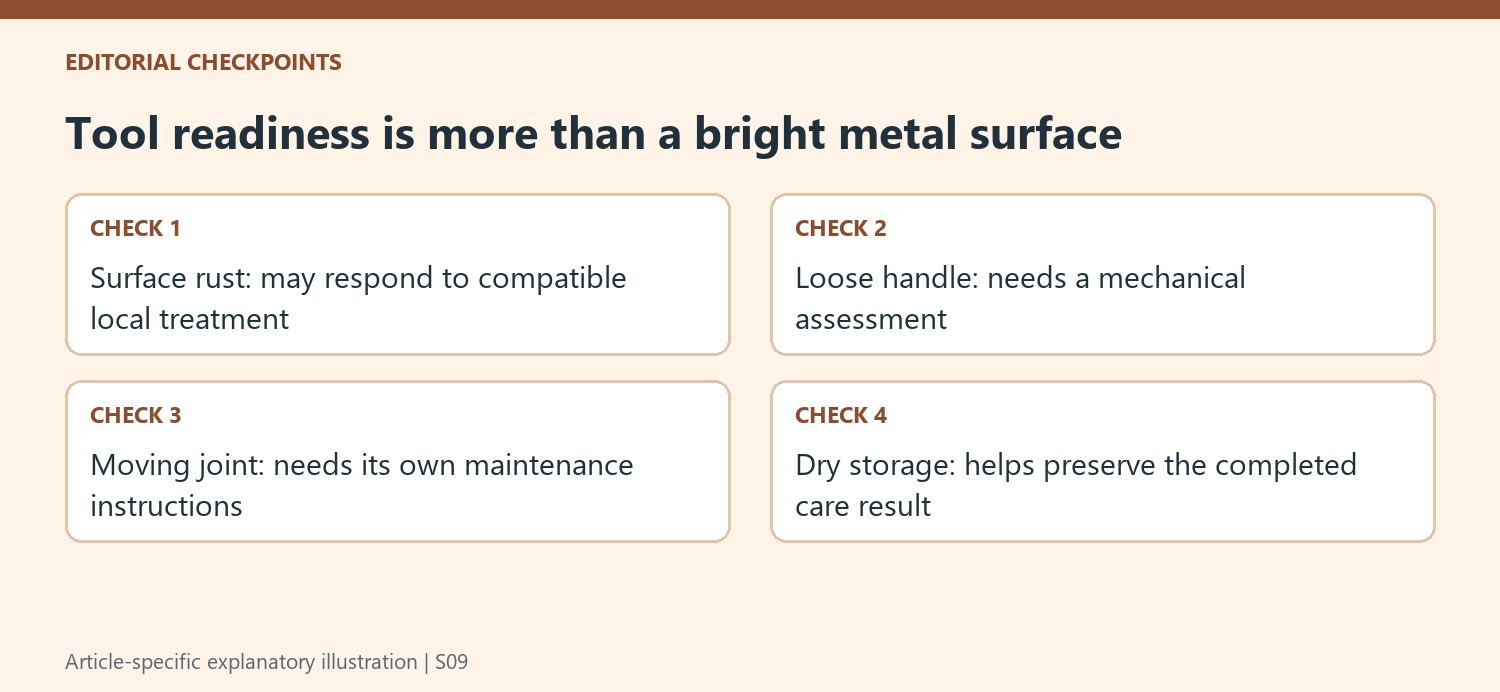
Tom's Guide frames the maintenance task around preparing tools before the growing season, when an unnoticed problem is less likely to interrupt immediate work. Use that opportunity to inspect the complete item: the metal head, cutting area, moving joint and attached handle can present different needs. A rusty-looking patch is only one observation. Cleaning it does not establish that a loose handle, damaged edge or binding mechanism has been put back into working order.
The source's late-winter timing reflects its seasonal context rather than a universal date for every garden. Choose a preparation window suited to the local growing cycle and your actual use. The practical aim is to assess and maintain the tools before they are needed. A tidy-looking tool that has not been checked for function can still delay a pruning job when it is taken from storage on the first busy day.
Keep the condiment proposal limited to compatible light rust
The interviewed expert discusses ketchup's mild acids as a possible aid for small surface-rust patches and tarnish. That is not a guarantee for deep corrosion or every coated metal. Identify the tool and its finish, then follow its maker before putting an acidic material near painted areas, plated parts or attached grips. A familiar food ingredient does not remove the need to protect the object from an incompatible cleaning process.
The article describes a limited application followed by gentle wiping or brushing, thorough rinsing and complete drying. Keep that entire process together rather than remembering only the suggested condiment. Do not leave residue in a pivot or extend contact indefinitely when the result is disappointing. Its separate soda-soak example is also not a required next stage, particularly where immersion would affect other materials or the tool's specific maintenance instructions.
Plan dry storage and the right protective treatment
The source recommends a light protective oil after cleaning and drying suitable metal tools, along with dry storage. Select the actual tool maker's supported product and procedure rather than copying an imprecise ingredient category from general advice. Lubricating a moving joint and coating an exposed steel surface can have different application needs. Keep any sharp edge handled appropriately and leave the tool ready for its intended use rather than merely reflective.
The article extends its discussion to brass and copper garden decoration, but those objects introduce separate patina, plating and coating decisions. Do not apply a tool-restoration routine to an ornament automatically. For the tools themselves, distinguish cleaning, functional inspection and protective storage as three useful outcomes. A method that removes a light stain can be worthwhile, while severe corrosion or damaged construction still requires a different decision than another household treatment.
References
- Don’t put your rusty garden tools in the trash — this cheap pantry staple will bring them back to life. Tom's Guide; Camilla Sharman.
Early cleaning helps distinguish light surface deposits from serious corrosion.


Leave a Comment
Comments (0)