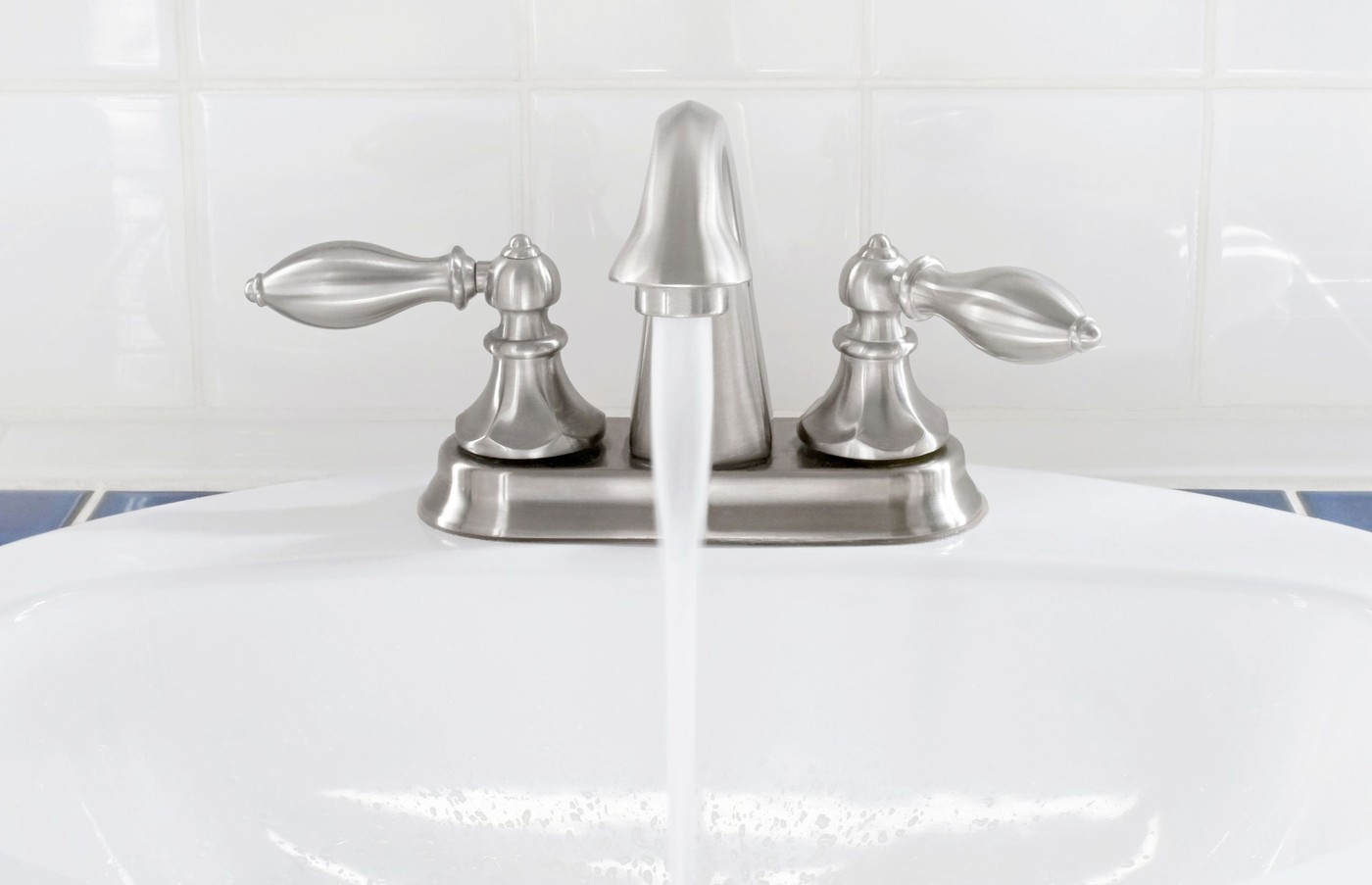
Begin Nickel-Plating Care with Gentle Cleaning
Nickel plating gives household fittings a decorative finish and helps protect the material beneath. Humidity and environmental exposure can contribute to discoloration over time. Start with a soft, compatible cleaning method before considering stronger tarnish removal.
Identify the finish and follow its maker's instructions, particularly around faucets and plated utensils. Store suitable small items dry and avoid aggressive rubbing that could wear through the coating. A product labeled for another metal may not preserve the same surface.
Identify plating before treating tarnish
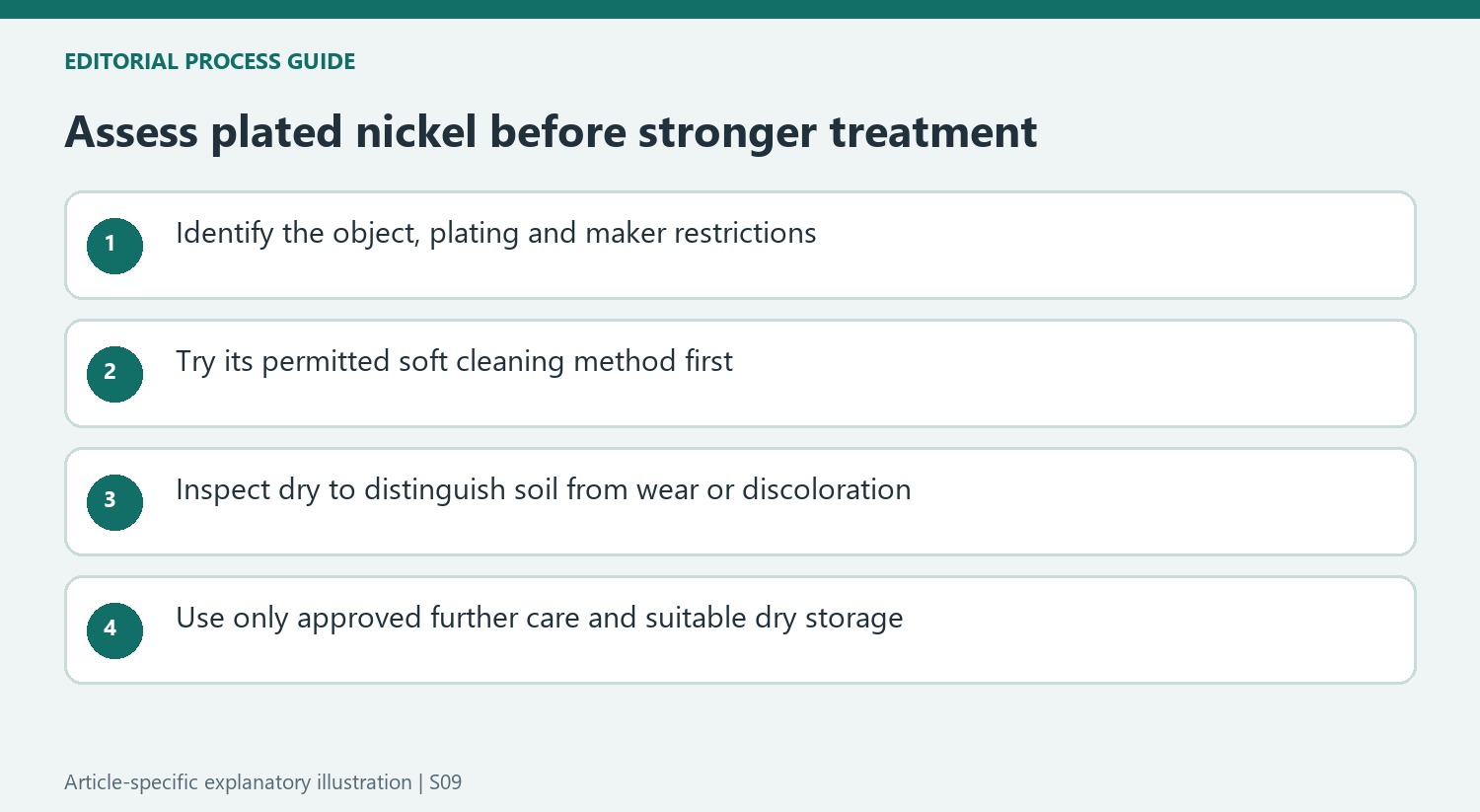
Real Homes describes nickel as a decorative protective layer on items ranging from faucets to small tools and jewelry. Their uses and construction differ, so first identify the object's material and any coating. The article connects tarnish with environmental exposure and humidity. A greasy fingerprint may need only mild cleaning, while discoloration or worn plating can require a different assessment.
Do not treat stronger recipes as a required progression
The source lists several stronger approaches but also warns that harsh chemistry and excessive soaking can strip plating. Those cautions prevent its methods from becoming an automatic escalation ladder. Check the maker's instructions and product exclusions before any stronger treatment. A successful result on one loose metal object does not establish suitability for an installed faucet or an item with other materials attached.
Store small items to limit renewed exposure
The article recommends a dry place and a clean soft wrapping for suitable small nickel-plated belongings. That is a storage measure, not a reason to leave cleaner or oil on every surface. Remove compatible cleaning residue and dry thoroughly before putting the item away. For installed fittings, follow their own maintenance guidance rather than adapting a jewelry or tool-storage recommendation to wet plumbing hardware.
Do not confuse a protective plating with a solid object
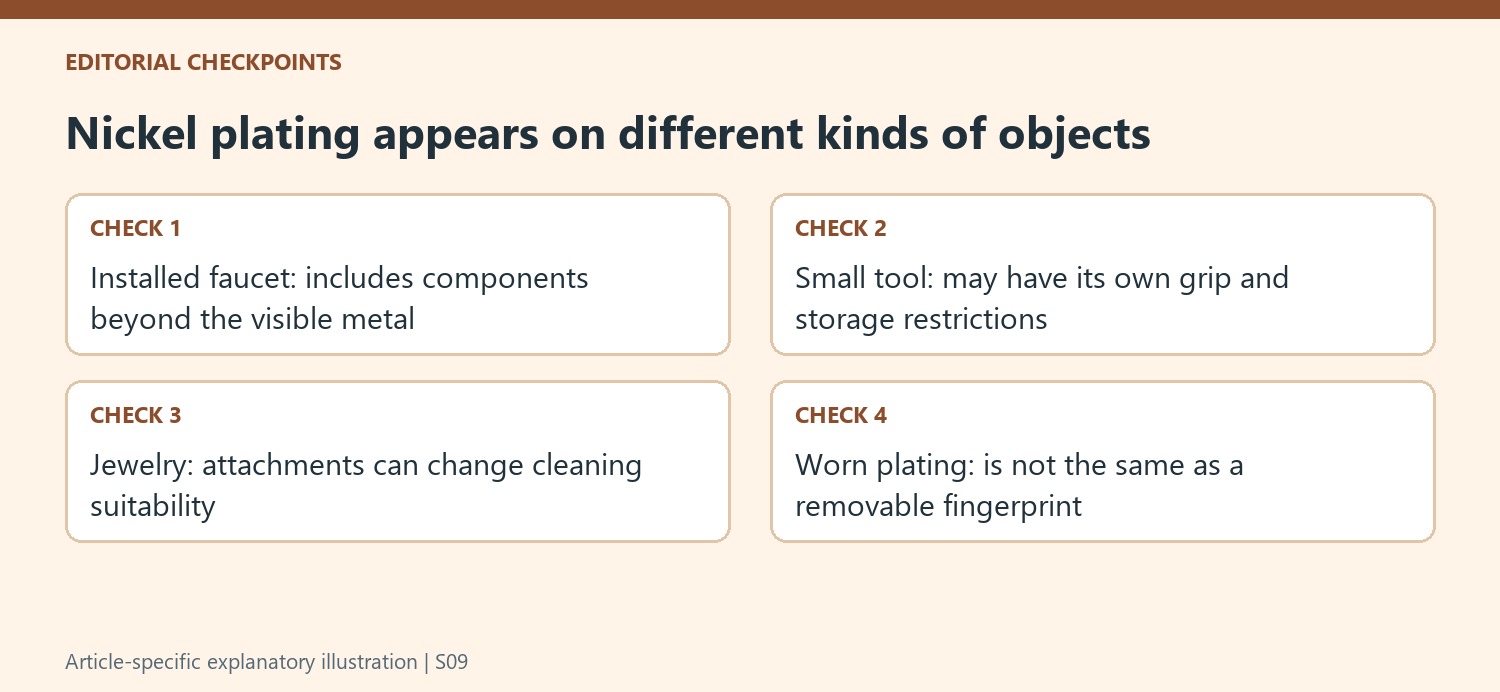
Real Homes describes nickel plating on very different belongings, including faucets, tools and jewelry. That range is a reason to identify the whole object before treating its visible surface. A plated tool with no delicate attachments and an installed tap with seals and neighboring materials are not equivalent cleaning tasks. The thin decorative layer also needs protection; a stronger treatment that removes discoloration can still be unsuitable if it compromises the plating.
The source associates tarnishing with environmental exposure and humidity, while greasy fingerprints can respond to ordinary mild washing. Distinguish those observations before escalating. A mark that disappears with the supported soft cloth did not require a tarnish-removal recipe. Conversely, an area of worn plating is not necessarily removable surface soil. Inspect after cleaning and drying so the remaining condition can be assessed without a temporary wet shine obscuring it.
Read the strongest recipes together with their warnings
The article includes acidic and ammonia-based approaches but also warns that harsh products and excessive soaking can strip the coating. Those cautions prevent the list from becoming a universal progression for all nickel objects. Follow the maker's exclusions and current product directions before any stronger process. An installed faucet whose manufacturer prohibits acids remains subject to that restriction even when a general nickel-polishing article describes an acidic option for other belongings.
Do not combine the alternatives or extend a soaking period because a mark has not disappeared quickly. Nor should a recipe for a removable metal item be transferred to electronics, jewelry attachments or mixed-material objects without explicit suitability. A hidden-area check can be useful only within an otherwise permitted method. It is not evidence that a prolonged whole-object exposure will preserve every component or that repeated future treatment will leave the same finish.
Choose storage measures that fit the item
For suitable small nickel-plated belongings, Real Homes recommends a dry place and soft clean wrapping. Apply that advice after compatible cleaner removal and complete drying, not as a way to put a still-damp object out of sight. The storage suggestion addresses renewed environmental exposure. It does not mean all plated surfaces need an oily layer, nor that a faucet should be wrapped as if it were an unused tool in a drawer.
Installed fixtures require the maintenance routine supplied for their finish and wet location. The article itself makes protective treatment subject to manufacturer advice. Keep those boundaries when deciding what to do after routine washing. A useful plan distinguishes the object, removes ordinary grease gently, evaluates persistent discoloration and then chooses an approved treatment or storage response. That is more informative than aiming for maximum shine without accounting for what supports the nickel layer underneath.
References
- Cleaning and polishing nickel plating – how to remove tarnish and water marks. Real Homes; Camille Dubuis-Welch.
Thin decorative finishes should not be treated like a solid block of metal.


Leave a Comment
Comments (0)