Protect Appliance Coatings While Removing Steel Fingerprints
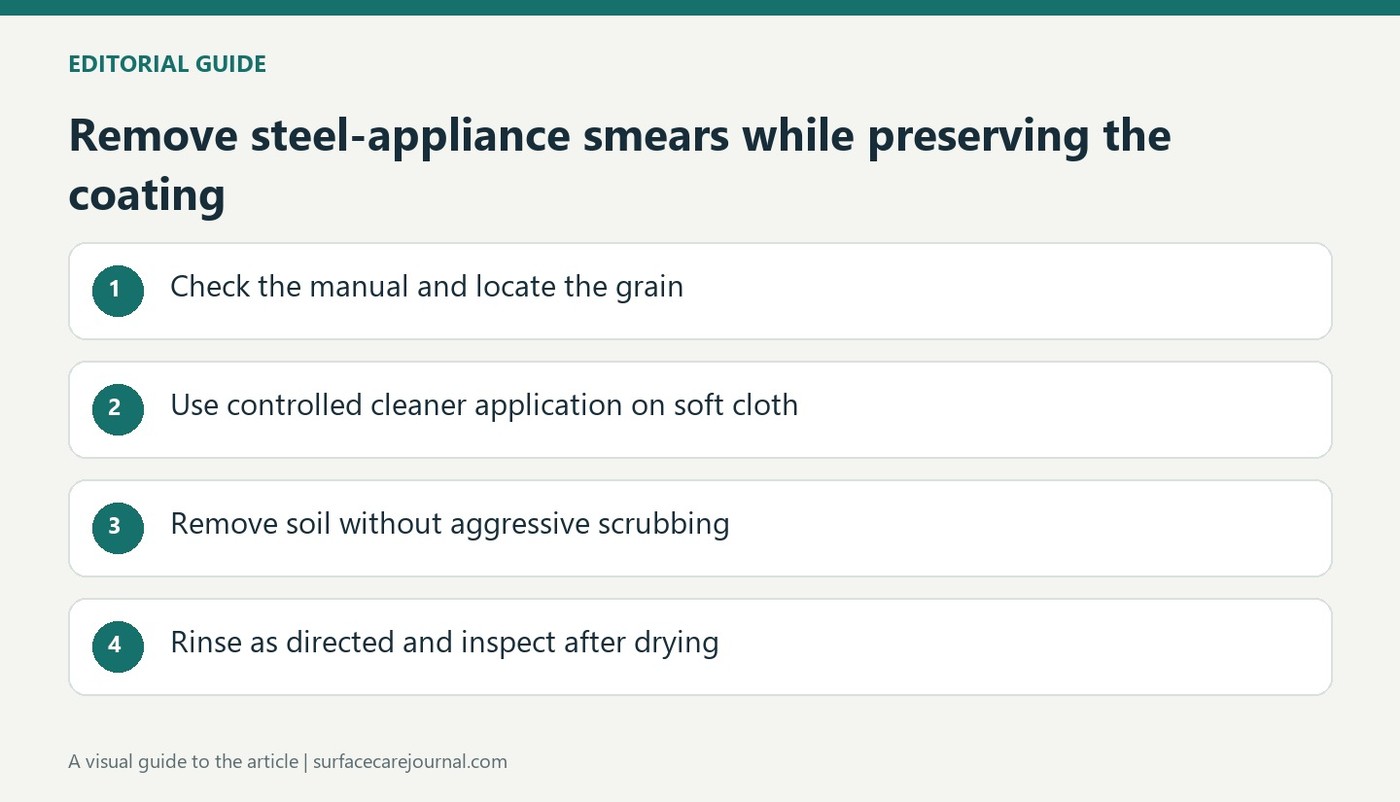
Ideal Home notes that stainless-steel appliances may have a protective coating that can be damaged by scratching. Its experts recommend regular cleaning with a damp microfiber cloth and mild washing-up liquid where permitted. Work in the grain's direction rather than repeatedly rubbing across the visible brushed pattern.
Remove residue with clean water and dry with a soft cloth to limit watermarks. Check the appliance manual before substituting vinegar, polish or abrasive powder, since the coating may set stricter limits than bare stainless steel. Keeping up with light marks reduces the temptation to use force when grease and fingerprints have accumulated across a larger area.
Find the brushed pattern before wiping
Ideal Home describes the grain as the faint lines visible when you examine a steel appliance closely. Locate that pattern before the first cleaning pass and use it to guide the cloth. A quick circular rub may spread marks into a different streak pattern. Keep the tool clean, soft and free of trapped particles while working across a large door.
Apply only enough permitted product for the mark
The source's smear-removal discussion emphasizes putting cleaner on a cloth for controlled application rather than producing drips across the appliance. Check the actual product and finish compatibility first, including any restrictions on glass cleaners or acids. More liquid does not guarantee better removal; excess can simply leave another film that needs rinsing and can reach controls or seams.
Assess the dry surface before escalating
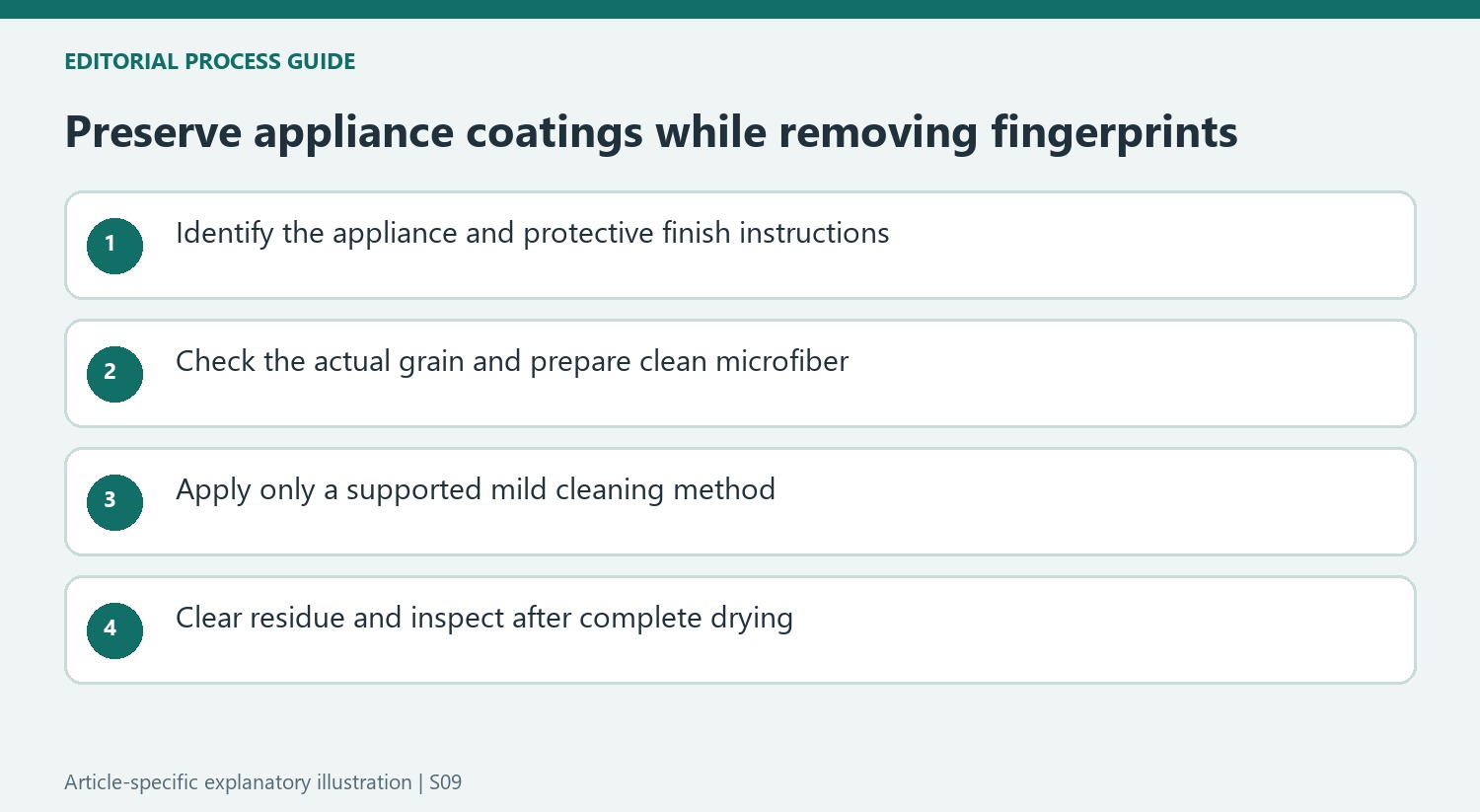
The feature connects regular mild cleaning with preventing tougher deposits. After the permitted wash, remove residue and dry with a fresh soft cloth. Inspect the remaining mark when the panel is dry, since water and cleaner can obscure it. If the coating appears scratched or chipped, stronger scrubbing is not a repair method. Seek appropriate finish-care advice for a persistent problem instead.
Inspect the protective finish before selecting a tool
Ideal Home's appliance guide points out that some stainless surfaces carry a protective coating. A scratch or chip can therefore be more consequential than a temporary smear. Identify the actual appliance and its finish instructions before using a scrubber, including a tool marketed as gentle on metal. Its material alone does not prove that it is appropriate for the particular coating or that it is free from trapped particles from a previous cleaning job.
The source's regular-care suggestion uses mild washing-up liquid on damp microfiber, followed by clean-water removal and soft drying. That provides a useful starting pattern where the maker permits it. Keep the liquid controlled around small electrical appliances and follow their specific handling directions. A kettle body, toaster exterior and refrigerator door are not interchangeable simply because all have a stainless appearance and show the same kind of fingerprint.
Let the actual grain guide the wiping direction
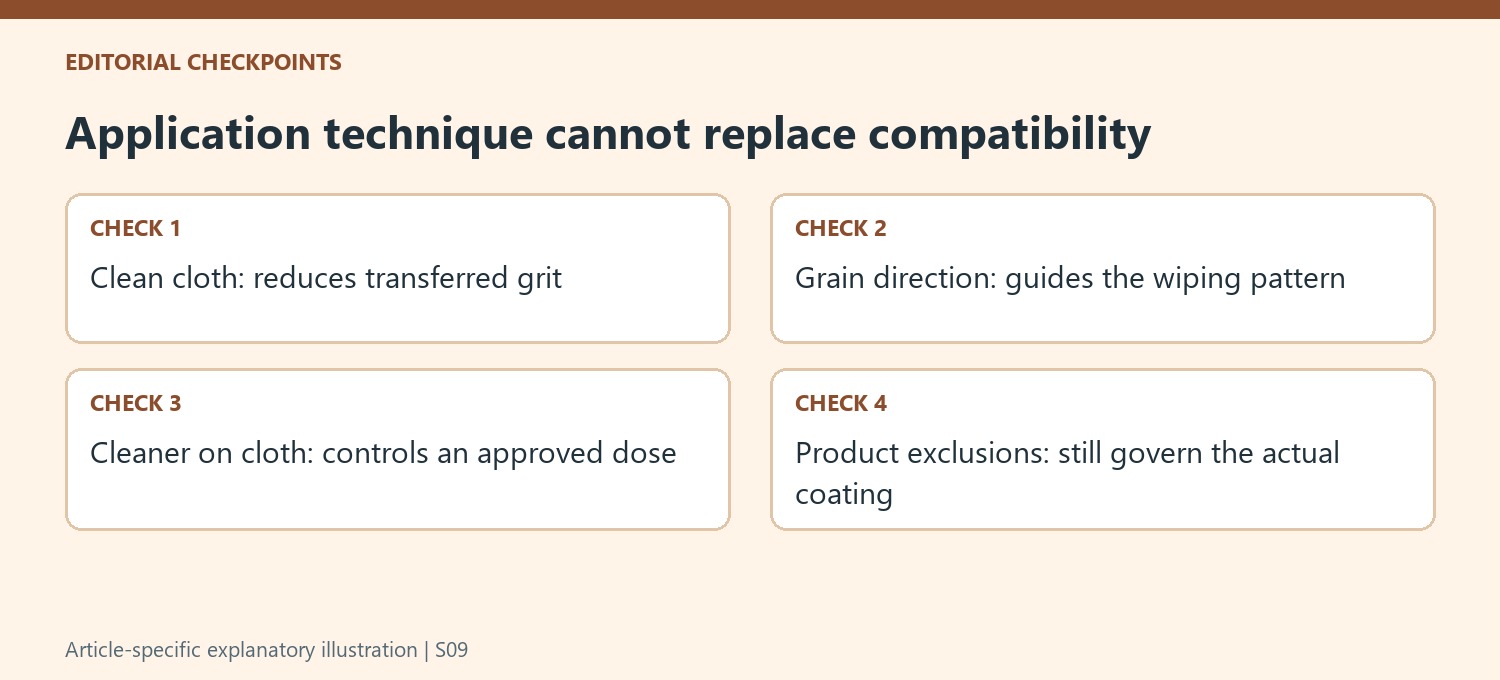
The guide describes the grain as the faint lines visible on the steel. Examine the panel rather than assuming that every part runs in the same direction. Work with those lines through the approved cleaning and drying stages instead of changing to forceful circular buffing when one mark remains. This preserves the source's link between technique and the visible finish while keeping product compatibility as a separate requirement.
Its suggestions for fingerprints include glass cleaner on a cloth, but that is not a blanket permission for any glass-cleaning formulation. Some appliance makers exclude particular ingredients or require a dedicated product. Read both the current label and the coating directions before treating the example as applicable. Spraying the cloth rather than flooding the panel can help control an approved product, but controlled application cannot make an incompatible cleaner suitable.
Use regular care without automatically increasing treatment strength
The article favors routine attention so grime has less opportunity to become a larger task. Adjust that idea to how the appliance is used rather than assuming that a lightly handled decorative panel needs the same schedule as a busy cooking area. Remove ordinary marks gently, clear cleaner residue and dry. That order makes the final assessment useful before another product is considered, instead of leaving several overlapping films on the surface.
The listed household alternatives and stronger steel-cleaner examples are separate choices, not ingredients for mixing or an obligatory progression. Familiarity with vinegar, lemon juice or baking soda does not override a coating restriction. Avoid the source's broad chemical-free language as a compatibility test; product chemistry and actual use instructions still matter. A persistent dry mark may require model-specific advice rather than additional friction, especially when the surface appears scratched, chipped or permanently altered.
References
- How to clean stainless steel appliances - 5 expert-approved tips to banish smears and stains. Ideal Home; Katie Sims.
Regular mild cleaning and wiping with the grain help preserve the original finish.


Leave a Comment
Comments (0)