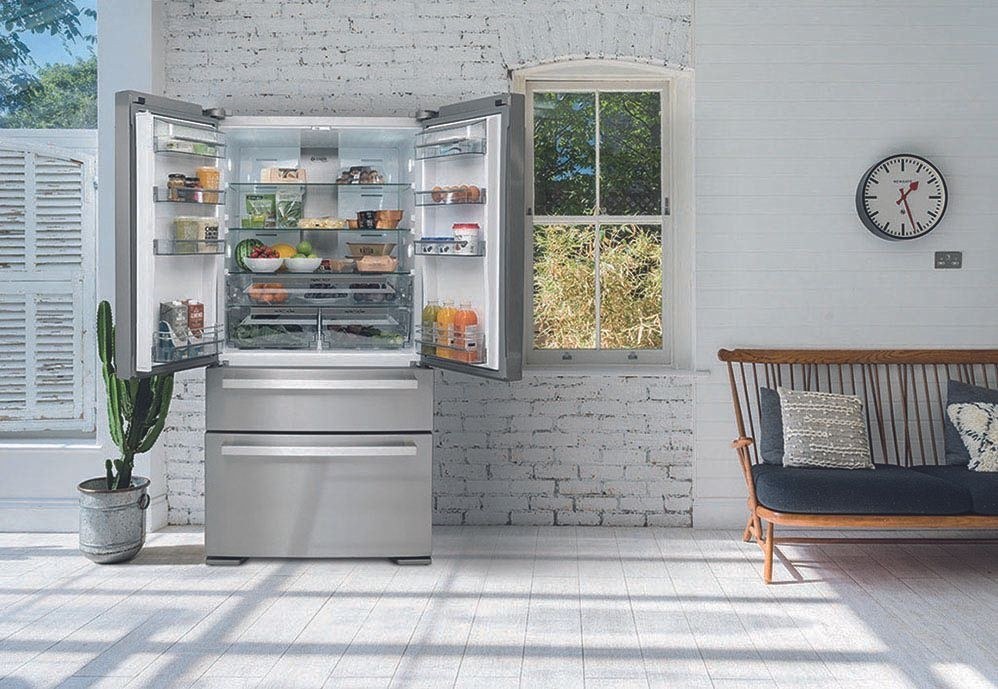
Check Appliance Coatings before Cleaning Stainless Steel
The stainless-appliance reference starts with the maker's cleaning instructions. Some finishes have a special coating and may need only a damp cloth or a particular product. Fingerprints and streaks are common, but their visibility is not permission to use a harsher cleaner.
Use a suitable soft cloth and remove residue carefully. A product intended to improve shine is different from one that removes grease. Match the method to the actual finish so the effort to polish a mark does not damage the protective surface.
Choose appliance products for appliance fronts
Homes and Gardens explicitly cautions that products sold for steel sinks or cookware can be too abrasive for appliance finishes. A shared metal name does not make those cleaners interchangeable. Find the exact finish in the appliance booklet or online guidance first. For a special coating, the permitted method may be much simpler than a general stainless-cleaning recipe suggests.
Use the visible grain as a guide
The article connects streaking with circular wiping or movement across the grain and emphasizes a clean microfiber cloth. Locate the faint directional lines, then work consistently with them during the permitted cleaning and drying stages. Keep fresh cloth areas available as soil lifts. Otherwise the next pass may redistribute grease even while the panel temporarily looks shinier when wet.
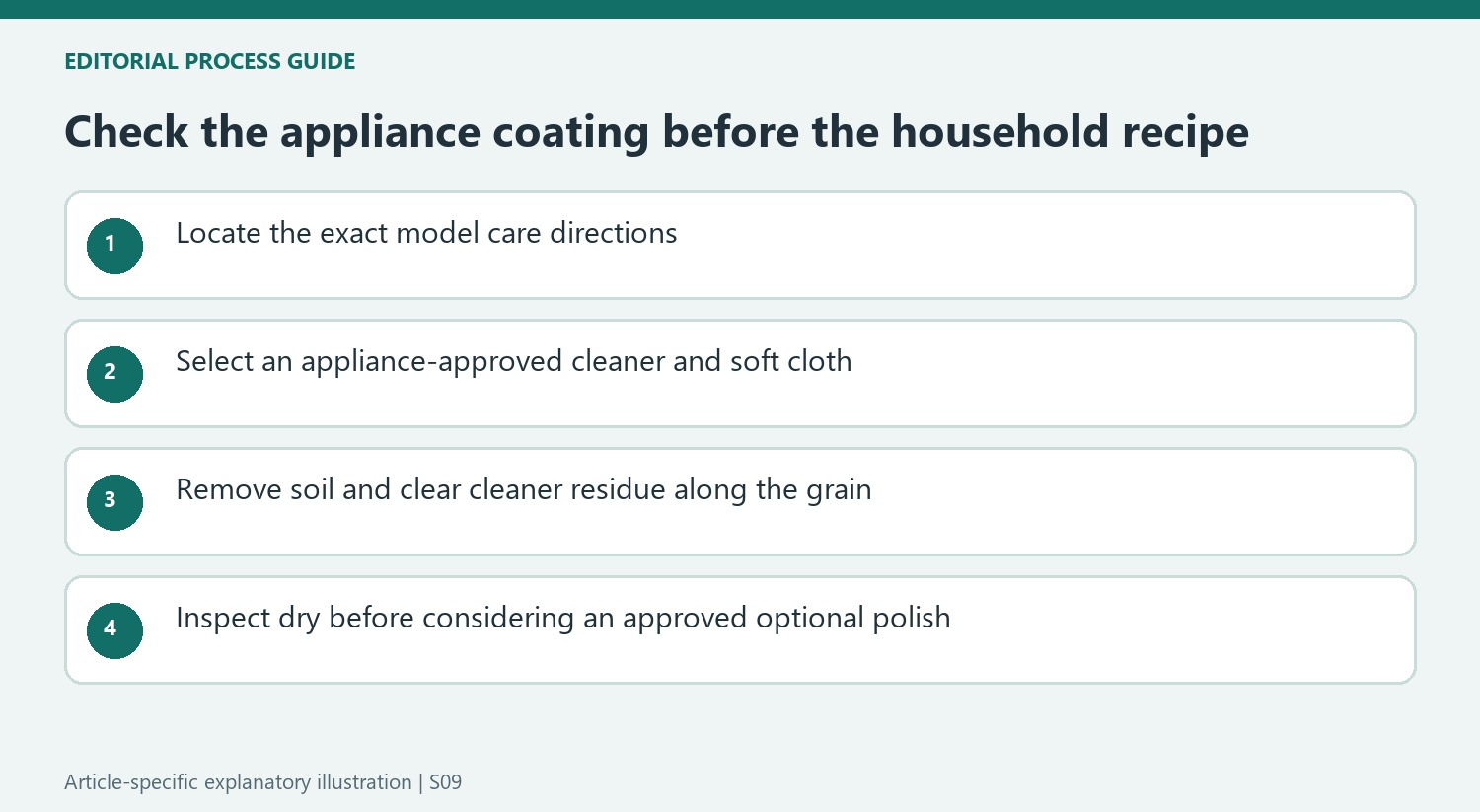
Judge shine after dirt and residue are removed
The source discusses baby oil and other polishing options, including their use when photographing kitchens. A photographic shine is a different goal from removing everyday cooking residue. Do not coat over grime or assume an oil is compatible with a fingerprint-resistant finish. Complete the approved wash, rinse as required and dry before deciding whether any separately permitted finishing product is useful.
Make the booklet more authoritative than the generic recipe
Homes & Gardens explicitly recommends checking the appliance booklet or the manufacturer's online cleaning directions before beginning. Some steel appearances include a special coating that needs a particular cleaner or little more than damp wiping. Find those requirements before selecting one of the article's household recipes. A homemade method's low cost or an attractive photograph does not establish that it preserves the exact finish on the appliance in front of you.
The source also cautions that products designed for steel sinks or cookware can be too abrasive for decorative appliance fronts. Keep that distinction when choosing from bottles that all mention stainless steel. The actual label's intended use and the appliance's restrictions both matter. Do not transfer a successful pan-cleaning technique to a refrigerator door merely because the materials share a name and both collect greasy fingerprints during cooking.
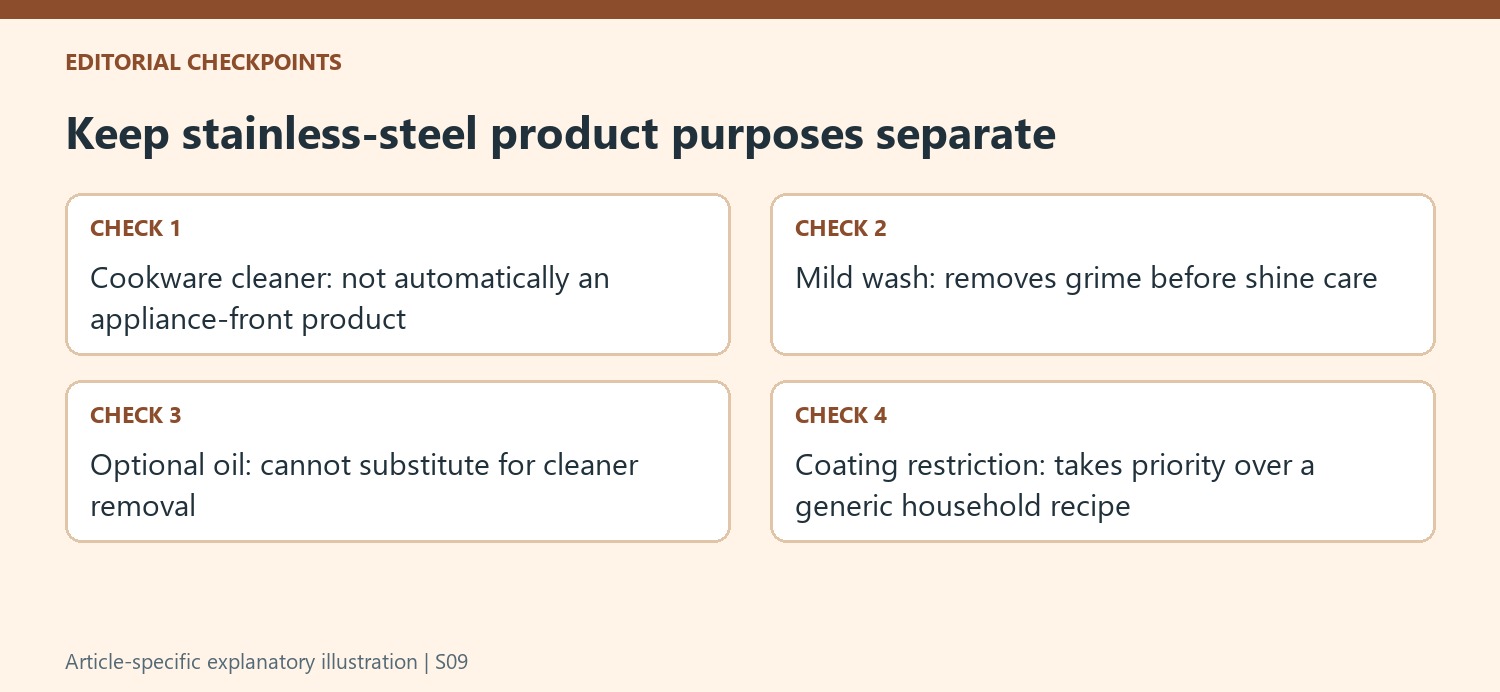
Understand the separate roles in the household examples
In the source's dish-soap example, the mild wash is followed by fresh-water wiping before optional appearance treatment. That order matters: removing grease and cleaner is a different task from adding a small shine-enhancing layer. If a streak remains after the dry stage, first consider incomplete removal or the wiping direction instead of automatically applying more oil. An oily coating can temporarily change reflection without resolving the original cleaning problem.
Any optional oil or polish still requires maker approval for the finish and location. Keep the product controlled on suitable fabric rather than spreading it around openings or electrical controls. The article presents specialist products and household alternatives, but they are not a combined sequence of increasingly strong chemicals. A discreet test can provide an additional check under a permitted method; it does not cancel an explicit coating exclusion.
Use the dry finish to evaluate the remaining streak
The guide connects visible grain direction and complete drying with a cleaner-looking result. Locate the actual lines and follow them using soft clean fabric instead of rubbing in random circles. Replace a cloth face as it collects soil, then complete any required residue removal. A damp panel can conceal both surviving film and damage, making the final dry inspection more useful than deciding mid-wipe that the cleaner is too weak.
Its exclusions include rough pads, scouring powders and incompatible chlorine or ammonia products. Keep them excluded when a persistent mark becomes frustrating. If ordinary approved care leaves a suspected scratch or changing coating, seek product-specific advice instead of treating it as removable grease. Regular proportionate attention to handles and other frequent contact points can reduce buildup while preserving the actual appliance finish, rather than chasing a uniform high shine at the expense of its care requirements.
References
- How to clean stainless steel appliances – for a gleaming finish. Homes and Gardens; Hayley Gilbert.
Not every steel-looking door or panel tolerates the same polish or household solution.


Leave a Comment
Comments (0)