
Follow the Grain When Cleaning Stainless-Steel Surfaces
Homes & Gardens recommends checking stainless-steel appliance instructions before cleaning, since grades and surface treatments vary. For ordinary marks, use a compatible mild cleaner and microfiber cloth, working with the visible grain. Cooking utensils need a food-surface-appropriate wash rather than an appliance-polishing product.
Remove cleaning residue with clean water as directed and dry with a lint-free towel. The guide distinguishes routine fingerprint removal from more difficult staining, so avoid beginning with harsh abrasives. A finish that looks like bare stainless steel may still have a coating, making the manufacturer's permitted method more useful than a general recommendation for the metal alone.
Read the sixteen ideas as alternatives
Homes and Gardens presents a broad collection of methods spanning cookware, sinks, appliances and outdoor metal. They are not steps to combine in one cleaning session. Its introductory distinction between dish soap for cooking tools and surface products for appliances is a useful boundary. Choose one permitted route for the actual item and its finish instead of testing every pantry ingredient on a single mark.
Give rinsing the same attention as washing
The everyday routine ends with clean water and a lint-free drying towel after grease has been lifted. That matters even when a product is described as mild or natural. Residue can create a new streak pattern or make a surface feel coated. Where hard water causes spots, the guide suggests distilled water as a way to reduce added minerals during the wipe-down.
Keep polishing separate and restrained
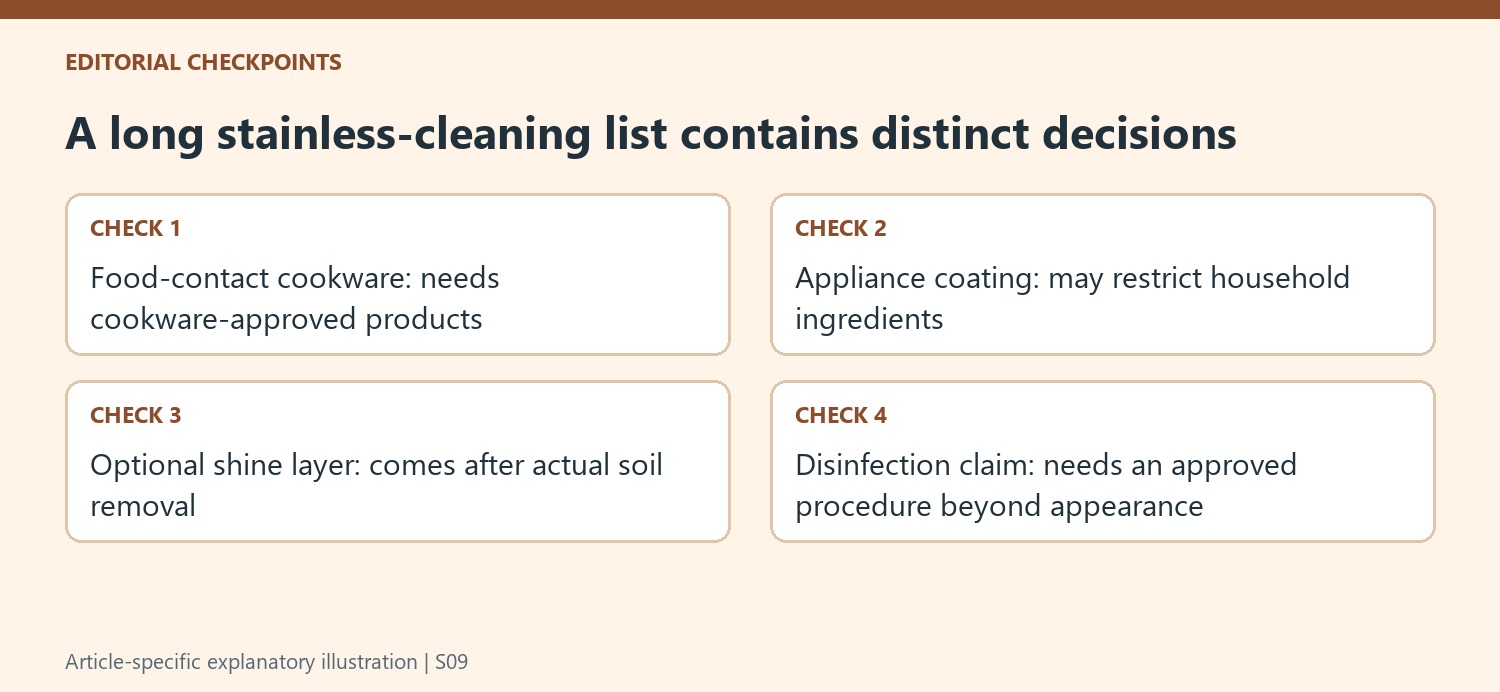
The feature's polishing discussion warns that too much oil attracts dust and its commercial-polish section distinguishes appliance use from cooking tools. Shine therefore needs a separate compatibility decision after cleaning and drying. For a coated door, follow the maker before adding any film. On a food-contact pan, a suitable wash and complete rinse are more relevant than copying an appliance's decorative finishing routine.
Read the long list as choices for different jobs
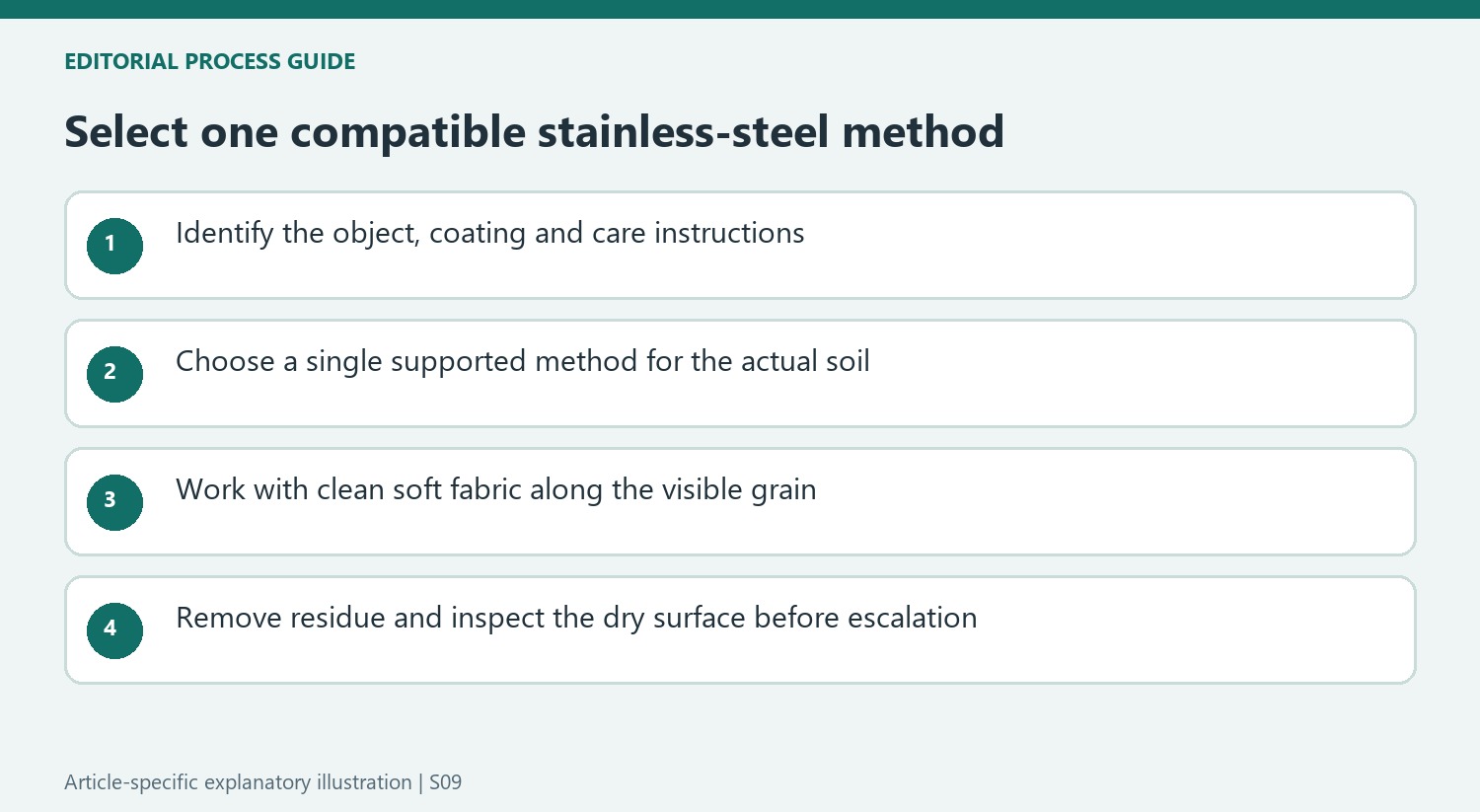
Homes & Gardens lists many stainless-steel cleaning options, but its opening instruction is to consult the manufacturer. That condition matters because an appliance front, cooking pan and outdoor fitting can have different grades, coatings and components. Do not turn the number of suggestions into a requirement to try them all. Identify the object and soil first, then select one supported process with clear application, residue-removal and drying stages.
The guide itself separates cooking tools from decorative appliances when discussing general spray cleaners and polish. Keep that distinction attached to any product example. A formulation intended to leave an appearance-protecting layer on a refrigerator door is not automatically suitable for a food-contact pan. The words stainless steel describe a material family, not a universal approval that travels from one household object to another without a current label check.
Separate grease removal from a brighter appearance
Several contributors discuss oils or protective polishing after cleaning, while the source also cautions that too much can attract dust. Remove ordinary soil before considering those appearance treatments. A glossy film is not evidence that grease has left the surface, and another layer is not the best response to incomplete cleaner removal. Where the actual finish supports polish, keep the dose and completion steps within its own directions.
The article's broader claims about familiar household ingredients should not replace surface compatibility or a validated disinfection procedure. An acidic cleaner can be restricted on a coated appliance, and a visibly active reaction does not establish microbial control. Likewise, steam or alcohol requires the object's approval and the correct process; neither belongs on every nearby component simply because a general steel guide includes it among possible approaches.
Use grain and drying as consistent checkpoints
The source repeatedly favors working along the visible grain with soft microfiber and avoiding steel wool or abrasive pads. Inspect the actual lines on each panel and keep the cloth clean as soil transfers. Finish with the supported residue-removal step and a dry cloth. In hard-water conditions, the guide's distilled-water suggestion can reduce mineral residue during suitable cleaning, but it is not a reason to omit the required water wipe.
Assess the fully dry result before choosing any further treatment. A smudge, leftover cleaner, mineral spot and scratch are different findings, and more pressure may worsen the last of them. Set the maintenance frequency around use, distinguishing cookware after a meal from a lightly handled appliance panel. This preserves the useful structure beneath the long list: object identification first, one compatible method, complete removal and a deliberate decision about the remaining mark.
References
- How to clean stainless steel – 16 methods, tips, and tricks to keep stainless steel all over your home gleaming. Homes and Gardens; Chiana Dickson.
Soft tools and complete drying help reduce the streaks left on a visibly brushed finish.


Leave a Comment
Comments (0)