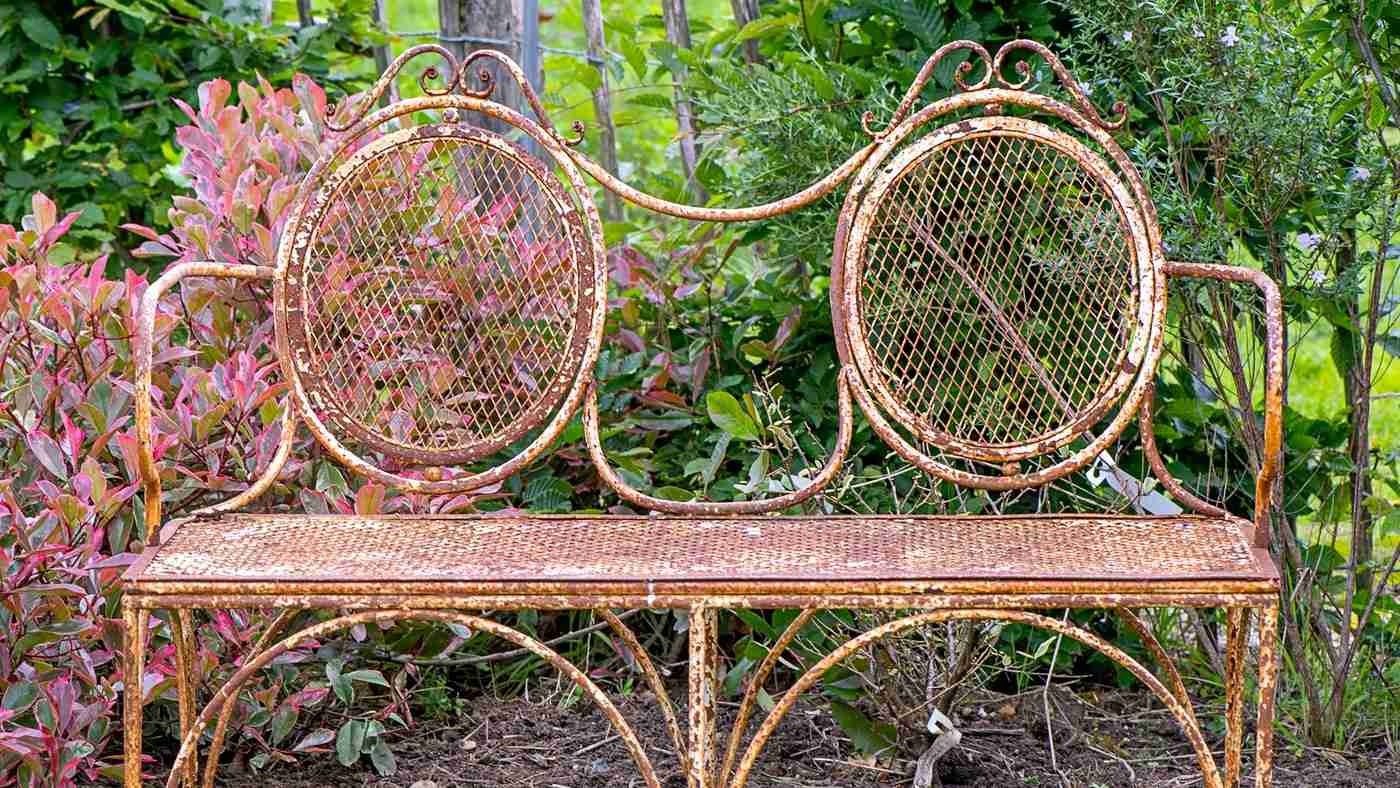
Choose Rust Treatment around the Furniture Finish
The source discusses molasses as one proposed method for reducing rust on garden furniture. It also notes that the amount and age of corrosion affect how easy removal will be. Begin by inspecting the metal and any paint or plating rather than selecting a recipe first.
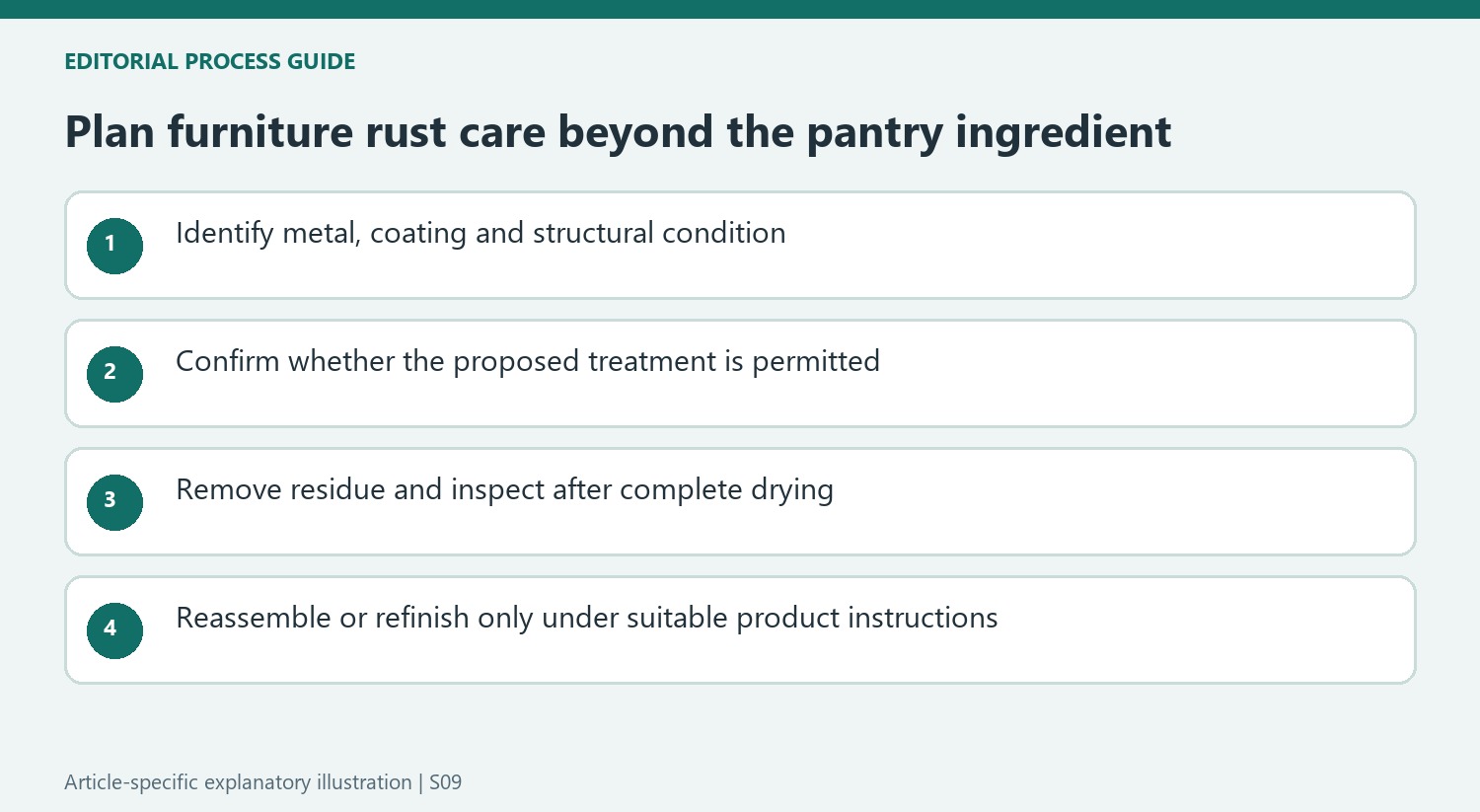
Use an approved treatment and appropriate tools for that finish, then remove residue and dry thoroughly. Light surface corrosion is different from weakened components. Protective maintenance after cleaning matters because removing a visible mark alone does not prevent future moisture exposure.
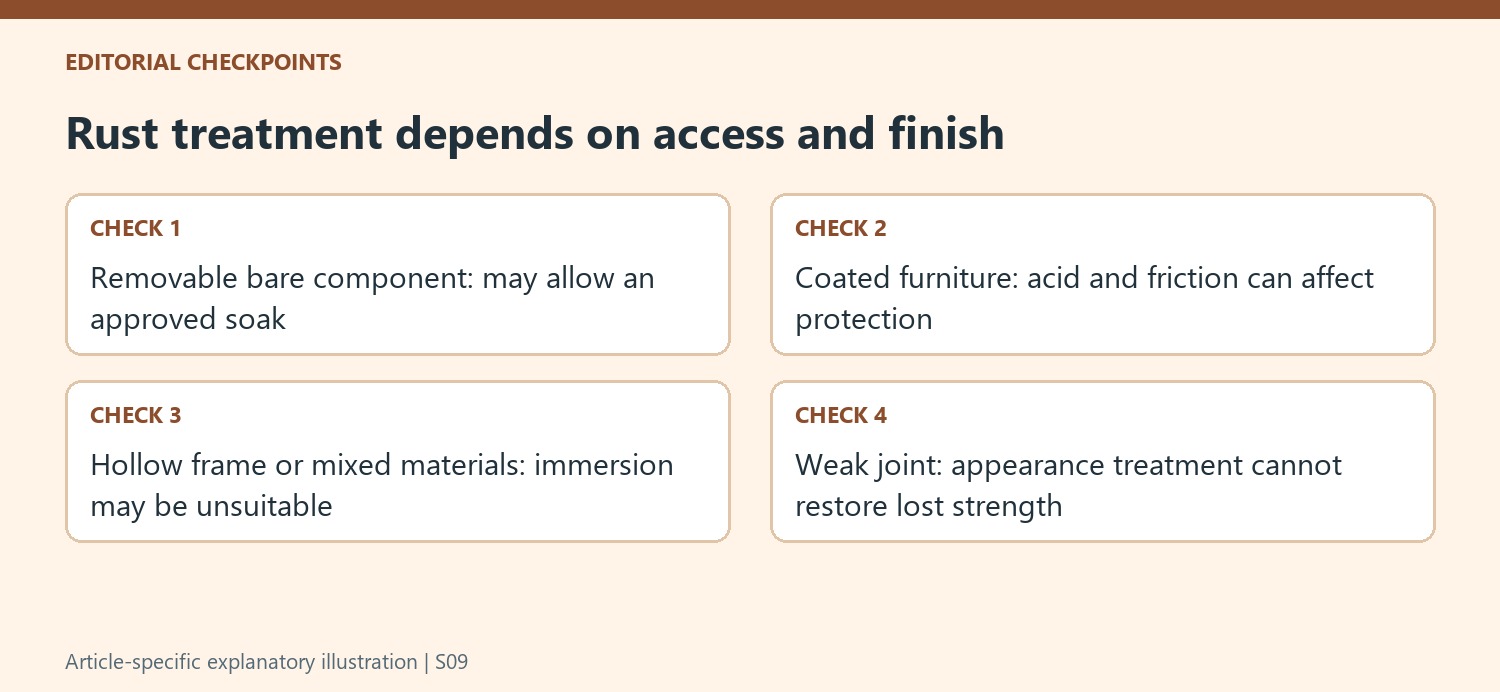
Match the proposal to removable compatible parts
Tom's Guide quotes a suggestion to soak suitable iron or steel components in diluted molasses over several days. That is a very different project from quickly wiping an assembled painted chair. Check whether parts can be removed safely and whether the metal, coating and attached materials permit immersion. Keep hardware organized and avoid forcing corroded joints simply to fit a household cleaning method.
Do not confuse stain removal with structural repair
The source acknowledges that the extent and age of corrosion affect the result. Inspect load-bearing areas, joints and feet before committing time to cosmetic work. Surface discoloration may be treatable, while badly weakened metal needs repair assessment or replacement. A lighter color after cleaning does not demonstrate that a chair can safely carry weight or that a corroded fastener retains its strength.
Plan protection after the treatment
The article calls for complete drying before reassembly. Follow the furniture maker or coating-system instructions for residue removal, preparation and any renewed protective finish as well. Rust removal alone does not stop further exposure to moisture. Its alternative acid-paste suggestion is also conditional on material suitability, rather than an instruction to apply acid or wire brushing across every decorative outdoor finish.
Assess construction before considering a long soak
Tom's Guide presents the molasses idea principally for furniture components that can be dismantled and submerged. That access condition matters as much as the pantry ingredient. A welded frame, hollow section, upholstered seat or coated fitting may not suit a long wet treatment. Identify the material and current manufacturer instructions before adapting a removable steel-part suggestion to the whole chair standing on the patio.
The source quotes a distinction between light surface rust and older, more stubborn corrosion. Inspect which situation is present and whether the furniture remains structurally sound. Removing an orange stain cannot restore missing metal or a weakened joint. Do not read the article's optimistic reuse theme as a guarantee that every damaged item is recoverable, or that a decorative improvement establishes a safe load-bearing seat.
Treat the pantry methods as conditional proposals
The article describes a diluted molasses soak and a separate citric-acid paste where disassembly is impractical. These are alternative proposals, not ingredients for a combined stronger treatment. Their acid exposure and the subsequent scrubbing may be incompatible with a particular paint, plating or adjacent material. Follow the furniture's actual finish requirements rather than assuming that an edible starting ingredient makes the resulting cleaning process harmless to the object.
Likewise, the source's wire-brush and abrasive-sponge suggestions belong only where a supported restoration process permits that contact. They are not routine care for intact decorative coatings. A hidden-area observation may provide information, but it does not settle compatibility for a multiday immersion or protect concealed joints and attachments. For valuable furniture or uncertain coatings, obtain material-specific advice before selecting a method that intentionally changes the surface.
Plan what follows rust removal before starting it
Tom's Guide emphasizes complete drying before reassembly. Include that stage when planning the work, particularly where water could remain around joints or inside a removable part. Clear treatment residue through the supported process and inspect the cleaned dry surface before returning the component to service. A successful-looking wet result is not the endpoint of a restoration job and should not obscure a remaining crack, loose fixing or area of material loss.
The article's broader suggestion that similar tricks can be used on other metal items does not replace instructions for cookware, grates or tools. Each brings its own surface and intended-use limits. Keep the chosen treatment attached to the identified furniture problem, and follow any required protective refinishing under compatible product directions. The useful outcome is a sound, appropriately maintained object, not merely a brighter patch obtained without a plan for the exposed surface afterward.
References
- Forget ketchup — this pantry staple is the secret to removing rust from garden furniture. Tom's Guide; Annie Collyer.
A pantry-based method is not automatically appropriate for every coated metal.


Leave a Comment
Comments (0)