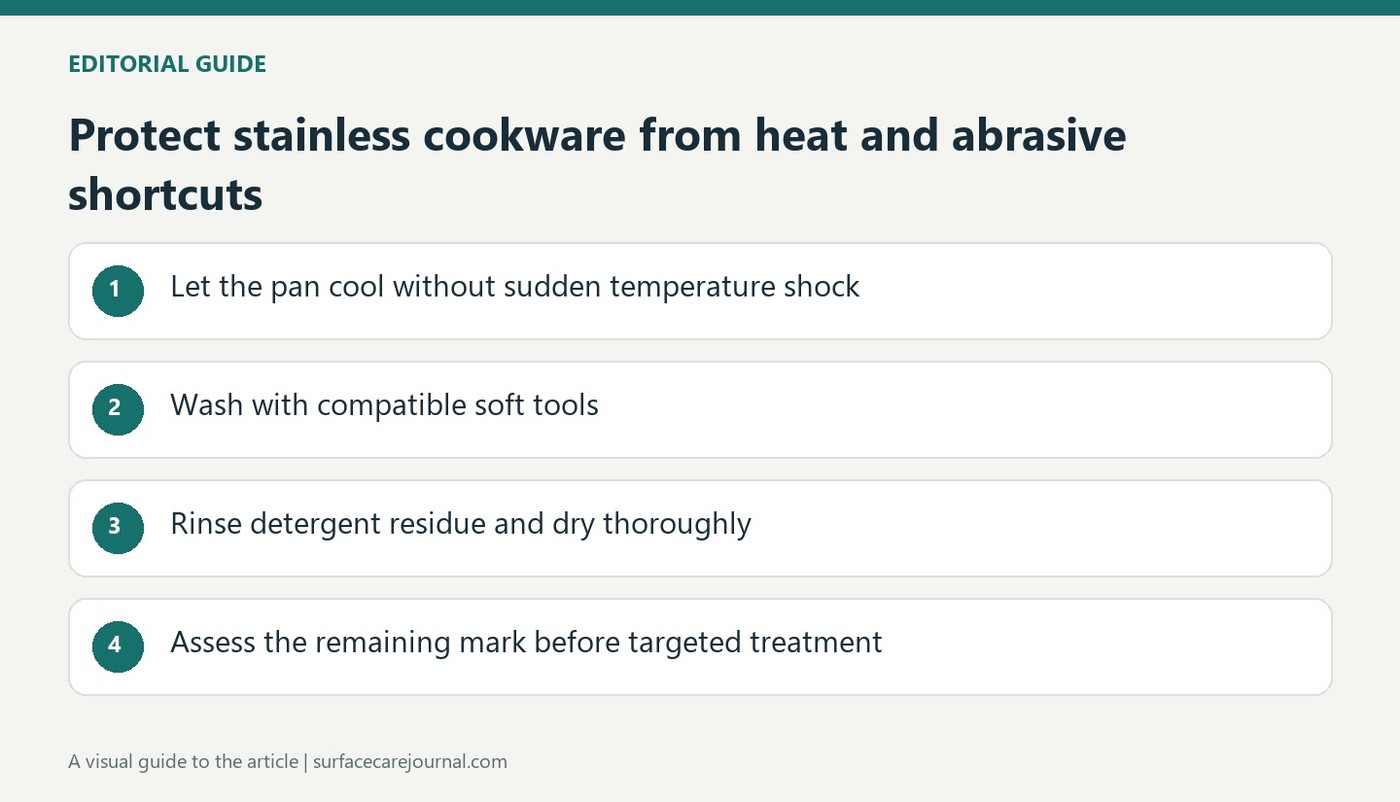
Avoid Abrasive Shortcuts on Stainless-Steel Cookware
Homes & Gardens warns that abrasive sponges and steel wool can leave small scratches on stainless-steel cookware. It recommends softer cloths, suitable brushes and non-scratch scrubbers instead. Let a pan cool before cleaning rather than subjecting it to excessive heat while trying to remove residue.
The article also notes that overheating can contribute to rainbow or blue discoloration. Select a compatible method for the specific mark instead of escalating pressure on the whole surface. Check whether the pan has any coating and follow its maker's care directions. Preserving the finish requires controlling both the cleaning tool and the conditions, not merely choosing a product labeled for stainless steel.
Control the temperature transition
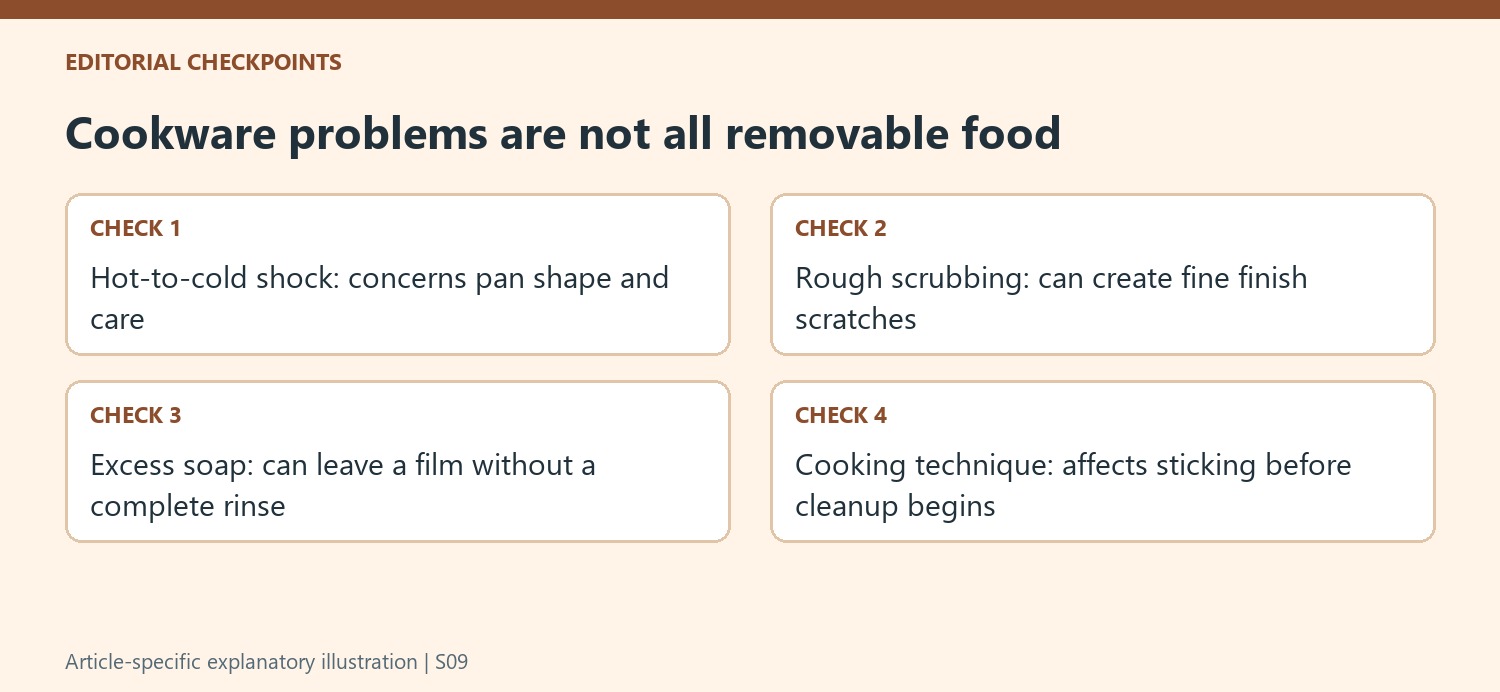
Homes and Gardens warns about both overheating during cleaning and running cold water over a very hot pan. Its concern is not just discoloration: abrupt cooling can contribute to warping. Give cookware a suitable cooling period before taking it to the sink. Do not try to compensate for a stubborn deposit by repeatedly heating an empty pan or shocking it under the tap.
Rinse instead of leaving a detergent film
The feature identifies excess dish soap and skipped rinsing as sources of dull residue. Use the amount needed for the task, then remove the wash solution fully and dry with a suitable soft towel. A hazy result may call for better residue removal rather than a more abrasive sponge. Change dirty water and cloths so lifted grease is not deposited back onto the cooking surface.
Choose treatment according to the remaining mark
The guide distinguishes stuck food, heat tint and hard-water deposits. Those are different from scratches or a warped base, so inspect before selecting a compatible stain product. Its warning about dry baking soda also underlines that a familiar household ingredient can be abrasive. Follow the cookware maker and product label, and keep decorative appliance polishes away from food-contact surfaces unless expressly suitable.
Solve the temperature problem before the residue problem
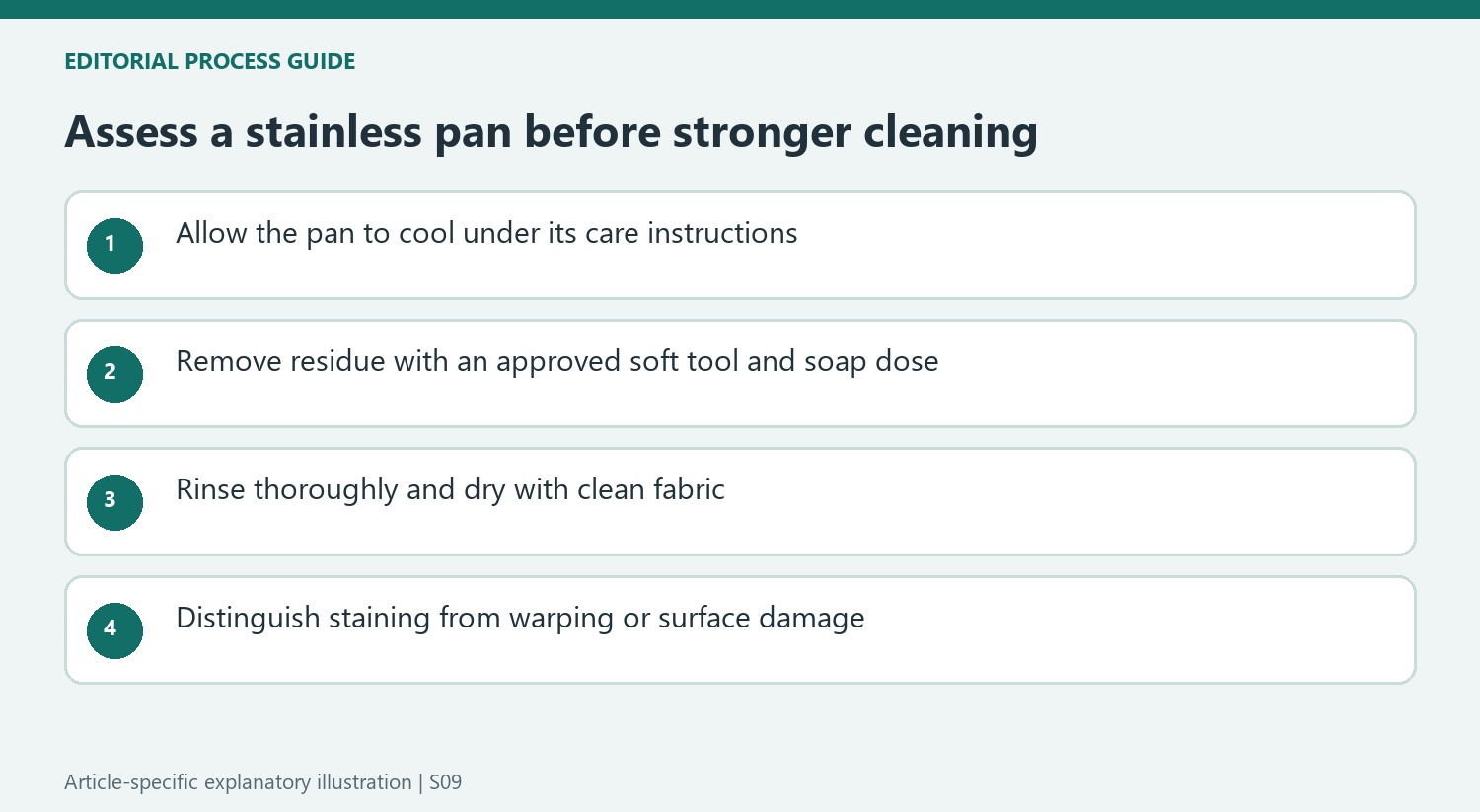
Homes & Gardens warns against both overheating an empty pan during cleaning and suddenly running cold water over a hot pan. These are separate temperature problems with a shared practical response: allow the cookware to cool appropriately before washing. A hurried cold rinse can affect the pan even if the chosen sponge is gentle. Follow its maker's directions rather than using a dramatic temperature change to make stuck food release faster.
The source connects a pan that no longer sits flat with possible warping and uneven cooking. Cleaning a discolored surface cannot correct that structural issue. Inspect how the cookware sits and distinguish shape changes from removable stains before adding another treatment. A bright interior is not evidence that the base remains sound, just as a dull-looking panel does not by itself mean the pan has lost its useful cooking function.
Choose softer contact and a measured soap dose
The interviewed cleaners discourage steel wool and abrasive sponges because they can leave fine scratches. Select a tool approved for the exact cookware and keep it free from trapped grit. A named sponge example in the article is not permission for every product version or every surface coating. The aim is controlled food-residue removal, with soaking only where the cookware permits it, rather than polishing the metal through repeated force.
The guide also identifies excessive dish soap and missed rinsing as causes of leftover film. More suds are not necessarily a useful answer to a difficult mark. Use the permitted product dose, remove loosened food and rinse thoroughly before drying with soft fabric. Where a supported stain method uses a paste, follow its formulation and contact directions rather than introducing dry abrasive powder simply because the ingredient is commonly kept in the kitchen.
Keep cooking practice separate from cleaning escalation
The article observes that using stainless cookware at an appropriate cooking temperature can affect sticking and later cleanup. That is a cooking-technique issue rather than a reason to heat an empty pan aggressively during washing. Follow the cookware and recipe guidance for temperature, oil and food handling. Do not assume that a simple water-drop demonstration guarantees that every ingredient will release cleanly or that a pan can be left unattended while heating.
Stains that remain after a compatible wash may be mineral deposits or discoloration rather than old food. Identify the likely problem and check the maker before choosing an additional product. Strong chlorine cleaners and unapproved abrasives remain inappropriate shortcuts. Complete the rinse and dry assessment before any next stage, keeping ordinary grease, detergent film, heat-related color and physical damage as different observations instead of treating all four with the same stronger scrub.
References
- 7 stainless steel cleaning mistakes that are ruining your cookware – and what to do instead. Homes and Gardens; Ottilie Blackhall.
The guide identifies scratching and overheating as preventable problems during cleaning.


Leave a Comment
Comments (0)