Inspect Metal Patio Frames While Removing Ordinary Dirt
BHG separates gentle routine cleaning from repairing rust and damaged paint on outdoor furniture.
Match the work to the furniture material
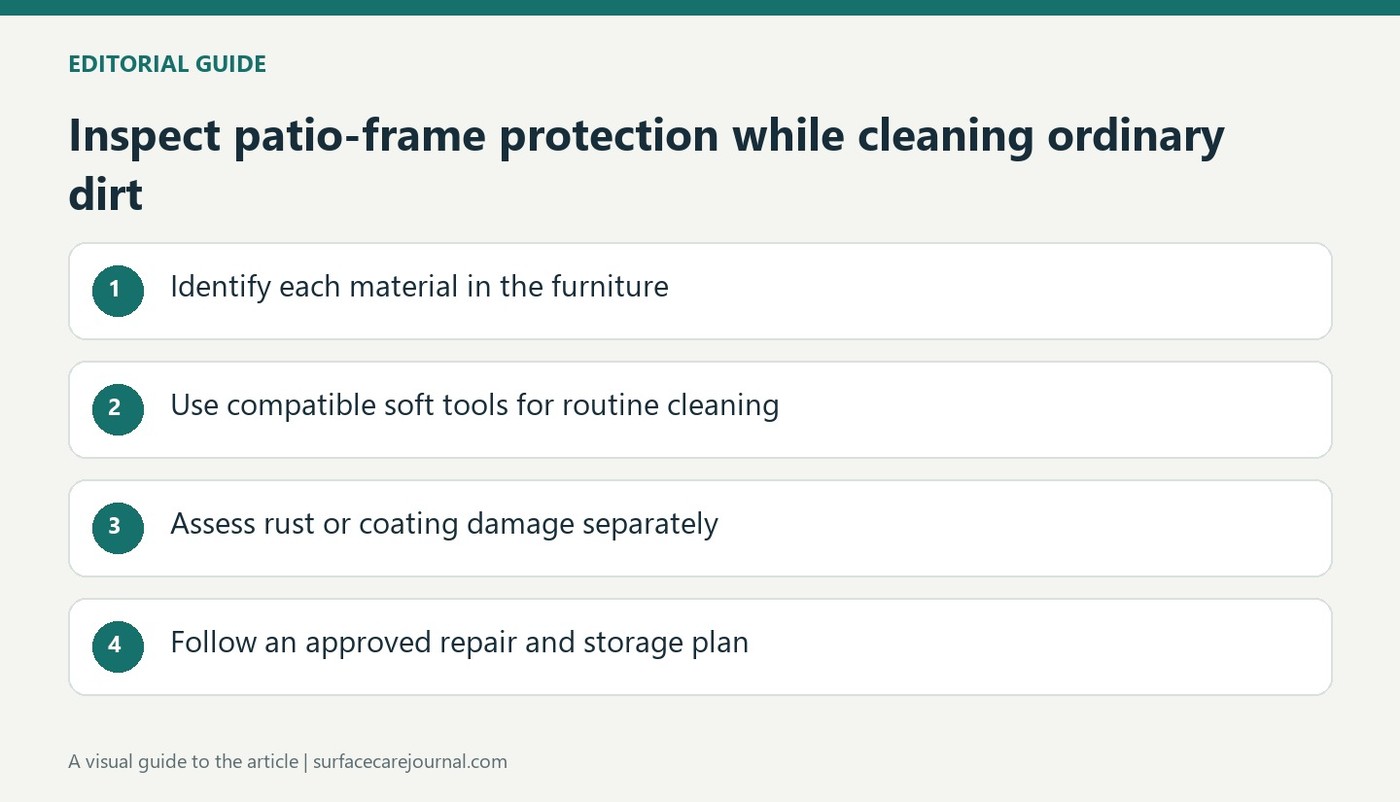
Better Homes and Gardens separates outdoor wood, glass, plastic and metal because the same routine does not suit every patio set. For metal and aluminum, it recommends frequent cleaning and soft non-abrasive tools to protect the appearance. Outdoor exposure means that dirt removal should also include inspecting the finish rather than judging only whether the seat looks clean enough to use.
Recognize when the coating needs repair
The guide describes treating rust and damaged paint as a separate maintenance task, with suitable preparation, primer and paint rather than simply covering dirt. It also discusses more durable protective finishes for wrought iron. Those choices must match the actual metal and product instructions. Store furniture under appropriate protection during harsh weather where possible, and check the maker's care advice before applying a polish, solvent or coating intended for a different type of surface.
Separate the frame from the other materials
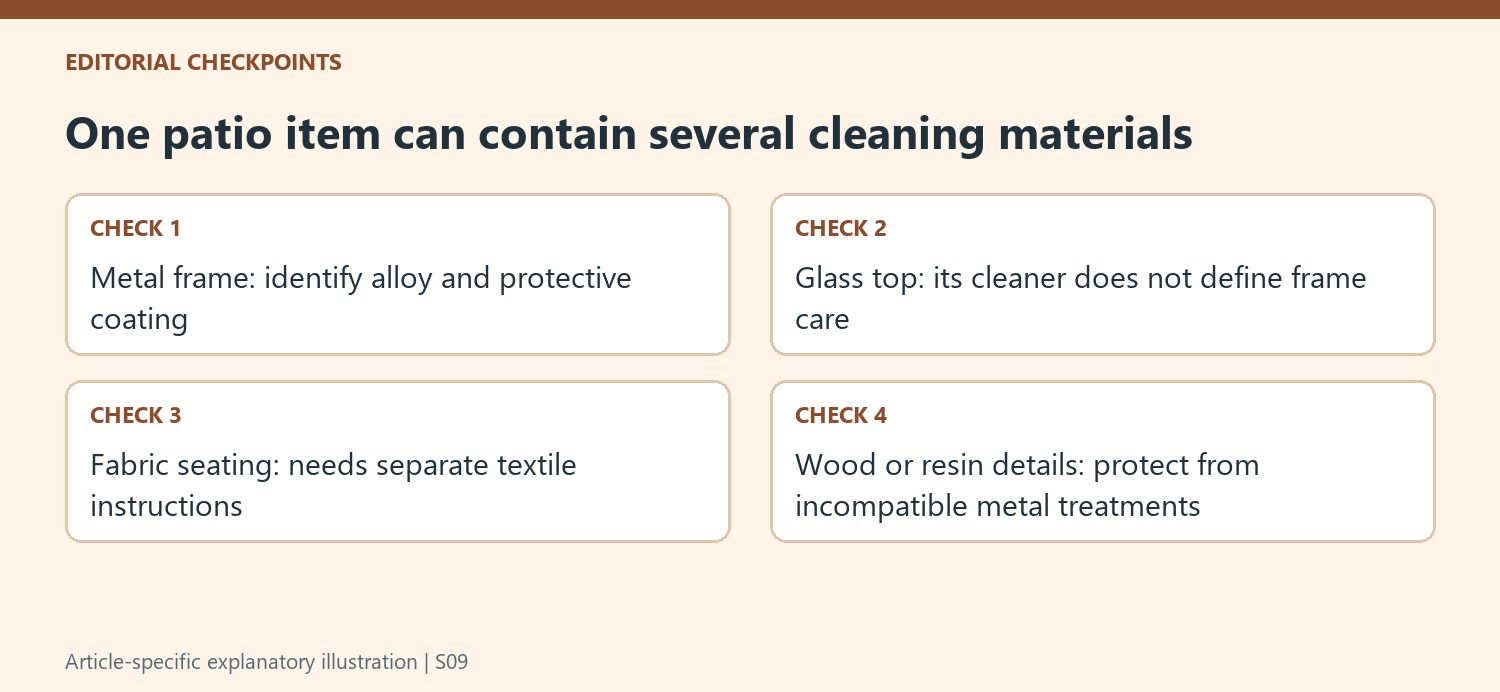
BHG's article covers glass, wood, wicker, plastic and metal in separate sections. A glass patio table can therefore require one method for its top and another for its painted frame. Keep each cleaner within the approved material and avoid assuming an outdoor product suits every component. Its metal discussion also separates aluminum oxidation from rust on iron or steel, which changes the repair decision. Protective coatings and optional waxes need the furniture maker's approval rather than a generic transfer from automobile care. For ordinary dirt, a soft suitable tool and regular cleaning can reduce the need for a much larger restoration project later in the season.
Identify the frame separately from the seat and tabletop
Better Homes & Gardens divides patio care into wood, wicker, metal, glass and plastic sections. A single furniture item can combine several of them, making that structure especially useful. A glass tabletop does not set the cleaning permissions for its painted frame, and a metal chair can carry fabric that needs another routine. Inspect the actual components before deciding how broadly a cleaning product or water rinse can be applied.
The guide's metal discussion includes aluminum oxidation alongside rust on iron or steel, but those conditions should not be treated as identical. Identify the metal and its coating under the maker's directions before choosing a corrective product. A whitish change on an aluminum component does not automatically call for the same sanding and primer sequence as a rusting steel area. Material identification prevents a repair method from becoming an unnecessary cleaning step on sound furniture.
Use ordinary washing as an opportunity to inspect protection
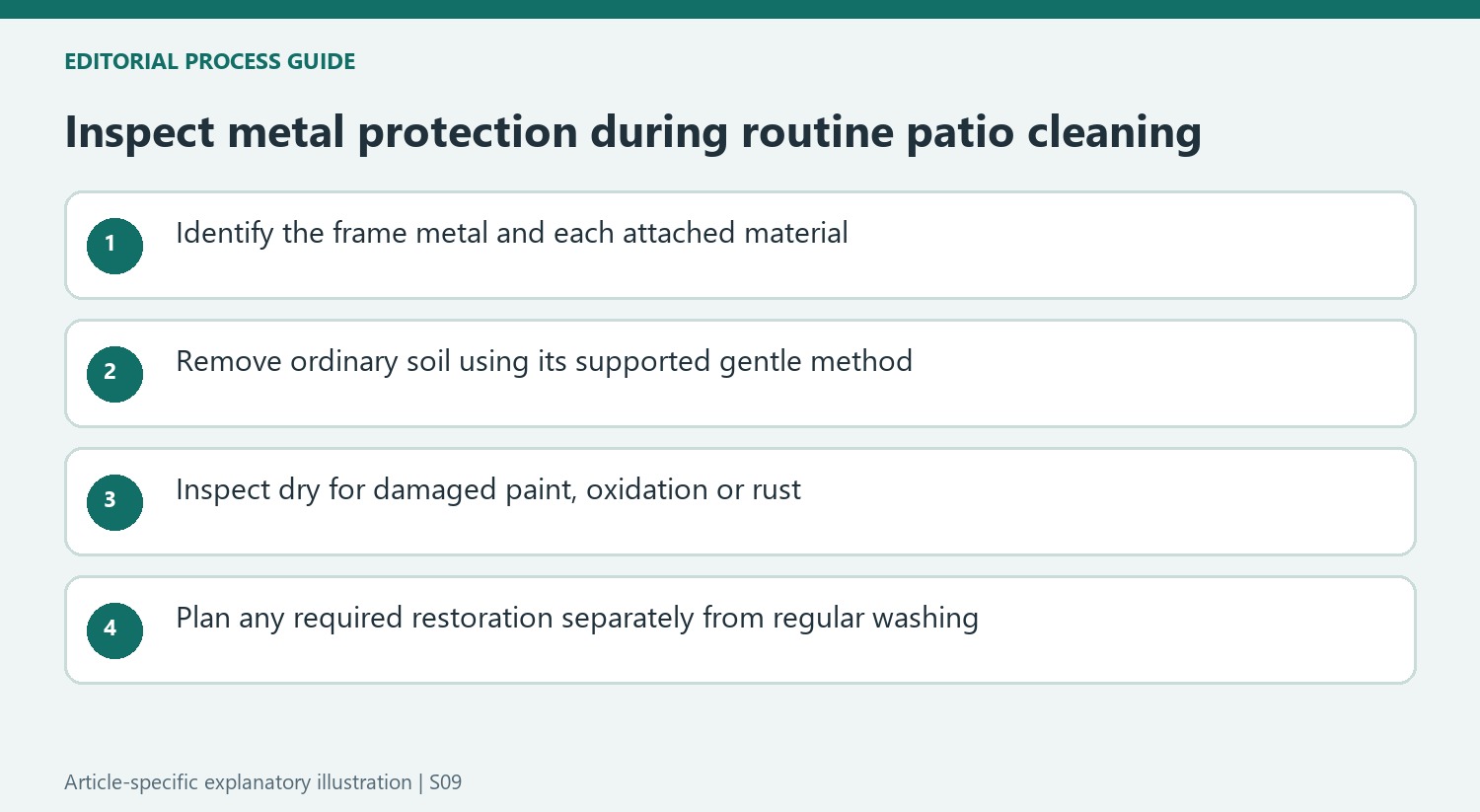
While removing routine dirt with a supported nonabrasive process, examine exposed edges, joints and painted areas for coating damage. The source separates frequent gentle cleaning from stronger work such as removing rust and repainting. Keep that distinction: an intact finish does not need to be sanded merely because the article includes sanding in its restoration advice. Repair exposure and ordinary soil removal serve different purposes and require different preparation.
Its optional chemical, polishing and protective-product suggestions need confirmation for the exact finish. A general patio guide cannot authorize solvents or acids on every powder-coated or painted frame. Product labels and furniture instructions govern the supported method, including surrounding materials and residue removal. Avoid combining a metal-care treatment with a different section's wood or plastic recipe just because several components are being cleaned during the same afternoon.
Leave furniture dry and ready for the next exposure
The source recommends routine seasonal attention and indoor winter storage where practical. Adapt that idea to local exposure and the furniture's storage instructions rather than treating four dates as a substitute for inspecting visible wear. After cleaning, complete required rinsing and drying before covering or storing the piece. Trapped dampness around a joint or beneath a cover can undermine the appearance benefit of a freshly cleaned top surface.
If restoration is needed, plan compatible rust removal, surface preparation and protective finishing as a separate project. Follow the chosen products' timing and curing instructions rather than returning the item to use when it only feels dry to a quick touch. Ordinary cleaning can reveal where that project is necessary, but it does not itself restore a failed coating. Keep the assessment focused on the identified material, condition and intended service of the actual patio furniture.
References
- How to Clean Outdoor Furniture to Look Shiny and Inviting. Better Homes & Gardens; Jessica Bennett.
BHG separates gentle routine cleaning from repairing rust and damaged paint on outdoor furniture.


Leave a Comment
Comments (0)