Put chrome faucet care ahead of aggressive scrubbing
Choose the method for the faucet finish
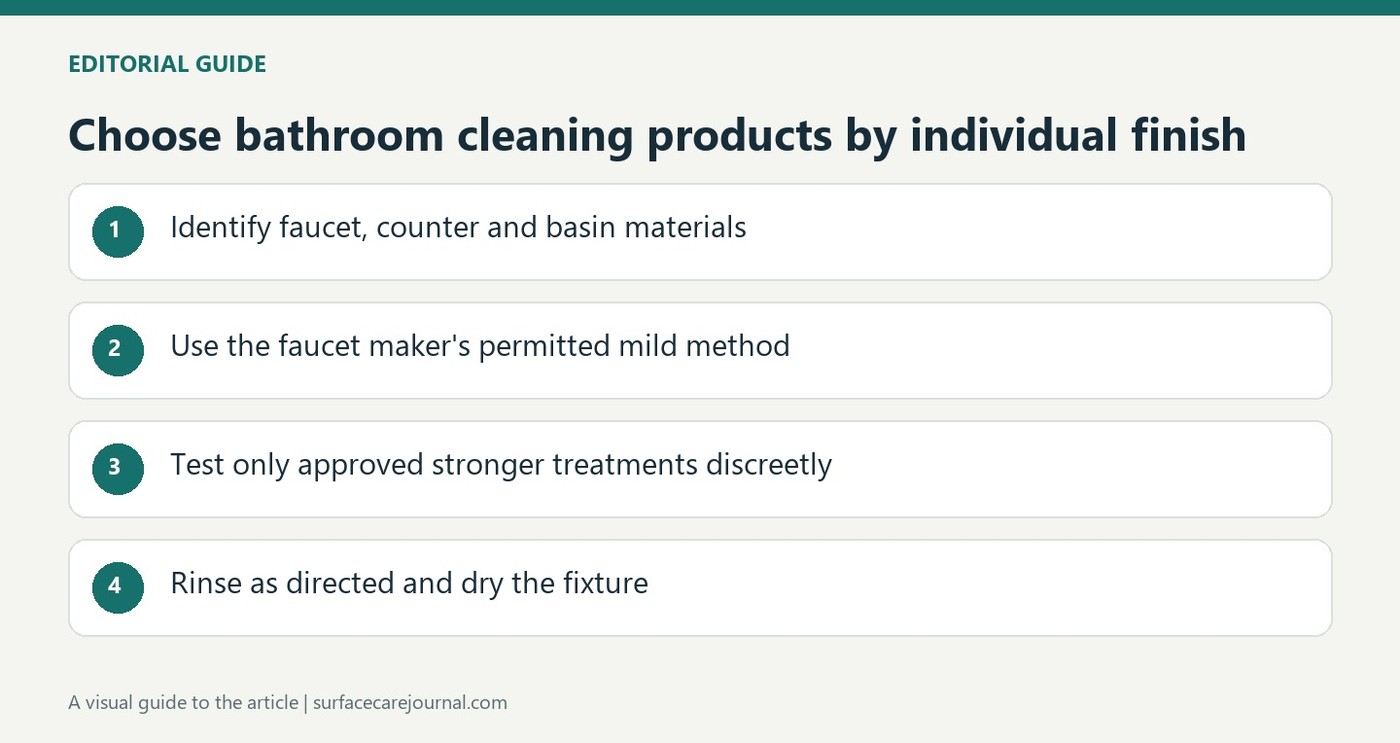
Better Homes and Gardens recommends checking the manufacturer's instructions before cleaning bathroom faucets. For compatible ordinary cleaning, its approach uses dish soap, water and a soft cloth. Chrome can scratch, so an abrasive product used elsewhere in the bathroom should not automatically be applied to the faucet, handles or towel bar.
Drying is a useful maintenance step
After cleaning and any required rinsing, dry the fixture with a clean cloth to reduce water spots. A soft-bristled toothbrush may help with suitable edges, but pressure and product compatibility still matter. The article makes any vinegar treatment conditional on manufacturer approval and advises a concealed-area test rather than treating acid as a universal faucet cleaner. Keep that restriction visible when dealing with hard-water deposits. The sink, countertop and faucet can all be different materials, so one convenient cleaning solution may not suit the entire vanity. A regular gentle routine reduces buildup while preserving the separate finishes around it.
Treat the faucet and neighboring basin separately
BHG's guide covers the sink, faucet, bath, showerhead and toilet in separate sections. That structure matters when one vanity combines a plated tap, stone counter and ceramic basin: a product approved for one does not establish approval for the others. Protect nearby surfaces while cleaning and avoid leaving a compatible cleaner pooled around the fixture. The guide makes acid use dependent on manufacturer permission and calls for a concealed test before broader application. If ordinary soap does not remove a mineral deposit, identify the finish and consult its specific directions. Do not assume a soft toothbrush makes an incompatible solution safe, or that longer contact is automatically better.
Read the faucet section instead of borrowing the tub method
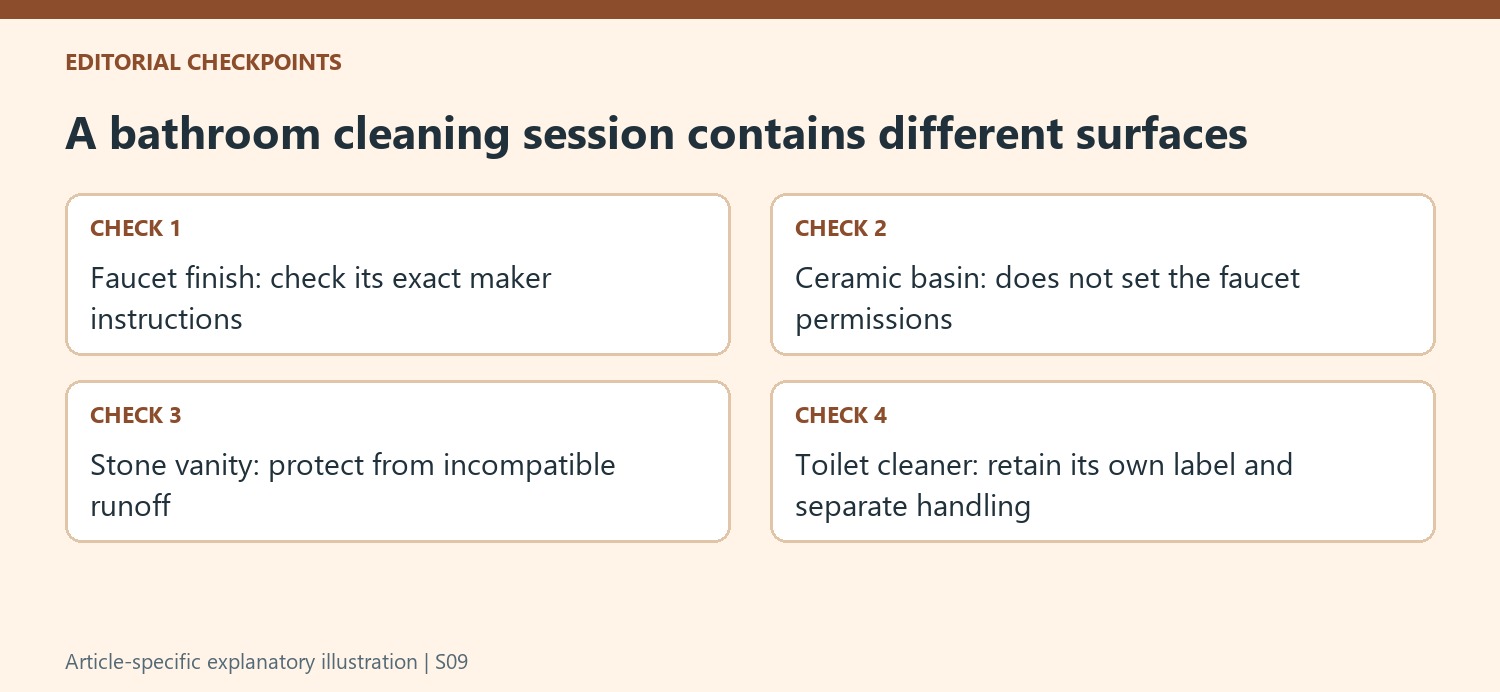
Better Homes & Gardens divides bathroom cleaning by object because the basin, bathtub and fittings need not share a material. A ceramic sink beside a plated faucet is two surface decisions, even when both are covered in the same splash. Start with the faucet's manufacturer and finish information, then select the compatible method. An approved bathtub stain remover does not become suitable for the handles just because the fixture is cleaned during the same session.
The source is particularly explicit about special finishes such as oil-rubbed bronze and unlacquered brass, where plain water and a soft cloth may be the supported routine unless the maker says otherwise. Chrome also needs protection from abrasive tools. Keep that distinction in view when arranging supplies so a scouring pad used elsewhere is not casually reused on the faucet. A convenient all-bathroom shortcut can erase the article's most useful material-specific limits.
Control treatment at edges and around the base
The guide's ordinary faucet method combines dish soap, water and soft fabric under the product's care directions. Areas around handles and the base may collect residue, but access difficulty is not a reason to use a harsher chemical. Its soft-toothbrush suggestion remains conditional on the fixture tolerating that contact. Work with light controlled handling rather than pressing a small brush into a finish that has not been identified.
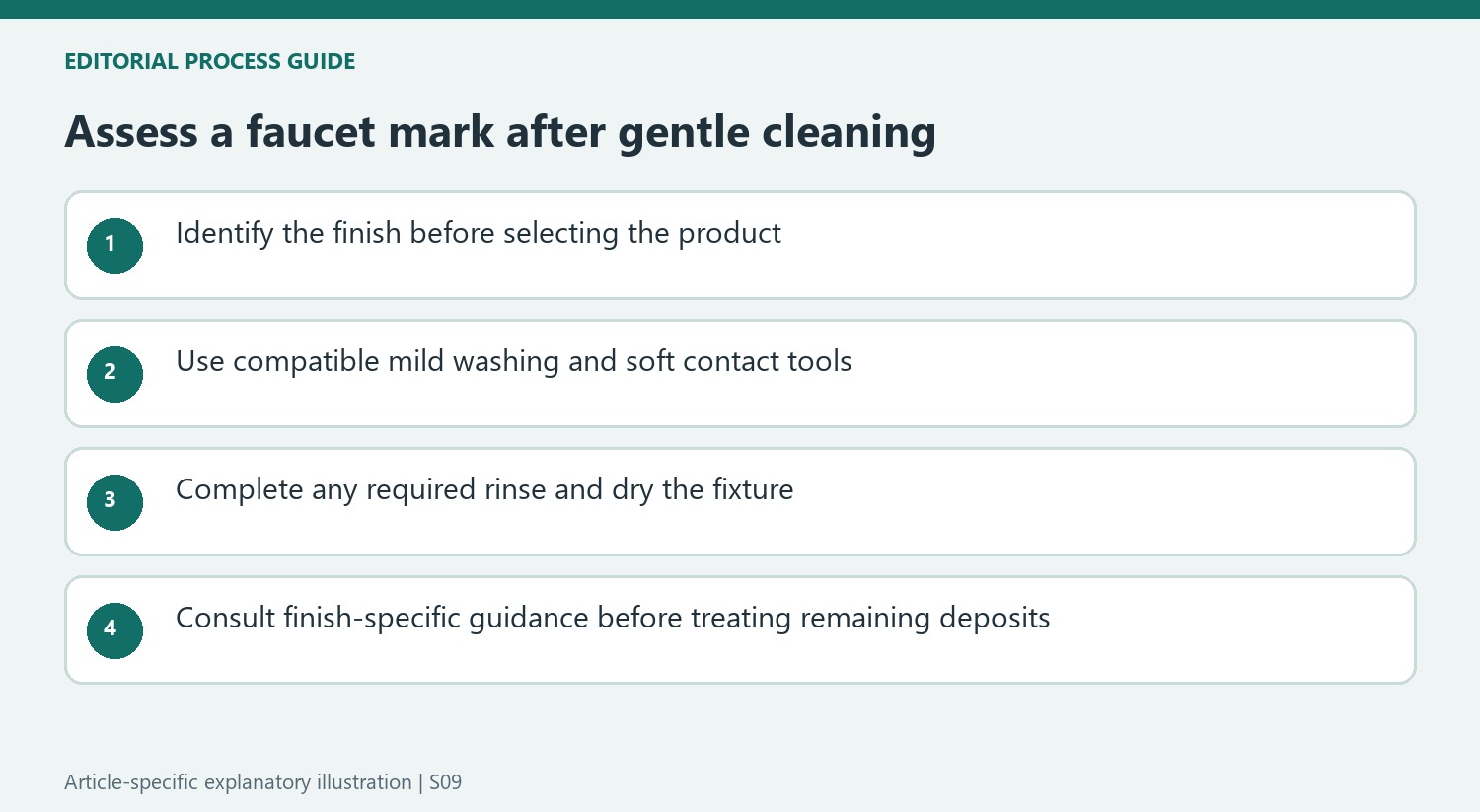
If soap does not remove a deposit, the article makes vinegar permission-dependent and calls for a concealed test. It separately cautions against baking soda without confirmation for the exact finish. Neither the familiar ingredient nor the gentle-looking applicator establishes suitability by itself. Protect the surrounding counter while working, since a stone surface can impose a different restriction from the faucet. Keep the compatible treatment local and remove it under the applicable directions.
Use a dry finish to decide what remains
After cleaning and any required rinsing, BHG recommends drying with a clean cloth to limit water spots. That stage also helps distinguish a residual mark from the temporary appearance of a damp surface. Avoid applying a second product while the first is still present, or scrubbing a dry-looking pale deposit before checking the maker's instructions. One thorough supported cycle gives more useful information than several overlapping household methods applied in quick succession.
Adjust routine attention to actual use, as the article compares busy shared bathrooms with lightly used guest spaces. A frequently splashed faucet may benefit from regular gentle wiping without a frequent intensive descaling treatment. Keep toilet cleaning products and their handling separate from the vanity task. The article's wider bathroom discussion does not authorize transferring those stronger products to plated fittings, and its product-label distinctions remain relevant even when the entire room is being cleaned together.
References
- How to Clean Bathroom Faucets and Fixtures for Spotless Surfaces. Better Homes & Gardens; Jessica Bennett.
Better Homes and Gardens recommends checking the manufacturer's instructions before cleaning bathroom faucets.


Leave a Comment
Comments (0)