Clean chrome with a gentle wash and a dry finish
Start with loose residue and mild soap
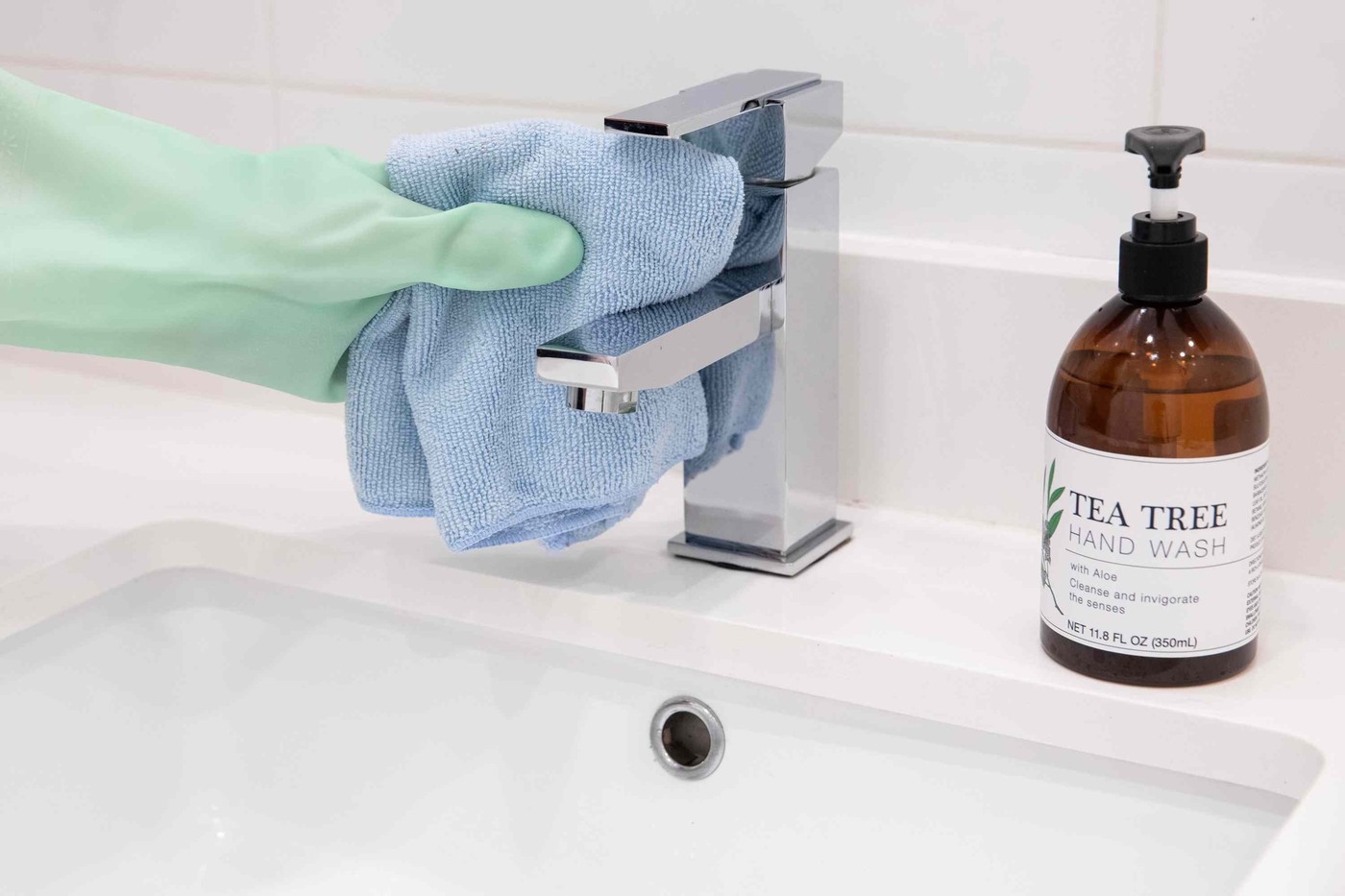
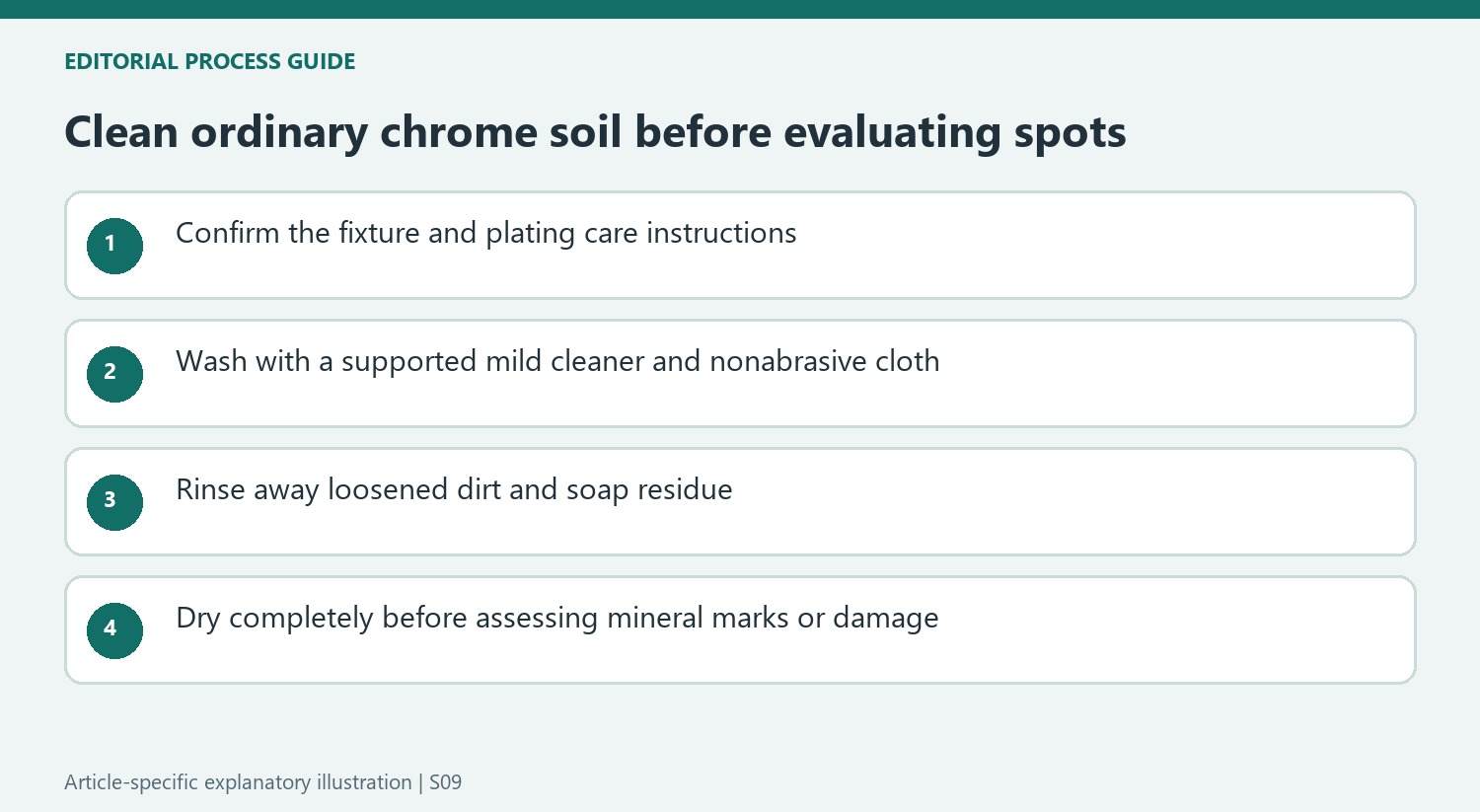
Chrome bathroom fittings are a plated finish, so preserving the surface matters as much as removing grime. The Spruce recommends a soft cloth or nonabrasive sponge with warm dish-soap solution for ordinary cleaning. Wring the cloth rather than letting it drip, and rinse it frequently so collected toothpaste and soap residue are not spread back over the fixture.
Reach small areas without scouring
A soft toothbrush can reach suitable edges and crevices. Rinse away the cleaning residue, then buff the fixture dry with a clean lint-free cloth. The guide warns against abrasive pads, stiff brushes and harsh scouring powders because damaged plating is difficult to restore. Its more specialized stain-removal suggestions should still be checked against the fixture manufacturer's instructions, especially for coated or decorative finishes. Drying after handwashing or shower use reduces the opportunity for new water marks, making a small regular habit preferable to repeatedly attacking a heavy buildup with stronger tools.
Check deposits without treating the plating as solid metal
The Spruce explains that chrome is a layer over another material, not necessarily a solid chrome object. Its examples range from plumbing fixtures to plated accessories, which is why a generic metal-scrubbing routine can be misleading. Hard-water spots may require a different compatible treatment from toothpaste or soap, but stronger chemicals and polishing suggestions need product-specific approval. Inspect for damaged plating before repeatedly working one stubborn area. Its maintenance advice includes frequent gentle cleaning, drying after use and considering the water source where spots recur. Those habits address fresh residue while avoiding the cycle of letting deposits harden and then using increasingly aggressive tools.
Remember that the visible chrome is a thin finish
The Spruce explains that chrome plating can sit over several underlying materials, including metal and plastic. The bright surface therefore does not reveal the construction beneath it or make every aggressive metal-cleaning technique appropriate. Its warning about damaged plating is especially relevant to a heavily handled faucet. Identify the fixture's actual finish and follow its manufacturer before treating a stubborn spot as if the entire object were solid chrome.
For ordinary washing, the source favors a nonabrasive sponge or soft cloth carrying diluted dish soap. Wring the cloth so it is not dripping and refresh it as soil transfers, rather than moving dirty water from one section to another. A small permitted soft brush may reach details, but a stiff brush or abrasive pad is excluded. The tool remains part of the compatibility decision even when the liquid cleaner is mild.
Distinguish ordinary soil from mineral marking
The guide treats soapy grime and hard-water deposits as different problems. That distinction matters before deciding that a mild wash has failed: a water mark can remain after the ordinary dirt has already gone. Although the source describes acidic options for deposits, they require the particular fixture's approval. Manufacturer restrictions on plated surfaces can be narrower than a general article, so do not automatically intensify acid strength or contact to chase a spot.
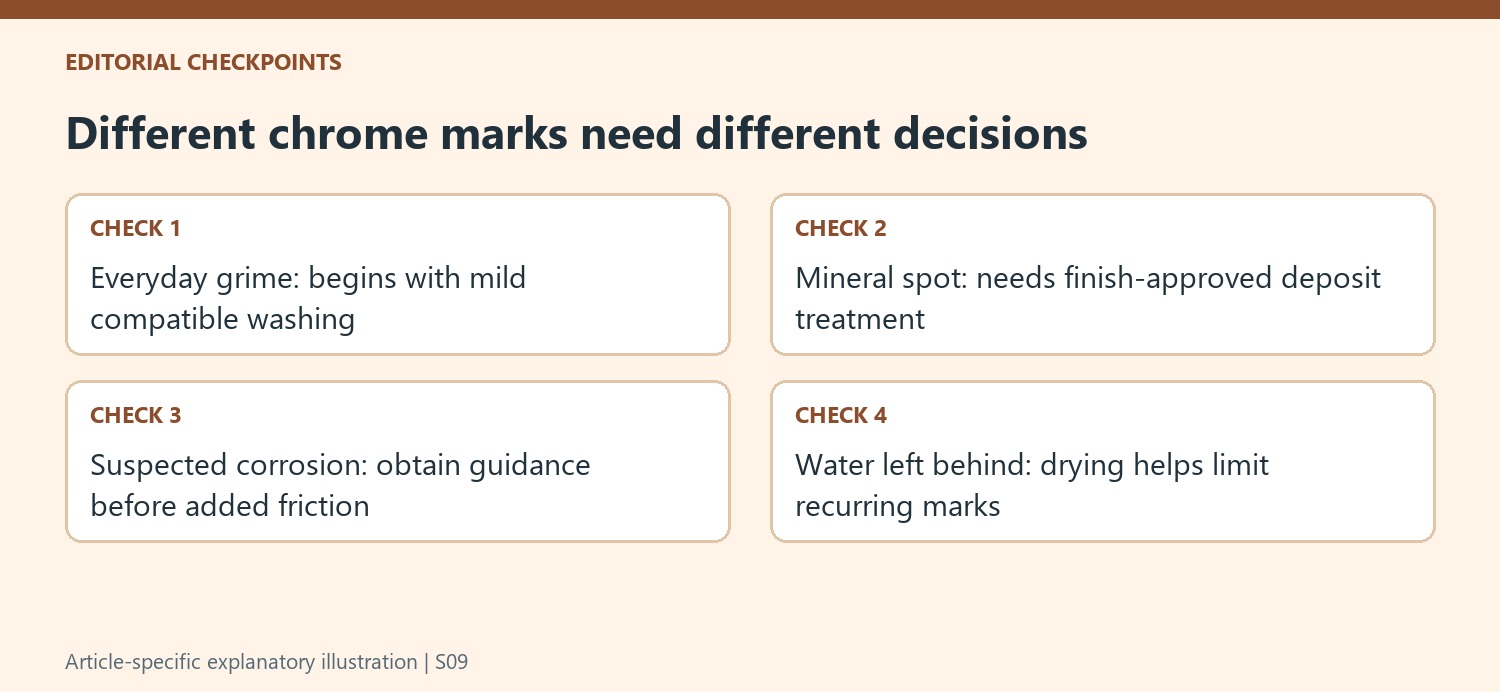
Its separate rust-removal suggestion is also not a routine wiping instruction for every fixture. Suspected corrosion, worn plating or an uncertain coating deserves product-specific guidance before friction is increased. A new scratch may look like another streak while wet, which is another reason to inspect only after residue removal and drying. The aim is to understand the remaining mark, rather than progressively treating the whole object with every method listed.
Make drying the repeatable maintenance habit
The source recommends a plain-water rinse followed by lint-free microfiber drying after cleaning. It also suggests drying fixtures after use to reduce the opportunity for water spots. That small action addresses recurring deposits without repeatedly introducing a new cleaner. In a hard-water area, its distilled-water suggestion concerns mineral residue during cleaning; it does not remove the need to follow the fixture's approved wash and removal process.
Optional automotive-style protection appears in the guide, but it remains separate from ordinary washing and requires confirmation for the exact product and location. A treatment suitable for decorative exposed metal is not automatically appropriate for every wet or food-contact area. Keep routine care simple: remove ordinary soil with approved soft materials, rinse away the cleaning product and dry completely. Refer difficult deposits or apparent finish damage to the maker rather than assuming a higher shine justifies unsupported treatment.
References
- How to Clean Chrome in Just 15 Minutes So It Can Finally Sparkle Like New. The Spruce; Mary Marlowe Leverette.
Chrome bathroom fittings are a plated finish, so preserving the surface matters as much as removing grime.


Leave a Comment
Comments (0)