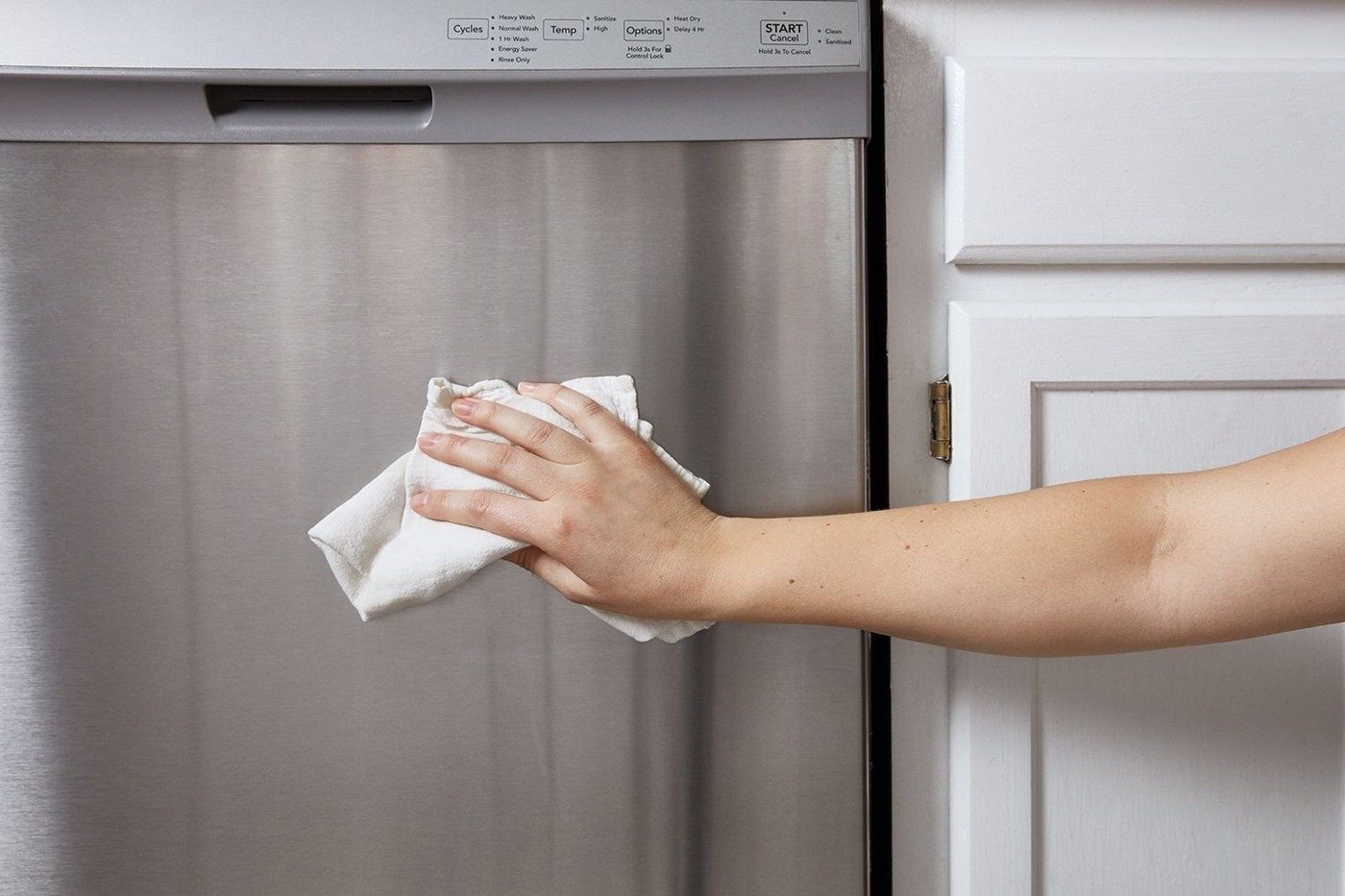
Do Not Skip the Water Wipe After a Suitable Steel Cleaner
The Spruce's homemade-cleaner guide separates stain removal, plain-water wiping and microfiber drying.
Keep the described method conditional
The Spruce discusses vinegar for fingerprints and greasy smudges on stainless steel but recommends testing a small inconspicuous area before treating the whole surface. It also warns against scouring pads, steel wool, oven cleaner and chlorine-based products. Follow the appliance's actual care requirements before adopting a household recipe, particularly when a coating or existing scratch could change compatibility.
Use separate stages and clearly identified bottles
The guide distinguishes loosening the marks from wiping with plain water and drying thoroughly with lint-free microfiber. Work with the grain instead of rubbing in circles. In a hard-water area, its suggested use of distilled water helps limit mineral spots. It also recommends a new spray bottle rather than an old chemical container with unknown residue, plus a clear label and storage away from children. Leaving a cleaner on the surface is not the completed process.
Control where the cleaner and rinse water travel
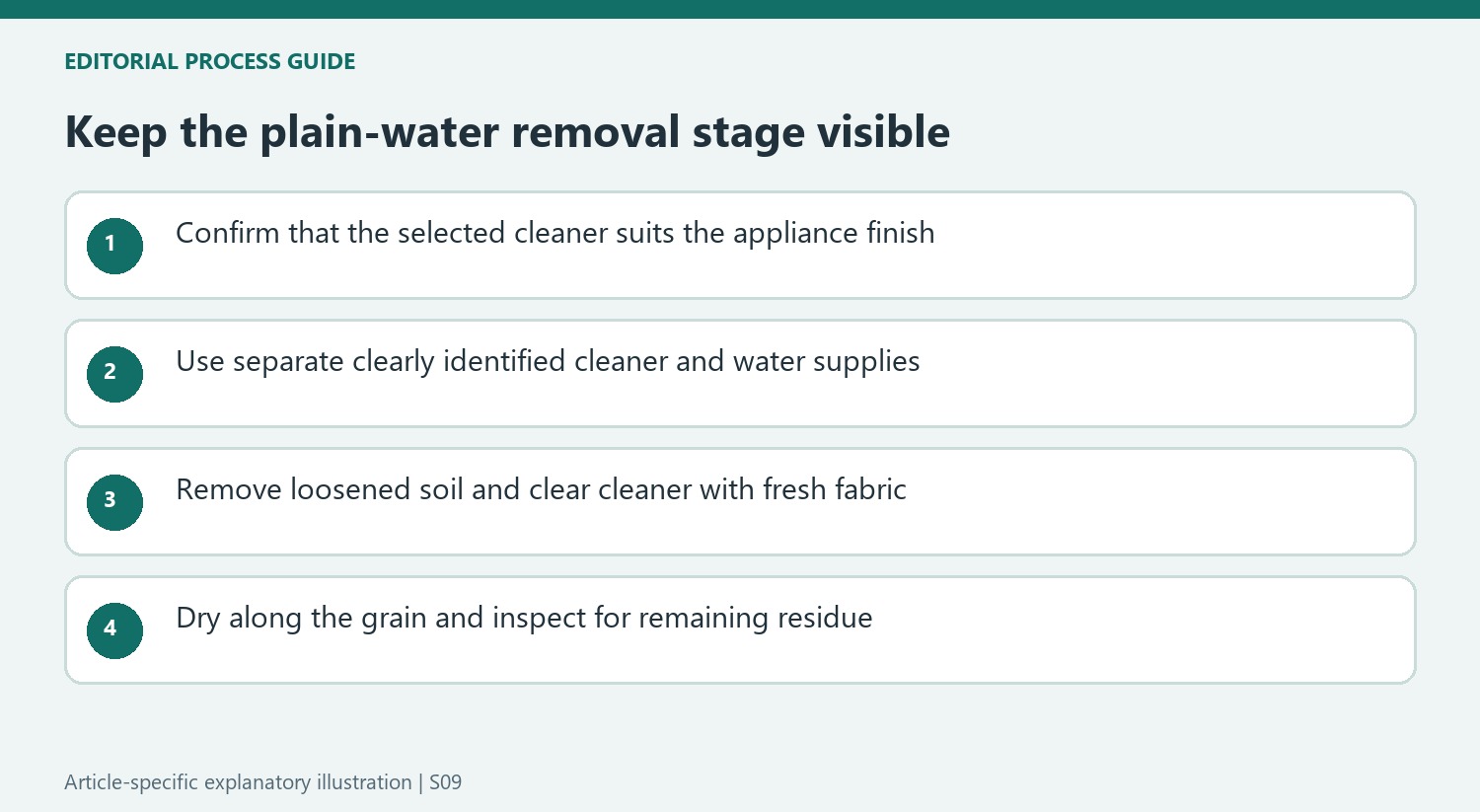
The Spruce's process uses distinct cleaner and plain-water stages, followed by a third cloth for drying. That arrangement makes residue removal visible rather than assuming the first wiped surface is finished. Protect nearby stone, grout and wood when considering its acidic cleaner, because the article warns that neighboring materials may not tolerate it. For appliance fronts, also follow restrictions around electrical controls and seams. A homemade label identifies the bottle's contents but does not establish compatibility with every finish. If a coated door's manual calls for soap and water instead, use that direction. A discreet trial is an additional check rather than permission to ignore a stated exclusion.
Treat the plain-water cloth as a separate tool
The Spruce's recipe describes three roles: removing fingerprints, clearing the cleaning material with plain water and drying the surface. Keeping those roles separate makes the second stage meaningful. A cloth still saturated with the first cleaner cannot perform the same job as fresh water on clean fabric. Arrange the supported removal stage before starting, rather than discovering after the first wipe that the available cloth is already holding the loosened grease.
The guide also connects hard-water minerals with spots and suggests distilled water for the water-wipe stage where appropriate. That addresses residue from the water itself, not permission to omit rinsing or use a stronger cleaner. Follow the actual appliance's directions for moisture around seams and controls, then dry with lint-free microfiber along the grain. Evaluate the fully dry result instead of judging only the momentary appearance of the damp panel.
Identify containers without inheriting unknown residue
The source recommends new spray bottles with clear labels instead of reusing a container that once held another cleaning product. The purpose is both identification and avoiding contact with unknown chemical remnants. Labeling an old bottle does not remove what was previously inside it. Keep the selected cleaner and plain water distinguishable, and retain the actual product and appliance instructions that determine whether the proposed method belongs on that surface.
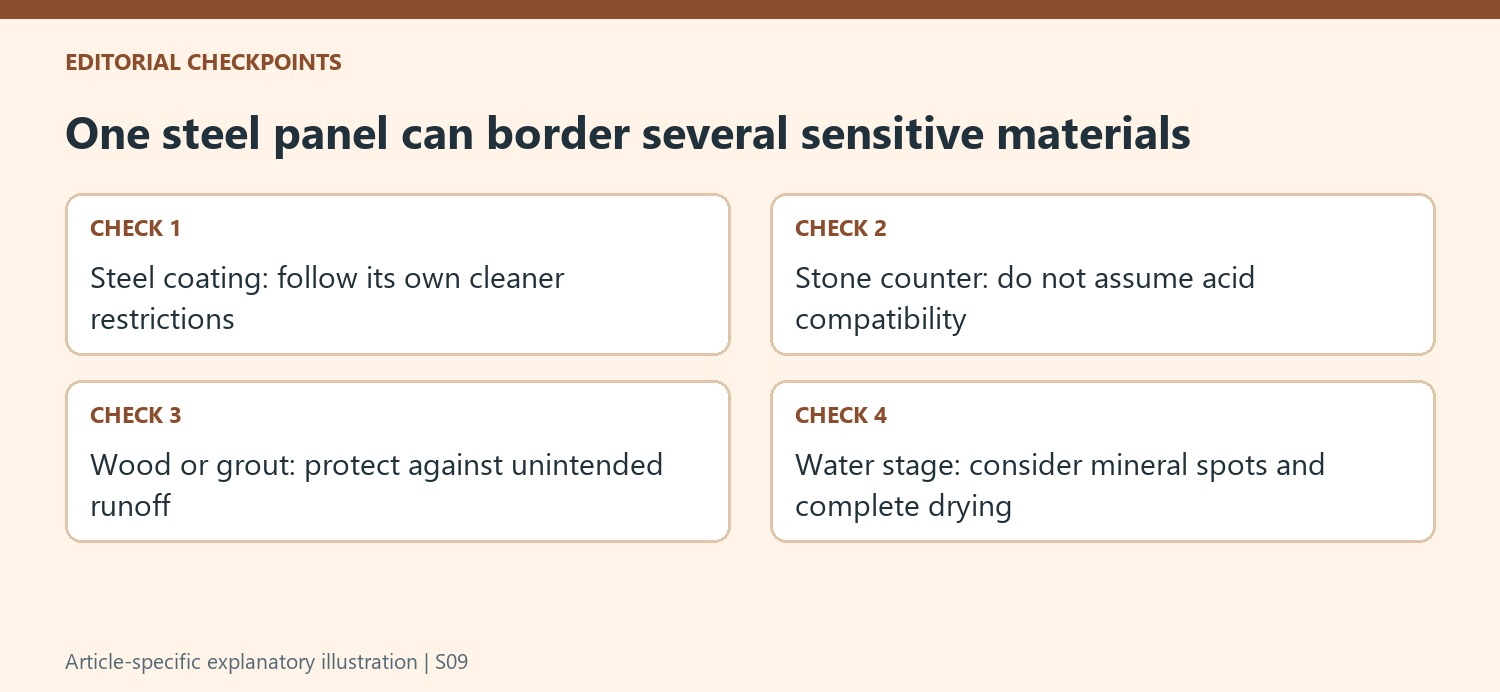
Store the prepared materials away from children and avoid eye exposure, as the article advises. These precautions do not turn the recipe into a universal appliance cleaner. Where the maker excludes acidic products or calls only for mild soap, follow that narrower direction. A hidden-area test is an additional check under a permitted method, not a way to overrule a known finish restriction or guarantee what repeated applications will do.
Protect the neighboring materials during removal
The guide warns that vinegar can affect stone, grout and hardwood, all of which may sit close to a steel appliance. An acceptable treatment on one panel therefore needs controlled application and removal so it does not become an unintended treatment of the counter or floor. Use the compatible cloth-based process rather than letting liquid run freely across different materials. Clean appearance on the steel does not establish that adjacent surfaces tolerated the same exposure.
The article includes optional shine care, but retain the distinction between grease removal and polishing. Do not add oil to hide a water streak or cleaner film that needs a proper removal stage. Its broader remarks about cleaning should also not be read as proof of disinfection from a routine wipe. Finish the approved wash, water wipe and drying process first; then decide whether any remaining mark needs product-specific advice instead of another household ingredient.
References
- How to Use Vinegar as an Effective Stainless Steel Cleaner. The Spruce; Mary Marlowe Leverette.
The Spruce's homemade-cleaner guide separates stain removal, plain-water wiping and microfiber drying.


Leave a Comment
Comments (0)