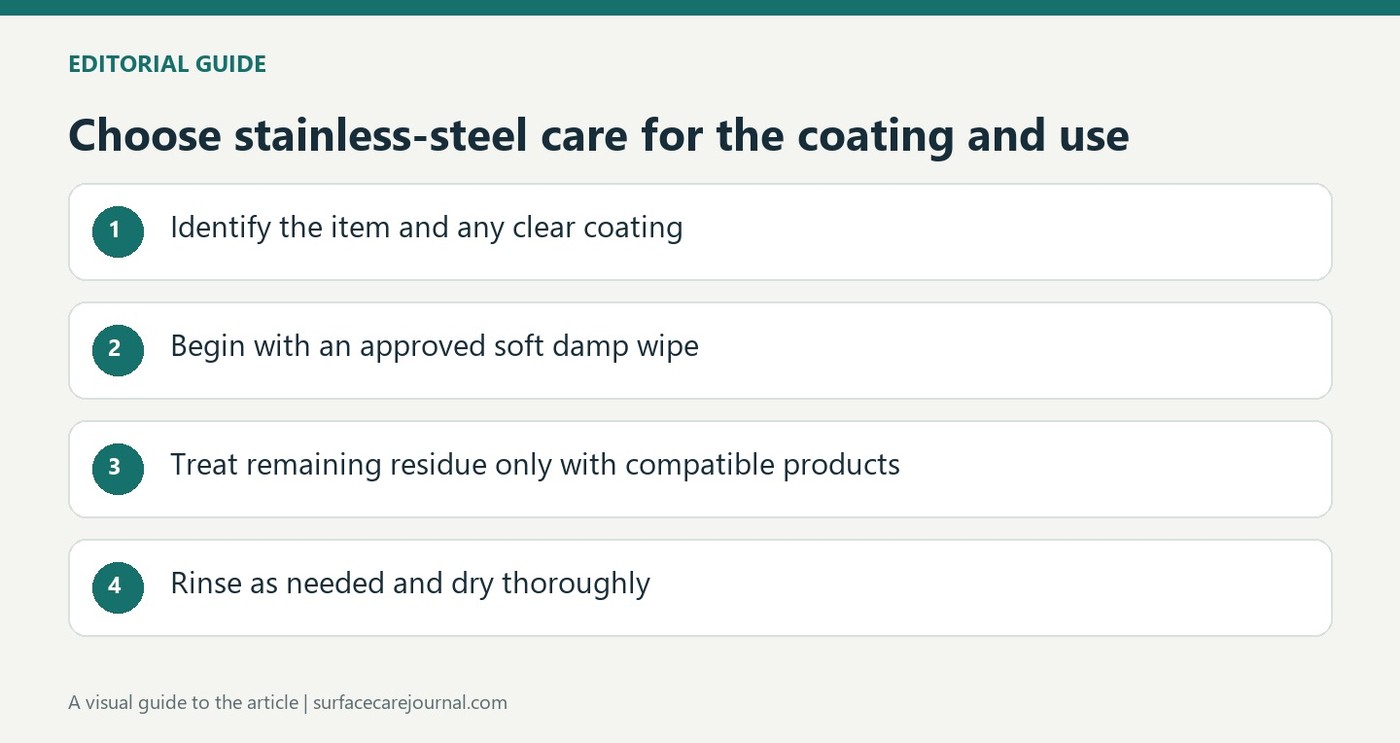
Check the Manufacturer's Advice Before Cleaning a Steel Coating
Real Simple notes that stainless grades and clear finishes differ, making mild care and product compatibility important.
Begin with the mildest suitable wipe
Real Simple recommends checking the appliance manual because some stainless surfaces have a clear coating that particular cleaners can strip. For ordinary marks, the guide describes a clean soft cloth dampened with hot water, working along the visible grain from top to bottom. Rinse where needed and dry thoroughly. This simple stage may be enough without moving directly to a stronger stain treatment.
Separate tough residue from the everyday routine
The article discusses several more involved methods for grease or stuck-on material but continues to emphasize soft tools and complete residue removal. It warns against sandpaper, steel wool, metal brushes and harsh abrasives. A decorative polishing product is also not automatically suitable for cookware or food-contact use. Choose a method for the actual item and its coating, and finish with a clean dry cloth rather than leaving soap or loosened grime on the surface.
Choose the method for the item's actual job
Real Simple covers appliances, cookware and other kitchen surfaces, but explicitly limits its polishing-paste discussion to decorative areas. A refrigerator front and a food-contact pan therefore need different product decisions even when both are stainless steel. The source also describes diluted vinegar, emphasizing prompt rinsing instead of prolonged contact. Retain those limits and follow the maker where its guidance is stricter. Its cleaning frequency varies with use rather than prescribing one calendar for every kitchen. Wipe ordinary marks when noticed, and judge stubborn grease only after the initial mild clean and drying. That helps separate leftover soil from coating damage or a permanent surface mark.
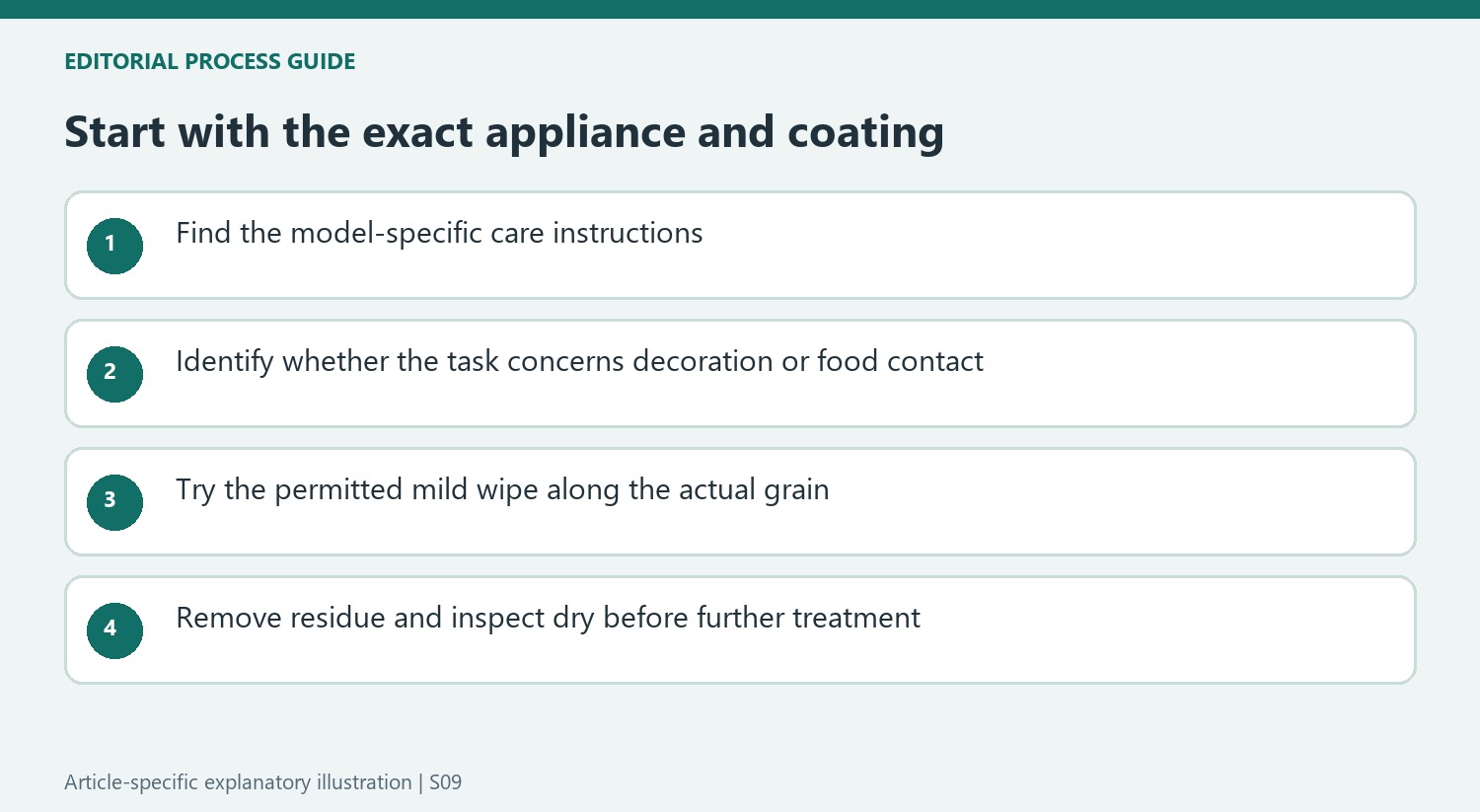
Find the instructions for the actual steel item
Real Simple explicitly points out that stainless grades and clear coatings differ. That makes the appliance manual a useful first tool, particularly when a proposed cleaner could affect a protective finish. Look for directions tied to the exact model rather than a photograph of a similar shiny appliance. If the supplied booklet is missing, the article suggests seeking the manufacturer's guidance online before beginning a stronger treatment.
The source covers multiple kitchen objects, so retain the distinction between a decorative door, sink and food-contact pan. Its polishing-paste discussion is limited to decorative surfaces and cannot become a general cookware recommendation. A product marketed for one kind of steel job also needs label review before use elsewhere. Matching the item's function and finish is more informative than choosing whatever bottle happens to be nearest the sink.
Use the ordinary wipe as an assessment stage
For many routine marks, the guide begins with a soft cloth dampened with hot water, working in the visible grain direction and drying thoroughly. Follow the particular appliance's temperature and moisture restrictions while applying that general principle. The mild first pass can reveal whether a mark is ordinary grease, dried residue or something that is not shifting at all. It avoids assuming that every visible line demands a stain-removal recipe.
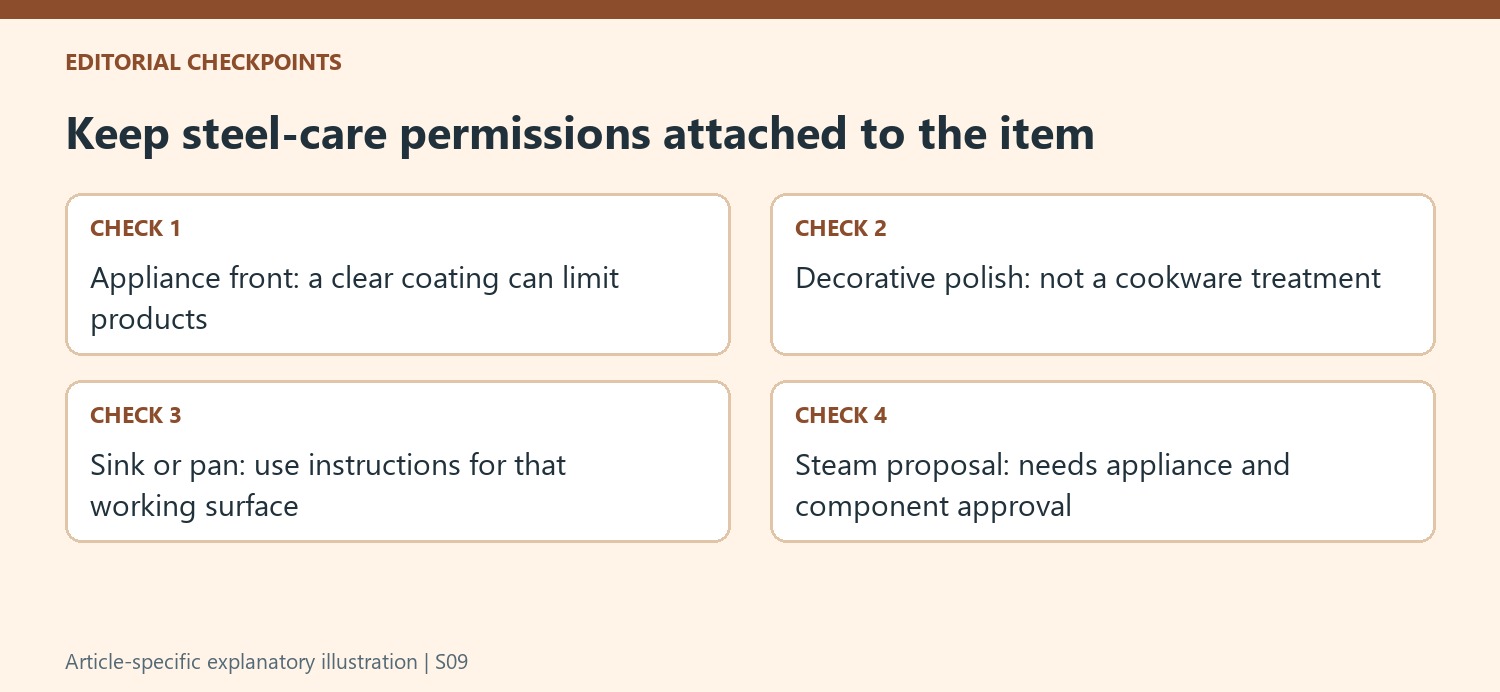
The article's more involved methods are options for compatible situations, not a sequence to apply indiscriminately. In particular, steam suitability depends on the appliance and its nearby electrical parts; the source's discussion should not be read as a universal permission or guaranteed disinfection result. Keep the treatment proportionate to the identified soil and preserve any limits on tools, contact and rinsing that the actual product or appliance specifies.
Complete removal before judging the finish
Where a supported method uses a cleaning mixture, clear it according to the instructions and finish with clean soft fabric. Real Simple emphasizes rinsing and drying rather than leaving loosened grease or product on the surface. Its cautions about harsh abrasives also apply when chasing a stubborn final spot. A worn finish cannot be restored by repeatedly using stronger friction on the same area without knowing what the mark represents.
Set cleaning frequency around actual use. The source describes a wide range because a lightly used decorative appliance front and a busy working surface collect different exposure. Address ordinary marks when noticed, protect adjacent materials and check the dry result before escalation. This practical routine preserves the guide's distinctions: manufacturer approval comes first, mild removal informs the next choice, and optional shine treatments remain separate from cleaning the surface for its intended job.
References
- How to Clean Stainless Steel Surfaces and Appliances—Without Chemicals. Real Simple; Marla Christiansen.
Real Simple notes that stainless grades and clear finishes differ, making mild care and product compatibility important.


Leave a Comment
Comments (0)