Keep Scouring Pads and Heavy Residues Off Stainless Appliances
The Spruce's experts favor mild suitable cleaners over abrasives and products that can damage the finish or attract dirt.
Do not scrub a smudge into a scratch
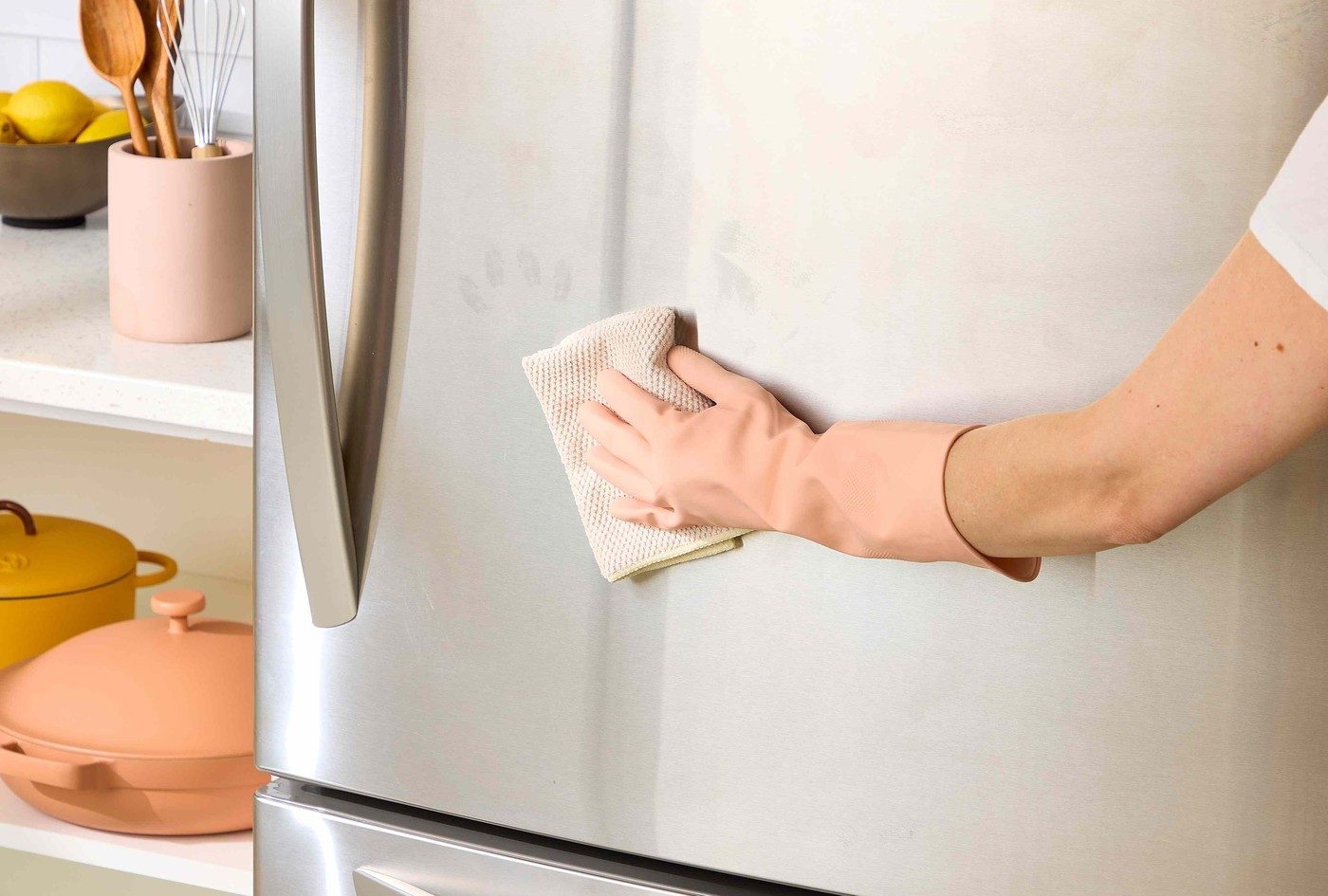
The Spruce identifies steel wool, rough pads, stiff brushes and melamine foam as abrasive options that can mark stainless steel. Its experts explain that removing a fingerprint is not worth damaging the finish underneath. Bleach and chlorine are also discouraged because they can discolor or corrode the surface. A soft microfiber cloth or gentle sponge offers a less aggressive starting point.
Treat a shiny film differently from a clean surface
The article cautions that cooking oil can leave residue that highlights fingerprints and attracts fresh dust, even if the first result looks glossy. It also advises against vinegar, citrus cleaners and ammonia-containing glass products in its experts' preferred routine. Their recommended alternatives are warm water with mild dish soap or a dedicated stainless steel product. Check the appliance maker's instructions before using a cleaner intended for a different material or finish.
Let the finish instructions resolve conflicting household tips
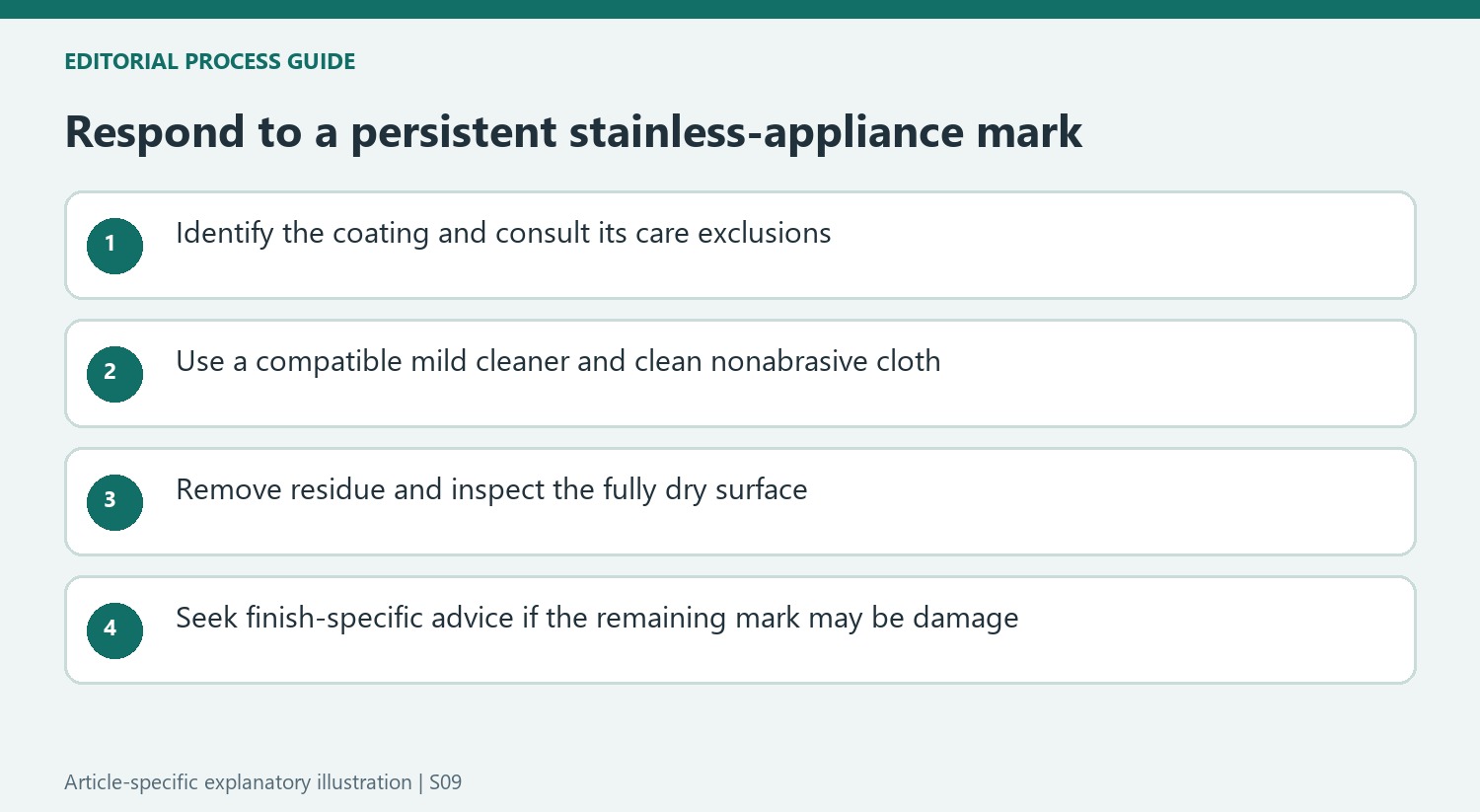
The Spruce's interviewed cleaners favor mild dish soap or a dedicated stainless spray and discourage several popular kitchen substitutes. Other cleaning features may recommend some of those same substitutes, which is why the appliance maker's instructions are a better deciding point than familiarity with an ingredient. Check for a fingerprint-resistant or colored coating before choosing the product. A cloudy patch might be residue, but scratching or corrosion cannot be repaired by stronger rubbing. Start with a clean soft cloth and a permitted mild method, remove the residue and inspect the dry surface. Escalate persistent discoloration through appropriate care advice rather than repeated abrasive trials.
Evaluate the tool as carefully as the liquid
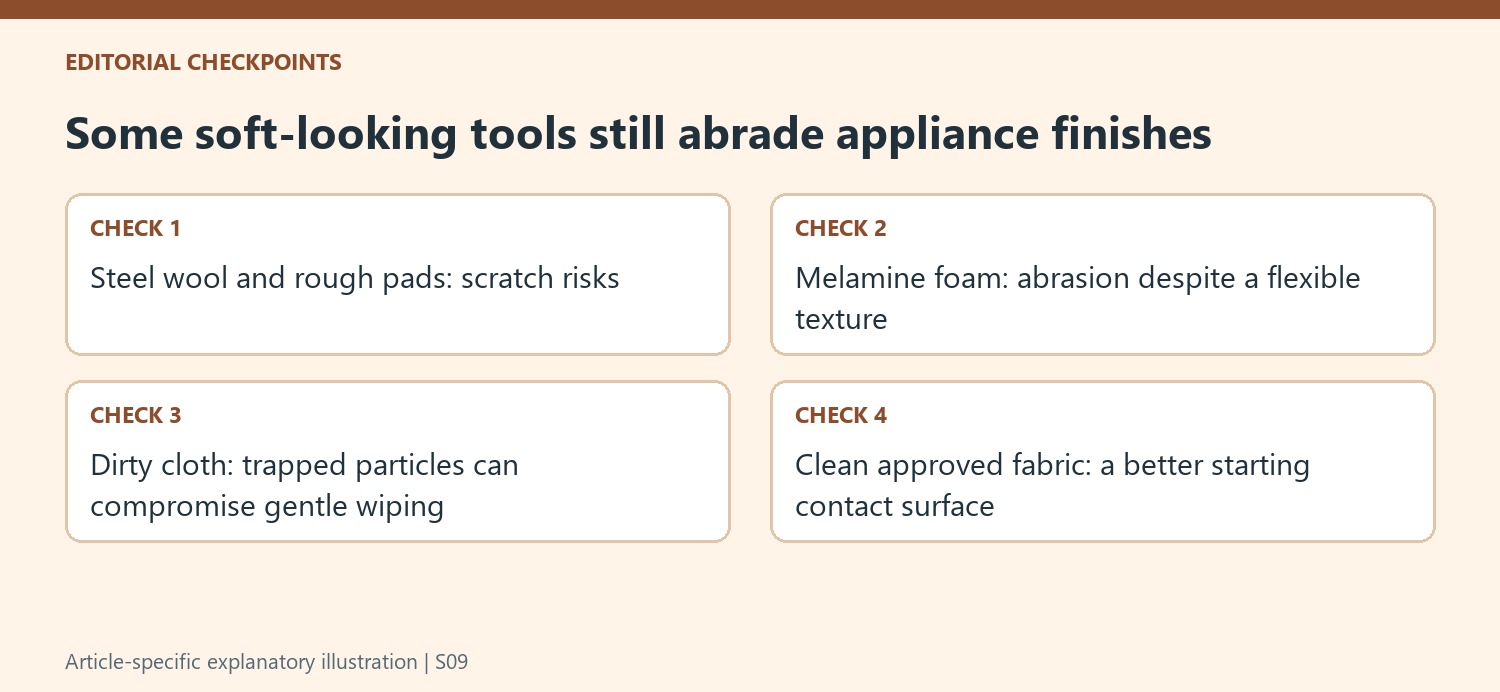
The Spruce's interviewed cleaners warn that familiar household tools can be too abrasive for stainless appliance fronts. Steel wool, rough scouring pads and stiff brushes are obvious concerns, but a soft-looking melamine sponge also relies on abrasion. Do not judge suitability solely by whether a tool feels flexible in the hand. Check the appliance's finish-care directions before introducing a new contact material to a visible door or control surround.
Loose grit creates another avoidable problem even with an otherwise suitable cloth. Use clean fabric and replace or refold it when dirt accumulates instead of increasing pressure on a mark. A scratch is a change to the finish, not merely another kind of dirt waiting for a more forceful pass. Inspect the dry panel and stop treating an apparent damaged area as an invitation to keep rubbing until its appearance changes.
Read exclusions alongside household cleaning suggestions
This source discourages several ingredients that other general cleaning articles sometimes recommend, including acidic household mixtures and some glass cleaners. Those differences make the appliance manufacturer's current instructions especially useful. The exact steel, coating and product formulation matter more than a broad claim that an ingredient works somewhere in the kitchen. A recipe successful on one surface does not establish compatibility with a fingerprint-resistant or colored appliance front.
Keep bleach and chlorine-containing cleaners away where prohibited, and do not combine products to compensate for uncertainty. Choose a mild supported wash or an approved stainless cleaner instead. A discreet trial can add information where the instructions permit testing, but it does not override an explicit exclusion. The source's practical message is to avoid unneeded aggressive chemistry and preserve the finish while removing ordinary marks through a compatible routine.
Do not confuse an oily shine with a completed clean
The article's experts also question heavy oil layers because they can leave a surface that catches dust and fingerprints. A panel may look glossy under one light while retaining a residue that becomes obvious after the next touch. Remove the original grime before considering any appearance treatment, and use only the finish's approved process. An extra coat is not an effective way to correct a cleaner that was never properly removed.
After the supported wash and any required rinse wipe, dry with clean nonabrasive fabric and evaluate the result. Look separately at the high-contact handle and the broader decorative panel, since they may have different amounts of soil. Persistent staining or suspected coating damage warrants product-specific advice rather than an expanding list of household experiments. This keeps cleaning decisions tied to an identified surface problem instead of treating every visible imperfection as removable grease.
References
- Before You Clean Stainless Steel, Make Sure You’re Not Using One of These 7 Products That Can Cause Damage. The Spruce; Kate Van Pelt.
The Spruce's experts favor mild suitable cleaners over abrasives and products that can damage the finish or attract dirt.


Leave a Comment
Comments (0)