Remove Appliance Grime Before Adding Any Polish
A cleaning expert recommends mild soap, clean microfiber and targeted attention to handles and controls.
Clean before trying to polish
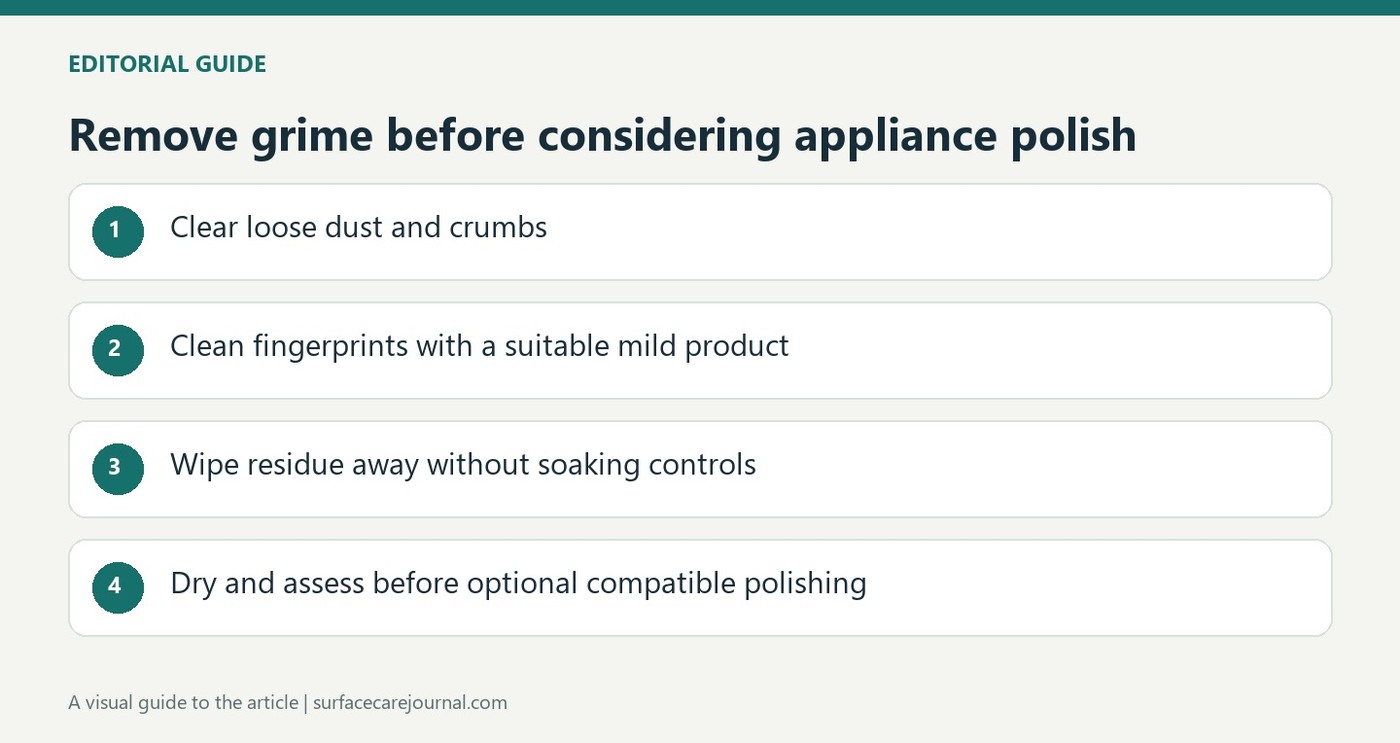
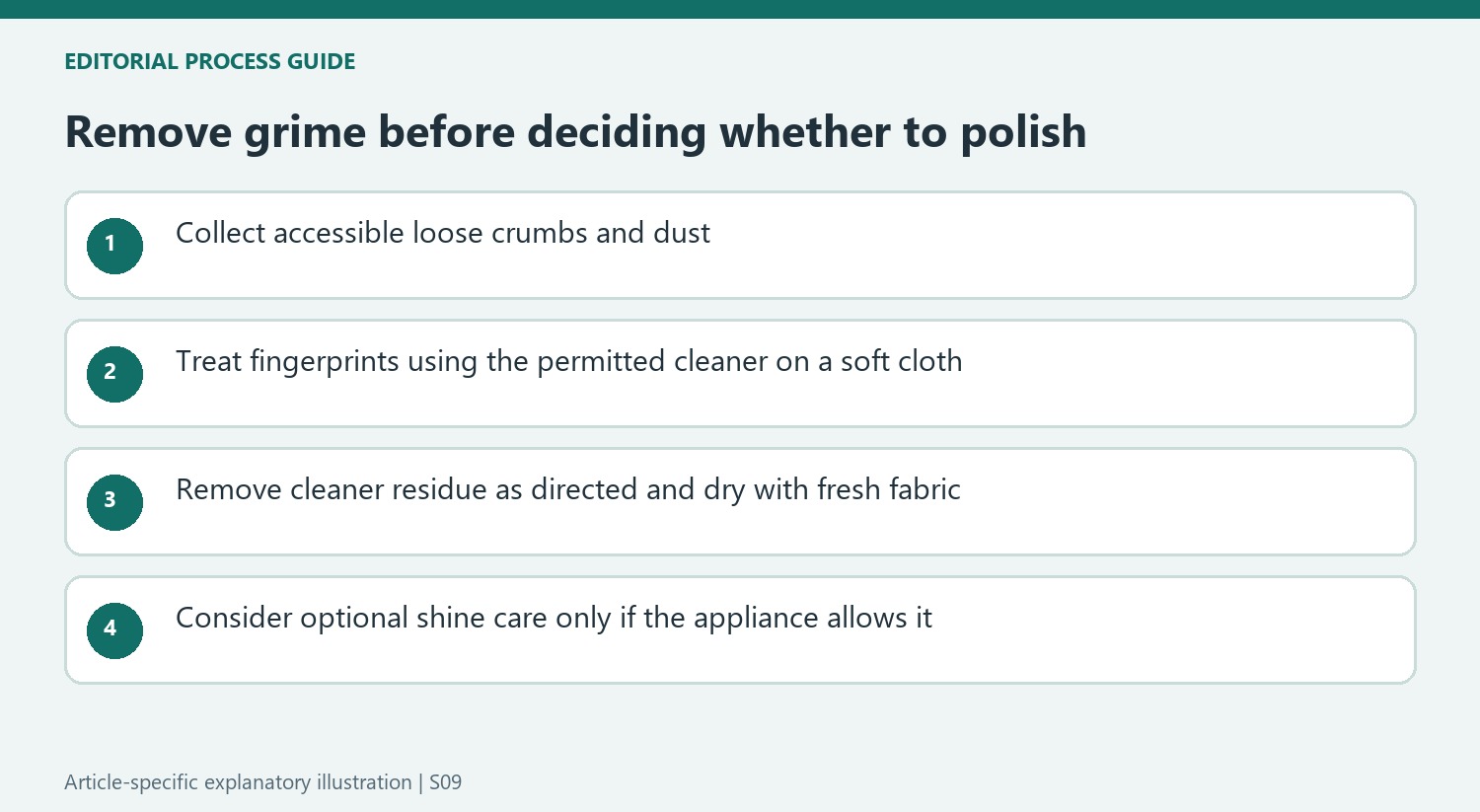
The Spruce recommends first removing crumbs and loose grime, then using a suitable soapy cloth or stainless steel cleaner on fingerprints and stains. Follow with a clean damp cloth and dry promptly with another microfiber cloth to reduce streaks. A product that changes the shine is not a substitute for removing the soil. Handles, buttons and areas near controls often need the most frequent attention.
Do not soak the sensitive parts
The expert cautions against saturating seams and controls, using abrasive pads or applying a heavy oil or wax layer that can collect dust. Cleaner applied to the cloth allows more control than spraying indiscriminately over the appliance. Follow the steel's grain and keep dedicated clean cloths ready for quick touch-ups. Coated or colored finishes require particular care because scratches can be more obvious, and product compatibility remains important.
Make touch-ups specific to high-contact areas
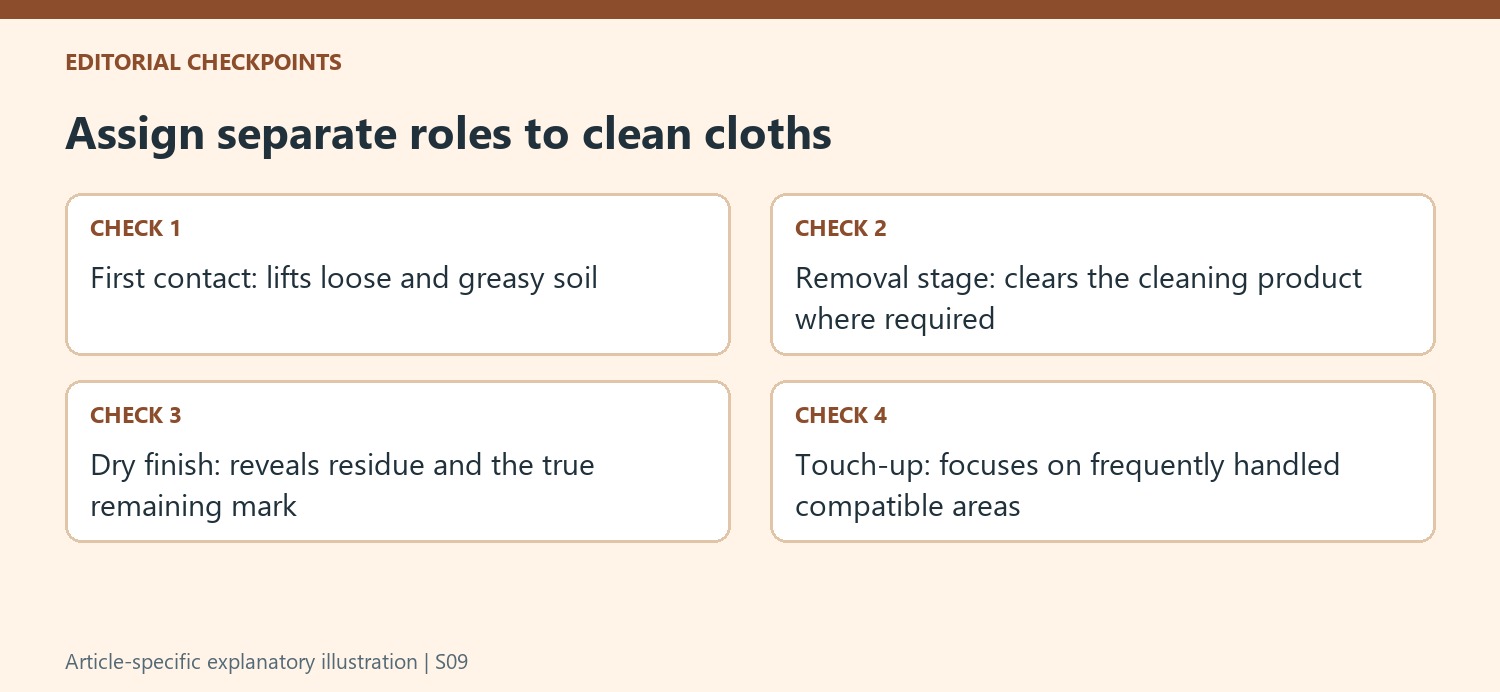
The Spruce quotes cleaning-company founder Lakeisha Germain on short, regular attention to appliance surfaces. Her emphasis on handles and nearby controls gives that routine a practical focus: remove new finger marks before they become a sticky buildup. Keep separate clean cloths for washing, residue removal and drying rather than moving soil around the whole door. The article also discusses pots, jewelry and hardware separately, demonstrating that stainless steel is not a single-use category. A polish suitable for an appliance front is not automatically a cookware cleaner. Check both the product label and the item's finish before borrowing a tougher stain treatment from another application.
Clear loose material before addressing fingerprints
The Spruce's expert-led guide starts with dust and loose debris rather than immediately polishing a whole appliance. Remove accessible crumbs through the appropriate gentle method before wiping the front. This prevents the cleaning cloth from repeatedly carrying the same material across the panel. A handle touched during cooking may need more attention than the broad upper door, so assess the distribution of ordinary soil before deciding how much product is necessary.
The distinction also helps explain the source's preference for microfiber and mild cleaning. A rough pad used to scrub off crumbs creates a finish risk that loose-debris removal could have avoided. Keep a fresh cloth face available as grime transfers, and use the appliance's actual instructions around joins and controls. The goal is to lift the dirt from the surface, rather than spread it into a thinner film that looks temporarily even while damp.
Give each cloth a clear task
Cleaning, any required residue-removal wipe and drying are different stages even when the same kind of soft textile is used. A cloth already holding cleaner and grease cannot reliably show whether the next wipe has left a clean finish. The source advises controlling product on the cloth rather than flooding controls or seams. That makes the dose easier to manage and keeps the cleaning action concentrated on the accessible panel.
Select a steel-specific product only when its label and the appliance's current directions support the use. The article mentions stronger named products for particular situations, but a shopping example does not authorize abrasive treatment on a coated refrigerator. Likewise, cookware guidance does not transfer automatically to an appliance door. Match both the product's intended surface and the manufacturer's coating requirements before escalating beyond a routine mild wash.
Evaluate shine only after the dirt is gone
The interviewed cleaning professional separates cleaning from polishing and cautions against heavy oily or waxy layers. A glossy film can still hold dust or reveal new fingerprints, so adding more is not a useful default response to a streak. Where the exact appliance supports an optional polish, apply it under its instructions after soil removal. Skip that stage when the finish's approved routine calls simply for washing and drying.
Frequent small touch-ups at handles and buttons can reduce the need for a broad intensive clean, but those locations also demand care around electronics and openings. Use the permitted controlled-damp approach and leave the area ready for normal use. If a mark persists on the dry finish, identify whether it is removable residue or damage before repeating the treatment. The article's practical value lies in that ordered process, rather than in promising one polish for every shiny kitchen object.
References
- We Asked a Pro How to Clean Stainless Steel Appliances, and It's Surprisingly Easy. The Spruce; Melissa Epifano.
A cleaning expert recommends mild soap, clean microfiber and targeted attention to handles and controls.


Leave a Comment
Comments (0)