Use a Soft Cloth and Grain-Direction Wipes on Steel Appliances
The Spruce emphasizes non-abrasive tools, product testing and complete drying rather than vigorous scrubbing.
Choose the cloth as carefully as the liquid
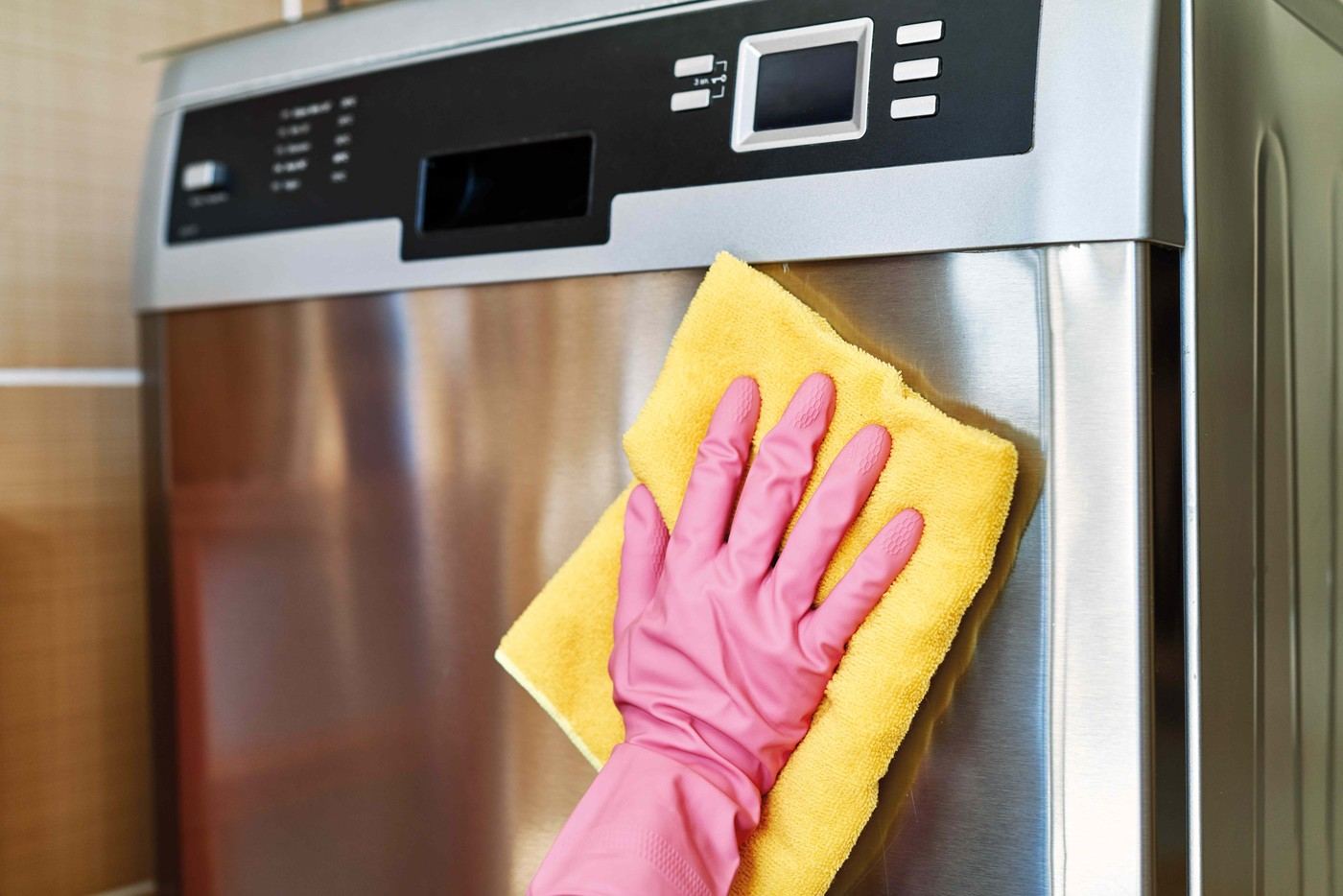
The Spruce describes microfiber or another soft non-abrasive tool for stainless steel appliances. Work in the direction of the visible grain instead of rubbing in circles or scrubbing against it. A new product should be checked on a discreet area first. The guide warns against steel wool and products containing bleach, ammonia or chlorine because cleaning should not create permanent damage to the surface.
Keep residue removal in the sequence
For a mild soap-and-water method, apply a small amount with a damp cloth, remove the dirt and finish with a clean dry cloth. The article also discusses other household and commercial options, each with its own process. Where a cleaner needs a water wipe afterward, that is part of the method rather than an optional extra. A little regular attention can prevent sticky buildup from becoming the next intensive cleaning task.
Distinguish removing dirt from changing the shine
The Spruce presents several alternatives, including dish soap, household liquids and commercial stainless products, rather than a sequence requiring all of them. Its oil method begins by removing dirt and ends with buffing, so polishing should not bury a greasy deposit under another film. Product and appliance instructions decide whether that finishing step is appropriate for the particular coating. Keep the cleaning cloth free of grit and replace it when it becomes soiled. On a large refrigerator door, inspect the dry result before adding more cleaner. Repeatedly rubbing a remaining streak with a dirty cloth can spread residue instead of revealing whether the underlying mark is removable.
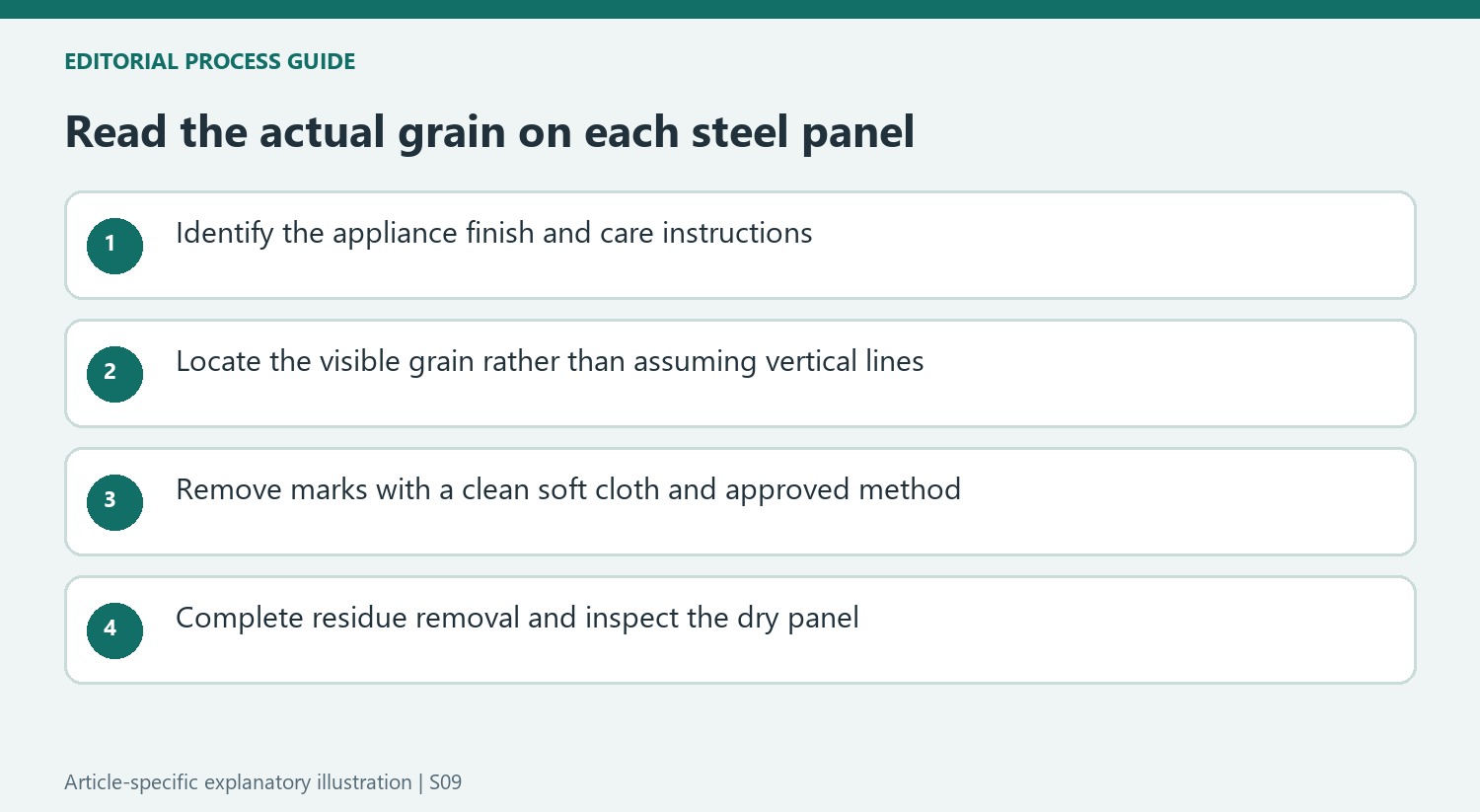
Identify the grain before moving the cloth
The Spruce's appliance guide treats the direction of wiping as part of the method, not simply a finishing flourish. Look closely at the particular panel's visible lines before starting. A refrigerator door and an adjacent range need not present the same orientation. Work with the actual grain using a soft clean cloth rather than treating a top-to-bottom instruction as proof that every steel surface has vertical striations.
Also inspect the cloth itself. A gentle textile holding grit from a previous task is no longer a clean contact surface. Change to a clean face as dirt transfers, and avoid taking a cloth used on a greasy range directly across a less soiled refrigerator. The source's preference for nonabrasive tools matters throughout cleaning, including the final dry wipe when a rough pad might otherwise be used to chase one persistent mark.
Keep the alternative methods separate
The guide describes several approaches, including dish soap, vinegar, club soda and commercial steel products. They are alternatives to assess against the appliance's directions, not ingredients for a combined stronger solution. Begin with a supported mild method and evaluate the result after residue removal and drying. If the finish has special fingerprint-resistant treatment, its own care requirements decide which of those household suggestions remains appropriate.
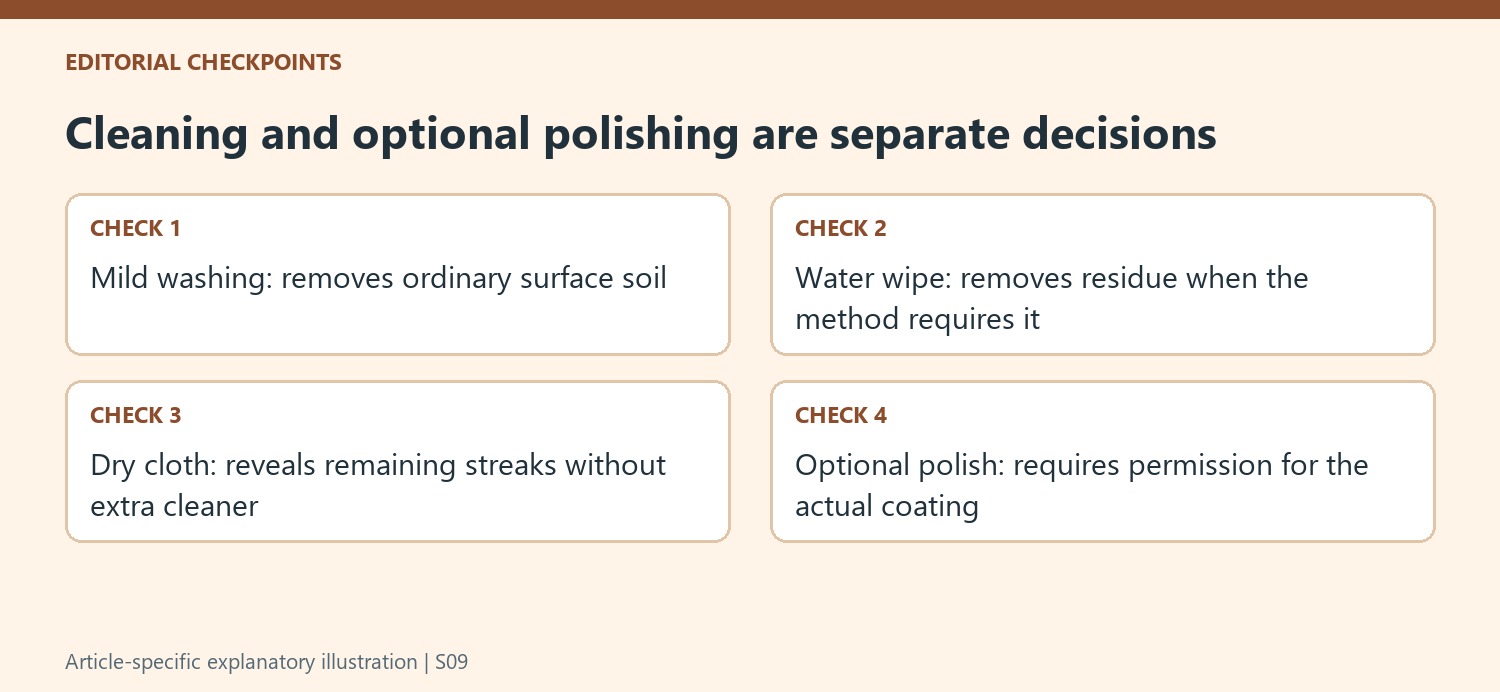
For its mild dish-soap option, the source uses a small amount on a damp cloth and follows cleaning with a dry finish. Where the selected method calls for a plain-water removal stage, complete that stage rather than buffing cleaner indefinitely. Keep liquid controlled around handles, seams and controls under the appliance instructions. A larger wet area does not necessarily improve grease removal and can make the remaining residue harder to assess.
Reserve any approved polishing for the clean surface
Oil appears among the source's possible polishing choices, but a shinier panel is not evidence that food or fingerprints have been removed. Clear soil first and consider any additional shine treatment only where the exact appliance permits it. A clear coating can change the decision even when the door resembles uncoated steel. Do not add a household oil simply to hide streaks left by an unfinished cleaning stage.
Inspect the dry surface from different angles before deciding what needs further attention. A smear from leftover product requires a different response from a scratch, and additional rubbing cannot reverse permanent damage. The source excludes steel wool and other rough tools, as well as harsh incompatible chemistry. Keeping those exclusions alongside the grain-direction technique produces a repeatable routine: identify the surface, remove ordinary dirt gently, clear the approved cleaner and judge the fully dry result.
References
- How to Clean Stainless Steel Appliances Like a Pro in 6 Genius Ways. The Spruce; Maria Sabella.
The Spruce emphasizes non-abrasive tools, product testing and complete drying rather than vigorous scrubbing.


Leave a Comment
Comments (0)