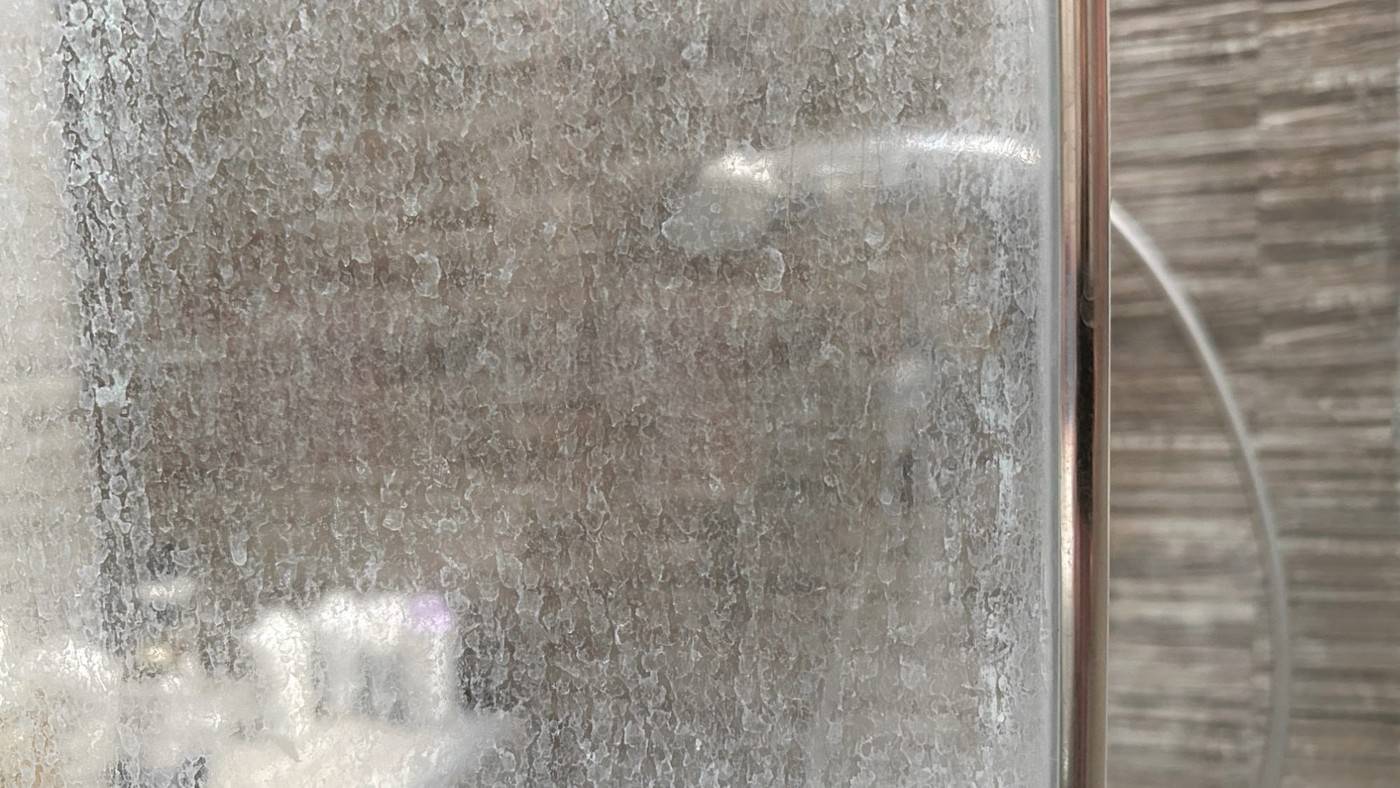
Remove Soap Film Without Forgetting the Door's Coating
Expert advice on shower scum pairs cleaning suggestions with a warning that protective films and abrasive products require extra care.
Understand what is making the glass cloudy
Tom's Guide describes soap scum as a mixture involving hard-water deposits, soap and body oils. That combination explains why a simple rinse may leave an opaque film. The article distinguishes a regular cleaning approach from a more intensive paste treatment, rather than presenting heavy scrubbing as the routine starting point.
Preserve the source's cautions
The glass specialist quoted in the source warns that baking soda can be abrasive and may etch glass over time. Another expert advises checking care recommendations, especially for anti-fog films and etched finishes that may react badly to stronger products, including vinegar. The low-effort preventive step is to remove water with a squeegee after showering. That reduces how long moisture and residue remain on the door and can make later cleaning less demanding.

Let the care label resolve conflicting suggestions
This source is useful because its experts qualify the treatment suggestions within the same article. A household paste may appear convenient, yet the glass specialist flags cumulative abrasion, and the cleaning expert notes sensitive anti-fog films and etched finishes. Preserve those qualifications when choosing a method. If the enclosure's instructions exclude an ingredient or tool, select the recommended alternative instead. After an approved wash, rinse away dirty solution and use a clean cloth or squeegee for remaining moisture. That sequence addresses the residue without assuming a stronger recipe is necessary merely because the rest of the bathroom already looks clean. Put the squeegee where it is easy to use after bathing.
Retain the qualifications inside the expert advice
Tom's Guide includes suggestions for routine and deeper cleaning alongside warnings from a glass specialist. Those cautions are part of the advice, not an optional footnote after the recipe. Baking soda adds abrasion, and repeated use may affect a surface even when a single cleaning session appears successful. Look for the enclosure's care instructions before deciding that an ordinary household paste is a suitable long-term way to keep the door clear.
The article specifically mentions anti-fog films and etched finishes as reasons to investigate sensitivity to stronger products. This makes identifying the actual glass treatment more useful than choosing a method from the pane's cloudy appearance alone. If the finish is unknown, ask the supplier about an approved cleaner. A general glass-cleaning claim does not establish what lies on the outer surface of a particular door or how that layer will react.
Work on the mixed film without adding another layer
Soap scum combines soap, body oils and hard-water material in the source's explanation, which helps account for a stubborn opaque film after a simple water rinse. Use a compatible method that addresses the layer rather than judging success by fragrance or foam. Observe the actual product's application and contact instructions. A heavy detergent dose may leave additional material to collect, so more product is not automatically a shortcut through the existing film.
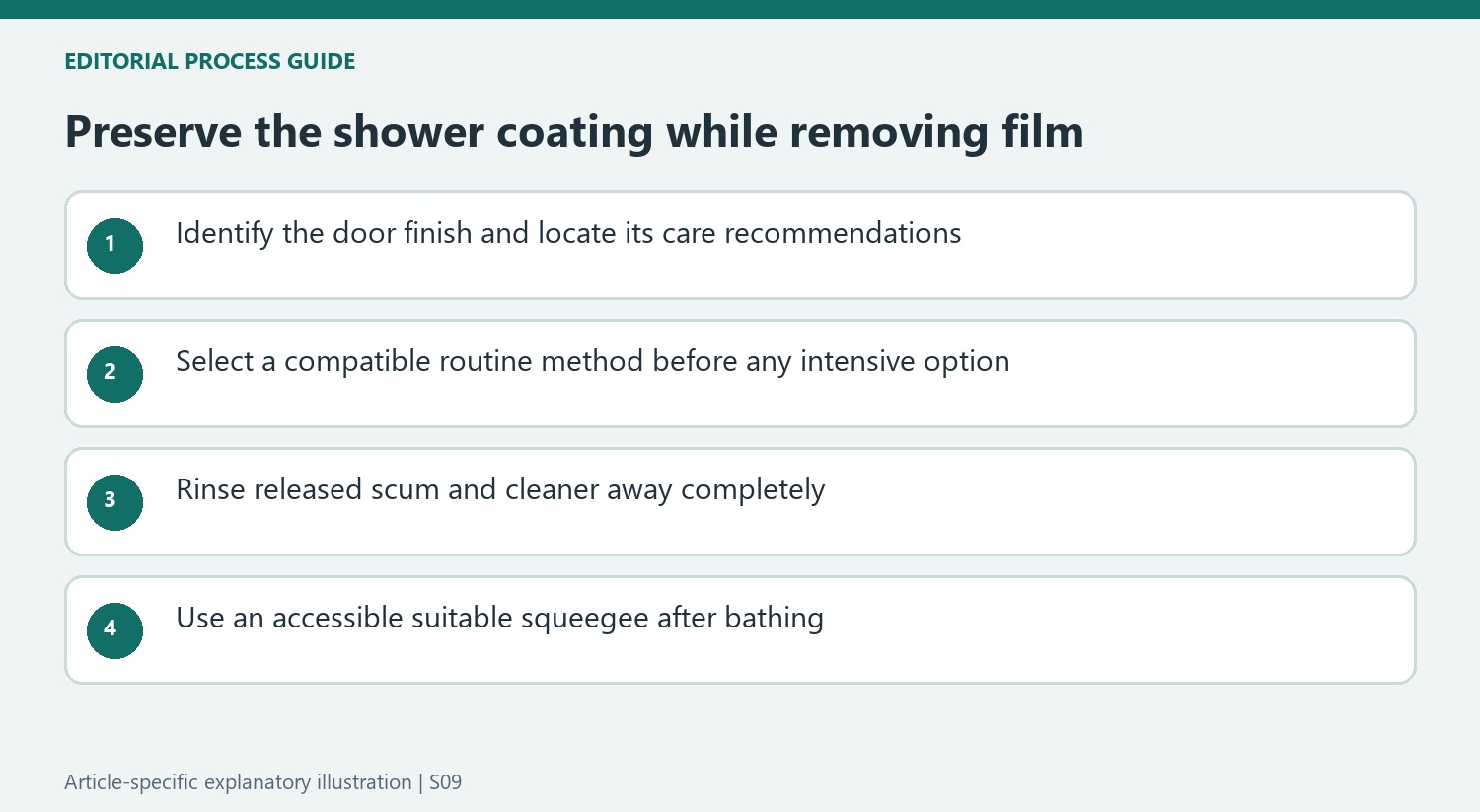
After the permitted treatment, rinse away the dirty solution thoroughly and finish with suitable clean fabric or a squeegee. Keep the tool face fresh enough that it removes material instead of redistributing it. If cloudiness remains after drying, distinguish cleaner residue from an old deposit before repeating the process. An established surface defect also should not be treated indefinitely as ordinary soil that will disappear with one more forceful circular pass.
Give the short post-shower task a clear role
The glass specialist recommends a brief squeegee habit because it shortens the time water and soap residue remain on the pane. Keep that action separate from the deeper cleaning decision. It is preventive maintenance, while accumulated film still needs the door's approved wash. An accessible tool helps the habit become practical in a frequently used household shower, where waiting for a weekend clean allows many successive wetting cycles to occur first.
The source also mentions water softening as a way to address the water contribution, but that is a separate household-system decision rather than an immediate cleaning instruction. Continue using suitable daily care regardless of whether such equipment is considered. The dependable approach preserves the qualifications: identify the finish, choose the compatible cleaner, remove its residue completely and reduce the next period of standing droplets. Clear glass is the result to assess without sacrificing an existing protective treatment to repeated abrasion.
References
- I’ve discovered how to remove soap scum from my shower — and I’m never going to have grimy glass again. Tom's Guide; Camilla Sharman.
Expert advice on shower scum pairs cleaning suggestions with a warning that protective films and abrasive products require extra care.


Leave a Comment
Comments (0)