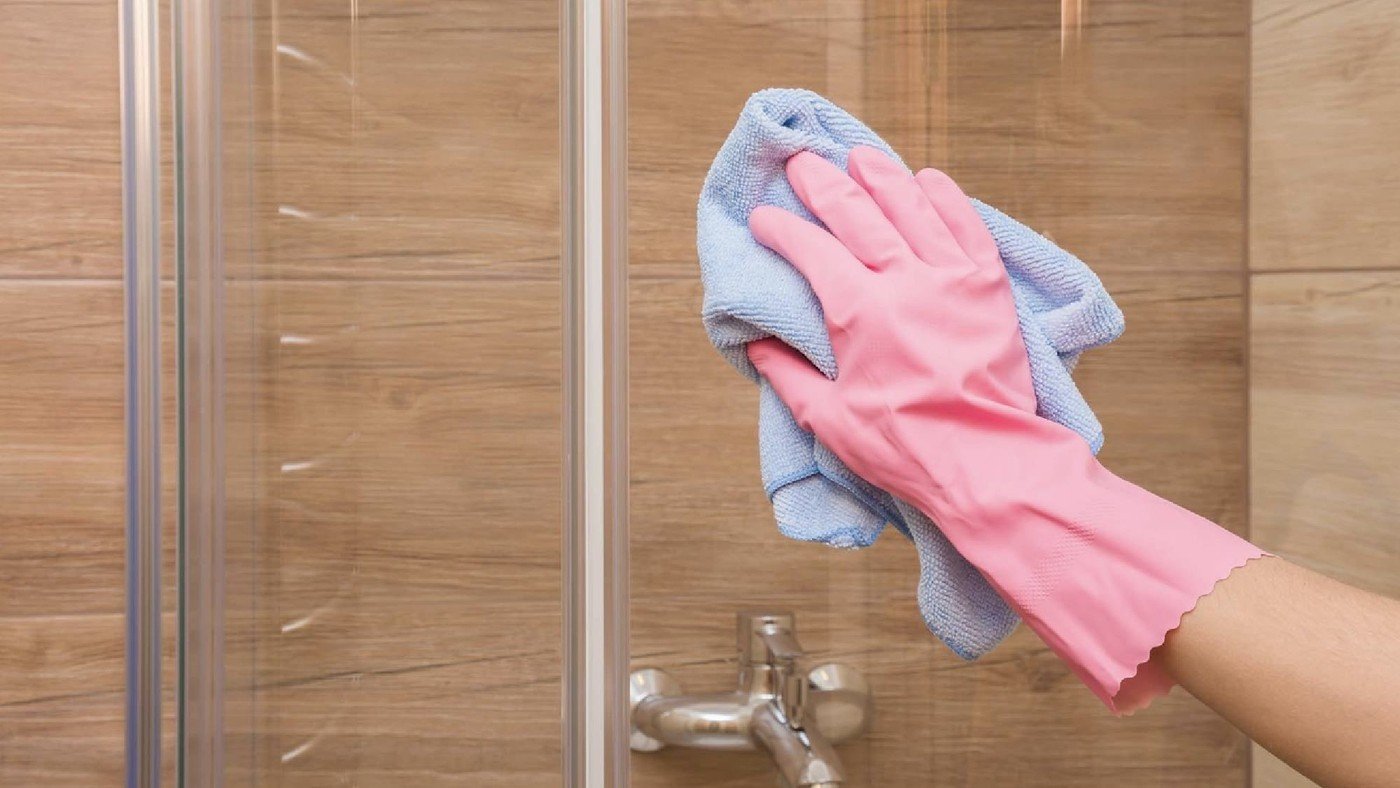
Treat Shower Water Marks as a Cleaning-and-Drying Task
A Tom's Guide guide distinguishes mineral residue from greasy soap film and emphasizes removing moisture after the clean.
Match the approach to the residue
The article discusses diluted household cleaning approaches, including vinegar with dish soap for deposits mixed with soap residue. It recommends a non-scratch sponge for more persistent marks and explains that lighter residue may need less contact time. Those are separate approaches, rather than instructions to combine every product mentioned into one mixture.
Do not skip rinsing and drying
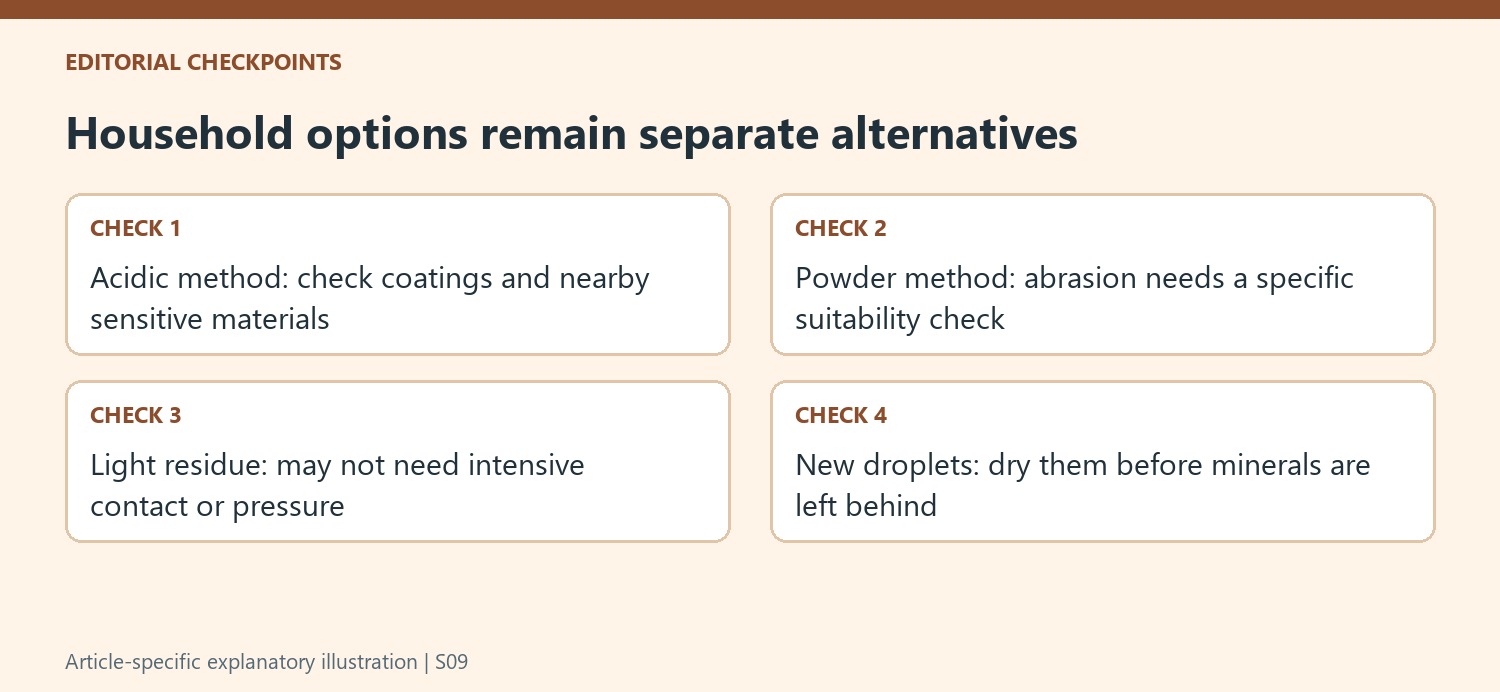
Each method ends with rinsing and drying the glass. Leaving fresh droplets on the door can create new marks even after the old film has been removed. The guide also points to regular wiping and bathroom ventilation as ways to reduce accumulation. Where a door has a protective film or specialist finish, the manufacturer's approved cleaner takes priority. An abrasive paste or acidic ingredient should never be assumed compatible simply because it is a familiar kitchen product.
Make the final inspection part of prevention
Tom's Guide explains that the pale residue comes from minerals left behind as hard water evaporates. This makes the final drying pass directly relevant to the cause, rather than merely cosmetic. Keep a squeegee or clean cloth available and remove water before droplets dry. Ventilation helps reduce lingering bathroom moisture as well. The article offers several household alternatives, but a light mark on routinely cleaned glass may need less intervention than an old deposit under soap film. Start with the door's approved method, observe its response and stop when clean instead of escalating automatically to a more abrasive option. Dry the lower edges and corners as well as the center.
Choose the method for the deposit rather than its popularity
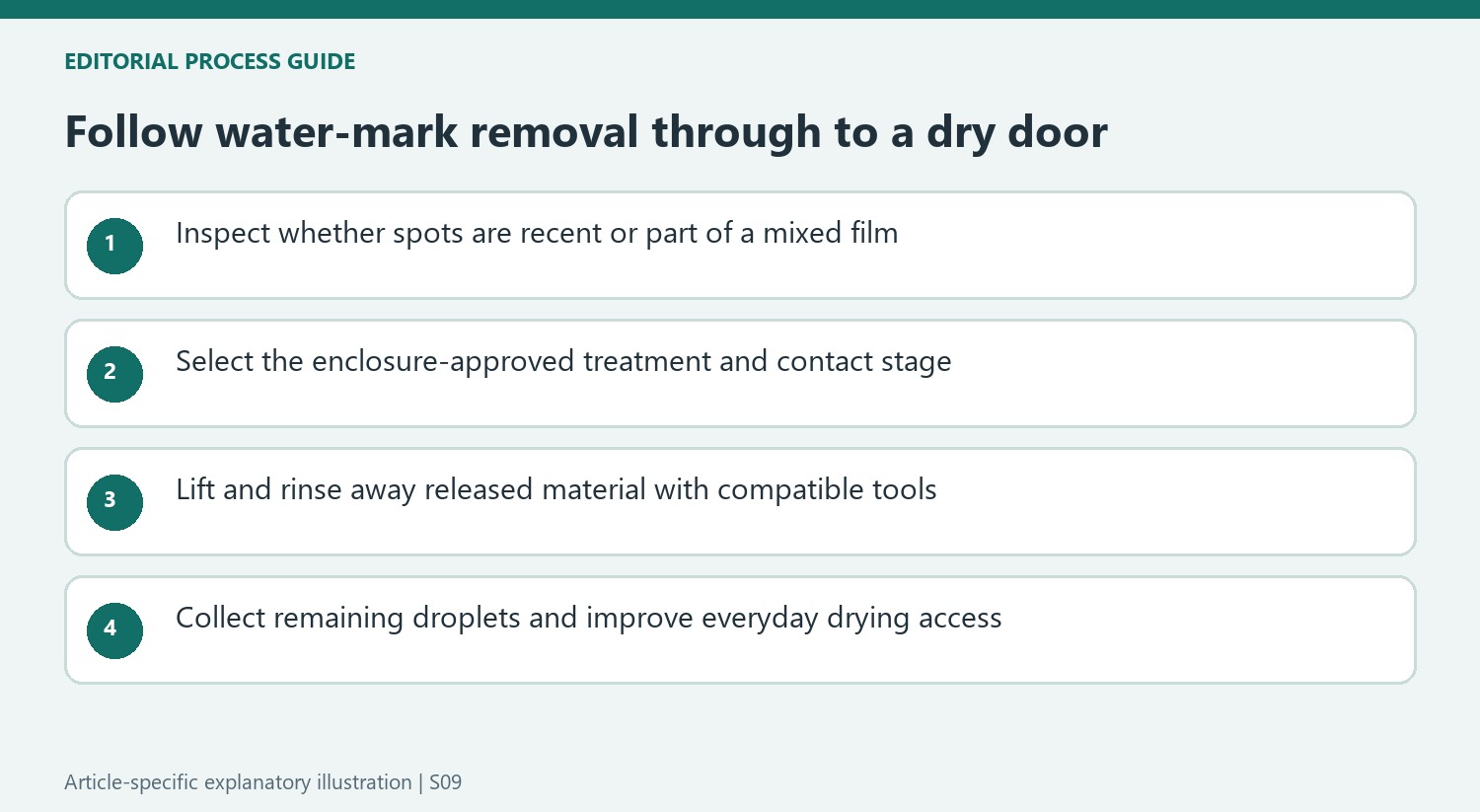
Tom's Guide explains that mineral-bearing droplets leave visible material after evaporation. Soap and body oils can complicate the cloudy layer, so first inspect whether the door has faint recent spots or established residue. The article presents several household approaches, but these are alternatives within a guide, not ingredients to combine into one stronger treatment. The enclosure's approved care method should decide which, if any, belongs on that particular pane.
The source distinguishes lighter residue that may lift promptly from heavier material requiring a contact stage. Follow the actual product's permitted time instead of assuming every mark needs an extended soak. A protected or coated surface may exclude acidic ingredients or abrasive powders altogether. The fact that vinegar, lemon or baking soda comes from the kitchen does not resolve those restrictions, especially where cleaner can also reach fittings and adjacent bathroom materials.
Keep loosening and collecting the residue separate
An appropriate cleaner must first act on the compatible surface; a suitable soft tool then helps remove the loosened film. Work without unnecessary pressure and refresh dirty cloth faces. Do not continue rubbing the same deposit across a widening area once it has lifted. The source's emphasis on non-scratching tools is relevant to both the cleaning head and any grit or powder trapped in it during use.
Rinse away the released material before deciding that the door is finished. A wet clear-looking panel can still carry detergent or cleaning powder that becomes visible as it dries. Collect the remaining water with the approved squeegee or clean fabric, working systematically across the pane. Give the lower edge and corners the same attention as the central reflection; those are easy places for a new trail of droplets to remain unnoticed.
Use prevention to reduce the next deposit
The article connects regular water removal and bathroom ventilation with less accumulated residue. Put the suitable finishing tool where it can be used after bathing instead of storing it behind supplies that must be moved each time. The goal is to remove droplets before their water evaporates, not to add another scented spray to an already wet pane. Ventilation supports the wider moisture routine without replacing direct collection of water from the door.
Inspect the dry result at the next use rather than treating a longer cleaning session as inherently better. If a mark returns immediately, consider incomplete rinsing or repeated water exposure before escalating the product strength. Maintain the ordinary approved approach and reserve any more intensive permitted treatment for an identified need. A useful routine addresses the cause of new spots, the existing residue and the final removal stage as connected tasks rather than relying on one dramatic scrubbing session.
References
- Stop scrubbing your shower glass the hard way — these 3 household items remove limescale instantly. Tom's Guide; Alice Carroll.
A Tom's Guide guide distinguishes mineral residue from greasy soap film and emphasizes removing moisture after the clean.


Leave a Comment
Comments (0)