
Use Clean Microfiber Faces for a Clear Mirror Finish
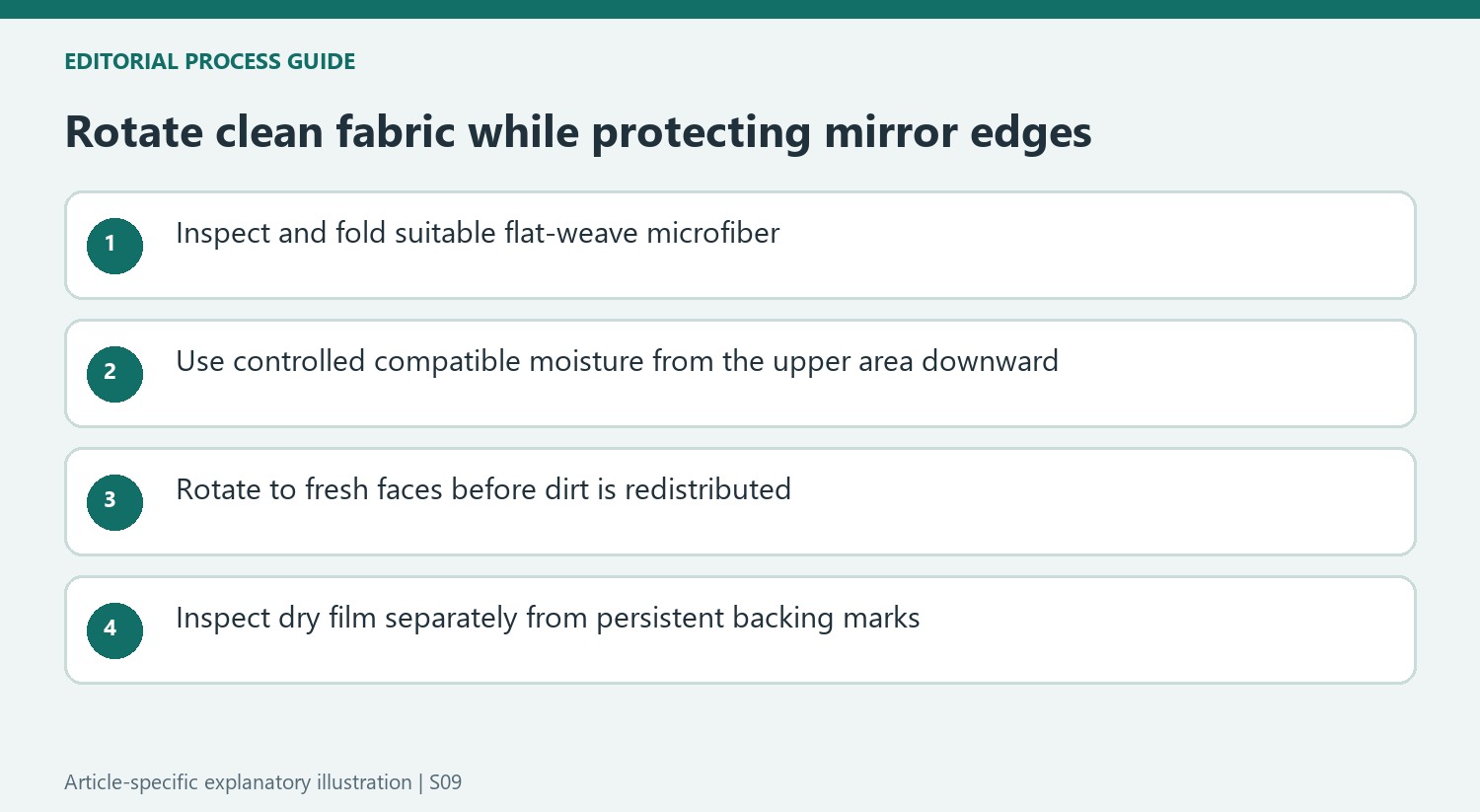
A flat-weave microfiber cloth can clean a mirror with carefully controlled moisture. Fold it into quarters and turn to a fresh face as dirt collects. This limits the chance of redistributing residue over the glass.
Work from the top downward and avoid soaking edges or vulnerable framing. Use only a cleaner compatible with the mirror instructions when water alone is insufficient. Newspaper can leave ink or other residue, so it is not automatically an improvement over a suitable lint-free cloth.
Give the folded cloth a defined job
Real Homes recommends flat-weave microfiber and folding it into quarters to provide several fresh working faces. Rotate before the section becomes too dirty or wet. This is a practical way to control what touches the glass, rather than rubbing with one soiled patch until the whole mirror looks smeared. Use water alone where it works and is permitted, adding only a compatible cleaner when needed.
Keep homemade recipes subject to mirror guidance
The article discusses several household ingredients, including a cornstarch mixture and acidic alternatives. Their inclusion is not a reason to apply them to every mirror. Backing, edges, frames and special coatings can impose different limits. Check the mirror manufacturer's instructions and keep moisture controlled. An absorbent clean cloth and careful removal of residue remain important whichever permitted solution is selected.
Do not assume newspaper provides a better finish
The source includes a warning that modern newspaper can leave a cloudy residue, undermining the intended final polish. A suitable low-lint cloth is easier to control and can be changed to a clean face as work proceeds. Inspect the dry mirror from more than one angle before adding product again. If a cloudy patch persists, distinguish removable film from a damaged surface or backing rather than increasing pressure.
Make the folded cloth supply fresh working surfaces
Real Homes favors flat-weave microfiber and explains folding it into quarters. The point is to rotate to a clean face as dirt or moisture accumulates, rather than spreading one dirty patch across the whole reflection. Inspect the cloth before use and maintain it under its care instructions. A fabric described as microfiber still needs to be clean enough for the job, especially when it is also expected to leave very little residue behind.
Use controlled moisture where water alone is suitable, and choose only a mirror-approved cleaner if the actual soil requires more. Work from the upper area downward with deliberate coverage. The source's zigzag motion is useful as an organizing pattern, but the material on the cloth face matters as much as the route. Stop to rotate the fabric before an absorbed deposit becomes the new film being rubbed onto already finished glass.
Protect the frame and backing while addressing the front
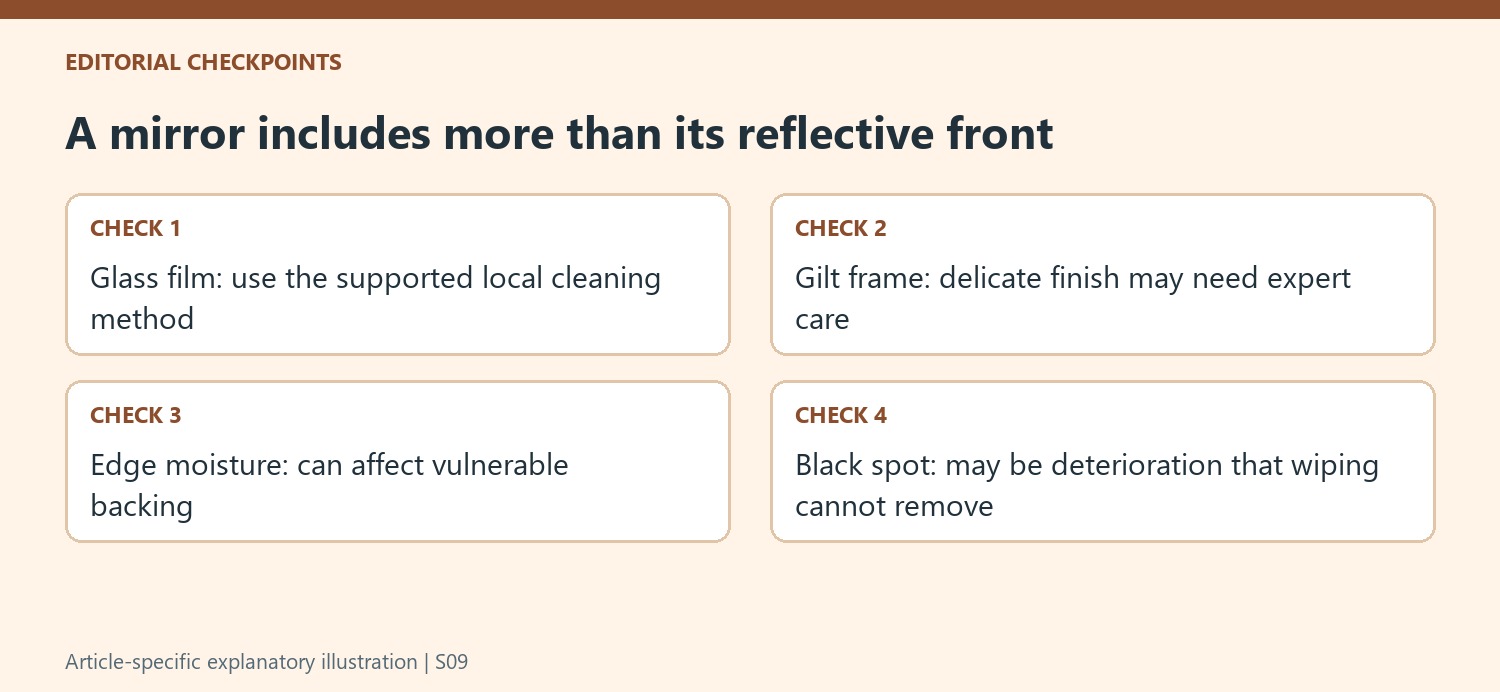
The source warns that a mirror's decorative surround can be more vulnerable than the reflective front. Gilt frames in particular may not tolerate a casual direct spray. Dust gently and consult a suitable expert where an old or valuable finish needs deeper attention. A barely damp compatible cloth is different from allowing cleaner to collect around delicate decoration or run toward the boundary where mirror glass meets its backing.
The article lists several household ingredients, but their availability does not resolve construction-specific limits. Picture-like frames, specialist coatings and older backing materials all need their own care guidance. Apply through the approved method and keep moisture restrained at edges. A favorable result on a plain modern mirror is not evidence that an antique framed example should receive the same mixture, contact time or amount of wetting.
Distinguish a cleaning mark from backing damage
Inspect the dry reflection from an angle so remaining fibers or film can be identified before another application. The source cautions that modern newspaper may leave a foggy residue, which is a reason not to assume a traditional tool improves on suitable clean fabric. If a small area needs further compatible attention, use a fresh cloth face locally rather than restarting a wet wash across the whole mirror.
Black spots on an older mirror may arise from moisture-related backing deterioration rather than removable front-surface dirt. Do not keep scrubbing them in an effort to produce an impossible cleaning result. The article suggests professional assessment for a valuable piece where restoration may be considered. Preserving an older mirror's condition can be a better outcome than escalating cleaner and pressure. Keep the routine focused on gentle front-surface collection while recognizing when an imperfection belongs to the underlying assembly.
References
- How to clean a mirror for streak-free results using vinegar, water and more. Real Homes; Lesley Hannaford Hill.
Folding the cloth creates several fresh wiping surfaces during the job.


Leave a Comment
Comments (0)