
Clean Windows More Clearly by Dusting Before Washing
Removing dry debris and choosing the right conditions can prevent a glass-cleaning session from becoming a fight against streaks.
Prepare the surrounding surfaces
Homes & Gardens' window-cleaning advice begins with clearing dust and cobwebs from the pane, frame and sill. Applying liquid over loose dirt can spread it into a film, while dust falling from the frame can spoil glass that has already been cleaned. A suitable brush or vacuum attachment helps reach the corners and tracks.
Control drying and the final pass
The guide recommends avoiding direct sunshine because cleaner can dry before it is properly removed. A squeegee works best in steady, overlapping passes, with the blade wiped between strokes. A clean, dry microfiber cloth can finish the edges where moisture collects. Product choice also matters: window coatings, tint and seals may not tolerate harsh treatments. Select a suitable glass cleaner and follow the window manufacturer's care instructions rather than assuming every pane has the same surface.

Remember the outside and the screen
The guide points out that polishing only the interior cannot remove pollution, bird marks or dust on the exterior. Plan both faces where access is appropriate, and treat screens as a separate item. The source recommends gently removing loose screen dust, washing with a mild compatible method when needed and drying before reinstalling. Exterior conditions such as coastal salt, pollen or nearby work can also change the cleaning interval. A routine should respond to that exposure rather than follow an inflexible calendar. Avoid transferring the article's scraper suggestions to coated glass without checking the window manufacturer's instructions first. Remove remaining moisture at the corners with a clean cloth.
Reduce what the wet cloth has to carry
Homes & Gardens starts its routine with dry dust collection because liquid can turn loose debris into a film. Include the frame and sill before the pane so material does not fall onto a finished reflection. Use a suitable soft brush, dry cloth or approved vacuum attachment for accessible corners. The objective is not to polish these parts at this stage but to remove the particles that would otherwise complicate every later wet pass.
Inspect stubborn outdoor marks separately from general dust. The source discusses scraping, but that tool cannot be assumed suitable for a coated or treated pane. Check the window maker's instructions before selecting any blade or spot-removal product. A careful dry preparation does not justify moving directly to abrasion when a local deposit persists. Choosing a permitted treatment for that mark is a separate decision from washing the ordinary film across the rest of the glass.
Give the squeegee a clean working edge
The guide connects a controlled finish with steady downward passes and slight overlap across large areas. Keep the blade clean between strokes so the tool is not drawing a line of dirty water through a neighboring section. Avoid unnecessary pressure; the contact should follow the tool and window guidance rather than an attempt to force the rubber into every corner. A clean cloth can finish narrow areas the blade does not reach conveniently.
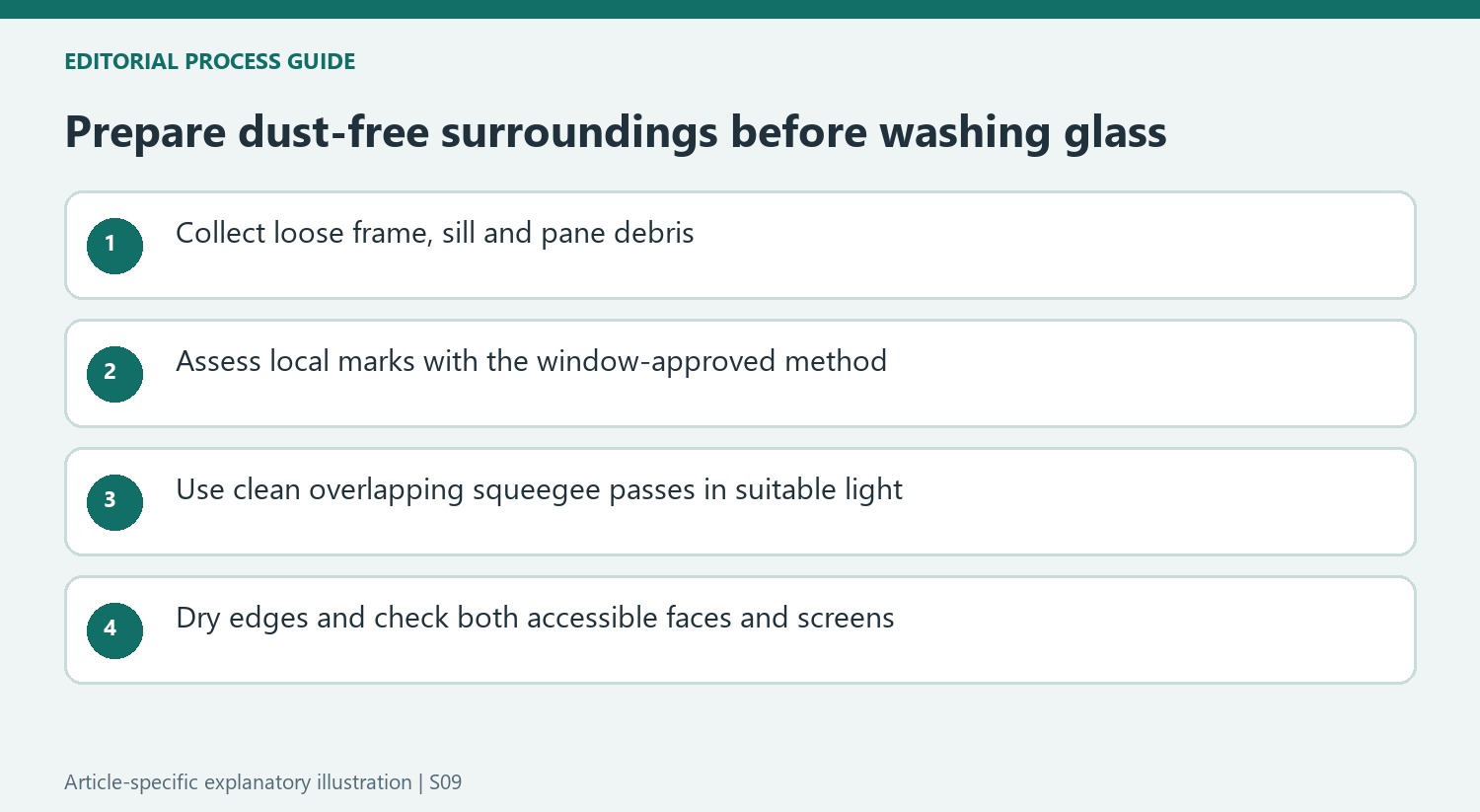
The final cloth should be dry, suitable and free from the dirt collected earlier. Focus on edges and small remaining lines instead of rewetting the whole pane simply because one corner needs attention. If streaks appear repeatedly, inspect the blade, cloth and product dose before changing to a stronger formula. The source notes that some cleaners leave residue or affect coatings, which makes approved chemistry as important as an orderly wiping pattern.
Plan both faces and the screen around real exposure
An interior-only polish cannot remove exterior pollution, pollen or bird marks. Plan safe appropriate access for the outside and use an equipped service where necessary. Screens deserve their own gentle debris-removal stage and compatible wash when needed, followed by complete drying before refitting. Cleaning them separately keeps retained screen dust from undermining the clearer view achieved through the glass while preserving the screen's condition and function.
Choose a cloudy period or another time when direct sun will not dry the cleaner faster than it can be removed. Adjust the interval to the environment, including coastal salt, pollen and nearby work, rather than treating one calendar as universal. The value of a routine is its responsiveness: collect dust first, treat identified deposits appropriately, remove liquid methodically and assess the dry result on both accessible faces. These habits reduce repeated work without relying on extra cleaner or pressure.
References
- 7 things people with clean windows always do – and why sunshine is the enemy. Homes and Gardens; Andy van Terheyden.
Removing dry debris and choosing the right conditions can prevent a glass-cleaning session from becoming a fight against streaks.


Leave a Comment
Comments (0)