
Lift Dust Gently from Glass Tables
The glass-table reference identifies dust, fingerprints, and smears as common maintenance problems. Remove loose particles with a soft cloth, duster, or suitable brush before the finishing clean. A lightly damp cloth can help capture dust that otherwise keeps resettling on darker glass.
Avoid rough sponge surfaces and unnecessary pressure. The tabletop needs a controlled clean rather than forceful polishing. Use a compatible product and a clean finishing cloth so the final pass removes residue instead of leaving another visible film.
Separate dust removal from the finishing clean
Homes and Gardens distinguishes loose dust from fingerprints and cloudiness. A lightly dampened microfiber cloth can capture dust on dark glass rather than sending it back into the room. Keep it clean and avoid pressing down hard on the tabletop. Once particles are collected, use the glass maker's compatible cleaning method, reserving a fresh cloth for the finishing pass rather than rubbing with the dirty area.
Look for residue and moisture at the edges
The article suggests a cotton swab for narrow table edges that a broad wipe can miss. Use only a little compatible cleaner there, especially where glass meets a different frame material. Remove remaining liquid with a suitable cloth or squeegee. Cleaning the center alone can leave visible grime at the perimeter and water around supports or joints that are not meant to remain wet.

Check the cloth and water before adding force
The source notes that hard water can contribute to cloudy deposits and that fabric softener reduces microfiber absorbency. Wash the cloth according to its instructions and keep it free of residues that can transfer back to the table. A stubborn cloudy area may need assessment rather than a rough sponge or more pressure. Dust removal and a clear-looking surface also do not establish disinfection, which requires its own approved method.
Capture the dust before it becomes a wiping film
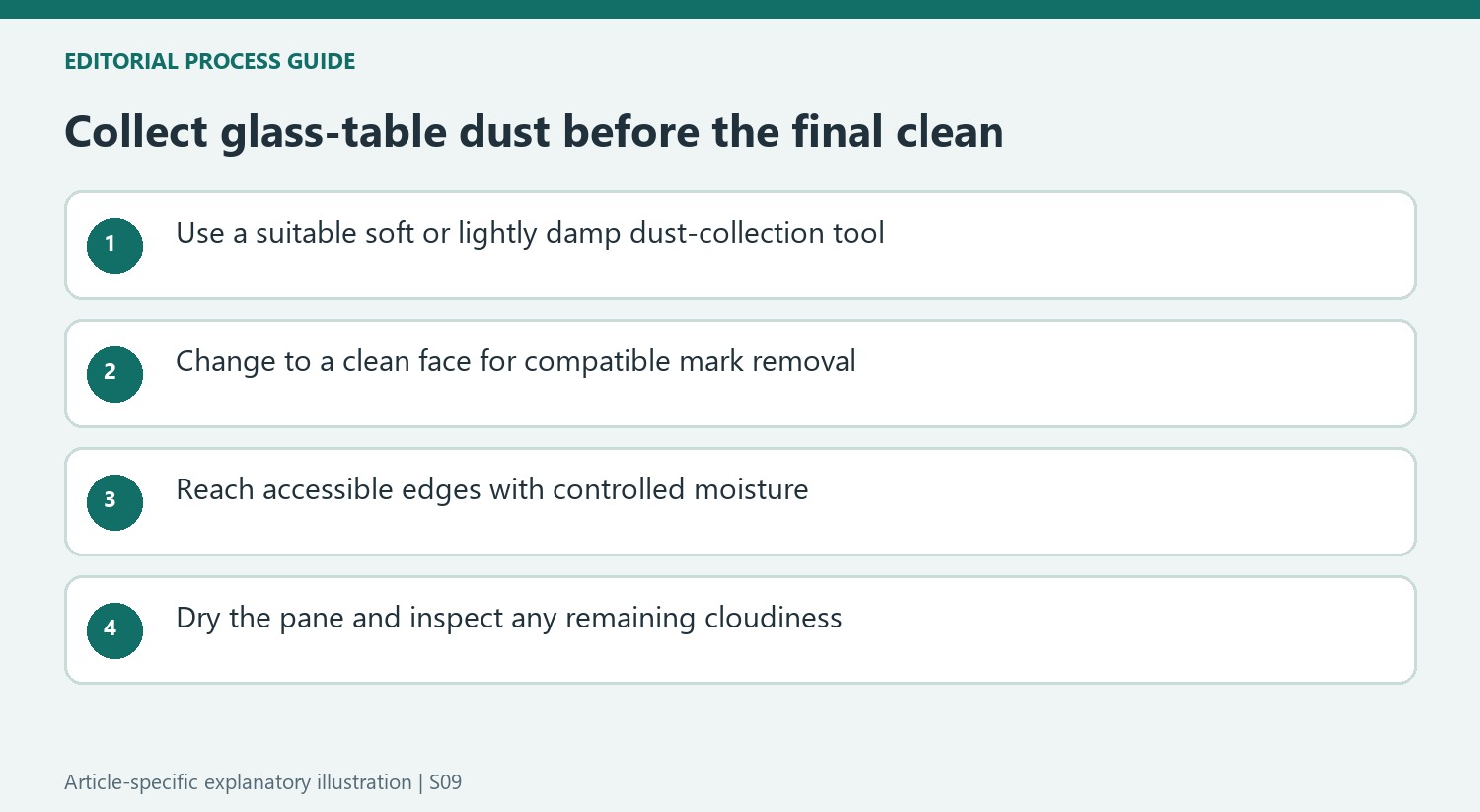
Homes & Gardens distinguishes loose dust from fingerprints and cloudy marks, which suggests starting with collection rather than a strong cleaning product. A suitable soft tool can lift particles, while a lightly damp microfiber cloth may capture dust that otherwise keeps resettling on dark glass. Keep that first pass gentle and refresh the working face. A cloth carrying a visible layer of dust should not then be used to give the same tabletop its final polish.
Avoid pressing heavily on the glass or using a rough sponge face to compensate for an imperfect result. The source identifies both pressure and abrasives as possible causes of damage. Check the table maker's requirements, including any surface treatment and the materials supporting the pane. Glass over a wood base, a metal rim and an all-glass edge are different assemblies even when their central reflective areas look alike from above.
Treat the perimeter as a different access problem
The guide suggests a cotton swab to reach narrow edges where a broad cloth misses grime. Use only a restrained amount of compatible liquid and do not force the swab into a joint. The goal is to collect accessible soil without saturating adjoining frame material or leaving fibers behind. Inspect those edges after the center is finished because a clear broad surface can make an overlooked dirty border especially noticeable.
Remove remaining moisture using the table's supported finishing method and a clean suitable cloth. A squeegee may help on an appropriate open pane, but it is not a reason to push water into the rim or supports. Work so liquid is actually collected rather than merely moved to the boundary. The same distinction applies to fingerprints: once lifted, their residue should leave the tabletop instead of being distributed across a wider but thinner film.
Check the source of cloudiness before repeating the wash
The article connects cloudy marks with mineral-rich water and notes that fabric softener reduces microfiber absorbency. Consider those two inputs separately: water can add deposits while a poorly maintained cloth can leave moisture or other residue. Follow the fabric's laundering instructions and keep cleaning tools free from substances that will transfer back to the glass. More product cannot reliably correct a finishing cloth that is no longer doing its collection job.
Dry spills promptly and inspect the clean dry result before treating a remaining cloudy area again. A persistent mark may need assessment rather than repeated force. Also keep visual cleanliness separate from disinfection: the absence of dust or fingerprints does not establish that an unapproved cloth-only method has met a germ-control claim. The source is most useful for its gentle sequence of dust collection, compatible cleaning, edge attention and restrained drying, all aimed at preserving the table while making its finish clearer.
References
- How to clean a glass table – and the crucial mistakes to avoid if you want a gleaming finish. Homes and Gardens; Millie Hurst.
A softer first pass helps avoid spreading grit across a highly visible surface.


Leave a Comment
Comments (0)