Mineral Marks Need a Different Response from Fingerprints
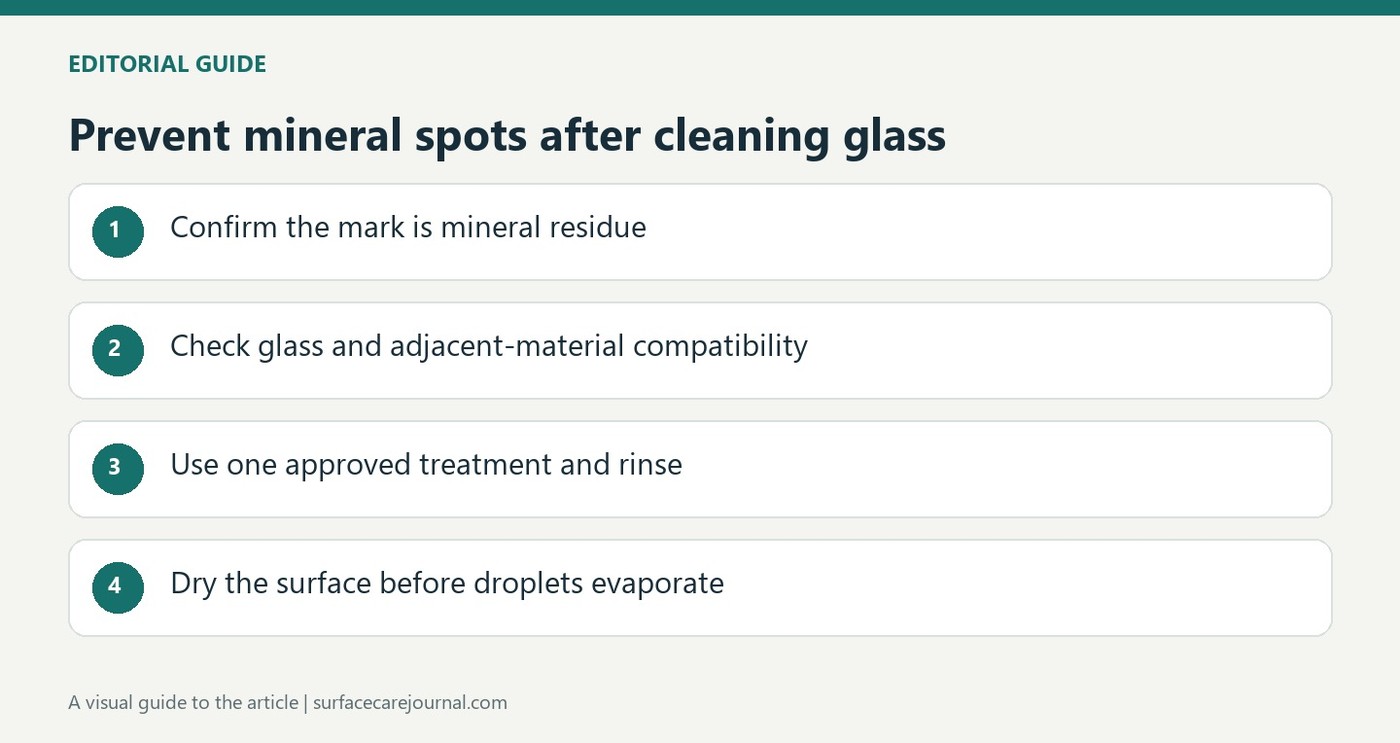
The hard-water reference distinguishes mineral deposits from everyday smears. It describes diluted vinegar as one possible treatment for compatible glass because the acid can loosen those deposits. Working from the top downward helps control coverage and runoff during the process.
Compatibility still matters, particularly around protective coatings, stone, and metal fittings. Use an approved product where required and follow its contact-time directions. After treatment, remove the residue and dry the glass instead of allowing another layer of mineral-rich water to evaporate on it.
Identify the deposit before choosing a treatment
Homes and Gardens describes the chalky marks as minerals left behind when water evaporates. The problem can appear on shower panels, windows and small glass items, but their coatings and surrounding materials can differ. A treatment for an ordinary drinking glass should therefore not automatically be used on a coated enclosure or a pane beside stone. Check the specific surface before deciding how to loosen the deposit.
Use one compatible process with a soft tool
The article presents household and commercial alternatives, including products specifically made for hard water stains. Treat them as choices, not ingredients for a combined recipe. Read the chosen product's directions, protect adjacent materials and provide the specified ventilation. Use a suitable lint free cloth or non-scratching tool. Its more intensive scraping suggestions need explicit glazing compatibility rather than being a routine finishing step.
Interrupt the evaporation cycle after cleaning
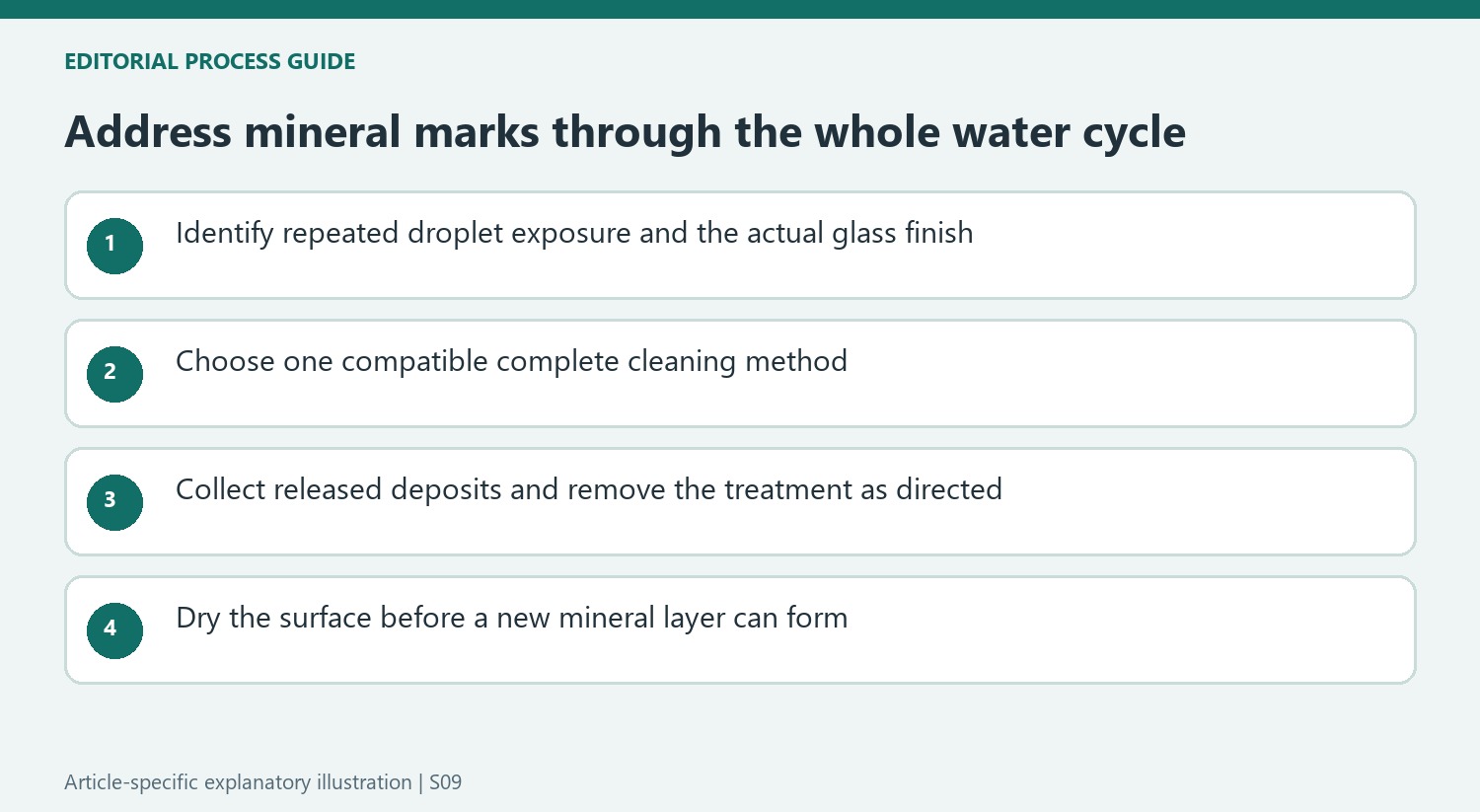
Once the deposits have been removed, rinse as required and dry the surface using a fresh cloth. The source also discusses water treatment and protective coatings as possible preventive measures, but those need to fit the actual installation. The most immediate habit is simply removing water after use. Keeping a squeegee or cloth nearby makes that easier and reduces the opportunity for another visible mineral layer to develop.
Identify the water history as well as the visible mark
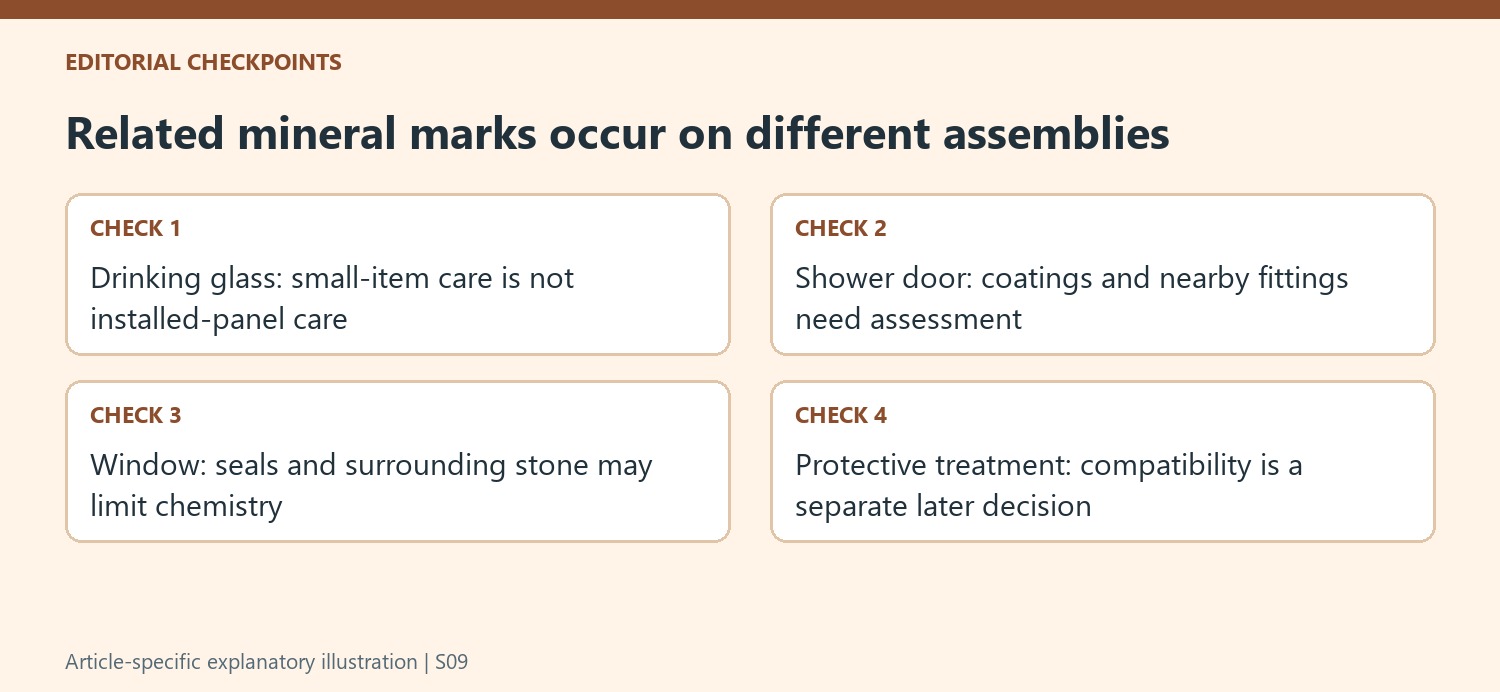
Homes & Gardens explains mineral stains through water evaporation, a different origin from a fresh fingerprint or dusty film. Consider where the droplets came from and how repeatedly that area becomes wet. A window beside outdoor spray, a shower panel and a drinking glass can show related mineral residue while requiring different treatment choices. The shared appearance does not make their coatings, surrounding materials or permitted cleaning methods interchangeable.
Inspect the actual item before choosing from the guide's household and commercial suggestions. An acid-sensitive surround or unfamiliar protective layer can make a seemingly simple recipe unsuitable. The source's small-item soaking examples should not become prolonged treatment instructions for an installed panel or mirror assembly. Use the product maker's care requirements to define what may contact the surface, at what strength and for how long.
Keep each option a complete separate method
The article lists alternatives including diluted vinegar, lemon juice, abrasive paste and specialist hard-water products. Read those as different approaches requiring their own assessment, not a set of additions for one increasingly complicated mixture. A commercial remover's current label governs dilution, ventilation, protection and removal. A familiar household ingredient still needs a material check, and the absence of a strong smell does not establish that the method suits every nearby finish.
Choose a compatible soft tool and work through controlled sections so coverage and runoff remain manageable. Allow only the permitted contact stage, then collect the loosened material. More force or a blade should not become the automatic answer when a chalky patch persists. The source's intensive tool suggestions require explicit permission for the specific glazing, not merely the belief that any object described as glass must tolerate a general window-scraping technique.
Prevent another evaporation layer after removal
Rinse the treatment away as required and finish with clean dry fabric or an appropriate squeegee. Leaving a fresh layer of mineral-bearing water on the pane can begin the process again immediately. Make water removal part of the completed job rather than a cosmetic extra to skip when the cleaning product has already made the surface look clearer. Edges and corners need attention alongside the center because droplets can remain there after broad passes.
The source discusses water treatment and protective glass products as possible longer-term measures. Those decisions need to fit the household system, actual installation and existing coatings. Do not add a new protective layer simply because the old deposit has been removed. The immediate useful routine is to reduce prolonged droplet contact, clean with an approved method when needed and inspect the dry result. That interrupts the source of repeated marks while leaving more involved water or coating choices to their own assessment.
References
- How to get rid of hard water stains on glass – 6 expert-recommended tips. Homes and Gardens; Lola Houlton.
Hard-water deposits can remain on glass after ordinary surface dirt has been removed.


Leave a Comment
Comments (0)