Separate Daily Glass-Stove Care from Burnt-On Residue
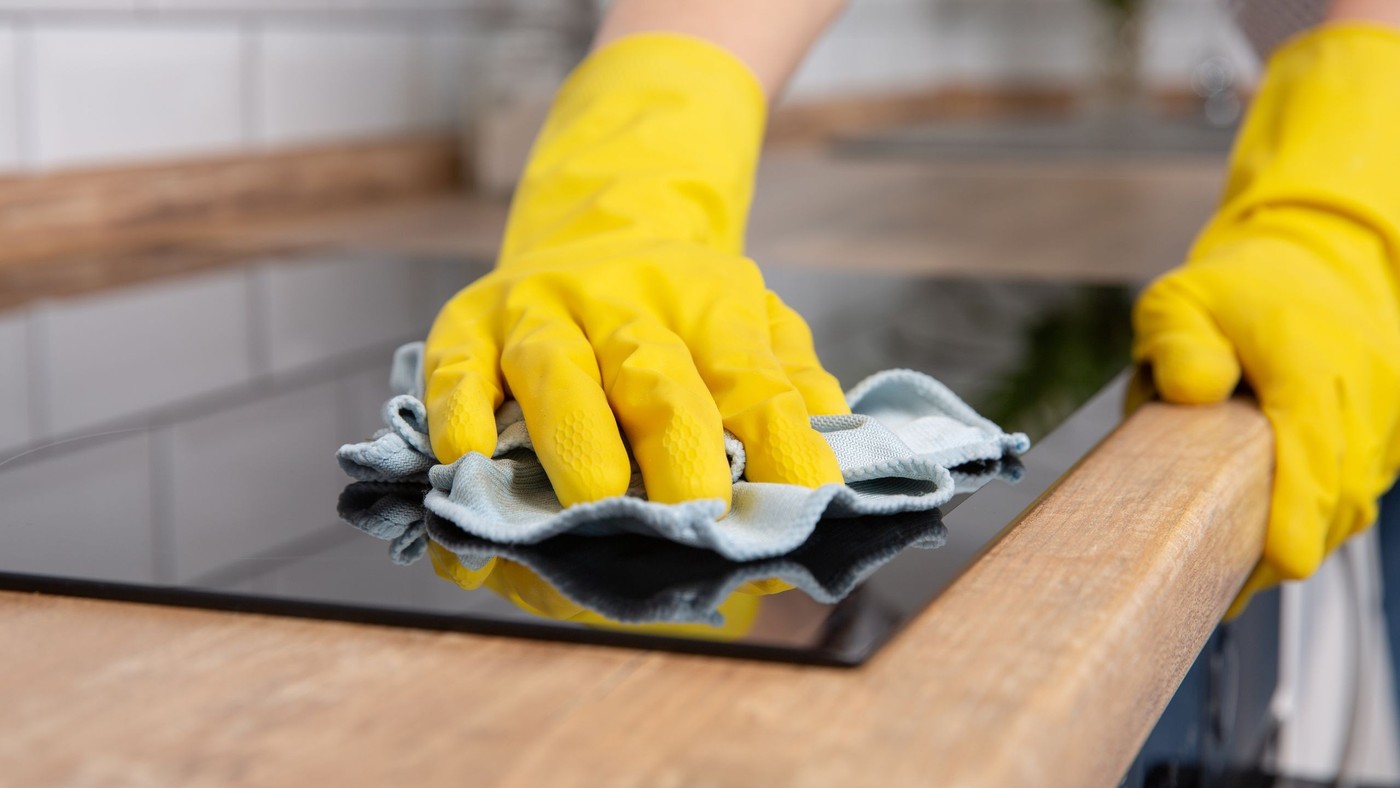
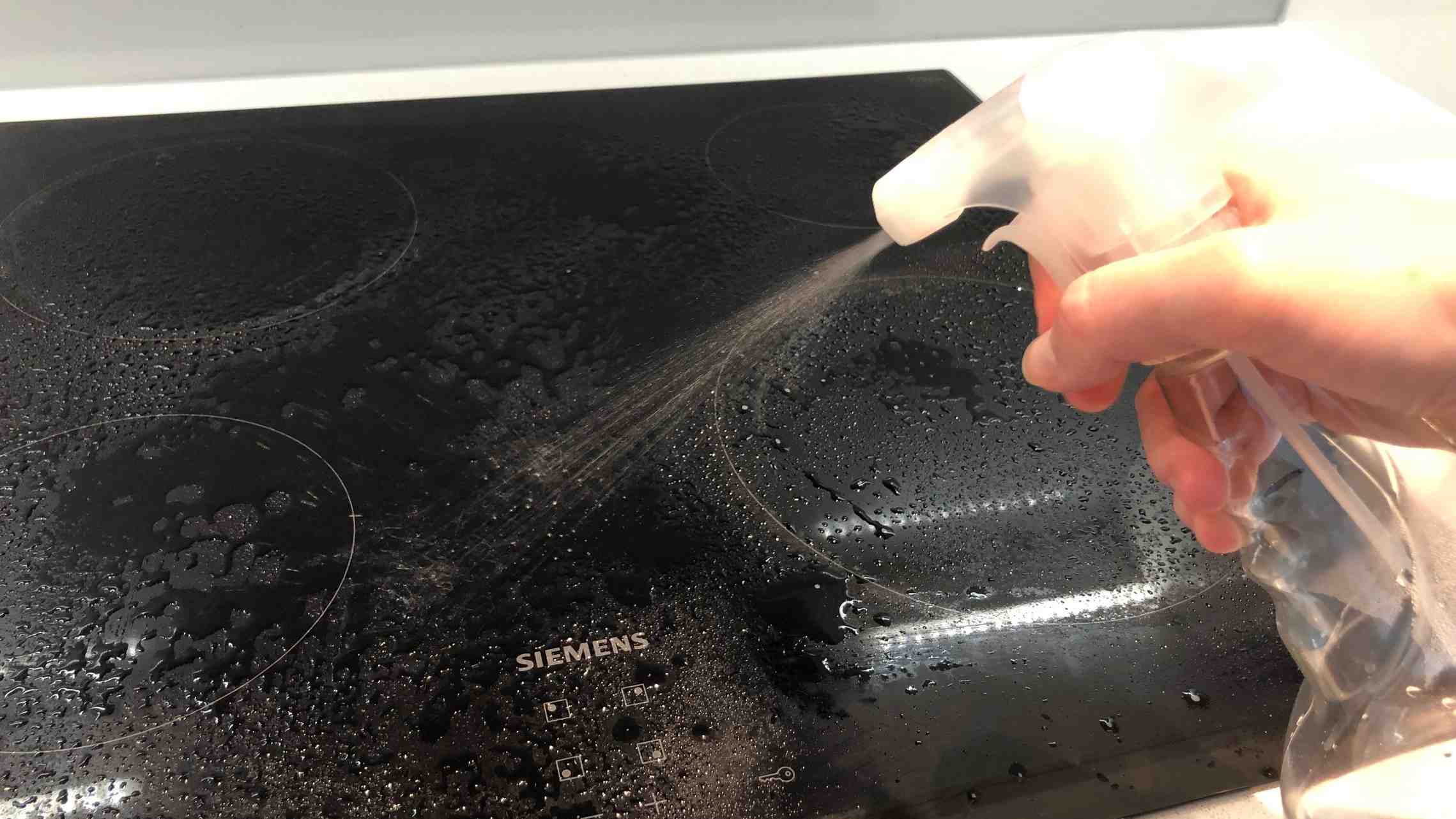
For ordinary glass-stove maintenance, wait until the surface is cool and remove visible food debris with a damp cloth. Apply a compatible stovetop degreaser for the time its label specifies. Use a soft sponge side or microfiber rather than a rough scourer.
Remove cleaner residue and buff dry with another clean cloth. Heavier burnt-on deposits may need the appliance maker's approved deeper treatment. Do not increase abrasion indiscriminately; preserving the glass is more useful than forcing a stubborn mark off in one pass.
Use the manual to choose the deeper treatment
Tom's Guide separates an ordinary cool-surface wipe from heavier removal of baked-on deposits. It mentions commercial cream or paste cleaners that are applied and removed according to their directions. This distinction prevents every light splash from becoming an abrasive deep clean. Check the cooktop's care instructions first, particularly where the glass has a treatment that limits what can be used on it.
Keep scraper use conditional
The source explicitly discourages a loose razor blade and recommends checking whether the appliance permits a purpose-made scraper. Its explanation matters because some treated glass can be damaged by a blade. Do not copy a scraping angle from a general guide without the relevant approval. If a permitted tool is used, follow the cooktop maker's technique and avoid forceful contact with surrounding controls or trim.
Reduce what gets baked on next time
The article recommends cleaning after use once the stove has cooled, and watching pans so spills do not repeatedly cook onto the same area. Soft microfiber or the smooth side of a sponge protects the surface better than a rough scourer. Remove the dirty cleaner, rinse as directed and dry before the next use. A familiar recipe or shiny appearance does not replace that complete residue-removal stage.
Give everyday splashes the lighter supported routine
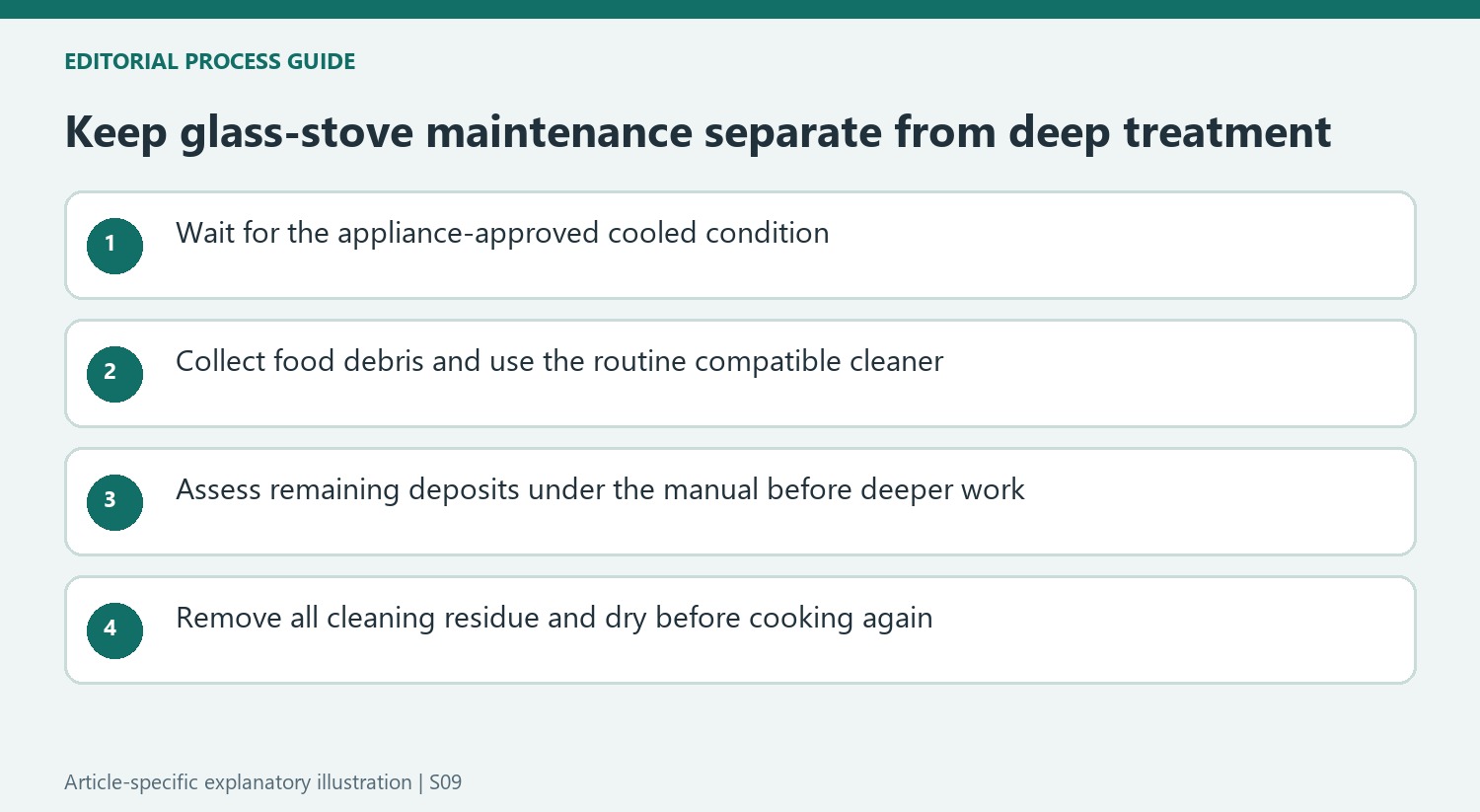
Tom's Guide separates a quick cooled-surface clean from a deeper treatment for accumulated residue. That distinction helps avoid turning every small splash into an abrasive session. Wait for the condition specified by the appliance maker, collect visible food debris and use its compatible ordinary cleaner. A purpose-made degreaser also needs the contact period on its current label rather than an assumed universal wait based on a different brand mentioned in a guide.
Use a microfiber cloth or the appropriate soft side of a sponge and keep the amount of water controlled. Inspect the fabric face as the dirt lifts, changing it before it spreads the same material across another cooking zone. The aim is to remove immediate grease and food soil completely so it does not become the next baked-on layer. A visibly shiny wet surface is not proof that the cleaning solution has been collected.
Escalate by appliance guidance rather than household improvisation
For heavier deposits, the source describes cream or paste products used according to their instructions and also presents household options. The cooktop manual should decide what is permitted on its actual glass treatment. Preserve the article's own note that abrasive powder can raise scratching concerns. A favorable personal experience with one method is not a material specification for another appliance, especially where a protective layer is not obvious to the user.
The guide explicitly rejects a loose razor blade and makes a purpose-built scraper conditional on the manual. Keep both qualifications. A dedicated tool is still not appropriate if that cooktop forbids scraping, and a generic angle from an article cannot override the maker's supported technique. If the permitted method leaves a mark, assess it or seek advice rather than pressing harder or trying an improvised blade along controls and trim.
Reduce what the next heating cycle will harden
Finish by removing dirty product and any approved rinse moisture, then dry under the appliance directions before use. Inspect around zone edges and controls where cleaner may remain after the main cooking area looks clear. Preventing a new cleaning residue from heating onto the surface is part of completion. The source also advises watching pans so boiling-over and spitting do not repeatedly load the same area with fresh food material.
Keep a practical after-use routine once the surface has cooled, adjusting deeper attention to the actual accumulation and the manual's requirements. The guide's suggested calendar is a prompt for regular inspection rather than proof that every kitchen needs the same intensive treatment on the same date. Separate quick maintenance, approved deep cleaning and any permitted specialist tool so each responds to an identified problem while protecting the surface that will be used for the next meal.
References
- How to clean a glass stove. Tom's Guide; Katie Mortram.
A quick cool-surface wipe can reduce the need for repeated deep cleaning.


Leave a Comment
Comments (0)