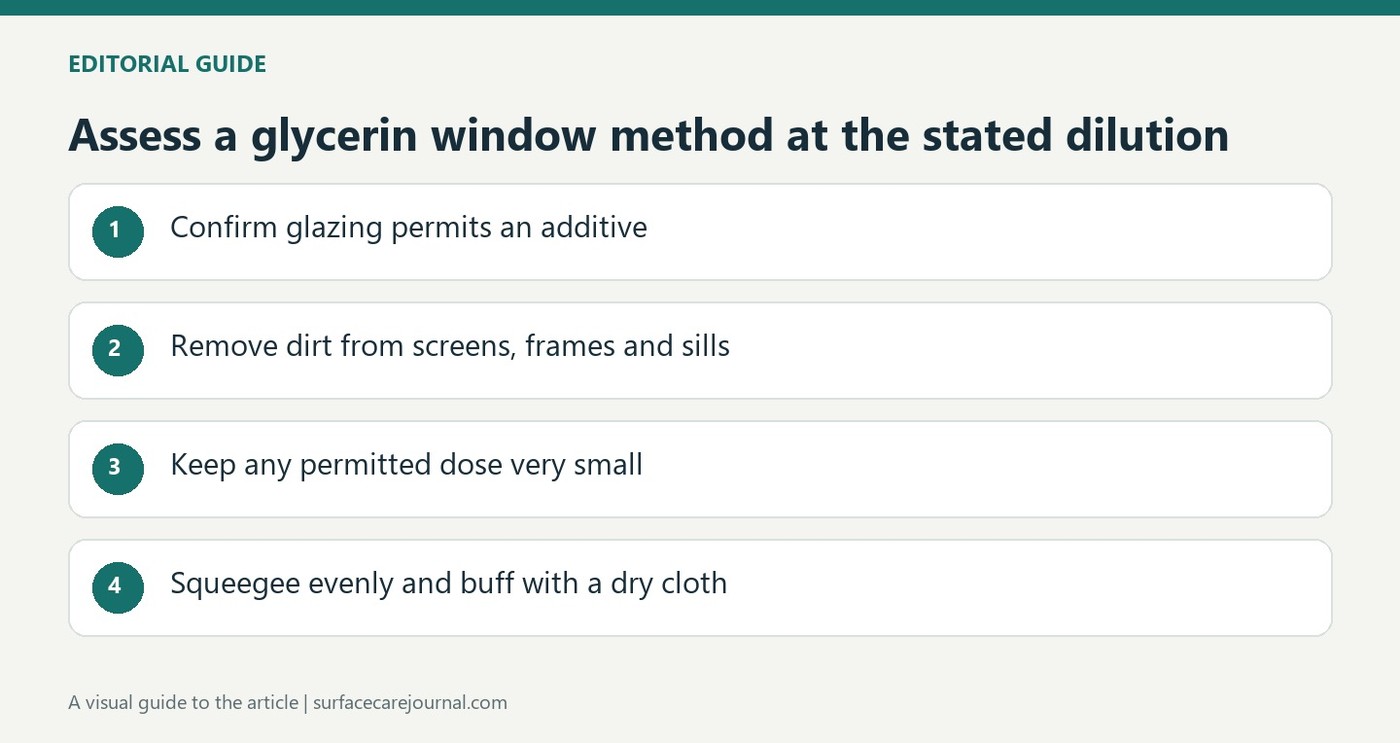
Use Very Small Amounts When Assessing a Glycerin Glass Method
Homes & Gardens discusses a glycerin window-cleaning method intended to leave a very thin layer on glass. The quoted recipe uses only two or three drops of vegetable glycerin in about a liter of warm water. Its experts advise working from top to bottom and buffing with a separate clean, dry microfiber cloth.
The article's claims about dust and condensation are expert suggestions rather than a guarantee for every window. Check compatibility with any specialist glazing coating before trying an additive, and avoid leaving a visible film. Careful dilution and removal of excess moisture are central to the described method; applying more glycerin is not presented as a way to improve the result.
Keep a tiny additive dose distinct from ordinary washing
The Homes and Gardens recipe is deliberately dilute, using only a few drops in a much larger quantity of water. Its intended thin layer should not be confused with a visible oily film or with removing heavy dirt. Check that the glazing allows an additive, then assess a small suitable area rather than increasing the concentration when the result is unclear.
Clean the surrounding obstacles to daylight
The article also recommends clearing dirt from screens, frames and sills before the final window pass. Dusty blinds and heavy curtains can continue to limit daylight even when the pane itself is clean. Review those practical obstructions separately from the cleaner choice. A clean window is one part of the room's light conditions, and the source's comments about brighter interiors are not a medical treatment claim.

Make the finishing passes controlled
The quoted experts recommend long top-to-bottom strokes, a clean blade between squeegee passes and a separate dry microfiber cloth for remaining moisture. Work outside strong direct sun so the liquid does not dry before removal. These technique details remain relevant when assessing any permitted cleaner. Inspect the dry pane for haze and streaks before repeating the additive trial or deciding that more product would help.
Keep the additive dose in its reported scale
Homes & Gardens quotes a recipe using only two or three drops of vegetable glycerin in roughly a liter of water. The tiny proportion matters to the intended barely visible layer. Do not replace that scale with a generous pour because the window is large or the result is uncertain. Check whether the actual glazing permits an additive and assess a suitable small area under its care guidance before considering broader use.
The source's claims about dust, fingerprints and condensation come from expert suggestions rather than a controlled comparison across all windows. Treat them as propositions to assess in context, not guarantees that an added film will cure every household moisture problem. A visible oily haze is not the intended result. Increasing the concentration when the pane appears smeared risks moving farther from the thin-layer idea rather than improving ordinary soil removal.
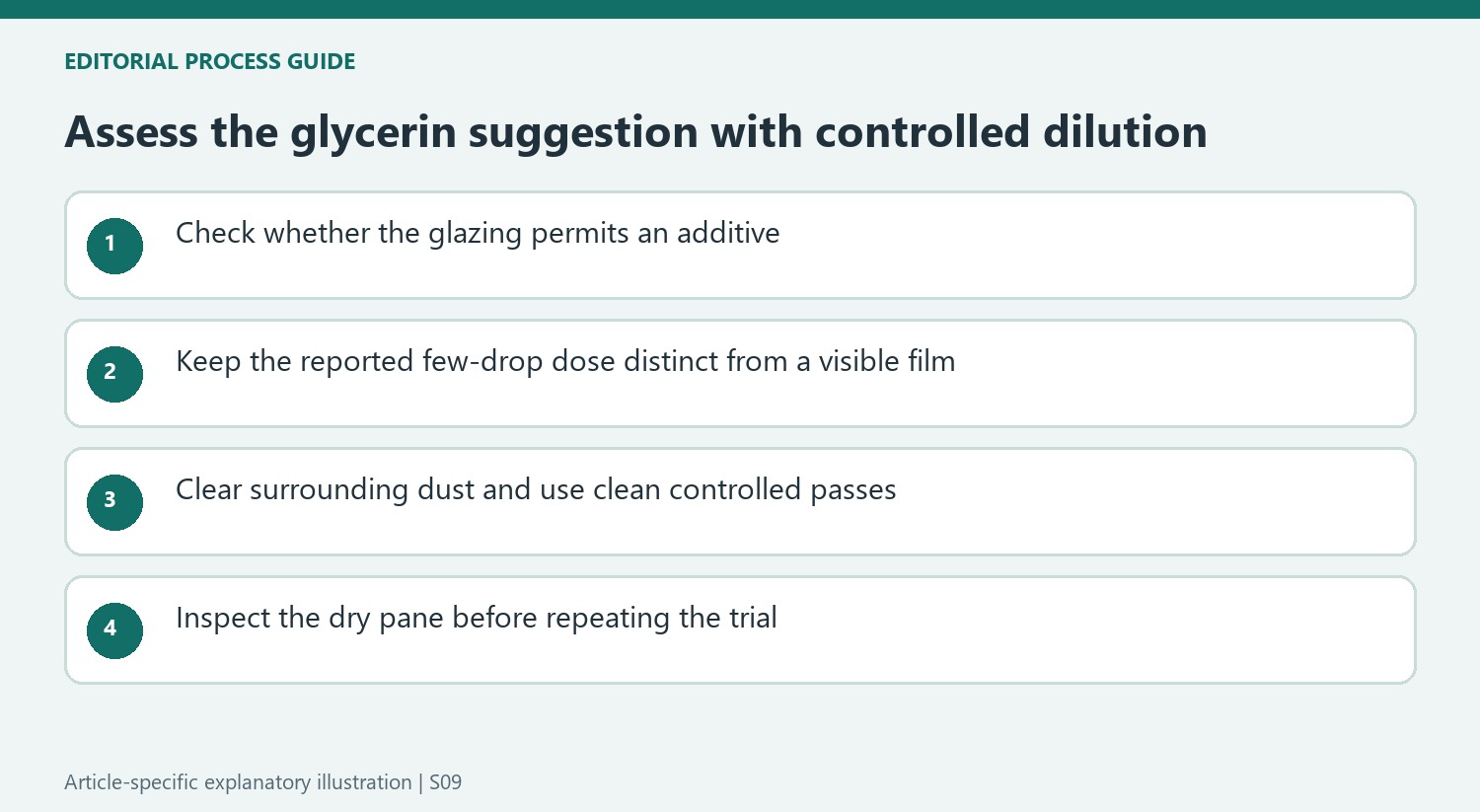
Prepare the sources of dirt and shade separately
The article recommends clearing screens, frames and sills before the final glass pass. Those surfaces can hold dust that otherwise reaches the pane during cleaning. Use suitable gentle methods for each material and keep drainage and seals functional. The additive is not a substitute for removing loose debris or for choosing a cleaner appropriate to an existing deposit. Complete the ordinary preparation so any later observation is not confused by dirt that was never collected.
Heavy curtains and dusty blinds can also reduce daylight even when the glass is clean. Review those obstructions under their own care requirements rather than attributing every dim room to the window-cleaner formula. Nearby vegetation and the room's arrangement belong to separate light-planning decisions. Clearer glazing may improve how the room feels, but the source's seasonal mood language should not become a claim that a cleaning additive treats a medical condition.
Judge the dry pane after a controlled finish
The quoted technique uses long top-to-bottom passes, a blade wiped between strokes and a separate dry microfiber cloth. These details limit how much dirty water is carried over a finished section. Work outside strong direct sun so the liquid can be collected before it dries into lines. The same controlled removal habits are relevant when using an approved ordinary cleaner without glycerin, which helps keep technique separate from the additive being evaluated.
Inspect the pane after drying for haze, remaining moisture and visible streaks. If the result is poor, review the permitted method, dose and tool condition before repeating an additive trial. A window that looks clearer temporarily does not establish lasting condensation control. Continue the appropriate ordinary cleaning and household moisture routine. The useful lesson is careful dilution and a clean finish, with any proposed thin-layer benefit kept conditional on glazing compatibility and the actual observed result.
References
- This Fall Window Cleaning Trick Instantly Lets in More Light On Darker Days. Homes and Gardens; Ottilie Blackhall.
The reported window-cleaning recipe relies on dilution and dry buffing, not a thick coating.


Leave a Comment
Comments (0)