A Clinging Paste Changes How Shower Glass Is Cleaned
A Tom's Guide experiment uses a thick baking-soda and dish-soap mixture to stay on vertical glass rather than immediately running down it.
The reported advantage is placement
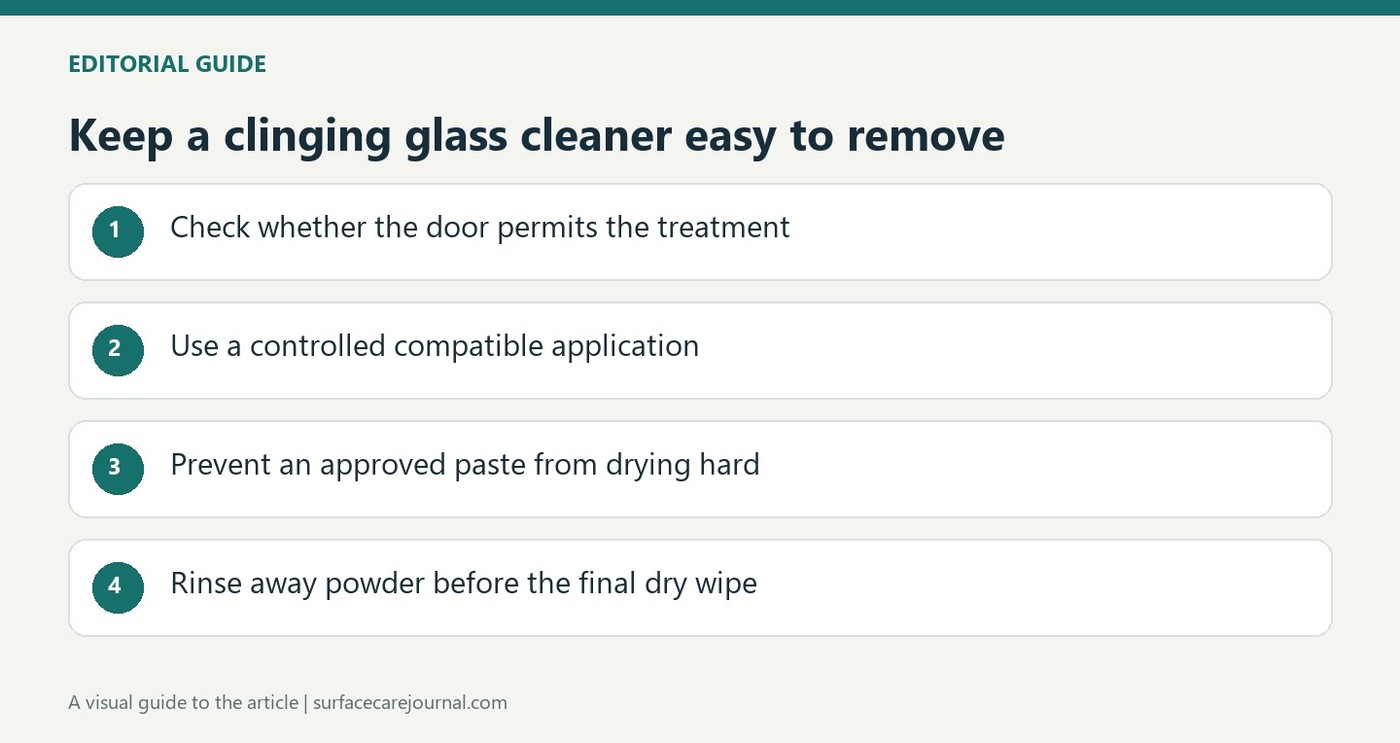
The writer describes mixing a spreadable paste, applying it with a damp cloth or sponge and allowing a short contact period before removal. The dish soap targets the oily film associated with soap scum, while the powder adds abrasion. The account reports clearer glass, but it does not establish that an abrasive paste is suitable for every coated shower door.
Remove the powder completely
The source cautions against letting the paste dry hard and emphasizes thorough rinsing because leftover baking soda can create its own pale film. A squeegee or dry microfiber cloth completes the process. Before copying the trial, check the door's care instructions and use only approved non-scratching tools. Stronger rubbing and household ingredients are not automatic improvements over the cleaner recommended for a particular protective finish.
Separate the trial's explanation from a guarantee
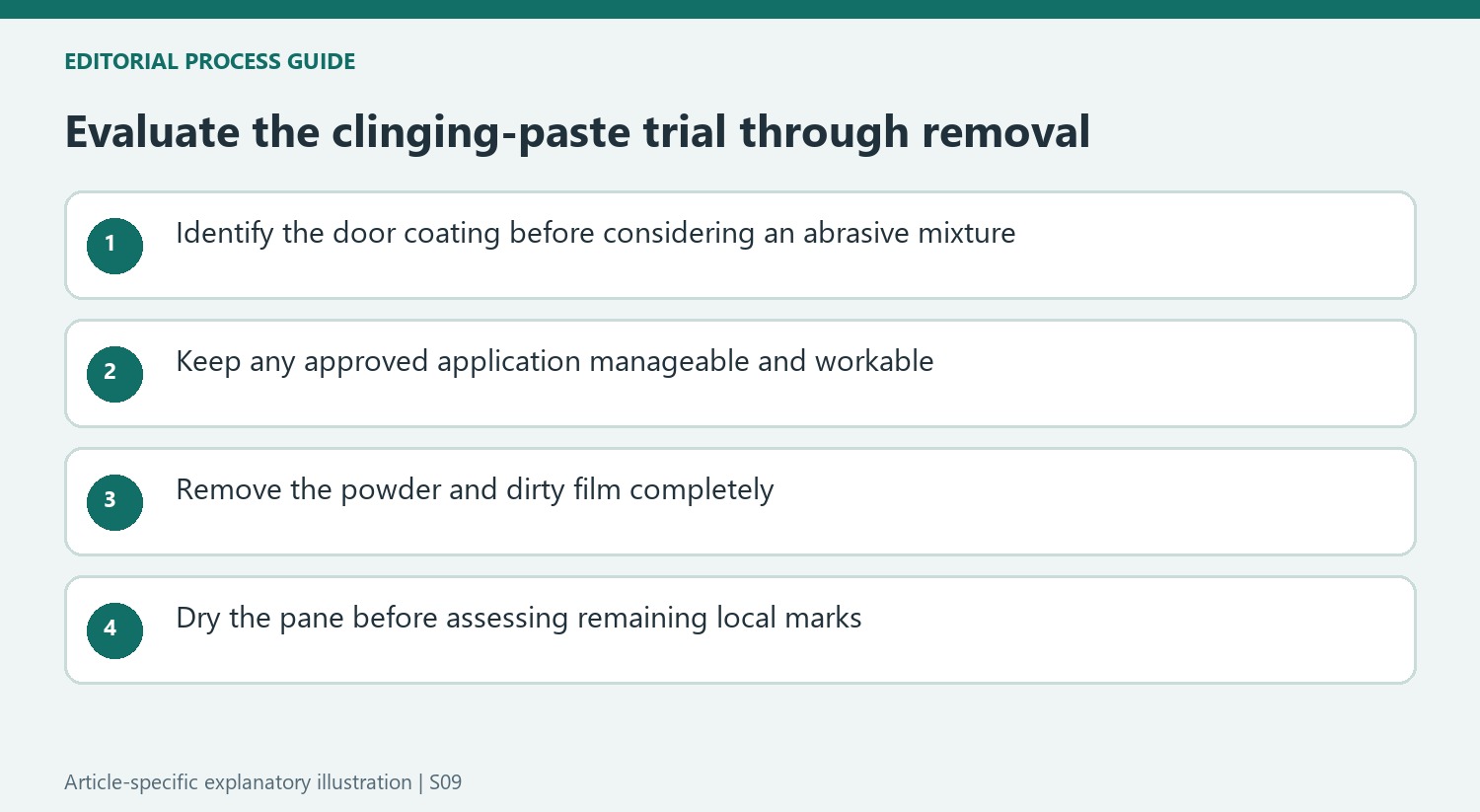
The author argues that a thicker cleaner stays in place longer than a thin spray on vertical glass. That describes the intended advantage in this household trial, but it does not prove that every mineral deposit will disappear in the same time. The paste also brings an abrasive ingredient, which matters on coated or delicate glass. If a permitted treatment begins to dry, follow its directions for keeping it workable rather than scraping off a hardened layer. Thorough removal is essential before the final inspection: a newly deposited powder film can obscure whether the original mark was actually lifted. Inspect remaining marks only after the powder has been removed.
Read cling as the trial's practical variable
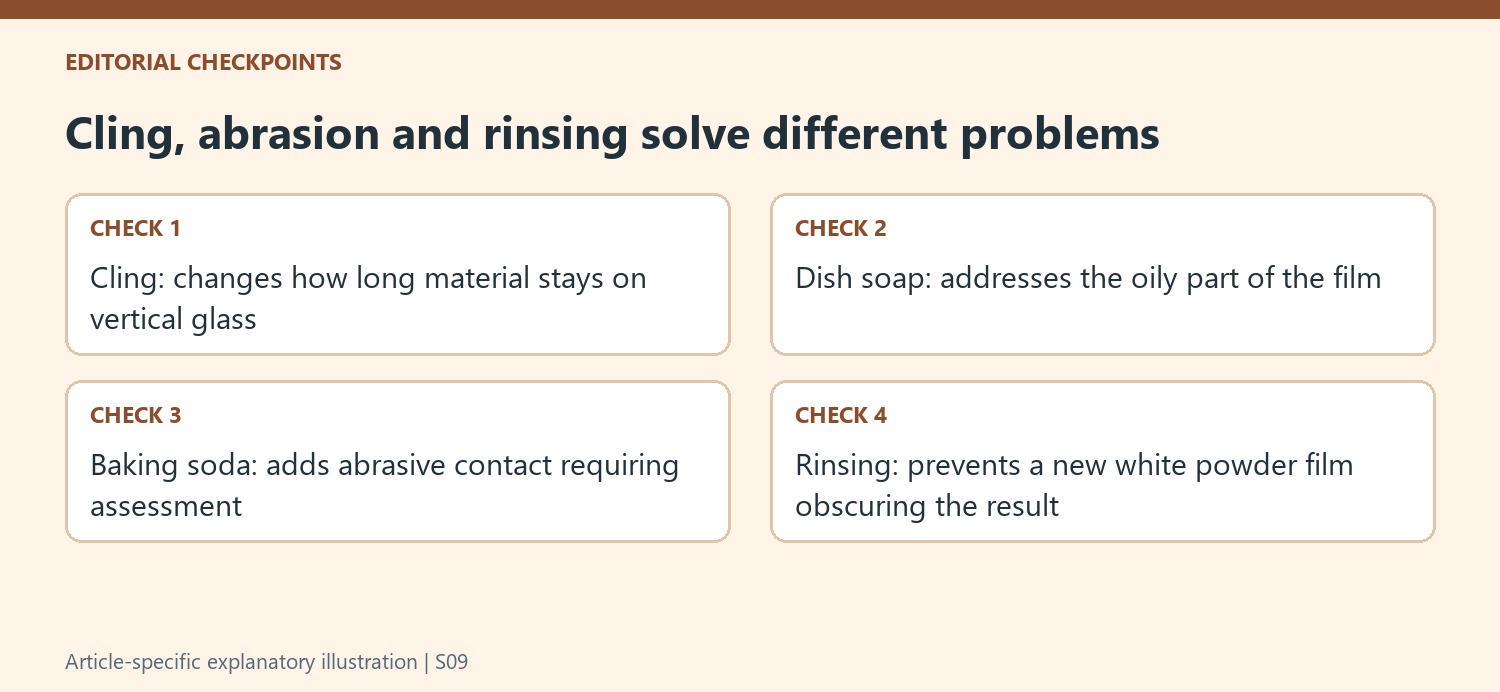
The Tom's Guide writer was dissatisfied with a thin spray running down the vertical pane and tried a thicker mixture instead. That account identifies placement and working time as the intended advantages. It does not establish that all vinegar-based products fail or that every alternative paste dissolves minerals in the same way. Separate the observed household result from the article's broader explanation when deciding what is relevant to a different door.
The mixture described contains baking soda, dish soap and some water. Its ingredients contribute different properties: the soap addresses oily film while the powder also introduces abrasive contact. A clinging consistency does not make that abrasion disappear. Check the shower's coating and current care instructions before adopting the method, especially where a pane looks like ordinary glass but has a protective treatment that is not obvious during a quick inspection.
Keep application and removal manageable
The writer spreads the mixture with a damp cloth or sponge and allows a short contact period. The source specifically warns against letting it dry into a hard layer. If a compatible approved treatment has such a requirement, keep the working section small enough to manage under its directions. A layer that becomes difficult to remove can create a new problem even before the original cloudy deposit has been assessed.
Do not make firmer scrubbing the central lesson of the trial. Use only the tools and contact permitted for the installed surface. A non-scratch label on a sponge is not a blanket guarantee for every glass coating or for particles trapped in the sponge during work. If residue persists, check whether the chosen method is suitable and whether the mark is actually removable soil before adding pressure or another abrasive implement.
Remove the powder before judging the old stain
The guide stresses thorough rinsing because leftover baking soda can create its own white film. That is a distinct failure from the original water marks. Collect the dirty mixture and rinse as the approved method requires, paying attention to lower edges where material gathers. A finishing blade or cloth should meet glass free from concentrated cleaning paste rather than becoming the main way to scrape a dry layer off the pane.
Finish by removing remaining water with the appropriate squeegee or clean dry microfiber cloth. Inspect only after product and moisture have been collected, then identify any local mark that remains. The writer's reported quick result belongs to one trial, while the transferable reasoning is to consider placement, compatibility and complete removal together. Continue suitable after-shower drying to limit the next deposit rather than assuming a thicker occasional cleaner replaces ordinary care of a frequently wetted door.
References
- I removed water stains from my glass shower door — without using vinegar. Tom's Guide; Kaycee Hill.
A Tom's Guide experiment uses a thick baking-soda and dish-soap mixture to stay on vertical glass rather than immediately running down it.


Leave a Comment
Comments (0)