
Read Glass-Cleaner Restrictions before Spraying Nearby Frames
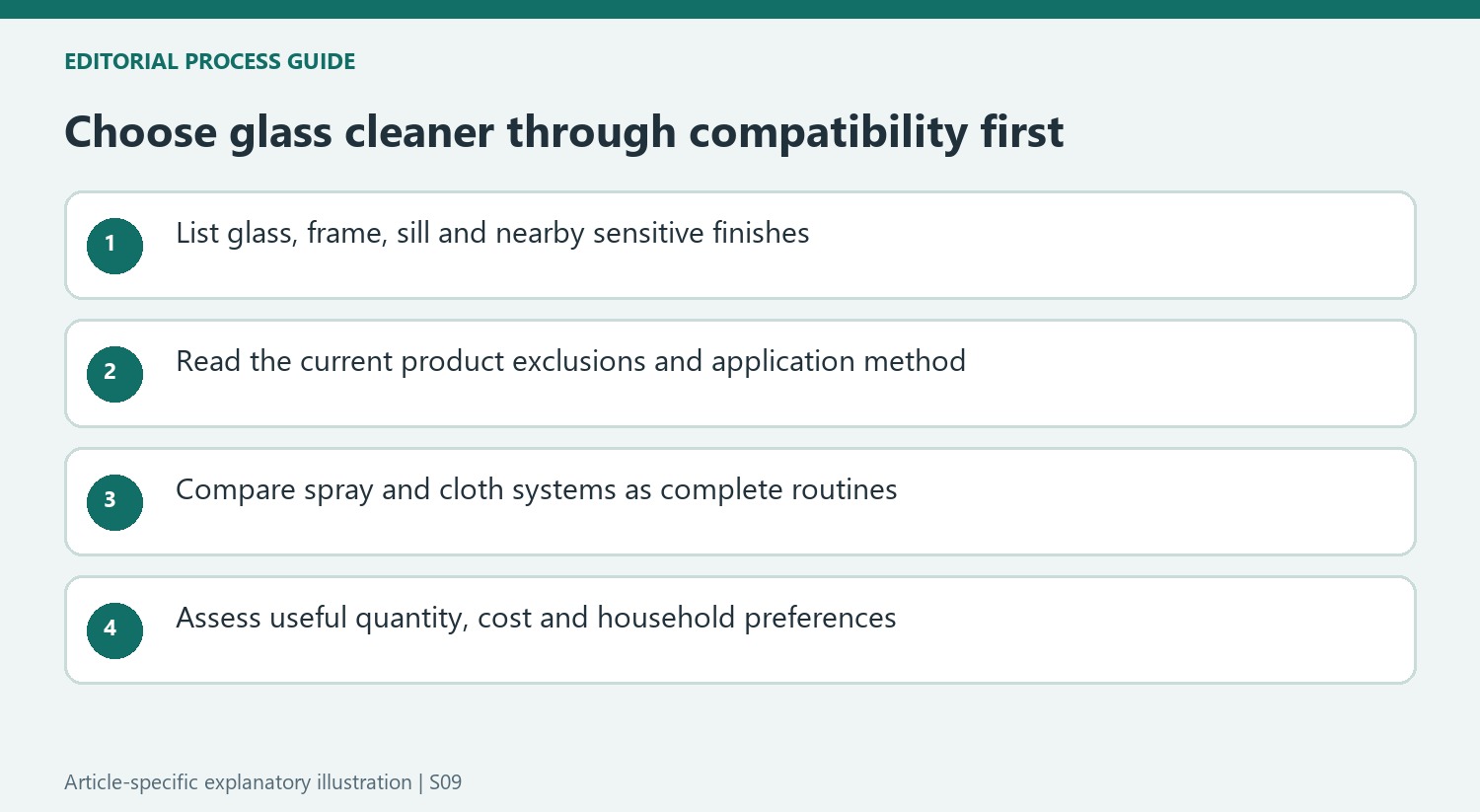
Commercial window cleaners differ in ingredients, application, and permitted surfaces. Some vinegar-based products target grease and fingerprints but warn against contact with varnished wood, marble, or limestone. Read the restrictions before spraying a pane close to those materials.
Use the recommended wiping cloth and amount rather than assuming extra product gives a better shine. Glass-cleaning cloth systems offer another approach for some tasks. Compare suitability and the intended cleaning method alongside price, fragrance, or packaging preferences.
Read restrictions alongside the product's intended use
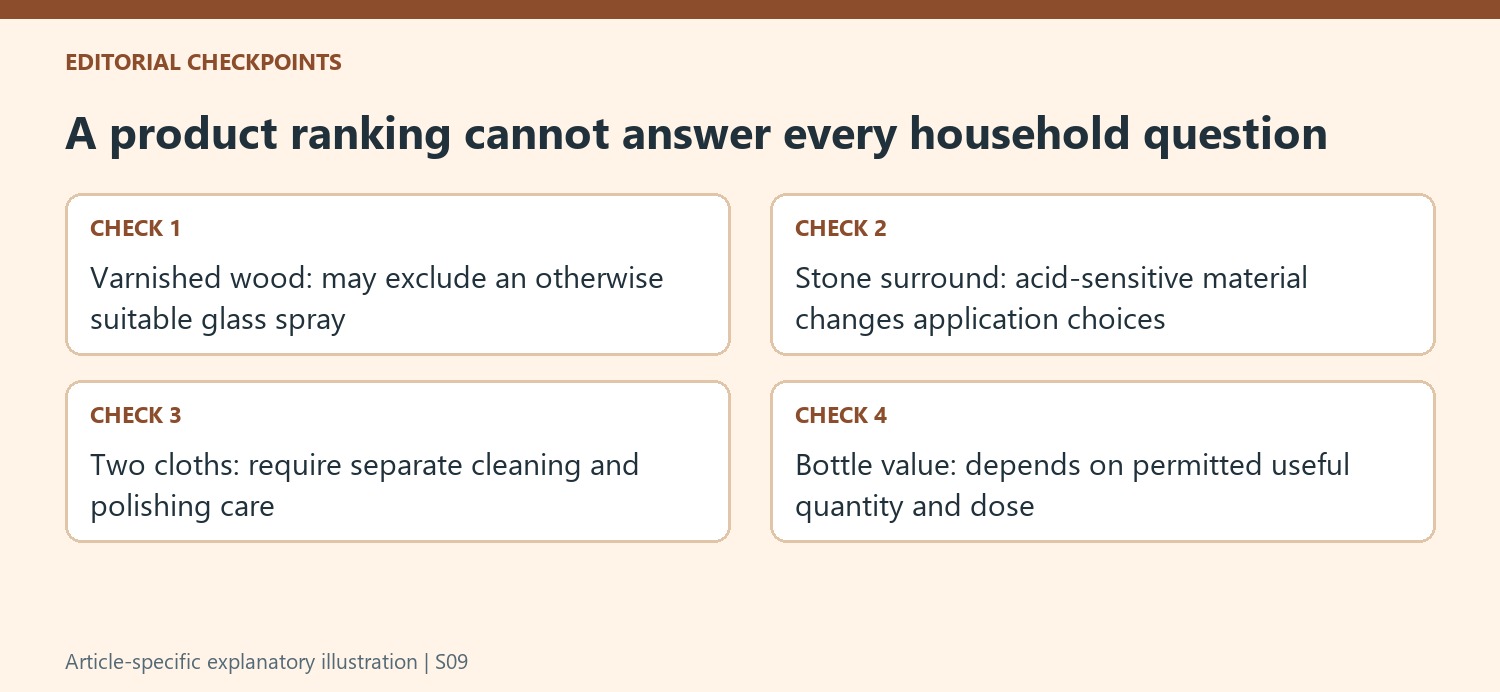
Real Homes compares several sprays, including vinegar-based choices with restrictions around wood and acid-sensitive stone. Those exclusions matter when a window sits above marble or a mirror has a varnished frame. Check the current label rather than relying on an older shopping summary. A product recommended for one glass task may still need a different application technique to protect the adjoining materials.
Compare a cloth system as a different approach
The guide includes an E-Cloth two-piece set: one cloth for cleaning and another for polishing. This changes the routine from repeatedly buying spray to washing and reusing the tools. Follow the cloth's instructions for wetting, laundering and finishing, and keep the polishing piece clean. A reusable system is an option to assess for the actual task, rather than proof that every mark disappears with water alone.
Compare useful quantity and practical preferences
The article recommends looking at bottle capacity rather than judging value by the shelf price alone. Fragrance, packaging claims and drying speed also appear in its comparisons. Decide which features matter to the household, then check surface compatibility and the recommended wiping material first. Marketing terms and favorable rankings do not replace the product label, particularly when the formula or packaging may have changed since the article was written.
Filter the shopping list through the surrounding materials
Real Homes ranks several glass-cleaning products, yet its exclusions may matter more than the order when the pane sits beside varnished wood or acid-sensitive stone. Start with the current label and the window's care instructions. A spray designed for glass can still affect a nearby frame, ledge or decorative finish. Decide how it can be applied with control rather than assuming that aiming toward the center prevents overspray and runoff.
The guide names restrictions around finished wood, marble and limestone for some vinegar-based products. Do not transfer those restrictions indiscriminately to every formula, but do check the exact bottle being considered. Formulations and packaging can change after a buying guide is published. A favorable historical recommendation is useful background while the current product instructions provide the practical limits for use in the actual room.
Compare a cloth system as a different routine
The two-piece E-Cloth option in the source separates cleaning from polishing. Assess that system by its wetting, collection and laundering requirements instead of viewing it simply as a spray bottle that never empties. Keep the finishing piece clean and dry enough for its intended stage, and wash the tools under their care instructions. Reusing dirty cloth faces would undermine the very distinction that makes a two-tool routine useful.
A reusable fabric approach may suit ordinary marks without an additional product, but that does not establish that every deposit disappears with water alone. Identify the actual soil and permitted surface method before choosing it. Consider whether the household will maintain and store the cloths appropriately between sessions. A product's environmental appeal or convenient description does not remove the practical work required to keep its collection and polishing functions effective.
Measure value by the work the product can perform
The article advises comparing bottle capacity with price instead of choosing the lowest shelf figure alone. Include the supported dilution or amount per use where relevant, along with whether the cleaner is suitable for the intended windows. A larger bottle has little useful value if its exclusions rule out the surrounding surfaces. Likewise, a quick-drying formula should be assessed within a technique that can remove it before visible residue remains.
Fragrance, recycled packaging and retail availability can help distinguish otherwise suitable options, but treat those claims according to the current label rather than a broad impression of greener cleaning. First establish compatibility and the recommended wiping material, then compare household preferences and cost. The guide works best as a structured shortlist: identify the task, remove unsuitable products, choose a complete cleaning routine and only then compare the features that make it convenient to keep using.
References
- The best window cleaning products. Real Homes; Annie Collyer.
A product intended for windows may be unsuitable for finished wood or stone.


Leave a Comment
Comments (0)