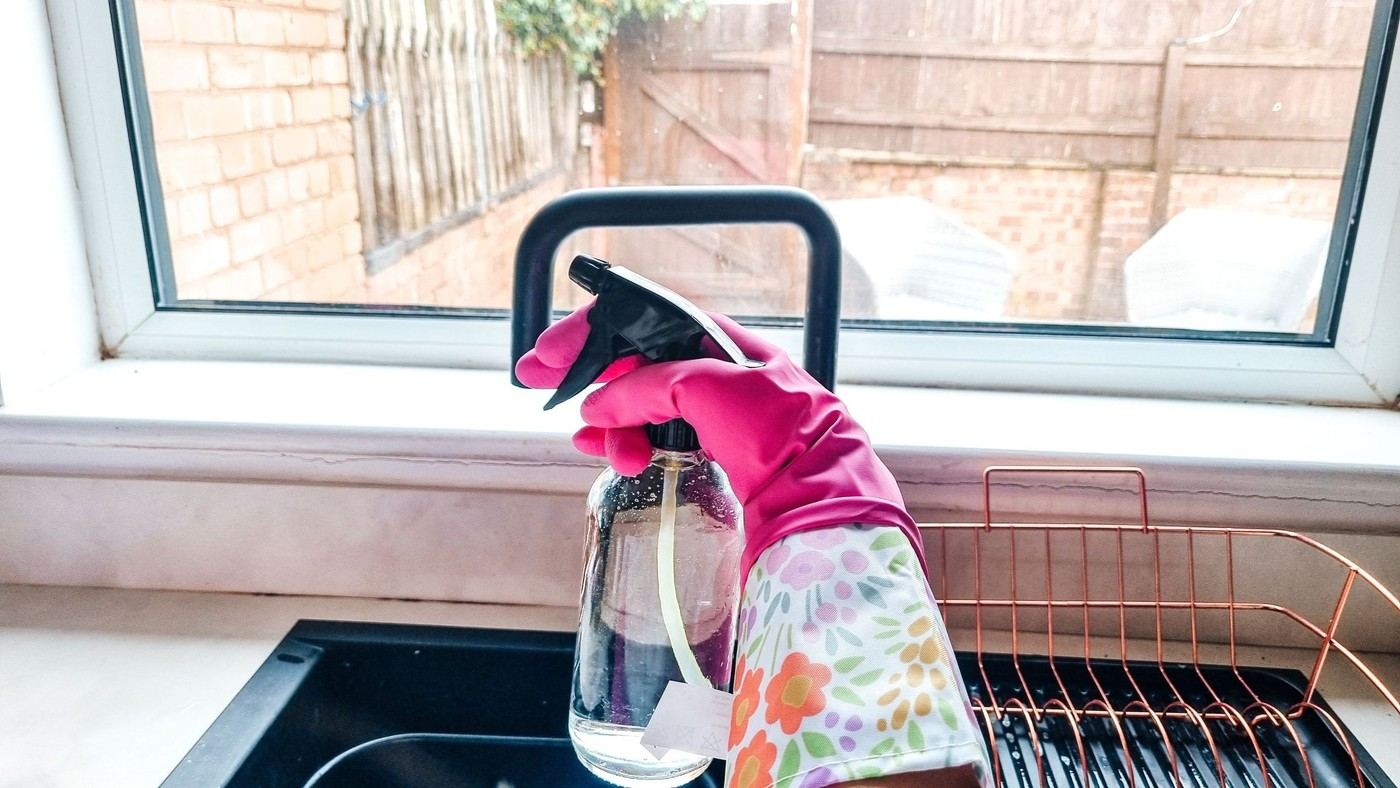
Control Drying when Using Vinegar on Compatible Window Glass
The source demonstrates a vinegar-based window wash using water, a spray bottle, a sponge, and a squeegee. Choose conditions that keep the solution from drying too quickly. Direct sunshine can leave streaks before the pane has been properly finished.
Check that the window and adjacent materials tolerate the cleaner before applying it. Remove excess liquid with the squeegee and finish with a clean microfiber cloth. Keep acidic runoff off sensitive stone or finishes rather than treating the entire frame like bare glass.
Prepare a controlled amount of compatible cleaner
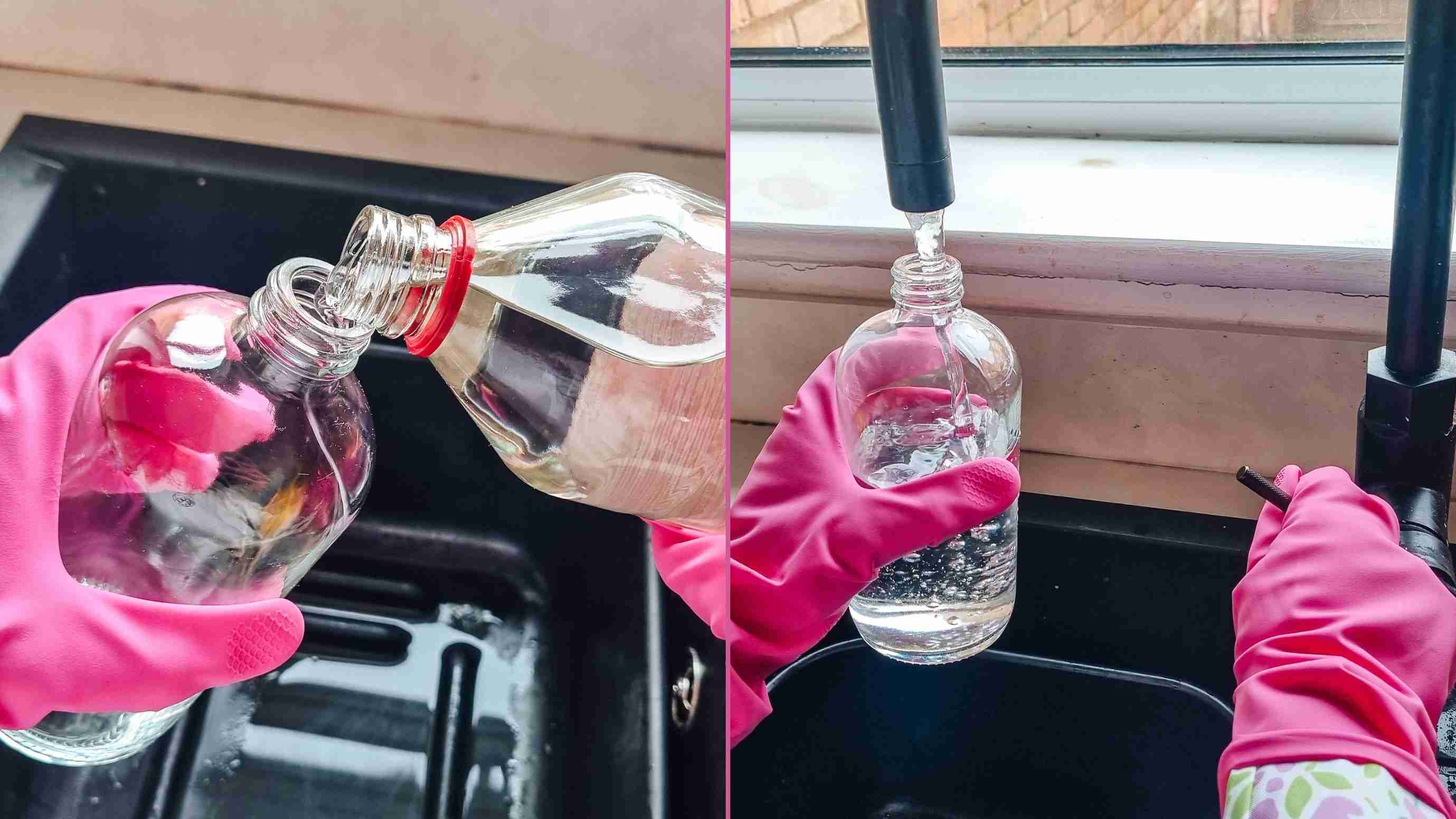
Real Homes demonstrates making a diluted solution in a clean spray bottle, then applying only a few sprays rather than emptying the bottle onto one pane. The guide specifically warns about acidic overspray on paintwork. Check the window's instructions and protect surrounding materials before beginning. Use a cloudy period so the liquid remains workable long enough to remove instead of drying into streaks.
Keep the sponge damp rather than saturated
The writer moistens a compressed sponge to soften it, squeezes out surplus water and uses it to spread the solution across the glass. That preparation controls both contact and runoff. Confirm that the tool is appropriate for the glazing, especially on treated panes. A sponge carrying grit or an incompatible scouring face should not be used simply because it looks similar to the one in a demonstration.
Complete the pane and ledge together
The reported sequence uses a squeegee from the top downward, followed by a microfiber cloth for remaining moisture. It then collects dirty water from the window ledge. This final area matters because runoff can otherwise sit against finishes or re-soil surrounding surfaces. Use a cleaner suitable for the ledge material if further wiping is needed. Check corners and the lower edge after the broad glass area has been finished.
Prepare the compatible mixture without unnecessary additives
Real Homes demonstrates diluted vinegar in a clean spray bottle rather than applying the bottle's full contents directly to one pane. Preserve the control in that example: measure the supported mixture and apply only what can be removed in an orderly pass. Check the glass and window instructions first. The source warns about acidic overspray on paintwork, a reminder that cleaner can affect nearby material even when its intended target is plain glass.
Optional fragrance appears in the demonstration, but it is not the core cleaning action. An extra scented ingredient may be unwelcome where residue or sensitivity is a concern. Keep the preparation straightforward and compatible, using the protection required for the chosen product. Do not read broad comparisons with commercial cleaners as evidence of universal environmental or health superiority; the source describes a household cleaning demonstration, not testing of every formulation and material combination.
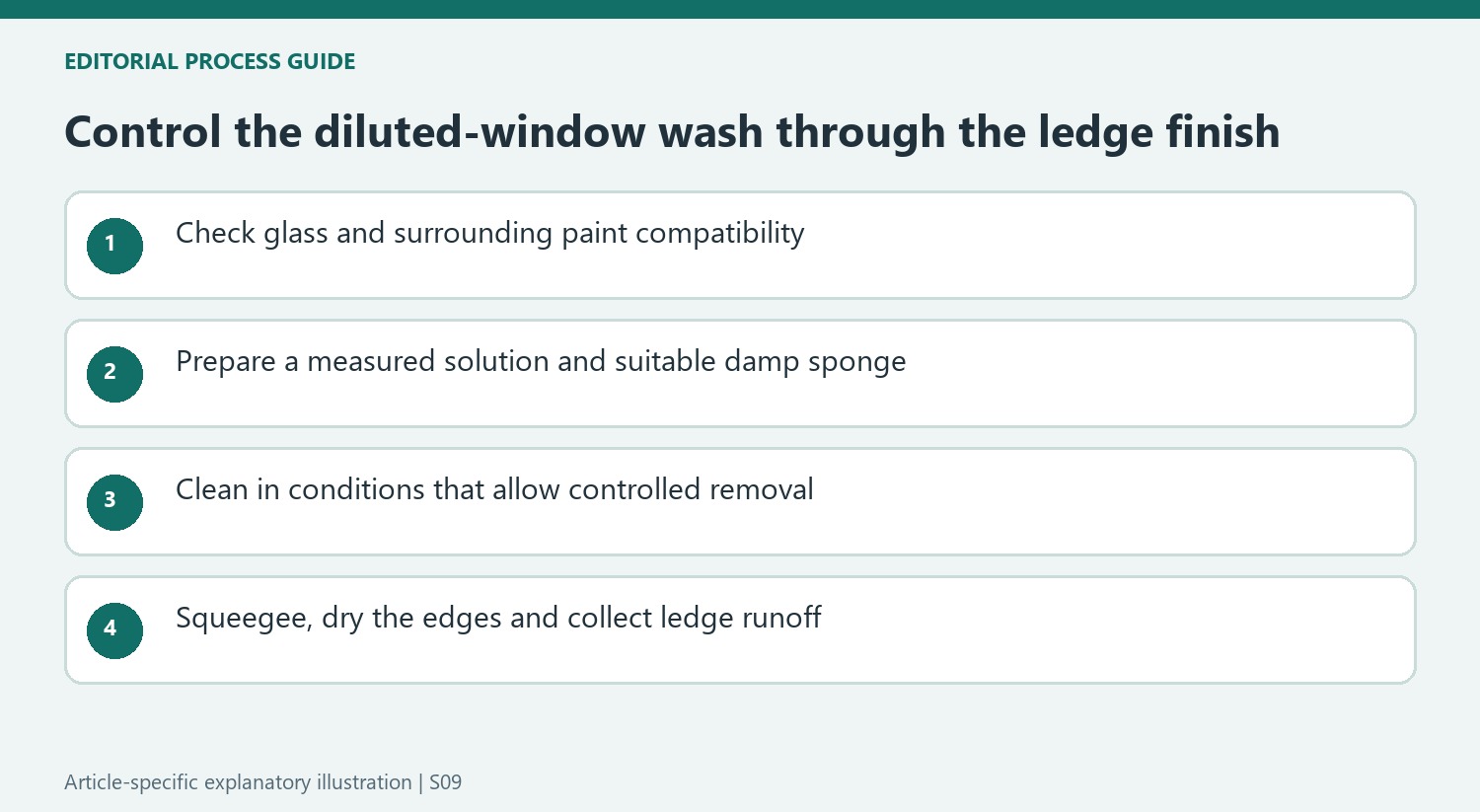
Manage moisture through the sponge and the weather
The writer dampens a compressed sponge so it becomes pliable, then squeezes out the surplus before spreading the solution. That preparation controls the amount of added water as well as how the tool contacts the pane. Choose a suitable clean sponge without grit or an incompatible scouring face. A similar-looking tool is not automatically equivalent if its surface has a different abrasive character or carries particles from an earlier task.
Use conditions that allow the solution to remain workable long enough for controlled removal. Direct sun can leave dried lines before the finishing stage reaches them, so the guide favors a cloudy period. Keep sections manageable rather than compensating for quick drying with repeated heavy spraying. The desired process loosens the identified film and collects it, without turning the sill and neighboring paintwork into a reservoir of acidic runoff.
Finish the lower ledge after collecting the pane water
The demonstration uses downward squeegee passes, followed by clean microfiber for remaining moisture. Wipe systematically across the pane so wet stripes are not left between strokes. Use a clean appropriate blade and cloth; dirt carried on either can leave a new trail through the finished area. If one corner remains damp, finish it locally rather than reapplying cleaner over the whole window solely to reach that small unfinished patch.
Collect dirty water on the ledge as a separate final check. Any additional ledge cleaner must suit its own material rather than being chosen because it was convenient for the pane. Inspect the dry glass, lower edge and nearby finishes before ending the job. A favorable result comes from compatible dilution, restrained application, suitable weather and complete collection together. It should not depend on treating vinegar as a universal solution for every surface surrounding a household window.
References
- Here's how to clean windows with vinegar. Real Homes; Eve Smallman.
Timing and proper liquid removal matter as much as the ingredient choice.


Leave a Comment
Comments (0)