A Paste-Cleaner Trial for Cloudy Shower Glass
A Homes & Gardens writer used The Pink Stuff with a softened sponge, followed by thorough rinsing and a dry finish.
Control the contact with the surface
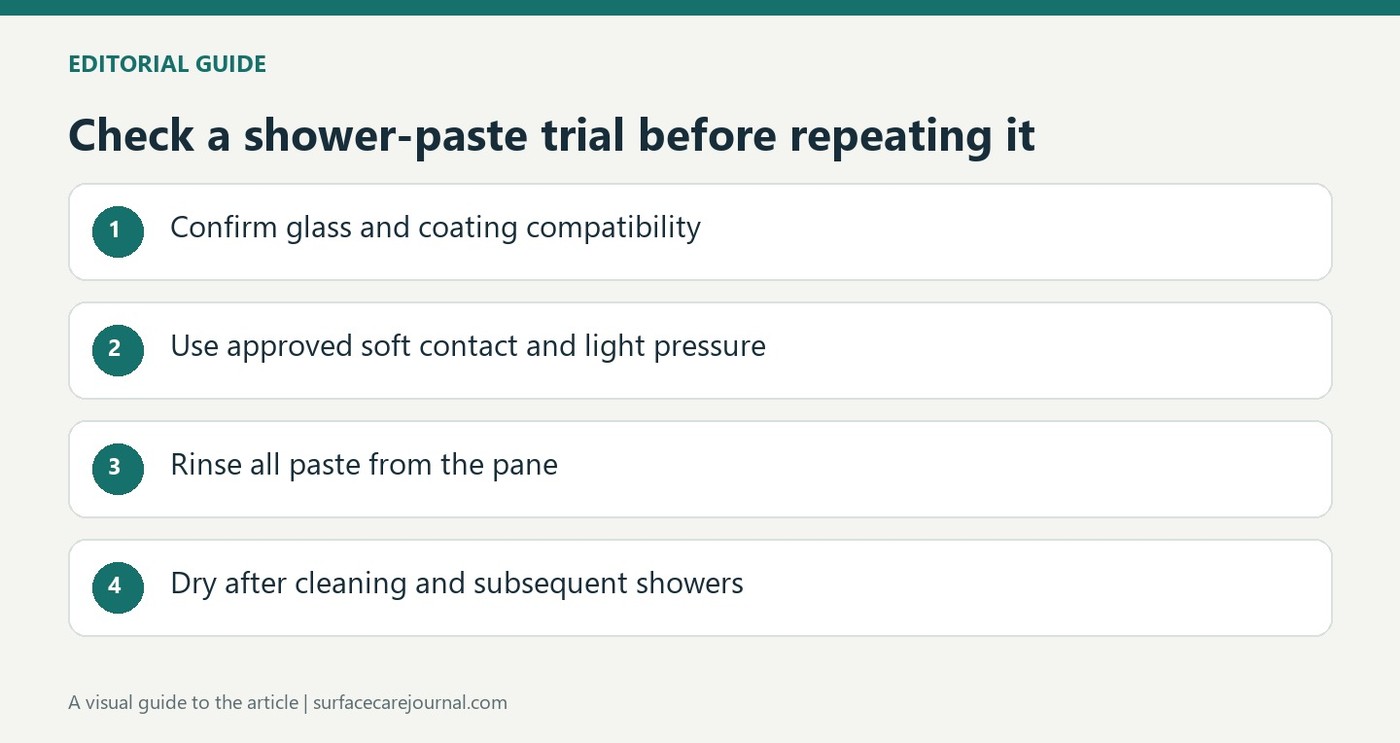
The reported method starts by wetting the glass, then applying the paste with a sponge softened in warm water. The writer works from the top downward with gentle movements rather than treating more pressure as the answer to every mark. The paste is then rinsed away before the door is dried with a squeegee or window vacuum.
Respect the abrasive limitation
The source specifically warns that the product can be too abrasive for delicate or polished surfaces and recommends gloves and ventilation. That matters around door finishes and any specialist glass coating. Check the cleaner label and shower manufacturer's instructions before adopting the method. The writer reports good results on their own glass, but that experience should not become a promise that every shower door or adjoining metal finish will tolerate the same treatment.

Keep preventive drying apart from claims about protection
The writer finishes the reported paste clean with a squeegee or window vacuum and recommends the same water removal habit after showering. This is a practical maintenance step even when a different approved cleaner is used. The article also discusses water behavior after treatment, but a personal observation does not establish a durable protective coating or a reason to extend cleaning indefinitely. Inspect the door regularly, use the manufacturer's care instructions and keep nearby metal finishes out of an unapproved abrasive process. A soft cleaning head and light pressure do not by themselves guarantee that every coating will remain unaffected.
Assess the enclosure before copying the pairing
The Homes & Gardens account pairs a paste cleaner with a sponge softened in warm water. Both parts need assessment for the actual shower door. Softening the sponge changes its feel, but it does not remove the paste's abrasive character or establish permission for a particular coating. Read the current cleaner label and enclosure care guidance together before treating a cloudy panel. A successful result in the writer's bathroom remains a result on that installation.
Include nearby fittings in the assessment. The source also describes cleaning metal shower parts, yet polished or delicate finishes can have different restrictions from plain glass. Keep an unapproved abrasive treatment away from those areas and avoid assuming the door handle tolerates whatever is chosen for the pane. Gloves and ventilation are practical requirements mentioned in the article; informal claims about a household cleaner being non-toxic should not replace its actual use instructions.
Control the contact from the upper pane downward
The writer wets the glass, applies the paste gently and works from the top toward the bottom. That order makes the application and later rinse easier to follow without moving dirty material across an already finished section. Use only the pressure and tools permitted for the surface. A remaining mark should prompt a check of compatibility and deposit type rather than a reflex to push harder with a more abrasive sponge face.
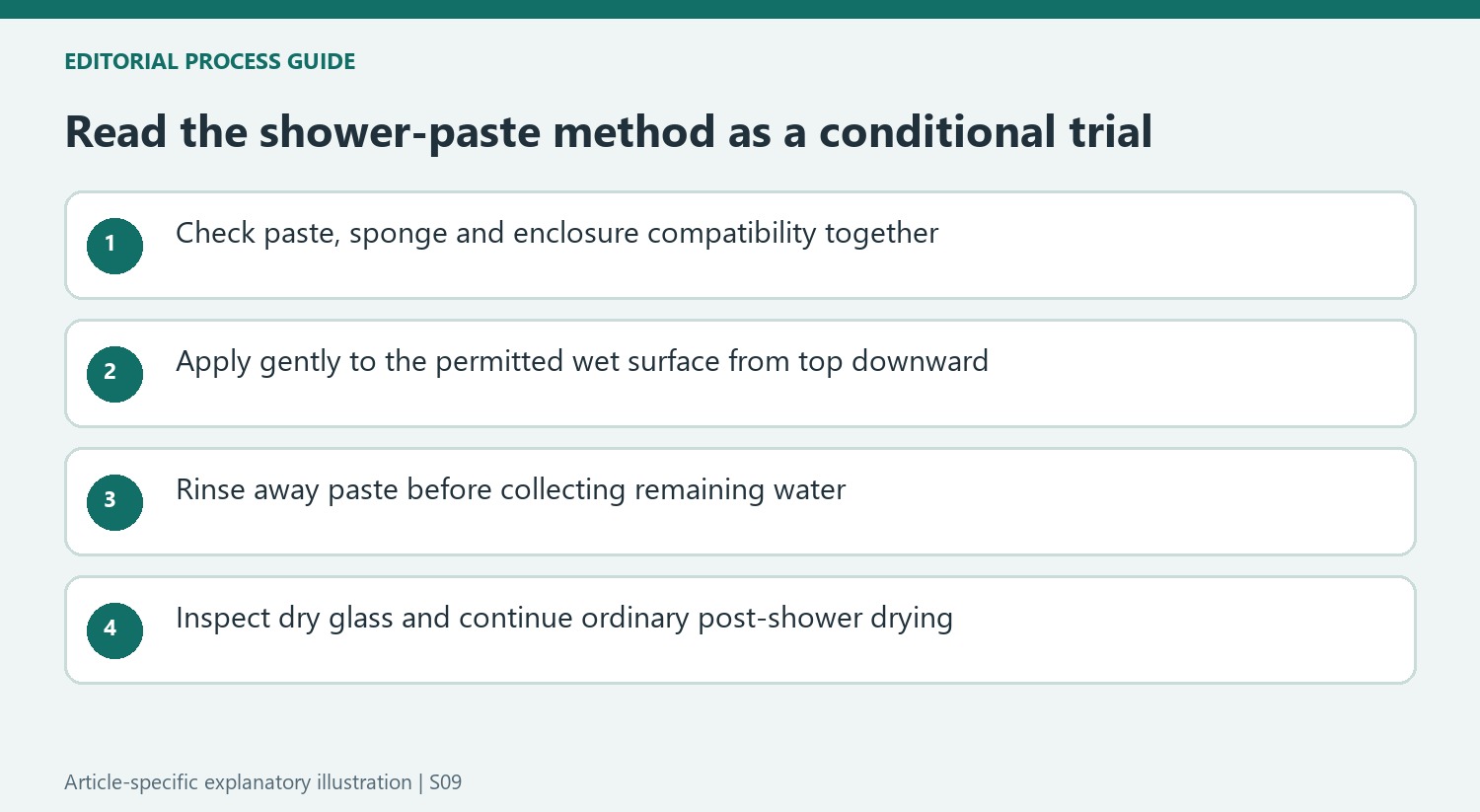
Rinsing has its own purpose: removing the paste and the soil it has released before the finishing tool reaches the pane. Check lower edges and places where product gathers. Do not expect a window vacuum to take the place of complete product removal; its instructions determine what liquid it may collect. Where a clean cloth is needed, use a fresh suitable face so cleaning particles are not spread back onto the glass.
Judge maintenance claims separately from visible clarity
The source reports improved water behavior after cleaning, but an anecdote does not establish a durable protective coating on every shower door. Continue the enclosure's ordinary maintenance rather than extending the interval solely because the pane initially looks clearer. A compatible squeegee or cloth used after showering removes water before mineral-bearing droplets dry. That habit remains useful even when a completely different approved cleaner is used for the deeper wash.
Inspect the dry door under normal bathroom light and distinguish surviving deposits from a new cleaner film. Review the nearby fittings as well, collecting any remaining water rather than allowing runoff to dry there. If the result is uncertain, seek the enclosure supplier's recommended route instead of repeating an abrasive treatment indefinitely. The useful lesson from the trial is its staged application, rinse and dry finish, with material suitability decided before those stages begin.
References
A Homes & Gardens writer used The Pink Stuff with a softened sponge, followed by thorough rinsing and a dry finish.


Leave a Comment
Comments (0)