
Clean Window Frames before Finishing the Glass
The window reference recommends including curtains or blinds in the broader cleaning task, then addressing the frames before the glass. Otherwise, dirt and water from the surround can land on a freshly finished pane. A damp sponge removes lighter surface dirt from the frame.
Choose a glass-cleaning solution compatible with the window and its neighboring materials. Finish the panes after the surrounding surfaces are clean, using suitable tools to remove liquid rather than allowing residue to dry in place.
Clean the surround before introducing liquid to the pane
The experts quoted by Homes and Gardens recommend including curtains or blinds in the larger job, then wiping frames before the glass. If the frame is particularly dirty, use only a mild product appropriate for its finish. This sequence reduces dirt falling or dripping onto a finished pane. Keep the amount of water controlled around joints and adjacent furnishings.
Use systematic coverage and a separate finishing cloth
The source describes a Z-shaped wipe to cover the glass and a suitable cloth for the edges. Whatever compatible cleaner is chosen, collect the loosened material instead of simply moving a wet patch around. A dirty cloth can spread the same residue over a fresh section. Finish narrow edge areas where moisture remains after the broad central pane looks clear.

Do not transfer the window recipe to a mirror blindly
The article specifically cautions against using its vinegar approach on mirrors because liquid can affect the backing. That distinction matters even when the front surfaces appear similar. Check the manufacturer's instructions for mirrors, specialist coatings, frames and seals. Exterior panes also face different dirt from interior ones, so inspect the actual soil and safe access before deciding how to clean both sides.
Begin with the items that can dirty the glass again
Homes & Gardens places curtains or blinds within the wider window-cleaning task, then directs attention to the frame before the pane. That order prevents nearby dust and dirty drips from undoing the finish. Follow the care instructions for the actual window treatment rather than assuming it tolerates the glass-cleaning solution. Move or protect it appropriately and deal with loose surround debris before introducing a wet cloth to the reflection.
A damp sponge may handle lighter frame dirt, while a heavier layer needs a mild product approved for the frame finish. Control the moisture around joints, seals and adjoining furnishings. Frame cleaning is not simply a preliminary spray over everything attached to the window. The useful result is a clean surround that will not shed material onto the pane during the next stage, achieved without leaving moisture trapped in an unsuitable location.
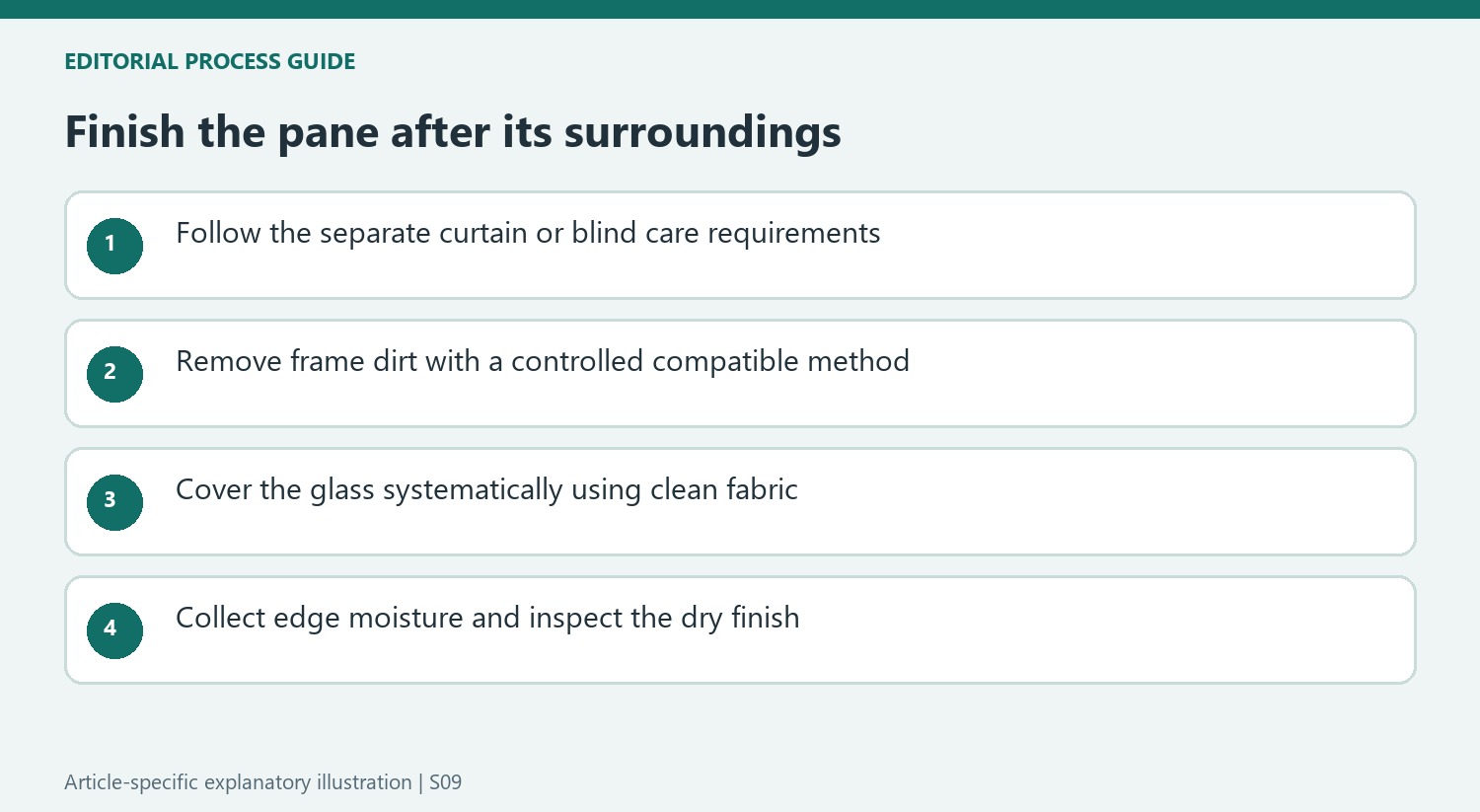
Cover the pane deliberately and keep fabric fresh
The article describes a Z-shaped motion as a way to reach the glass methodically rather than rub randomly at the middle. Whatever supported pattern is chosen, follow the cleaned area across the pane so missed strips are easy to identify. Apply a compatible cleaner in a controlled quantity and collect the loosened soil. A cloth already carrying dirty frame water should not become the tool used to give the central pane its final polish.
Finish with suitable clean fabric and pay particular attention to the edge where liquid remains after the broad area looks clear. The source also mentions newspaper, but paper condition and ink can vary, so it should not be treated as a guaranteed universal finishing tool. A clean appropriate cloth provides a straightforward option. Judge the dry result for residue or fibers before adding more solution across a surface that may already be clean.
Keep window and mirror assemblies distinct
The source explicitly advises against transferring its vinegar window method to mirrors because liquid can reach the backing. Preserve that distinction even though the front of each object appears similarly glossy. Specialist window coatings, tint, seal materials and decorative frames can also change what is permitted. Check the installed product's instructions rather than choosing the same household mixture for every transparent or reflective surface within reach of the spray bottle.
Exterior panes may hold different dirt from the inside, and access requirements must be considered before planning both faces. Use an approved method for each accessible area and an equipped service where needed. Keep drainage features and surrounding components functional during the broader care session. The practical sequence remains surround preparation, compatible glass cleaning, controlled liquid removal and dry inspection, with the details determined by the actual assembly instead of a single recipe applied everywhere.
References
- How to clean a window without streaks – according to experts. Homes and Gardens; Megan Slack.
A top-to-bottom sequence prevents dirty runoff from spoiling newly cleaned panes.


Leave a Comment
Comments (0)