A Vinegar-Based Glass-Cleaner Trial Uses Few Ingredients
The glass-cleaner account describes equal measures of white vinegar and distilled water in a clean spray bottle. A few drops of scented oil appear as an optional addition. The writer reports removing ordinary fingerprints and grime during a window-cleaning trial.
That experience does not establish compatibility with every glass coating or adjacent finish. Acids need particular care around stone, metal, and mirror edges. Check material instructions before adapting the mixture, and avoid unnecessary additives when the aim is a residue-free finish.
Distinguish a personal result from comparative testing
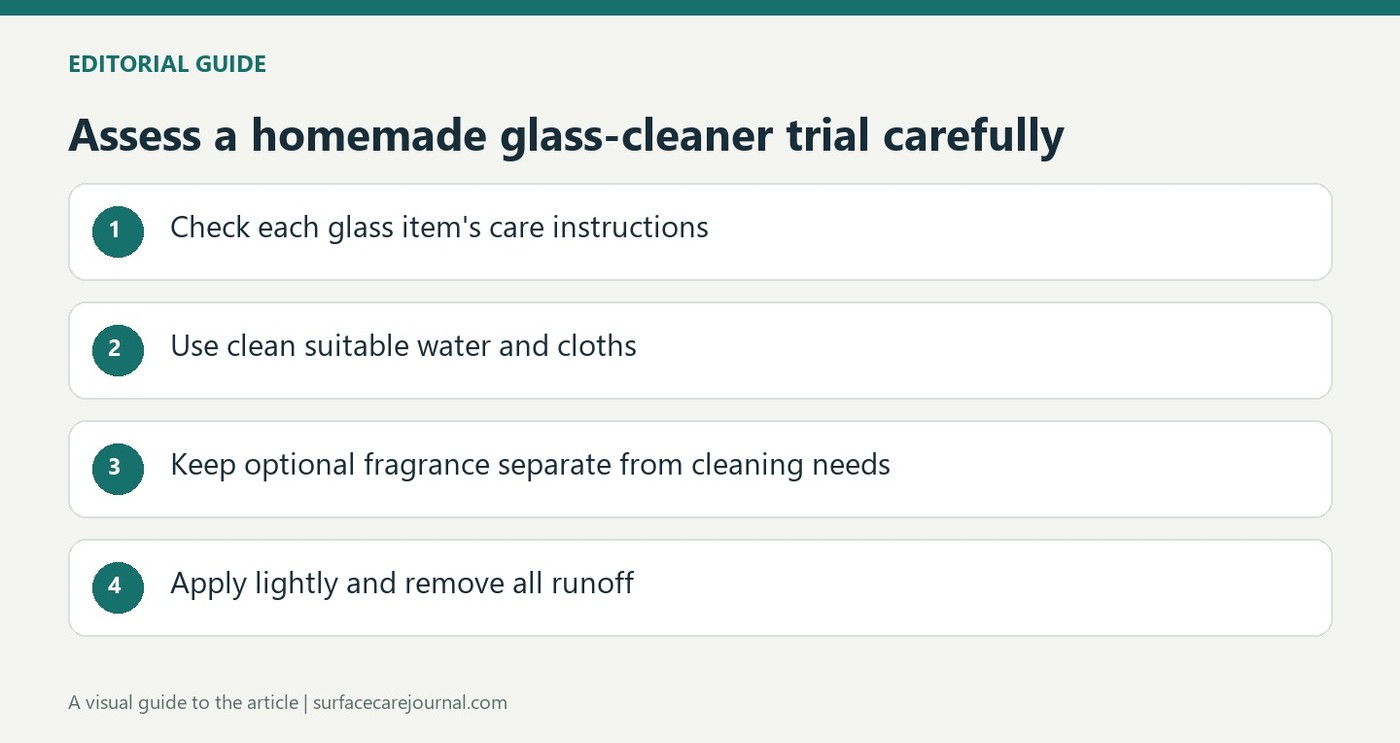
The Homes and Gardens writer reports trying the homemade solution on windows, mirrors, shower doors and picture-frame glass. That range records the author's experience, but it does not establish that every coating, backing or frame construction tolerates the same liquid. Check each item's care instructions separately. A favorable household trial also does not prove that the mixture outperforms every shop-bought cleaner or disinfects the treated surface.
Use the water and cloth details deliberately
The account uses distilled water to avoid adding mineral residue and reports better results with microfiber than with a fluffy hand towel. These details address two different possible sources of marks: deposits from water and fibers left by a cloth. Keep the cloth clean, use the appropriate amount of solution and inspect a small finished area before repeating the same process across other items.
Keep the optional fragrance in perspective
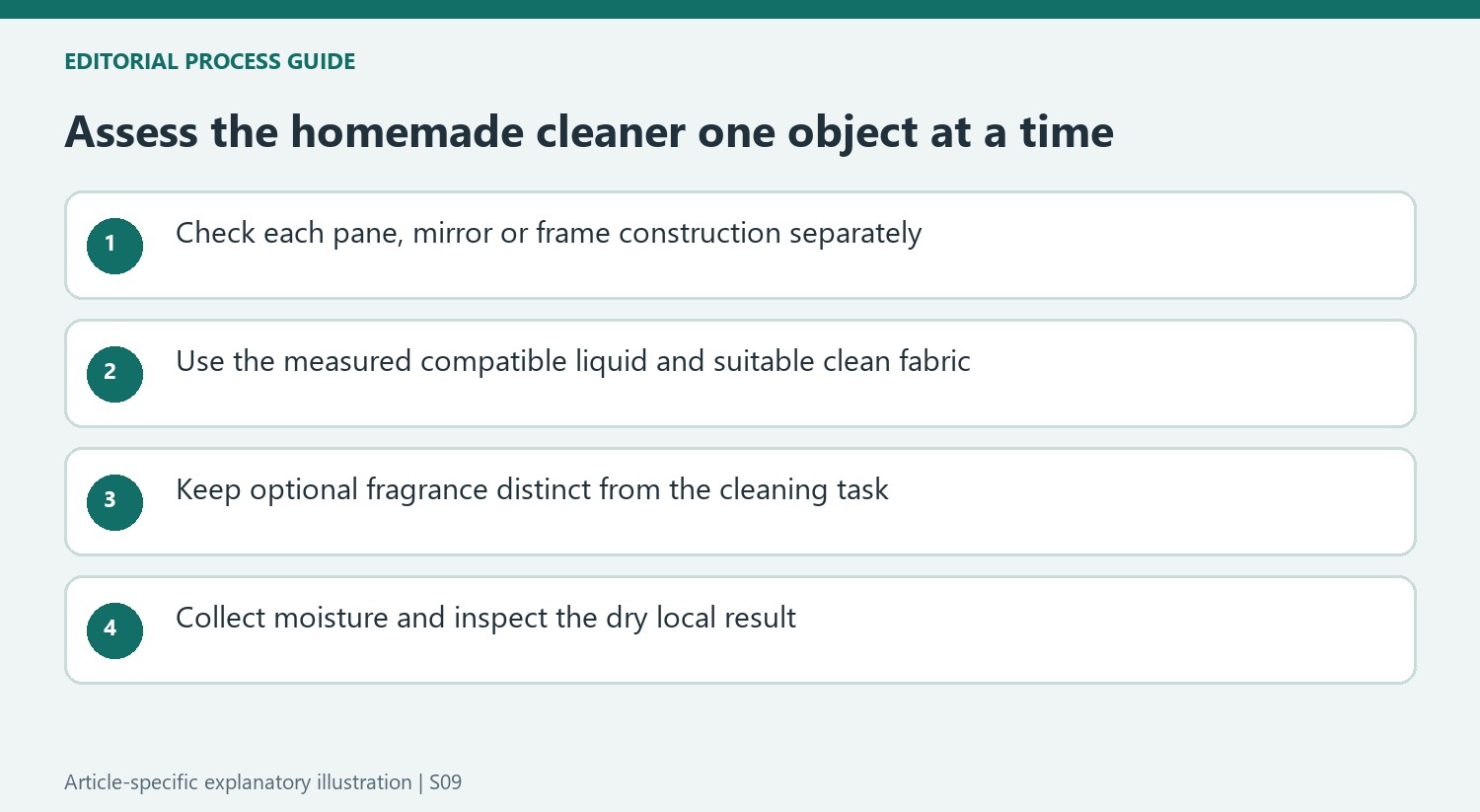
Lavender oil appears as an optional addition intended to change the smell. It is not the core cleaning step, and an extra ingredient may be undesirable when the aim is to avoid residue or fragrance exposure. The writer also warns against overspraying because excess liquid creates drips and streaks. Control application, remove the dirty solution fully and keep moisture away from picture-frame contents or vulnerable mirror edges.
Keep the personal trial distinct from a universal formulation
The Homes & Gardens writer mixed measured vinegar and distilled water, then tried the result on several household objects. That describes a useful account of what happened at that home, but it is not comparative laboratory testing across shop-bought cleaners. It also does not establish that the mixture disinfects surfaces. Preserve the observed cleaning result without extending it into promises about all products, all users or every kind of transparent and reflective material.
Each object named in the account has its own construction. A mirror has vulnerable edges and backing, a picture frame holds contents that should remain dry, and a shower door may carry a protective treatment. Check the care instructions separately instead of moving from one successful window to every item in the room. Acid compatibility and liquid control must include nearby frames, stone and fittings as well as the central pane being wiped.
Address water deposits and fabric fibers separately
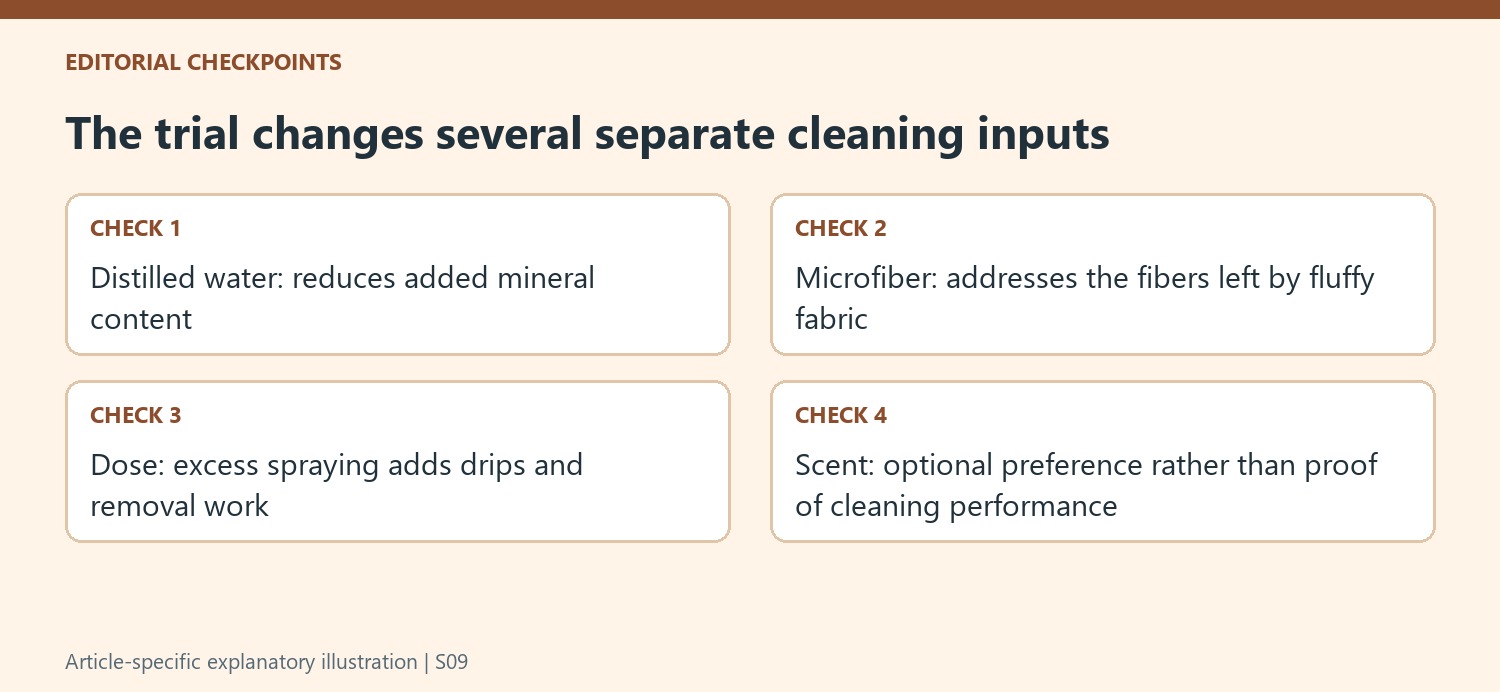
The source uses distilled water to reduce the contribution of mineral deposits and reports a better finish with microfiber than with a fluffy towel. These details concern different inputs. Changing the water does not remove lint already shed by a cloth, and a low-lint cloth cannot automatically prevent mineral marks if a wet surface is left to dry. Keep both the liquid and the finishing fabric appropriate to the problem being addressed.
Use a clean cloth and change its working face as dirt accumulates. Apply a controlled amount of the permitted cleaner rather than covering the object in more liquid than can be collected. The writer warns that overspraying can create drips and streaks, so the initial favorable report should not be read as a reason to use a generous dose on every surface. A clear local test under the manufacturer's guidance is more useful than assuming another object's result will transfer.
Treat optional scent as a preference rather than a cleaning requirement
Lavender oil appears as an optional addition intended to change the vinegar smell. It is not necessary to the article's basic water-and-vinegar cleaning concept, and fragrance can be undesirable in some households. Avoid adding it merely because a three-ingredient headline makes it seem essential. Any extra ingredient also becomes part of what must be compatible with the finish and removed without leaving a film across the reflection.
Inspect the result once the surface is dry, looking for fingerprints, water deposits, product film or fibers rather than grouping every imperfection as dirt. Address a remaining local mark only with the approved method for that object. The useful takeaways are measured preparation, suitable water, clean fabric and restrained application. Those can inform a careful routine while the original recipe remains conditional on each material and the writer's favorable experience remains a personal account rather than a universal performance guarantee.
References
- My homemade glass cleaner rivals shop-bought solutions – and it only contains 3 ingredients. Homes and Gardens; Gabriella Dyson.
The writer tests a familiar household mixture while exploring a simpler cleaning cupboard.


Leave a Comment
Comments (0)