Reduce Mineral Residue on Glass Shower Doors
Water left on shower glass can evaporate and leave mineral deposits, especially in hard-water areas. Soap residue adds another source of cloudiness. Remove both with a cleaner approved for the screen, its coating, and the materials around it.
Rinse away the treatment and dry the glass with a clean microfiber cloth or suitable squeegee. Keep acidic cleaners away from sensitive stone and incompatible hardware. A brief moisture-removal routine after showering reduces the buildup that later needs stronger attention.
Let the door's coating control the method
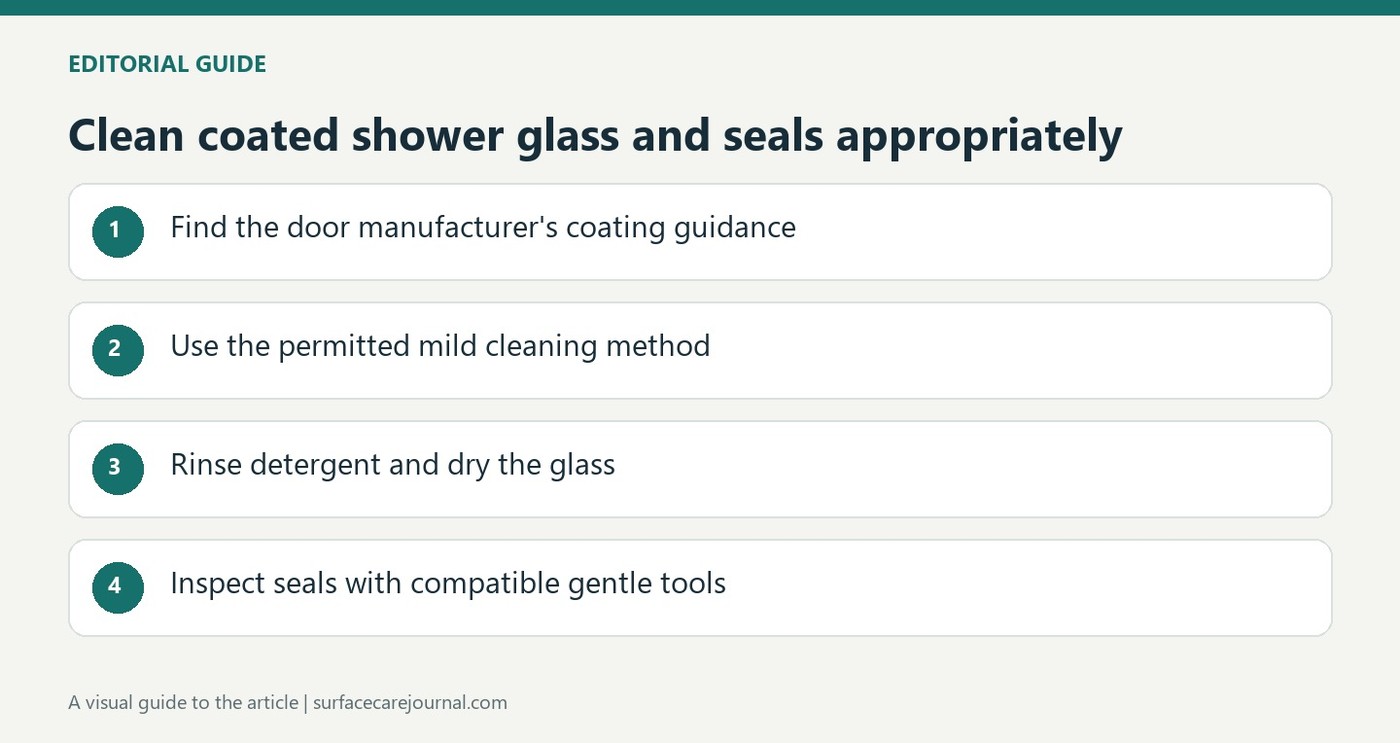
Real Homes gives treated shower doors their own instructions: use the manufacturer's recommended mild detergent, a microfiber cloth, a rinse and drying. That qualification is more useful than assuming tempered safety glass makes every cleaner or abrasive suitable. A protective coating can reduce buildup while still needing regular care. Check the enclosure's guidance before trying a household acid, pad or added water-repellent treatment.
Remove detergent rather than leaving a new film
The article discusses a shampoo cleaning hack but also includes a warning that unrinsed detergent may contribute to more residue. This is a useful distinction between loosening grime and completing the job. Rinse the permitted solution away, then collect remaining water with a suitable squeegee or clean cloth. A pane can look wet and shiny while still carrying material that will become visible after it dries.

Include the seals without damaging their condition
The guide points out that dirty seals can spoil the overall appearance even after the glass is clear. Inspect them during regular cleaning, using a compatible product and gentle tool rather than treating them like the center of the pane. Persistent black marks or deteriorated seals may need assessment. Dry the enclosure after use and check recurring damp areas instead of relying solely on occasional stronger cleaning.
Let a treated-door instruction outrank a general recipe
Real Homes gives coated shower doors their own care route: the manufacturer's recommended mild detergent, suitable microfiber, a rinse and drying. Start there when a protective treatment is present. The description of tempered safety glass concerns how the panel is made to behave if broken; it is not permission to apply every cleaner or abrasive to the finish on its surface. Identify that finish before choosing from the article's wider household suggestions.
A treatment intended to reduce stains still needs routine maintenance. Avoid interpreting protection as a reason to leave droplets and soap film until the pane becomes opaque. Inspect ordinary water exposure around the door and keep suitable drying equipment accessible. If an additional water-repellent product is being considered, check compatibility with the existing layer rather than assuming two protective treatments can be stacked without changing appearance or later cleaning requirements.
Make rinsing a required part of detergent cleaning
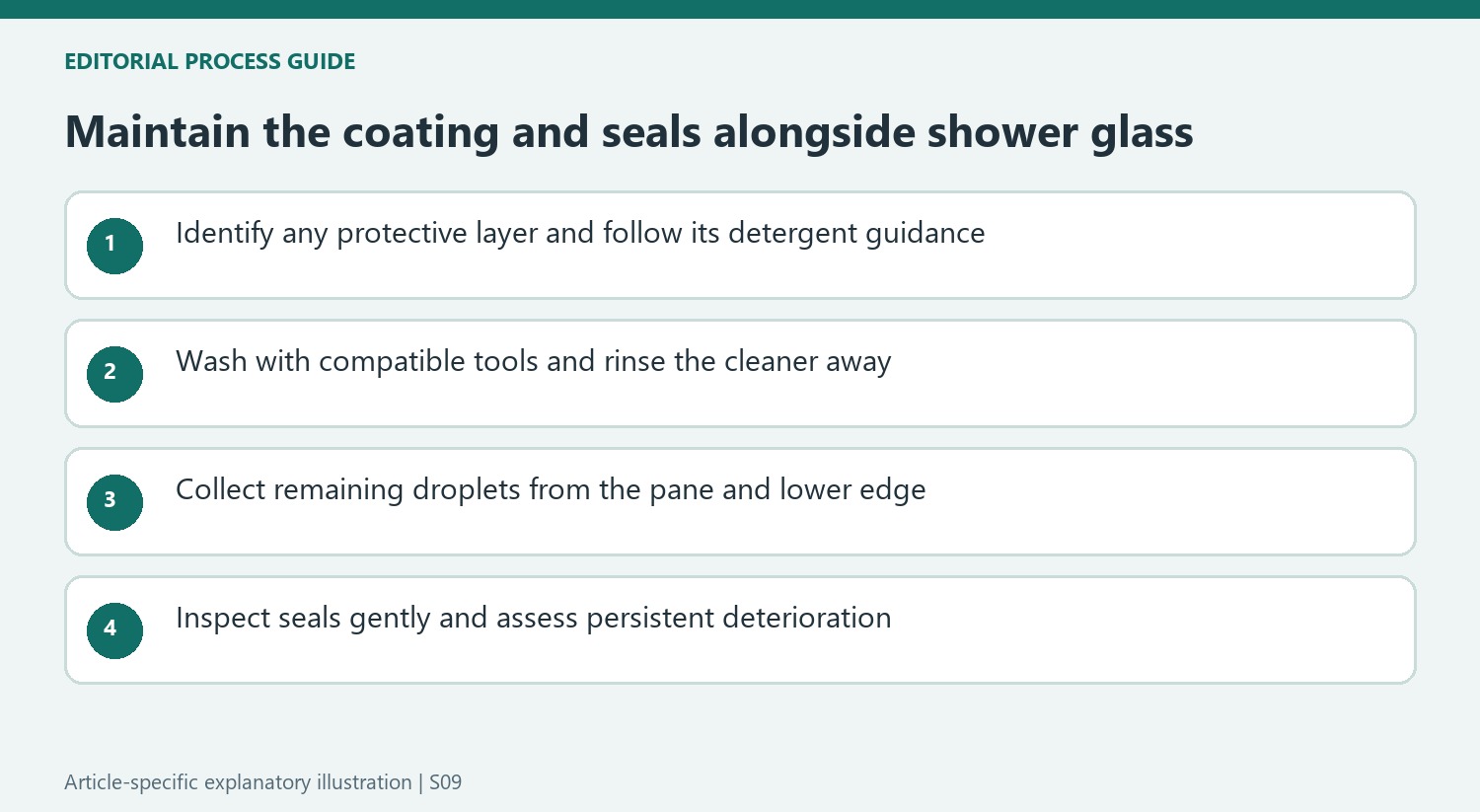
The article describes a shampoo shortcut but also preserves the qualification that unremoved detergent can contribute another film. That is the useful distinction: a surfactant may loosen material without the job being complete. After any permitted wash, rinse as the method requires and collect the dirty liquid. A shiny wet door can still be carrying the very ingredients that will become visible when the water evaporates.
Use clean fabric and a suitable squeegee for the finishing stage, paying attention to the lower edge as well as the center. Keep acidic runoff away from sensitive stone and incompatible hardware if an acid-based product is actually permitted on the pane. Do not combine every household alternative in the guide or increase abrasion simply because a deposit is old. The actual door and adjoining materials decide which complete method can be used.
Include seals in the inspection without treating them as glass
The source points out that dirty seals can spoil the appearance of a clear enclosure. Inspect them during routine care, using a gentle compatible tool and product. A seal's flexible material and function differ from the broad glass pane, so vigorous scouring or an unsuitable chemical can create a maintenance problem rather than solve one. Preserve the fitted position and examine any area that repeatedly stays damp after use.
Persistent black marks or visible deterioration may require assessment rather than increasingly forceful cleaning. Keep those findings separate from the ordinary mineral spots left by evaporating droplets. After bathing, remove water with the appropriate tool and review recurring accumulation before it becomes a large deposit. The complete care plan protects the coating, removes the chosen cleaner and maintains the seals, connecting visual clarity with the condition of the whole enclosure instead of focusing only on the central pane.
References
- How to clean glass shower doors – get rid of hard water stains and soap scum naturally. Real Homes; Sarah Warwick; Amelia Smith.
Drying the screen after rinsing limits what evaporating droplets leave behind.


Leave a Comment
Comments (0)