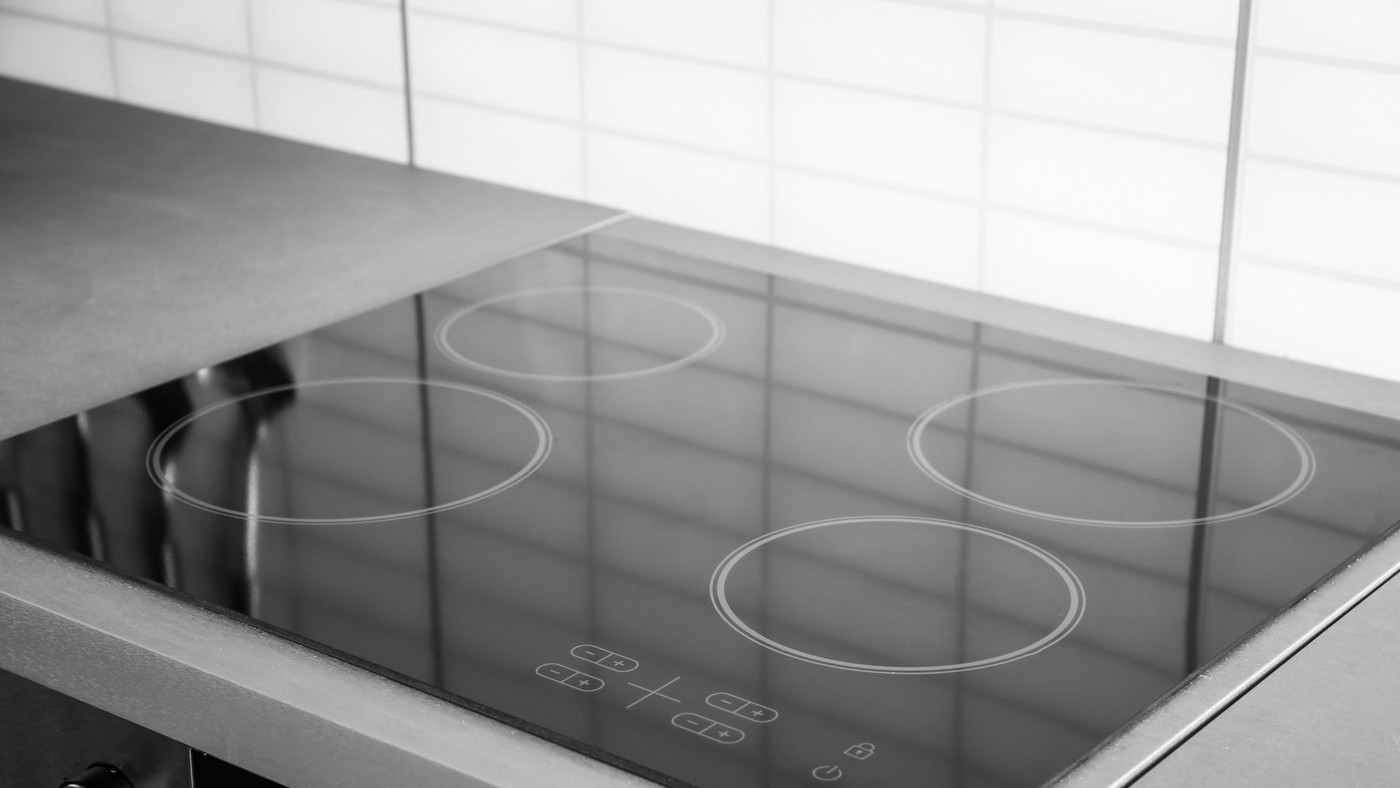
Let a Glass Cooktop Cool before Cleaning It
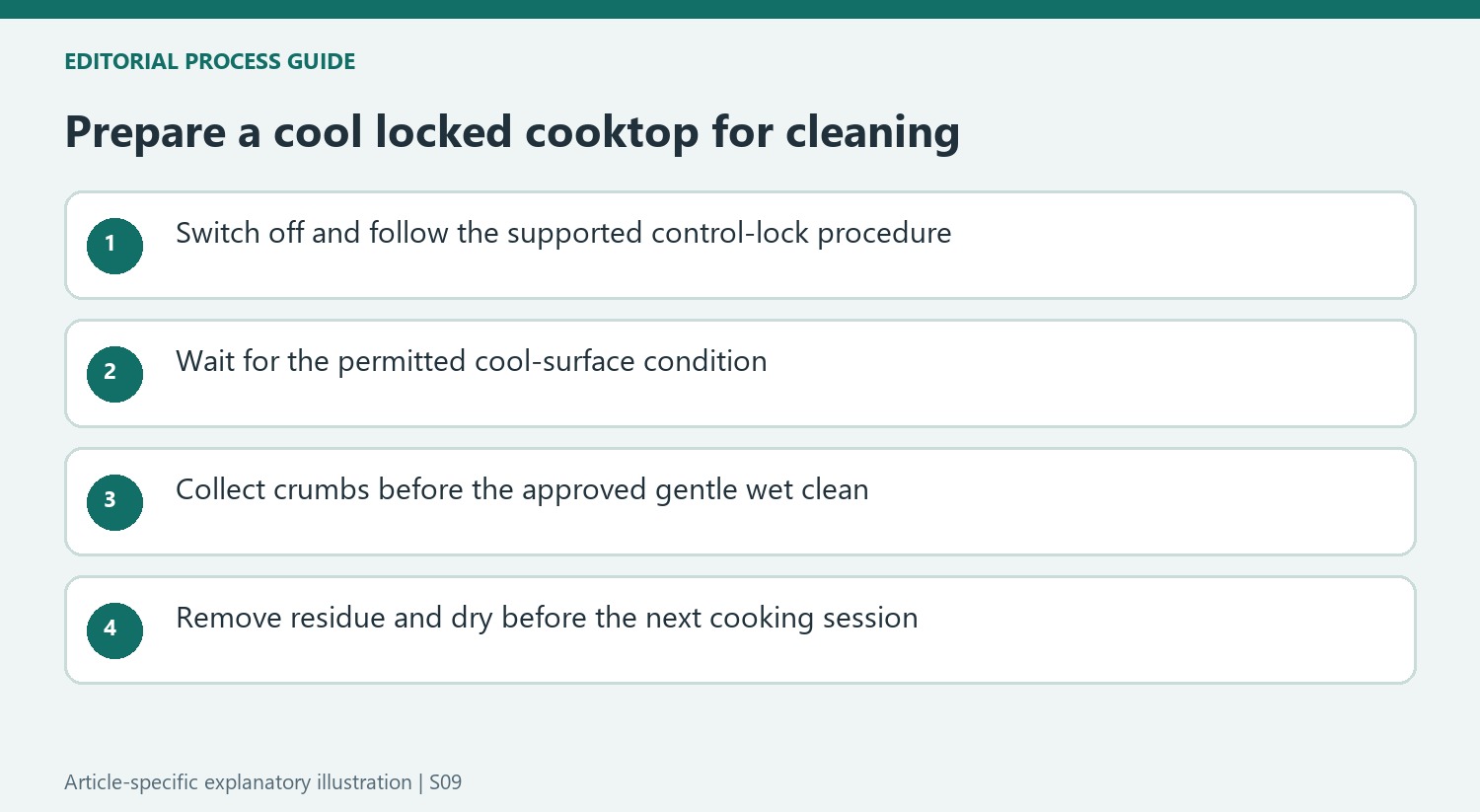
Switch a glass stove off and let it return to room temperature before cleaning. If the appliance has a control lock, use it according to the manual. Working on hot glass can cause burns and may damage the surface.
Remove loose crumbs before treating grease with an approved method. Use nonabrasive tools and follow the cooktop maker rather than assuming every household mixture is suitable. Wipe away residue with a clean cloth so cleaner is not left to heat during the next use.
Check the controls before wiping across them
Real Homes highlights that digital controls may be activated accidentally during cleaning. Use the appliance's supported lock function where provided, and confirm the surface is cool before collecting dry crumbs. This preparation reduces the need to work around loose particles while dealing with grease. The method should fit the actual cooktop, rather than a generic assumption that every flat glass appliance cleans identically.
Use gentle contact instead of extra pressure
The source recommends soft microfiber and restrained movement because forceful scrubbing can scratch the surface. A stubborn mark should be approached with a cooktop-approved product or tool, following its directions. The article presents several household mixtures, but that does not establish their suitability for every glass treatment. Start with the appliance maker's specified routine and check before introducing a different chemical or abrasive.
Remove cleaner before the next cooking session
After loosening grease, wipe away the dirty material with a clean damp cloth, keeping water controlled. Follow with the finish recommended by the manual and make sure residue is not left around controls or cooking zones. The article warns against excessive water and unsuitable bleach or ammonia products. A visibly shiny surface is only one goal; removing the cleaning material before reheating is part of completing the job.
Confirm the cooking surface cannot reactivate
Real Homes calls attention to the controls as well as the glass temperature. A digital hob can respond to wiping, so use its supported cleaning lock where supplied and keep it switched off under the appliance instructions. Wait until the surface reaches the permitted cleaning condition. The article contains several contributors' routines, but the clear starting rule for this approach is a cool surface rather than improvising around residual cooking heat.
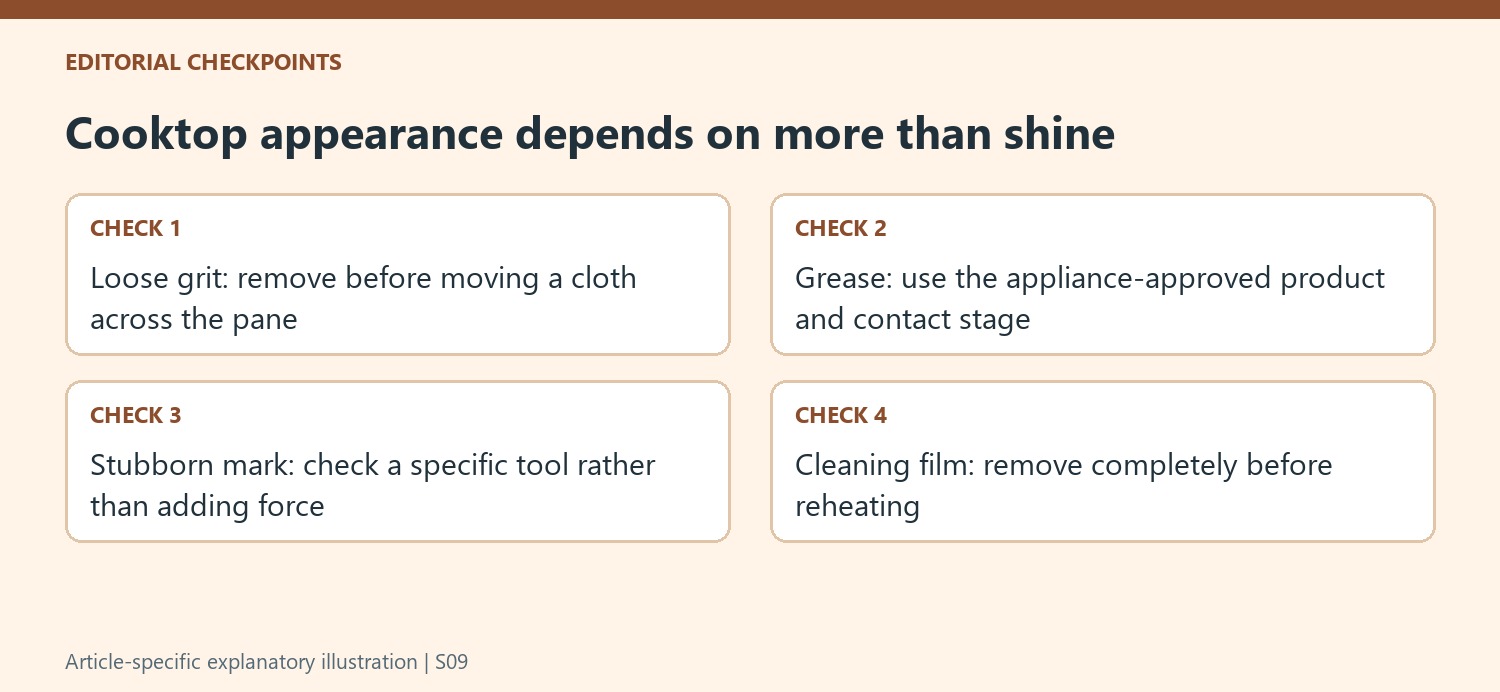
Collect loose crumbs before dealing with greasy soil. This separates dry particle removal from the stage in which a damp tool moves across the glass. Use equipment appropriate for that task rather than letting gritty debris remain under a cloth. Inspect the zones and control area while doing so; a small isolated spill may need local treatment, whereas a general film calls for the ordinary care method recommended for the actual cooktop.
Choose the appliance-approved route through stubborn soil
The source lists household mixtures and several commercial products, but a product list does not make each option suitable for every installed glass treatment. Start with the manufacturer's specified cleaner and nonabrasive tool. Observe its application, contact and removal directions. Avoid combining alternatives just because they appear in the same general article, and do not interpret bubbling or a strong smell as evidence of improved cleaning or disinfection.
Gentle contact is central to the guide. Excess pressure can damage the appearance while failing to address why a mark remains. If the normal treatment leaves a deposit, establish whether a specific cooktop tool is permitted rather than reaching for an ordinary abrasive pad. A line that looks like dirt could also be a permanent surface mark, so repeated vigorous rubbing is not a reliable diagnostic method or a substitute for asking the appliance supplier.
Complete the clean before the next heating cycle
Lift the dirty cleaning material away using a clean controlled-damp cloth and keep the surrounding water restrained. The article warns against excessive water and unsuitable bleach or ammonia products. A new layer of cleaner should not be left to dry around cooking zones or controls simply because the center now looks shiny. Refresh the cloth face as needed so the finishing stage actually removes residue rather than distributing it into a thinner film.
Follow the appliance's drying and return-to-use guidance, checking both the glass and the touched control area. Keep the suitable cloth and approved cleaner available for later cooled-surface touch-ups so food splashes do not accumulate into a more demanding job. The result to seek is a surface free of loose grit, grease and cleaning residue, achieved without using heat, pressure or an unfamiliar mixture as a shortcut around the cooktop's own instructions.
References
- How to clean a glass stove top — yours will be spotless after these 6 steps. Real Homes; Beth Mahoney.
Heat and accidental control activation are avoidable complications during maintenance.


Leave a Comment
Comments (0)