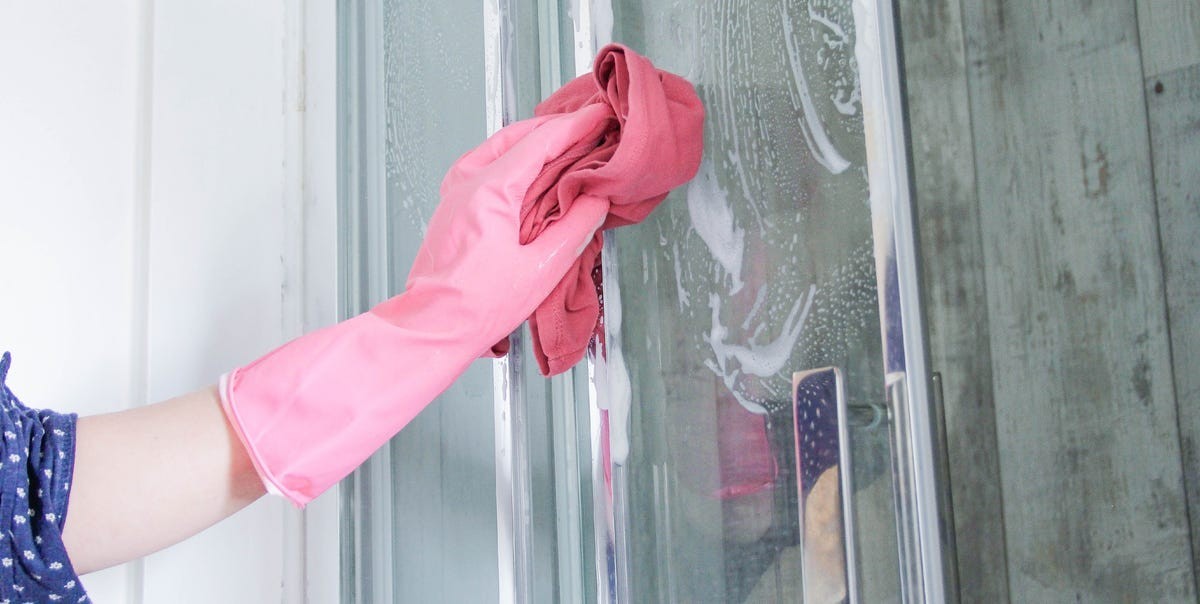
Dry Shower Glass Between Deeper Cleaning Sessions
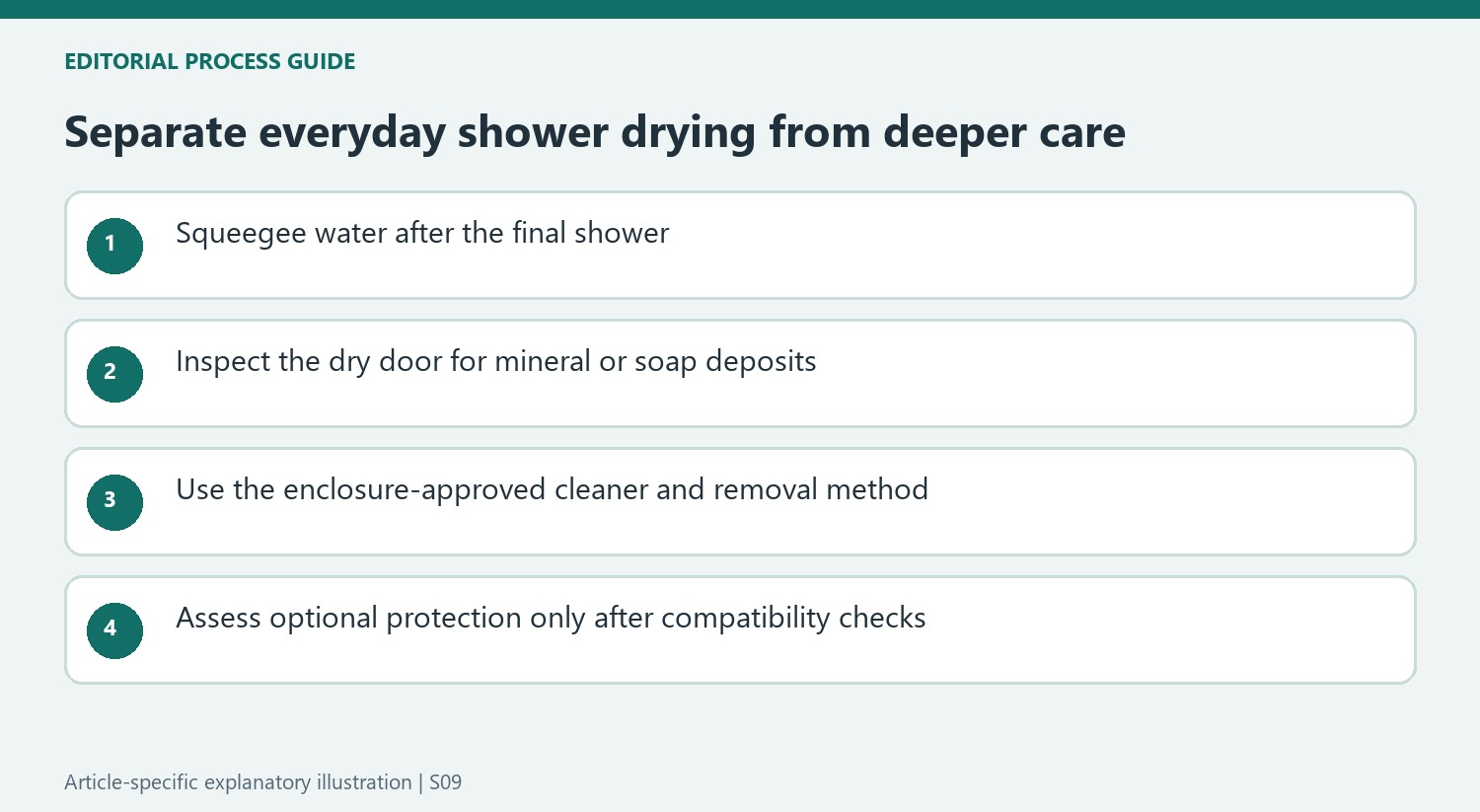
Good Housekeeping's cleaning specialists recommend squeegeeing and drying shower glass after the final shower of the day. This reduces the water left to evaporate on the surface and helps limit the deposits that make later cleaning harder. A separate deeper clean addresses accumulated soap residue and hard-water marks.
The guide describes a vinegar-based solution for suitable glass, but first check the shower manufacturer's instructions and protect any acid-sensitive stone, finishes or coatings nearby. Use a compatible non-scratching tool, rinse as directed and buff dry. Keeping the surface drier is a maintenance habit, not a reason to assume all surrounding bathroom materials tolerate the same cleaner.
Distinguish mineral spots from soap residue
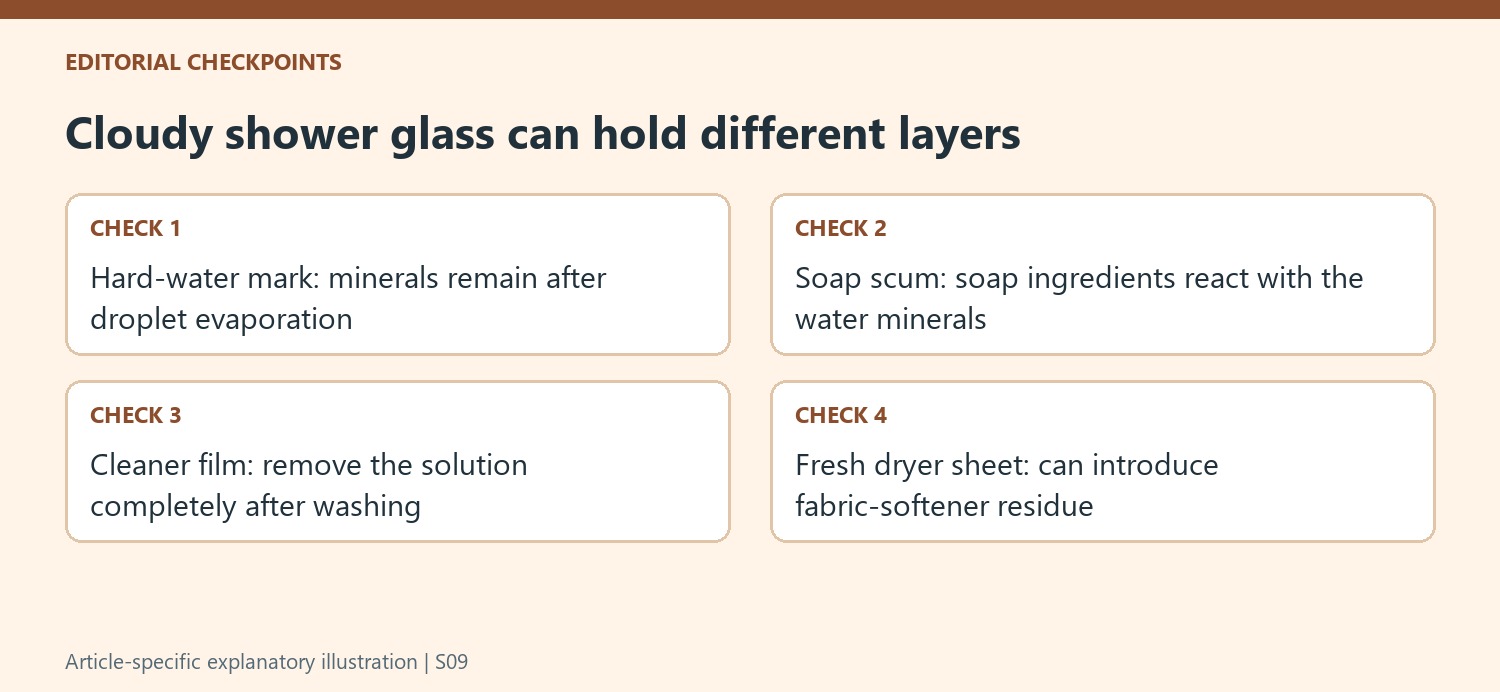
Good Housekeeping explains that hard water leaves mineral deposits as droplets evaporate, while soap scum comes from soap ingredients reacting with minerals. Both can cloud glass, but their origin helps explain why regular drying is useful. Inspect the dry door after a compatible clean rather than assuming a stubborn cloudy patch is simply fresh dirt that needs a more forceful scrub.
Do not leave a new layer while removing the old one
The guide cautions that fresh dryer sheets can deposit fabric softener when used as an improvised glass cleaning cloth. A clean microfiber cloth and a suitable non-scratching tool provide a more controlled approach. Rinse the chosen cleaning solution away as directed and buff the pane dry. The surrounding hardware and any treated glass coating still need their own compatibility checks.
Consider protective treatments as a separate choice
The article discusses a water-repellent glass treatment tested by its cleaning laboratory. Such a product is intended to make later maintenance easier, rather than replace cleaning or establish compatibility with every shower enclosure. Check the manufacturer's instructions before adding it to an existing coating. Keep the everyday squeegee accessible and remove water after the last shower so new deposits have less opportunity to accumulate.
Make drying an easy final-shower habit
Good Housekeeping's daily recommendation starts with the water left after use rather than with a new heavy cleaning mixture. Keep an appropriate squeegee reachable so the last user can remove droplets and finish damp areas with suitable clean fabric. This reduces the amount of mineral-bearing water that evaporates on the door. The habit is easier to maintain when the tool is ready and its blade is clean enough to leave an orderly pass.
Do not equate a quick squeegee with a complete deep clean. It limits new deposits but does not necessarily remove old soap film, hardware grime or a persistent chalky mark. Inspect the dry surface periodically so these tasks remain distinguishable. Where a door already has a protective coating, follow its care requirements for the blade and finishing cloth as well as for any cleaner introduced during a separate washing session.
Match the treatment to what makes the glass cloudy
The source explains two overlapping causes: minerals remain when hard-water droplets dry, while soap ingredients interact with those minerals to form soap scum. Their shared white appearance can make diagnosis difficult. Identify the pattern and recent history rather than assuming a cloudy patch needs an abrasive scrub. A suitable door-cleaning product or compatible solution can address the actual deposit while avoiding unnecessary wear on an unfamiliar finish.
The article gives a vinegar, water and dishwashing-liquid recipe with a contact period, followed by rinsing and drying. Read that as a method conditional on the door and its surroundings permitting those ingredients. Stone, metal finishes and existing coatings may impose different restrictions. A cleaner that reaches the pane can also drip toward those adjoining materials. Control application and follow the installed enclosure's directions instead of treating the whole bathroom as one glass surface.
Remove the cleaner before adding protection
Fresh dryer sheets are a poor substitute for a dedicated cleaning cloth in the source's account because they can leave fabric-softener material behind. That would add another layer while trying to remove the first one. Use appropriate clean fabric and a compatible non-scratching tool, rinse as directed and buff dry. If cloudiness remains, check whether it is cleaning residue or an established deposit before simply repeating the full product application.
The laboratory-tested water-repellent treatment discussed in the guide is a separate maintenance choice. Ask whether it suits the actual glass and any coating already installed, and follow its preparation and application requirements. It is intended to make later cleaning easier, not to eliminate the daily water-removal habit. Keep ordinary drying, deeper deposit removal and optional protection as clear stages so one product does not silently replace another necessary part of looking after the enclosure.
References
- How to Clean a Glass Shower Door to Keep Grime at Bay. Good Housekeeping; Elizabeth Berry; Monique Valeris.
Good Housekeeping recommends routine water removal to limit the buildup left by repeated showers.


Leave a Comment
Comments (0)