Check Water and Steam Settings Before Cleaning Window Glass
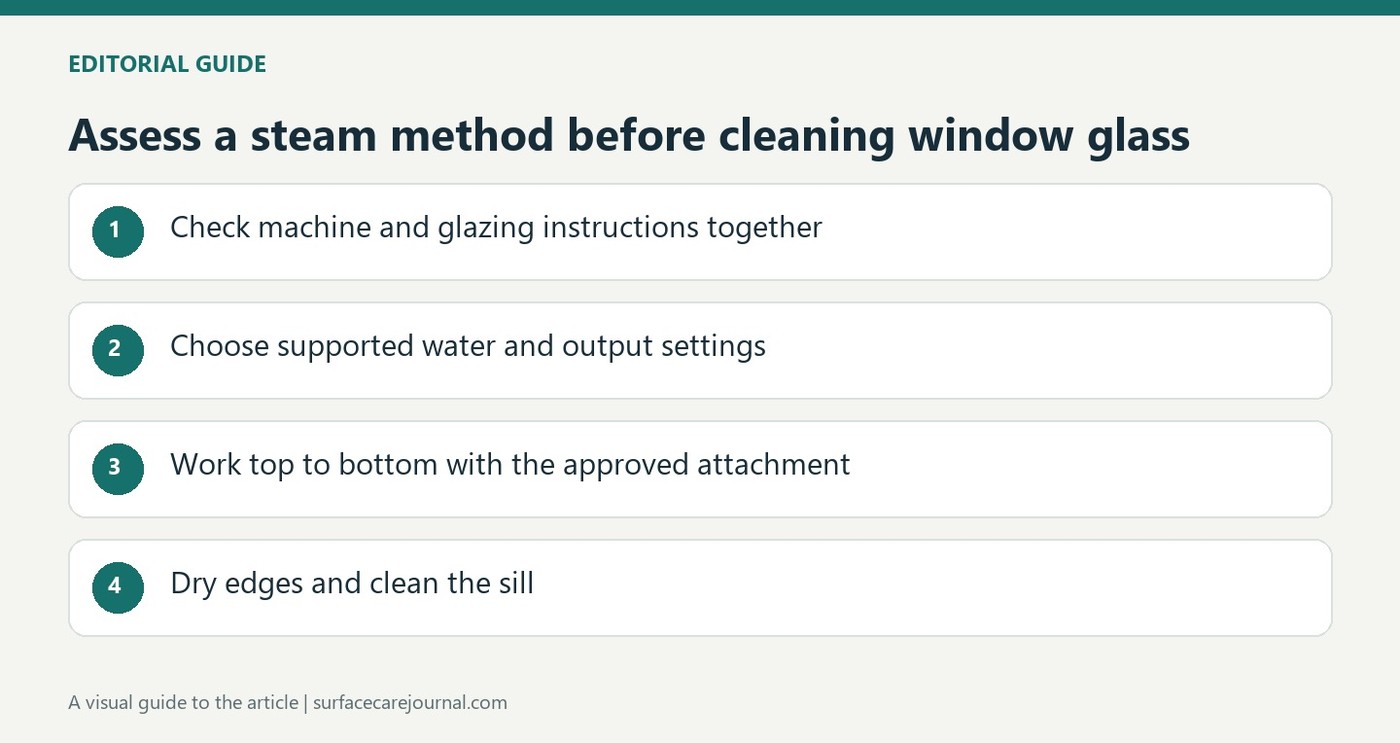
A Homes & Gardens writer describes using a steam cleaner with a squeegee attachment on dirty windows. The article favors a dull, dry day to avoid rapid drying and notes that mineral-rich tap water can leave residue. The appliance's own instructions should decide the permitted water type and whether its glass attachment is appropriate.
Use only a setting and technique approved for the glazing, particularly where heat differences or specialist coatings may matter. Keep a clean lint-free cloth available for edges and remaining moisture. The article warns against excessive steam; adding more heat is not the same as improving cleaning. Test the supported method cautiously instead of treating all glass as interchangeable.
Separate the reported trial from equipment instructions
The Homes and Gardens writer used a Black and Decker machine with a glass squeegee attachment and an adjustable steam output. That identifies the equipment behind the anecdote; it does not establish that every steam cleaner has the same attachment or operating requirements. Check the appliance manual and glazing care guidance together before transferring the described method to a different household window.
Follow a route that avoids dirty runoff
The source describes drawing the attachment slowly from the top of the pane downward. This keeps dirty water moving toward areas that have not yet been finished. A lint free cloth then removes moisture around the edges and remaining lines. The final buff is a separate stage, rather than a reason to increase steam output when a small wet streak remains.

Include the sill in the finished inspection
The article also recommends opening accessible windows to clear debris from their sills. Glass clarity can be undermined by neglected dust and dirt around the frame. Use a compatible method there and protect adjoining materials from runoff. The writer's suggestion about water quality addresses mineral residue, but the machine's specified water requirements still control what belongs in its tank and how it should be maintained.
Check the appliance and the glazing together
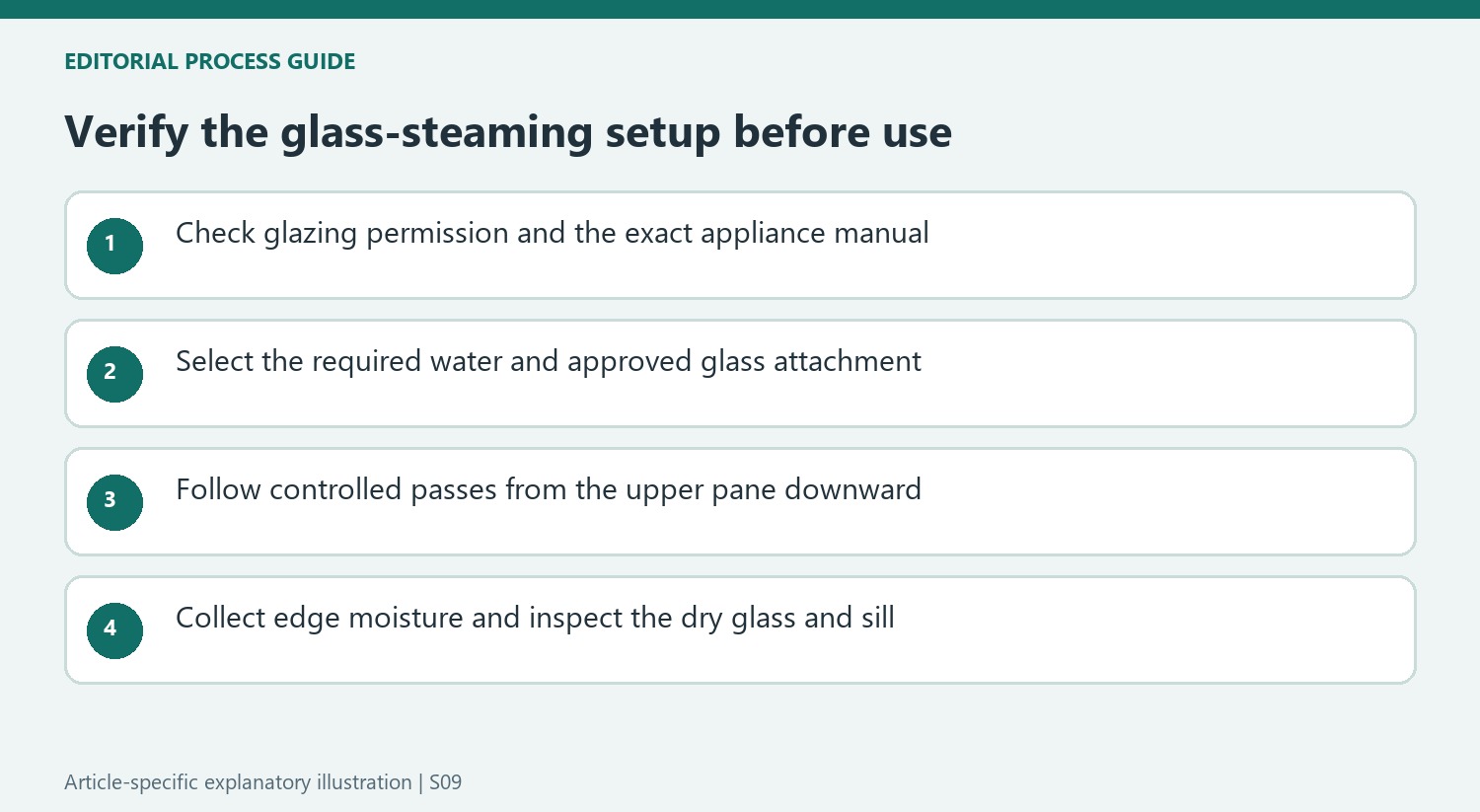
The Homes & Gardens trial links its quick result to a particular steamer, attachment and adjustable output. A different machine may specify different water, accessories or permitted surfaces. Read those instructions alongside the window care guidance before filling the tank. The source's preference for distilled water addresses mineral deposits, but it should not override an appliance maker's stated water requirements or maintenance procedure. Compatibility has to work on both sides of the equipment-and-glass pairing.
The same distinction applies to temperature. The article mentions weather conditions, but a single outdoor temperature threshold cannot establish that every glazing system tolerates steam. Specialist coatings, damaged panes and thermal differences can change the assessment. Use steam only where the actual guidance permits it, and choose the supported setting rather than assuming the writer's dial position translates directly to another appliance. If that permission is unclear, use the approved non-steam cleaning route instead.
Make downward progress without excessive moisture
The writer's top-to-bottom passes are intended to carry runoff toward areas not yet finished. Arrange the job so an upper dirty trail does not cross a lower section that has already been buffed. Move at the pace supported for the attachment and keep the output controlled. More steam can create additional liquid to collect; it is not automatically an improvement when the remaining problem is simply a damp line rather than adhered soil.
Keep the clean lint-free finishing cloth accessible before starting. The attachment removes the main liquid while the cloth addresses remaining edge moisture and small lines. Avoid using a soiled fabric face to buff the entire pane after dirt collection. Inspect the result after drying and distinguish water marks from material that never lifted. This check helps decide whether a local repeat is needed without increasing heat across an already cleaned area.
Include accessible edges in the completed job
The source also points to debris gathered on window sills over winter. Clear the accessible sill using a compatible gentle method and protect adjoining finishes from runoff. Do not assume that because the glass attachment is approved, a concentrated steam nozzle is appropriate for every seal, track or frame. Those parts have their own materials and drainage functions, and cleaning should preserve rather than alter how they work.
Choose a dull dry period when liquid will not flash-dry under strong sun before it can be removed. The writer's observation concerns achieving a clearer finish with less repeated wiping, not a universal promise that steam eliminates all cleaning problems. Complete the appliance's after-use care as directed and review both the dry pane and surrounding frame. A successful session combines suitable equipment, restrained moisture, an orderly route and a clean final collection stage.
References
- I tried steam cleaning my dirty windows and it was unbelievably quick and easy – but this one water trick is essential. Homes and Gardens; Chiana Dickson.
The tested approach uses a glass attachment and controlled steam, with attention to mineral residue.


Leave a Comment
Comments (0)