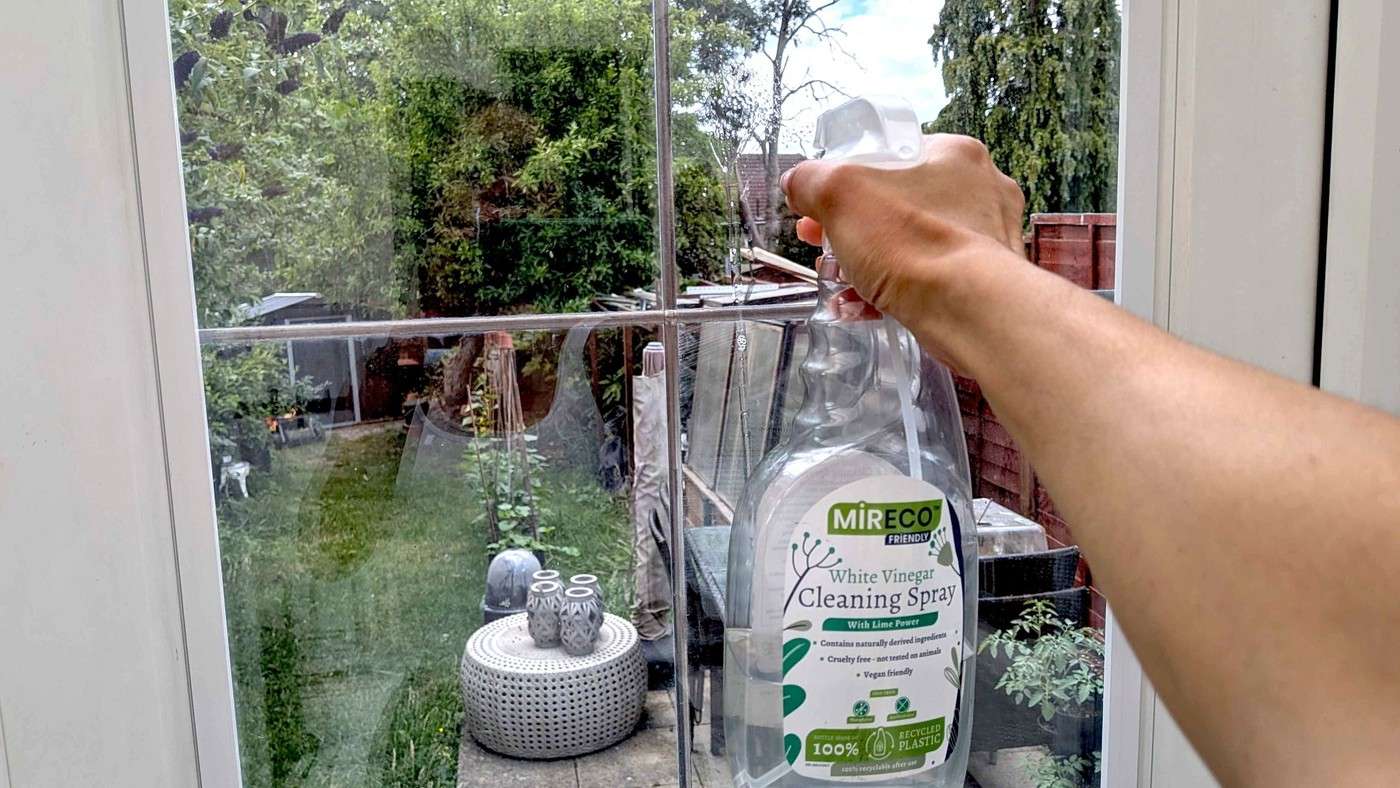
Dilute Vinegar Before Using It on Ordinary Glass
A Tom's Guide cleaning account highlights preparation, dilution and a separate dry buff as the steps behind a clearer reflective surface.
Remove loose dust first
The article begins by clearing cobwebs and dust from the surrounding frame with a soft cloth or vacuum attachment. Its mixture uses one part distilled white vinegar to ten parts warm water, rather than undiluted vinegar. The writer also notes that a small amount of washing-up liquid may help on heavily soiled glass, although additional soap means more residue to remove.
Finish with a dry cloth
After wiping away the marks, the reported method uses another dry microfiber cloth to polish the surface. The source describes the approach for windows and notes that it can also be used to refresh mirrors. Its warning to dilute vinegar matters because acidity can damage unsuitable materials. Check the mirror or glass manufacturer's care instructions before transferring an ordinary-glass method to a specialist coating or surrounding finish.

Do not confuse an effective wipe with universal suitability
The Tom's Guide writer describes improved clarity on ordinary household glazing after the diluted solution and a separate dry buff. That reported outcome is useful context, but it does not remove the need to check treated glass, mirror edges or adjacent materials. The source also lists possible sources of smears, including heavy soil and residue, which may call for better removal rather than a stronger concentration. Keep the initial dusting stage and the final clean cloth as separate steps. Where fingerprints remain, inspect and address the local mark before washing the entire surface again with additional product. Remove dust from the frame before refreshing the glass itself.
Understand the dilution in the reported glass trial
Tom's Guide describes a household window-cleaning trial using one part distilled white vinegar to ten parts warm water. Preserve that context when reading the result: it was an approach for the writer's ordinary glass, not a direction to apply acid to every mirror assembly or treated pane. Check the glass maker's care guidance and nearby frame or sill materials before deciding whether a vinegar-based method belongs in the room.
The familiar name of a household ingredient does not make it chemically inactive. Avoid interpreting the source's informal language as proof of universal material or health suitability. In particular, acid-sensitive stone surrounds need a different approved approach, and a mirror's edges deserve controlled application. The relevant lesson from dilution is restraint and a compatible method, rather than the claim that homemade automatically means harmless under any conditions.
Prepare the frame and keep the glass dose controlled
Remove loose frame dust before wetting the pane so the cloth does not drag it into a fresh cleaning film. Choose a suitable soft tool and pay attention to the boundary between glass and surrounding material. The writer's trial addressed marks on household patio glass; a decorative border or unfamiliar coating changes what must be checked. Keep liquid application manageable instead of allowing it to accumulate while another part of the surface is being scrubbed.
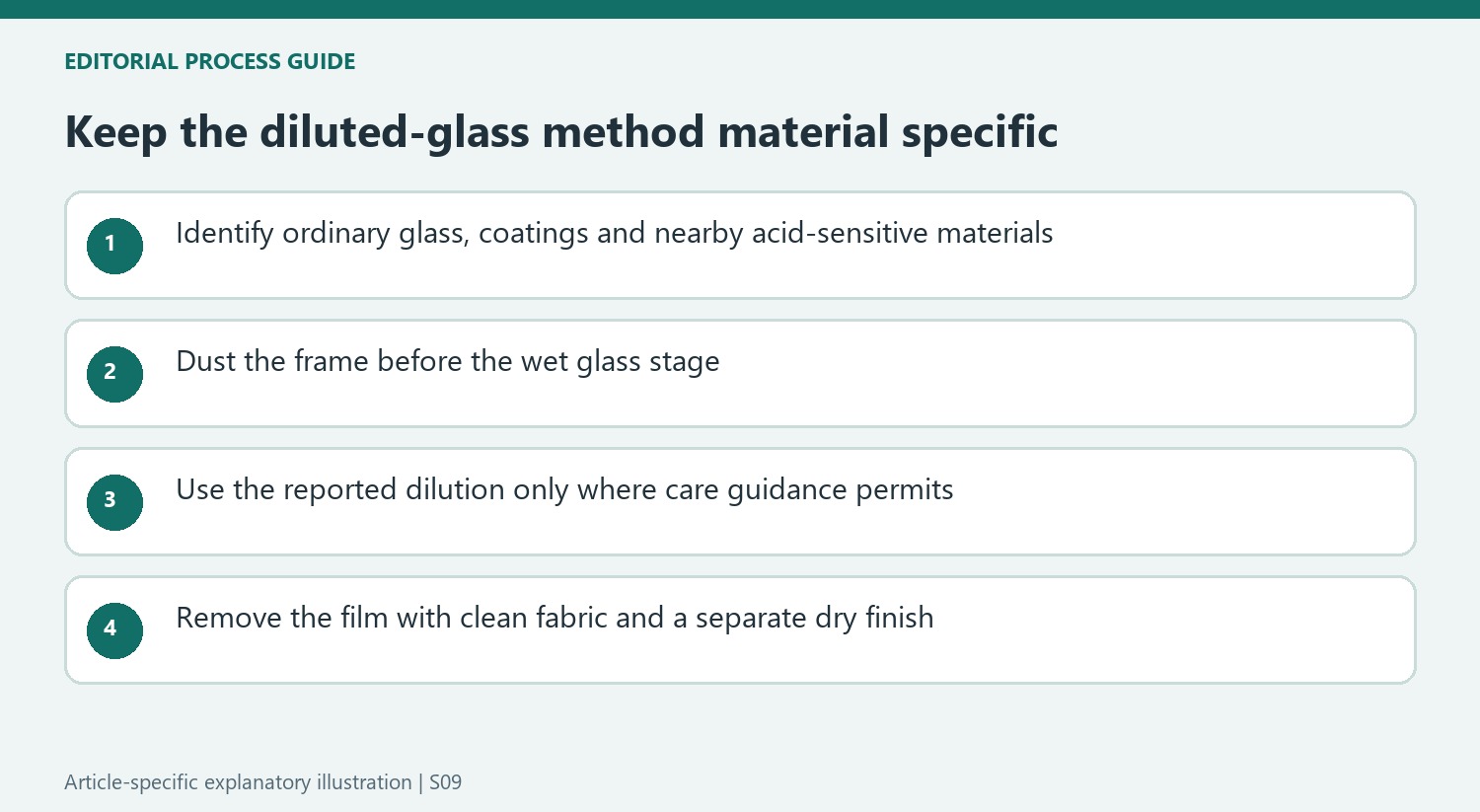
The source mentions a few drops of washing-up liquid for heavier soil, but soap introduces residue that must then be removed. That option should not become a reason to pour freely into the solution. Assess the actual marks first and use the approved method that addresses them. Dirty wash water or an already soiled cloth can undermine careful dilution, so tool cleanliness belongs in the preparation just as much as measuring the ingredients.
Finish by removing the film rather than intensifying it
Use clean suitable fabric for the wiping stage and a separate dry microfiber cloth for the final buff. Work methodically so any damp trail is collected rather than repeatedly spread across the glass. When the result dries, inspect for remaining fingerprints, cleaning film or water marks. These are different explanations for an imperfect reflection and do not all call for a stronger vinegar concentration or a longer soaking period.
The writer reports a favorable result in that particular trial. Use that as evidence of an observed household outcome while retaining the limits of the surface, recipe and tools involved. Other articles may publish different ratios, which is another reason to avoid treating one mixture as a universal standard. The dependable routine is to identify the material, control the dose, keep the cleaning cloth fresh and remove the liquid fully before judging whether a further local treatment is necessary.
References
- How to clean windows with vinegar for streak-free glass (yes, it really works). Tom's Guide; Cynthia Lawrence.
A Tom's Guide cleaning account highlights preparation, dilution and a separate dry buff as the steps behind a clearer reflective surface.


Leave a Comment
Comments (0)