A Light Mist and Clean Microfiber for Mirror Smears
A Homes & Gardens review of Method's glass cleaner pairs product discussion with practical advice on avoiding visible residue.
Use less cleaner at a time
The professional advice in the article is to mist lightly, fold a microfiber cloth and rotate to a clean area as the glass is wiped. Long horizontal or vertical passes make coverage easier to judge. A final pass with a separate dry cloth removes remaining moisture, while avoiding direct sunlight helps prevent the cleaner from drying before it can be removed.
Read beyond broad marketing claims
The source describes an ammonia-free, fragranced formula and discusses both its environmental rating and ingredient-transparency limitations. It also notes that some people may prefer an unscented option. A pleasant smell or a plant-based description is therefore not a reason to ignore personal sensitivities or the product label. On mirrors, a controlled amount of a suitable cleaner and a clean cloth remain central to the finish.

Keep the review's scope and cautions visible
The author reports good results in one household and gives the product an eight out of ten assessment. The cited EWG rating is part of that discussion, alongside concerns about nonspecific fragrance and colorant descriptions. It does not establish that every user will tolerate the scent or that every current formulation has identical ingredients. Read the bottle being purchased and consider an unscented option when fragrance is a concern. For cleaning performance, the expert's practical advice stays specific: rotate a folded cloth to a clean section, avoid excessive product and finish with a dry cloth before judging any remaining marks. Refresh a dirty cloth section before moving across more glass.
Separate a useful technique from a product verdict
Homes & Gardens describes the writer's experience with a mint-scented glass cleaner, but the practical wiping advice can be assessed separately from whether that fragrance suits a household. Use a light mist, expose clean faces of a folded cloth and move deliberately across the pane. The source's successful household experience is one review context; it is not evidence that every person with sensitivities will tolerate the same formula.
The article reports a favorable personal response and an overall environmental assessment while also discussing ingredient-transparency limitations. Those observations can coexist. A rating does not identify every person's trigger, and a pleasant scent does not establish universal suitability. Check the current bottle rather than assuming a historical review describes every later formulation. An unscented product may be a practical preference where fragrance itself is unwelcome, provided the surface guidance is also appropriate.
Make each cloth face do useful work
Folding microfiber gives several working faces so collected soil does not need to travel across the entire mirror. Change to a fresh face as the first becomes damp or dirty. Keep the amount sprayed low enough that the tool can lift it without becoming saturated immediately. The long horizontal or vertical passes discussed in the article support orderly coverage and make it easier to see which portion has already been cleaned.
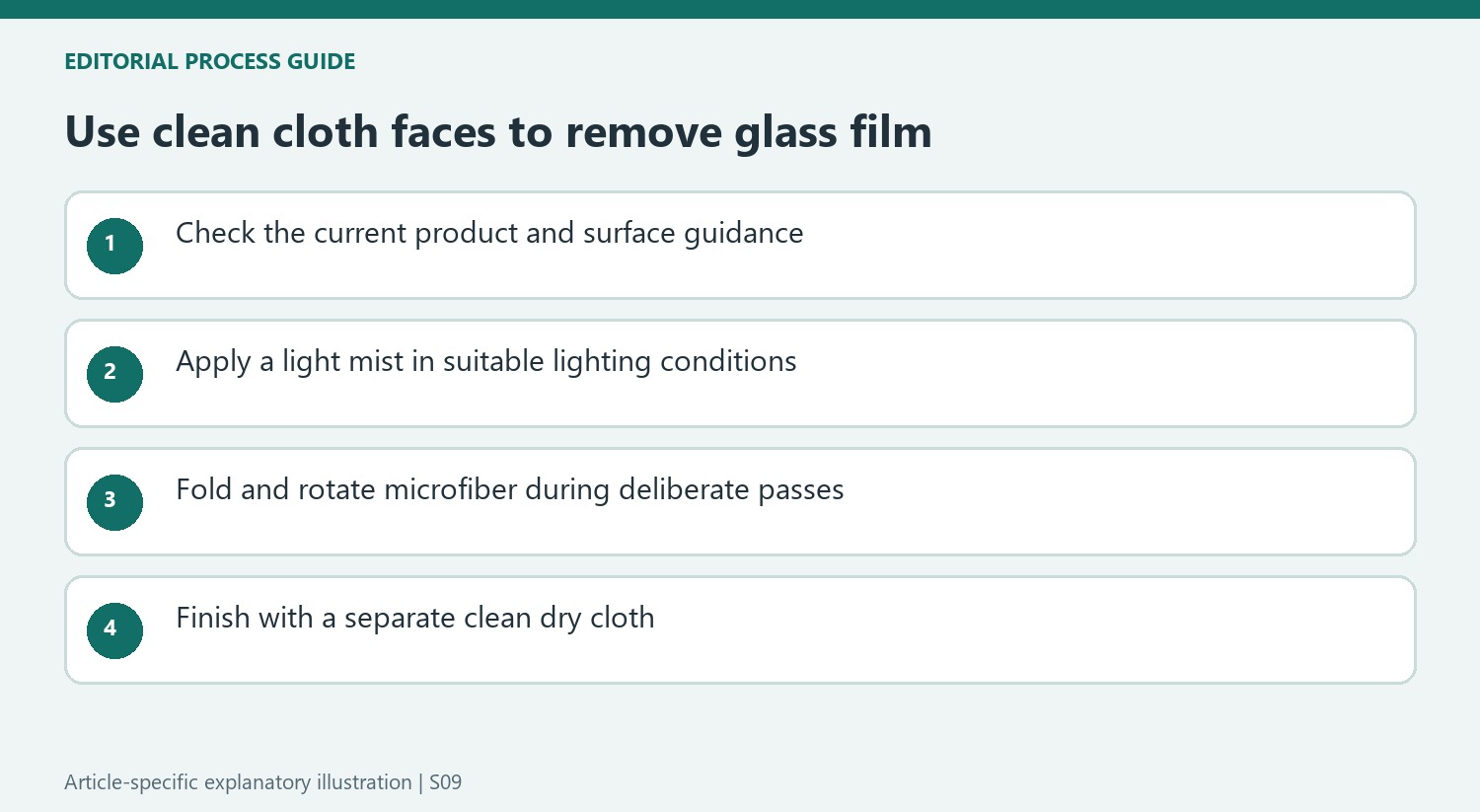
Reserve another dry cloth for the final finish rather than expecting the cleaning face to dry the pane after it has absorbed solution. If a haze remains, examine residue and fabric condition before increasing the dose. A visible layer created by excess product can resemble surviving dirt. The useful response is controlled removal and a clean tool, not an assumption that a second heavy application will produce the clarity the first one missed.
Use the review in the conditions it actually describes
Avoid direct sunlight when it dries the cleaner too quickly to remove in a controlled pass. Bathroom spots may need more frequent local attention than a less exposed household mirror, and window conditions vary with their surroundings. The article's cleaning intervals describe a routine rather than a rule for every room. Inspect the surface and deal with the actual marks instead of using a calendar as proof that the job is either overdue or unnecessary.
Prices and promotional offers mentioned in the review also belong to its publication context, so verify current details if considering the product. The lasting takeaway is a light application combined with cloth rotation, orderly wiping and a separate dry finish. Keep that technique distinct from broader claims about allergens, ingredient safety or fragrance effects. A clear reflection can support a cleaning-performance observation without proving health or environmental promises beyond the evidence the source supplies.
References
- This $4 non-toxic glass and mirror cleaner delivers a streak-free surface every time, without harsh chemicals. Homes and Gardens; Rebecca Shepherd.
A Homes & Gardens review of Method's glass cleaner pairs product discussion with practical advice on avoiding visible residue.


Leave a Comment
Comments (0)