A Low-Water Glass-Cleaning Trial With a Handheld Sponge
An Ideal Home experiment explores controlling moisture on indoor glass, with the same tool also described for household mirrors.
Reduce the amount of liquid
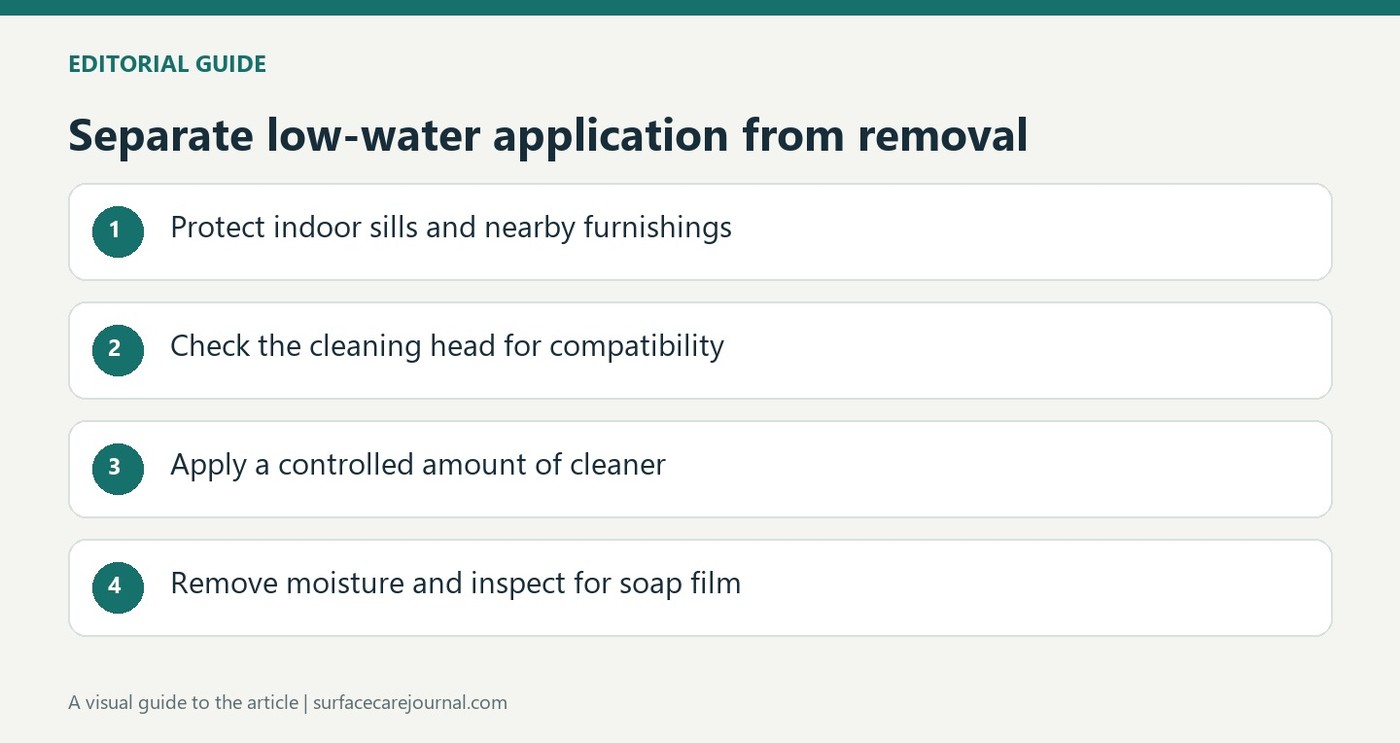
The writer tested a refillable Dishmatic tool with vinegar and washing-up liquid rather than using a bucket of water at the window. The purpose was to avoid soaking indoor sills and nearby furnishings. The account reports a clear finish after the cleaning solution was removed with a window vacuum, but it remains an individual trial rather than a universal method for every surface.
Consider the cleaning head and residue
The article notes concerns about excess soap and mentions a softer alternative head. Those qualifications matter: an abrasive sponge and a concentrated acidic mixture should not automatically be transferred to delicate finishes or unfamiliar glass treatments. For ordinary touch-ups, the guide also describes a microfiber cloth and controlled removal of excess moisture. The useful principle is to use only as much cleaner as needed and remove it completely rather than leaving a wet, soapy film.

Treat the reported result as a tool trial
The Ideal Home writer's main problem was indoor cleanup: a water-heavy method risked wetting the sill and nearby furnishings. The refillable handle changed how the solution was dispensed, while a window vacuum removed it afterward. Those two jobs are distinct. A tool that makes application convenient can still leave residue if the removal stage is incomplete. Check the cleaning head's surface compatibility and avoid applying an abrasive kitchen pad to an unfamiliar mirror. The source's own discussion of excess soap is a reason to keep the dose controlled, rather than assuming a concentrated mixture guarantees a clearer finish on every window.
Read water-free as controlled application in this trial
The Ideal Home account uses the phrase water-free to distinguish the tested method from a bucket-based wash. It still applies a liquid mixture through a refillable handle, followed by removal. That distinction matters around indoor sills and furnishings: the practical benefit reported was limiting the amount released at the glass, not making wet cleaning disappear. Plan how the liquid will be collected before starting the application stage.
The writer changed both the dispensing tool and the finishing tool compared with an ordinary bucket routine. A Dishmatic applied the mixture, and a window vacuum collected it. The original social-media example used a squeegee instead. These combinations demonstrate separate delivery and recovery decisions. A convenient handle cannot compensate for leaving a concentrated soapy layer to dry, and a good recovery tool does not make every cleaning head suitable for delicate surfaces.
Treat the mixture as a reported experiment
The source describes an influencer's equal-parts mixture and the writer's own adjustment toward more vinegar and less washing-up liquid. Those are reported household choices, not manufacturer instructions for every mirror, coated pane or window frame. The writer explicitly considered whether excessive soap could leave stickiness. That concern supports checking compatibility and residue removal rather than adopting a stronger-looking ratio as the main reason for the successful finish.
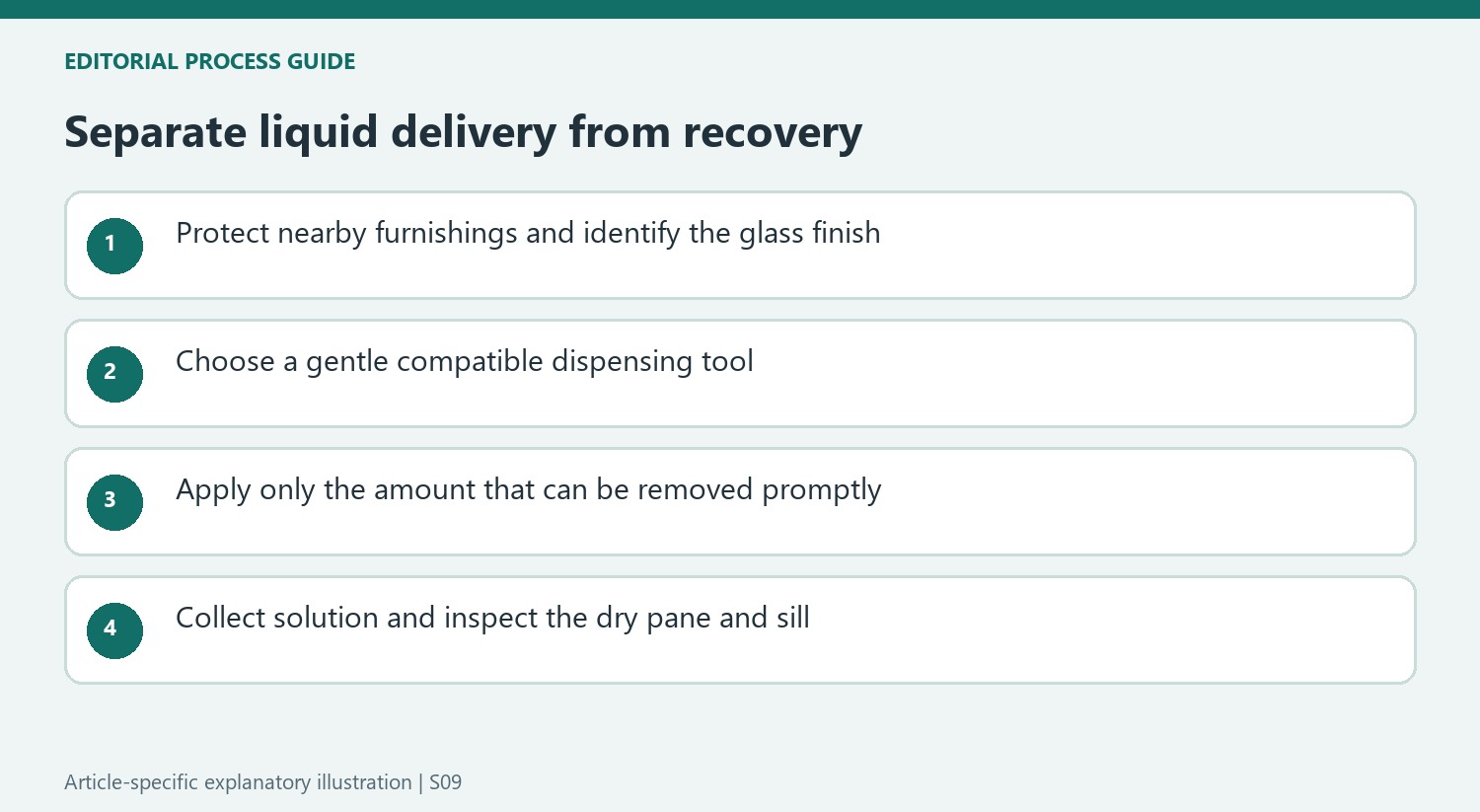
The cleaning head is equally important. The article calls attention to a softer alternative after describing the mildly abrasive head used in the trial. Do not assume an item designed for washing dishes is automatically appropriate on an unfamiliar glass treatment. Check the surface and tool guidance and use an appropriate gentle method. The observation that an older window survived one writer's treatment cannot establish that a different installed finish will respond in the same way.
Evaluate the result together with the surrounding cleanup
The reported advantage was a quick clear finish without a large quantity of liquid reaching the sill. Inspect both outcomes: the dry glass should be free of residue, and nearby edges should not remain wet. Recover the solution with suitable equipment under its instructions and deal with lingering moisture using clean fabric where needed. Leaving the surroundings untouched is not a useful shortcut if drips have accumulated beyond the visible pane.
If smears remain, the source lists several possible explanations, including excess solution, remaining dirt, mineral marks and unsuitable wiping tools. Diagnose which is present before repeating the entire experiment. For ordinary maintenance, its simpler alternative of controlled glass cleaner and microfiber may be sufficient. The account is most useful as an illustration of restrained application plus thorough recovery, while the concentrated recipe and particular kitchen tool remain choices requiring their own compatibility assessment.
References
- I tried this two-minute water-free hack to clean inside my windows — the impressive streak-free finish stunned me. Ideal Home; Lauren Bradbury.
An Ideal Home experiment explores controlling moisture on indoor glass, with the same tool also described for household mirrors.


Leave a Comment
Comments (0)