Stop Bathroom Mirror Lint With Two Separate Cloths
The final buffing cloth can matter as much as the cleaner when a freshly cleaned mirror keeps collecting tiny fibers.
Change the tools before adding product
Tom's Guide's bathroom-mirror report identifies humidity, airborne dust and unsuitable wiping materials as contributors to lint on glass. The expert advice is to use one damp cloth for the cleaning stage and a separate dry one for the final polish. Microfiber is suggested because it can collect grime without leaving the same fibers as less suitable materials.
Apply cleaner with control
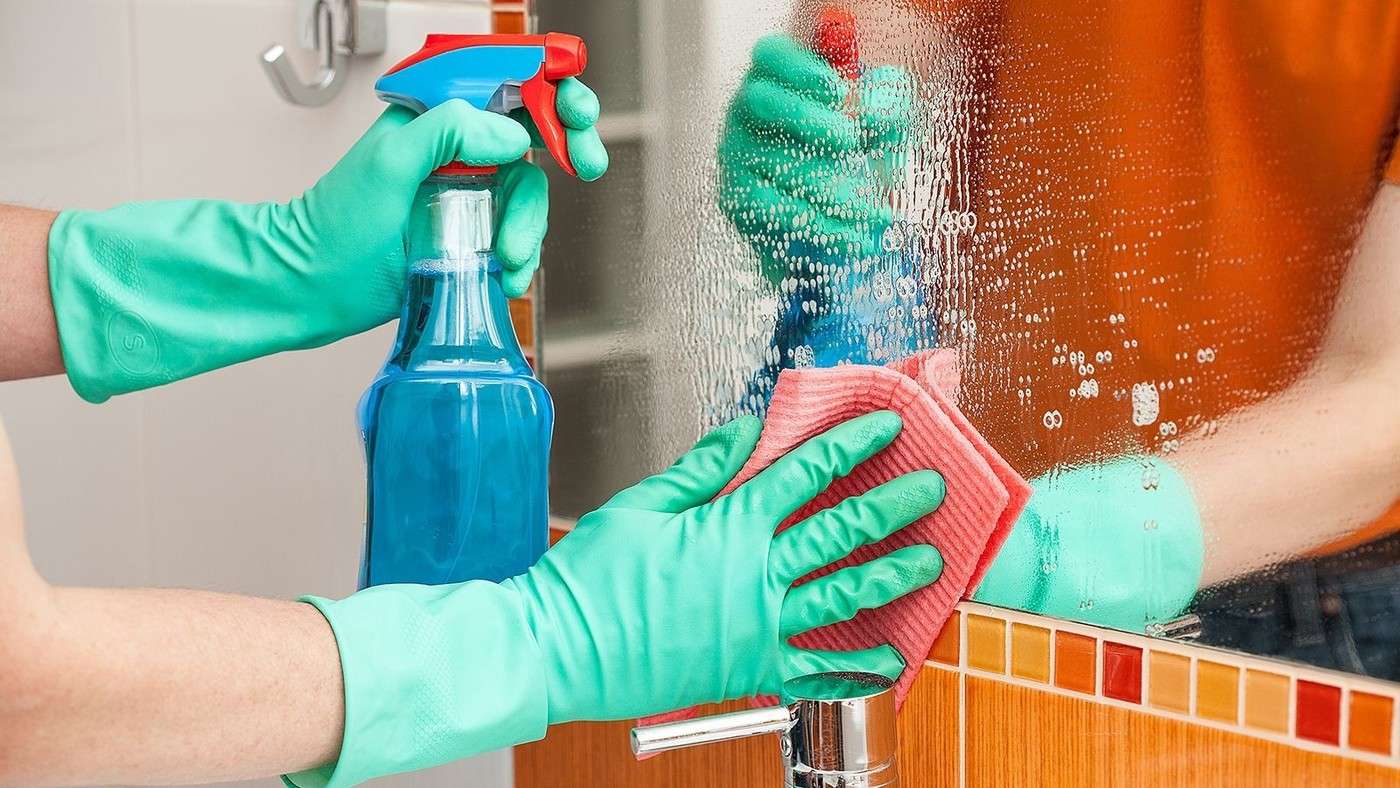
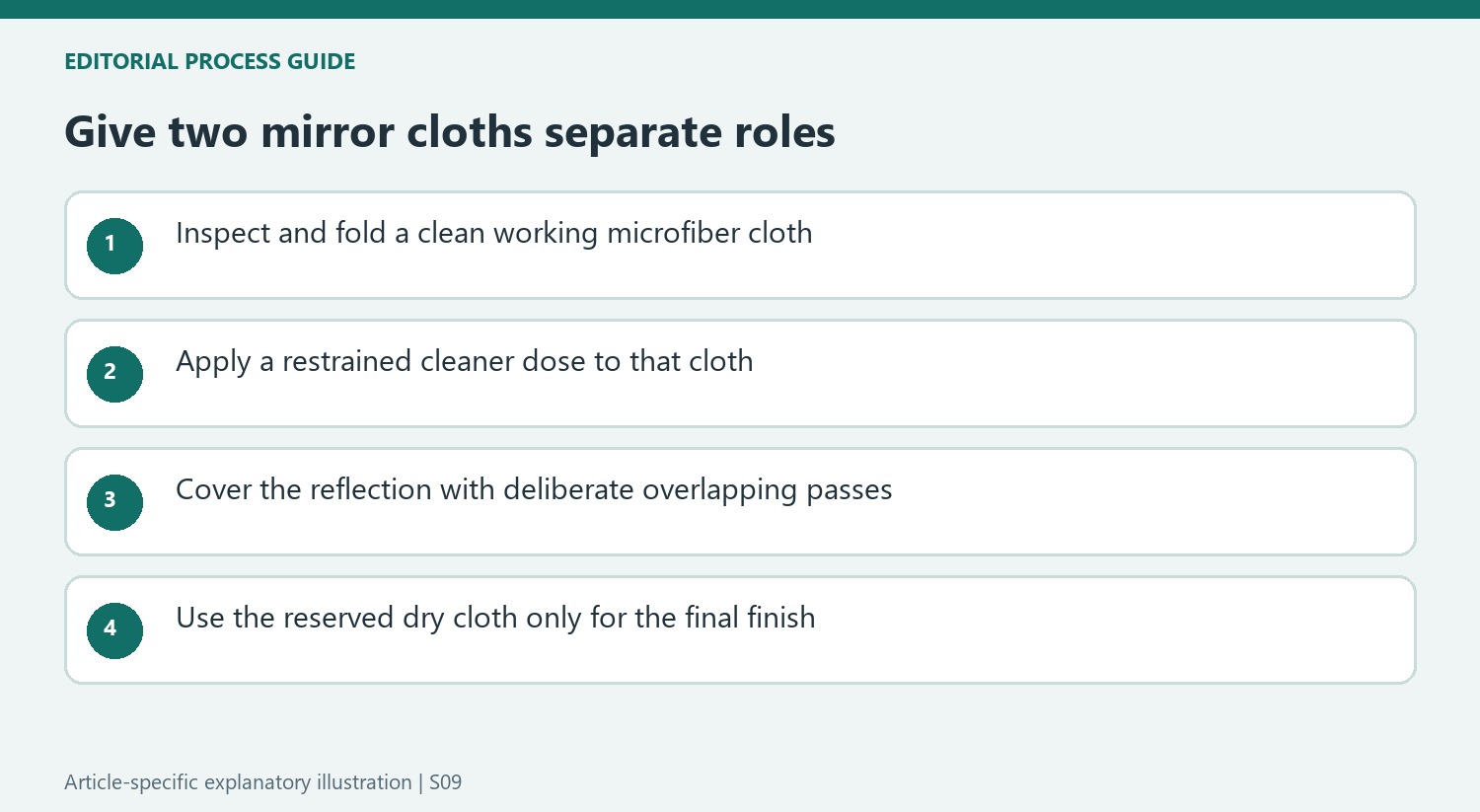
The article recommends putting the cleaning solution onto the cloth instead of directly onto the mirror. An S-shaped pass can help cover the surface systematically before the dry cloth removes the remaining moisture. The expert also describes crumpled newspaper as an alternative polishing material, but the key practical distinction is between cleaning and drying. Repeatedly rubbing the mirror with the same damp cloth can undermine an otherwise careful final finish.
Keep the finishing stage separate from the washing stage
The expert quoted by Tom's Guide attributes some recurring lint to humid, dusty bathroom conditions and unsuitable wiping tools. A clean dry cloth needs to remain dry until it is used for the finishing pass; using the first cloth for every stage can move moisture and residue back onto the surface. Avoid relying on paper towels or a sponge where they leave fibers or spread soap deposits. Check the mirror after the separate buffing pass rather than adding more solution immediately. The article's newspaper suggestion is an alternative anecdotal tool, while the consistent recommendation is controlled application and a distinct clean polishing cloth.
Assign each cloth a single stage of the job
Tom's Guide describes two separate tools for two separate purposes: one cloth loosens and lifts the soil, while another finishes the surface dry. Keep the finishing cloth out of the first stage so it does not arrive at the mirror already loaded with moisture and cleaner. Two cloths used interchangeably would lose the main benefit of the recommendation, even if both began as good-quality microfiber.
Check the fabric before starting. Visible loose fibers, old residue or a saturated face can affect the result regardless of the label on the pack. Fold the working cloth to expose fresh areas as soil accumulates. The source mentions color-coded sets as an organizational option, but the essential feature is remembering which cloth has which role. A household does not need a particular retail pack to make that separation clear.
Control application instead of flooding the reflection
Apply the suitable glass cleaner to the working cloth rather than covering the mirror with a heavy direct spray. This gives more control around frames and edges and avoids making the dry cloth remove a puddle of unnecessary product. Use the systematic passing motion described in the source so the cleaned area is covered deliberately. Repeated random rubbing can move the same dirty fabric over places that were already clear.
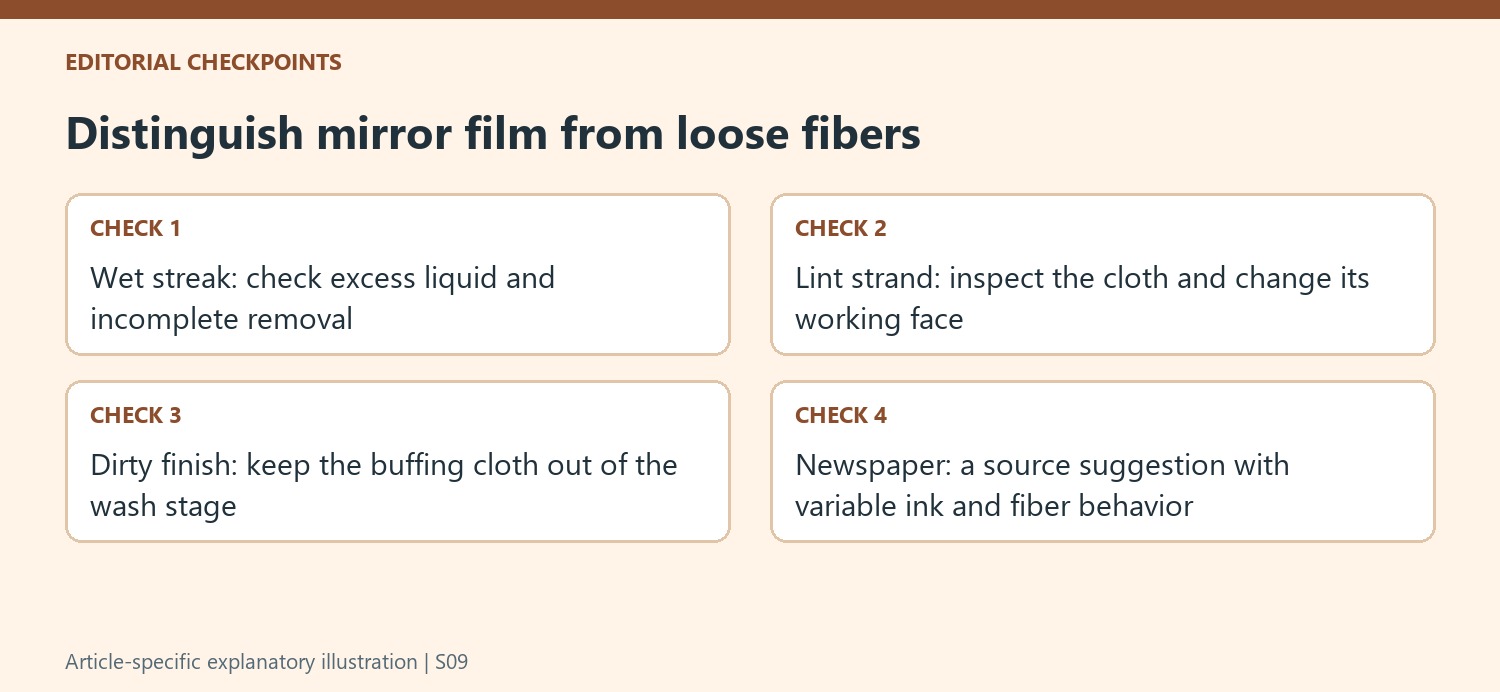
Bathroom humidity and routine dust contribute to the writer's lint problem, but more liquid does not solve loose fibers. Make the room conditions and cloth condition part of the check when results vary between sessions. If a streak appears, distinguish a wet film from a strand of lint before choosing the next action. A clean finishing pass is useful only when its surface is still appropriate for the material it is supposed to collect.
Choose a reliable finish over a traditional shortcut
An expert in the article proposes newspaper as another way to avoid lint, whereas other glass-cleaning discussions raise concerns about ink and fragments. Treat that as a method suggested in a particular source rather than a universal replacement for suitable clean fabric. A reserved dry microfiber cloth is the straightforward option when the specific complaint is that previous wiping tools left fibers behind on the reflection.
After finishing, look across the dry mirror under ordinary bathroom light and from an angle that reveals streaks. If only one area needs attention, address it with a clean cloth face instead of restarting the whole wash. Keep the finishing cloth identifiable for the next session and clean the tools according to their care instructions. A repeatable result comes from controlled application, clean working surfaces and a genuinely separate dry stage rather than from vigorous buffing alone.
References
- My bathroom mirror is a lint magnet — I asked an expert how to get a spotless finish. Tom's Guide; Millie Fender.
The final buffing cloth can matter as much as the cleaner when a freshly cleaned mirror keeps collecting tiny fibers.


Leave a Comment
Comments (0)