
Clean the Mirror Frame Before Polishing the Glass
A streak-free mirror clean begins with removing dust and treating stubborn spots, rather than immediately spraying the whole surface.
Keep the frame from re-soiling the glass
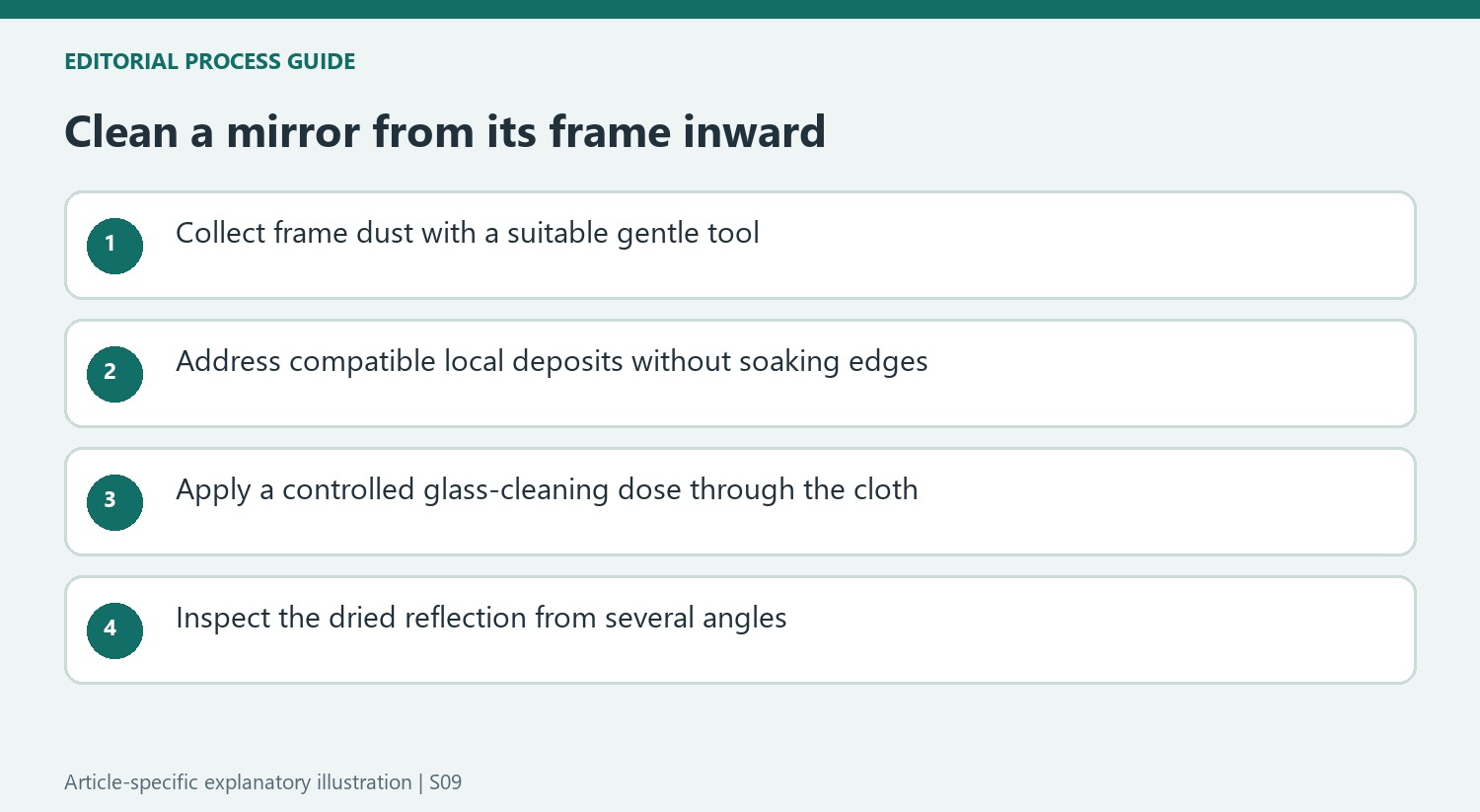
Ideal Home's mirror guide recommends cleaning the frame first, using a slightly damp cloth rather than soaking it. An ornate frame may need a soft brush or a vacuum brush attachment to reach grooves. This preparation keeps loose dust from dropping onto the glass after it has been polished.
Work on marks before the final pass
The guide separates toothpaste splashes and other stubborn deposits from the overall wipe-down. Once those areas are addressed with a suitable treatment, it recommends a diluted cleaning solution and straight wiping motions, followed by a check from different angles. Too much product can leave residue, while mineral-rich water can contribute to visible marks. Avoid assuming that a heavily fragranced or soapy cleaner will improve the final finish simply because it smells clean.

Check the cloth, light and pressure before repeating
Ideal Home cautions that newspaper can leave ink or small fragments on the glass, so a suitable clean cloth is the more predictable starting point. It also recommends avoiding bright direct sunlight, when cleaner can dry before it has been removed and marks become harder to judge. Resist scrubbing a stubborn patch with increasing force. Treat it locally using a compatible method before returning to the overall wipe. Then step back and view the mirror from several angles. A second controlled pass may be useful on a genuinely dirty surface, while adding more product to an already smeared film can compound the problem. Keep the frame dry enough to protect its particular finish.
Protect the border while removing its dust
Ideal Home puts the frame before the final glass wipe because debris from a dusty border can fall onto an already cleaned pane. Begin with the appropriate soft tool for the frame's shape. A carved groove may respond better to a soft brush than a cloth pressed into the recess. Keep the contact gentle and collect the loosened material instead of driving it toward the edge of the glass.
A barely damp cloth is different from a wet wash, particularly on a decorative or unfamiliar finish. Avoid allowing cleaner to collect where frame and mirror meet, and check the frame maker's advice where available. A large wall mirror need not be lifted simply to follow an example of cleaning a portable one. Stable access, controlled cloth moisture and gentle attention to the border are the practical priorities.
Separate a local mark from the general film
The source distinguishes small deposits such as toothpaste from the wider layer that a final wipe removes. Treat a compatible local mark first so the main cloth does not carry it across the whole mirror. Do not interpret a spot-treatment suggestion as permission to soak an ornate frame or coat an unfamiliar protective surface. Apply carefully through the tool and use the least disturbance that removes the identified deposit.
For the broader wipe, avoid unnecessary quantities of fragranced or soapy product that leave more material to remove. The article discusses diluted cleaner and the contribution of mineral-rich water to dried marks. If the mirror looks worse immediately after washing, examine dosing, water and cloth condition before deciding the glass needs stronger chemistry. A residue problem is not necessarily evidence that the original soil survived.
Judge the dry reflection before another pass
Finish with clean, suitable fabric and inspect the surface from more than one angle once it has dried. Strong direct sunlight can make the liquid disappear before removal is complete, so choose conditions that allow an orderly wipe. Avoid escalating pressure when a faint line remains; identify whether it is lint, dried cleaner or a persistent surface mark before repeating the same action over the entire pane.
Newspaper is sometimes proposed as a traditional buffing tool, but the guide also notes the possibility of ink or fragments. Clean microfiber offers a more predictable starting point when the aim is to avoid introducing new debris. Rotate to an unused area of the cloth as needed and keep the dry finishing face separate. The final check should confirm a clear reflection while leaving both the glass edge and decorative frame in suitable condition.
References
- How to clean mirrors - and all of the mistakes you should avoid to ensure a streak-free finish. Ideal Home; Jennifer Ebert; Lauren Bradbury; Katie Sims.
A streak-free mirror clean begins with removing dust and treating stubborn spots, rather than immediately spraying the whole surface.


Leave a Comment
Comments (0)