
Start Fabric-Headboard Care With the Manufacturer's Instructions
BHG recommends routine dust removal, discreet testing and sufficient drying time for any compatible deeper treatment.
Remove ordinary dust before treating stains
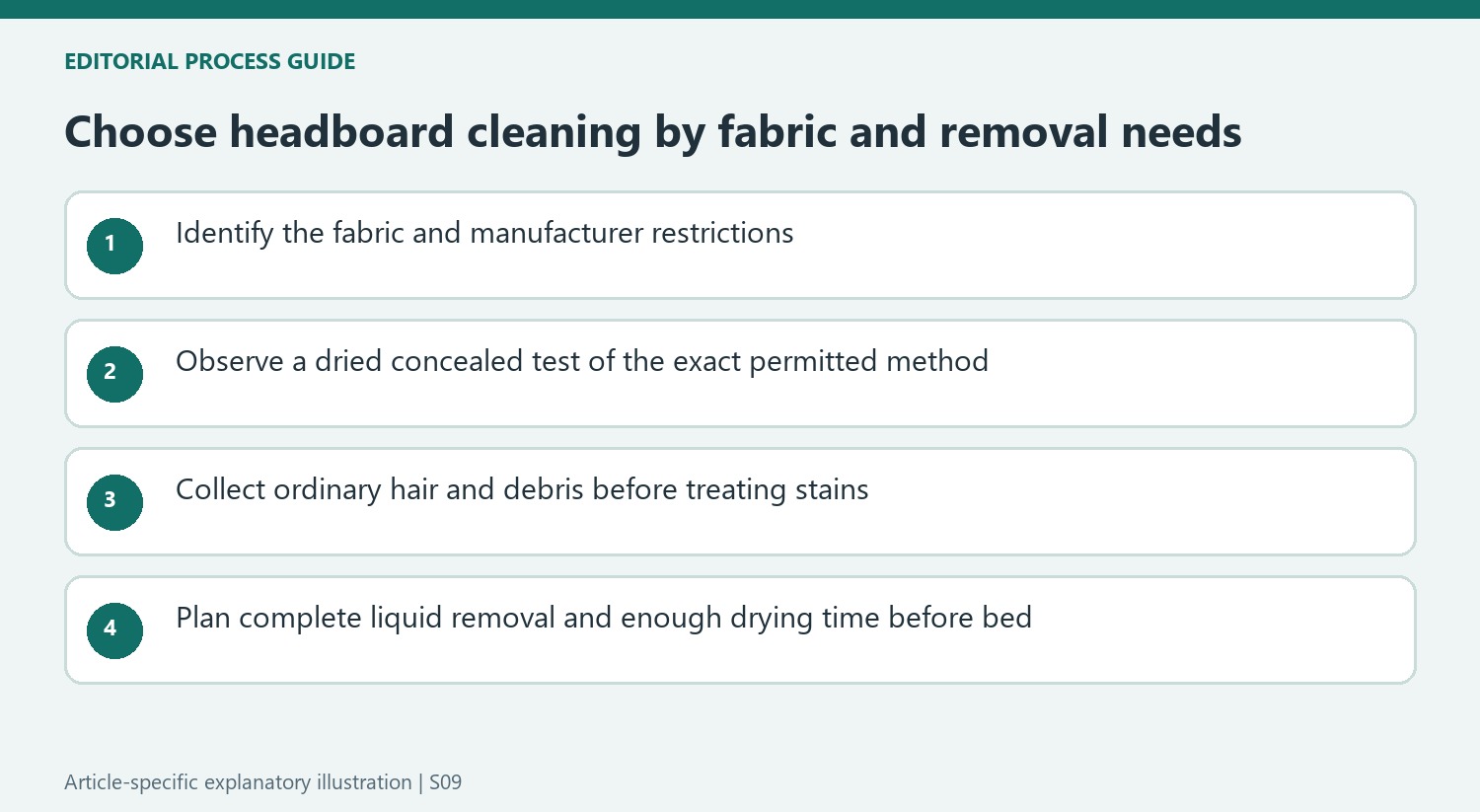
Better Homes and Gardens recommends a lint roller or vacuum for loose hair, dust and other debris, with the frequency adjusted to pets and the room's conditions. Before first use of a cleaner, test a seam allowance, back section or another inconspicuous area. Fabric type matters: even a seemingly ordinary steam treatment can shrink or pucker some cotton or linen upholstery.
Blot and leave time for drying
The guide describes gently blotting a compatible stain treatment instead of rubbing it deeper into the fibers. Follow by removing detergent residue with a clean damp cloth and allow the headboard to air dry completely. For a permitted deeper machine clean, work from the top in overlapping passes and plan enough time before the bed is needed again. Manufacturer instructions remain the starting point for deciding whether water, extraction or steam is suitable.
Do not confuse extraction with a fabric steamer
BHG describes an upholstery machine applying solution and recovering liquid, while a fabric steamer delivers heat without the same recovery process. Their jobs and compatibility checks differ. The guide notes that steaming is less effective at stain removal than an appropriate extraction or hand-cleaning process. Choose according to the fabric instructions and the actual soil, rather than calling every machine treatment a steam clean. If the permitted process introduces moisture, plan airflow and enough time before bedtime. A damp headboard pressed against pillows can remain wet even when the front feels improved, so complete drying is part of finishing the job.
Match the method to the fabric before choosing the machine
Better Homes & Gardens starts with the manufacturer's fabric guidance, including the possibility of shrinking or puckering cotton and linen under very hot steam. That warning makes a broad claim about steam's gentleness insufficient for a particular headboard. Identify the textile and construction, then check both furniture and equipment instructions. A fabric steamer, a liquid-extraction attachment and a controlled hand clean solve different problems and should not be treated as interchangeable versions of one process.
Before first use of any new compatible product, choose an inconspicuous place such as a seam allowance or accessible back section for a test. Observe it after drying for color movement, texture change and an outline. A product that did not visibly alter one older test area is also not proof that every later formulation or tool is identical. Keep the check tied to the actual method that will be used on the visible front.
Use routine dry collection to reduce the deeper-cleaning load
The guide describes lint rolling or suitable vacuuming as ordinary maintenance, adjusted for pets, dust and conditions in the room. Reach accessible edges and recesses with the approved tool rather than only passing over the broad central panel. This collects hair, pollen and loose particles before they accumulate into a more demanding task. It does not require waiting until a stain appears or a stale odor makes the whole headboard seem neglected.
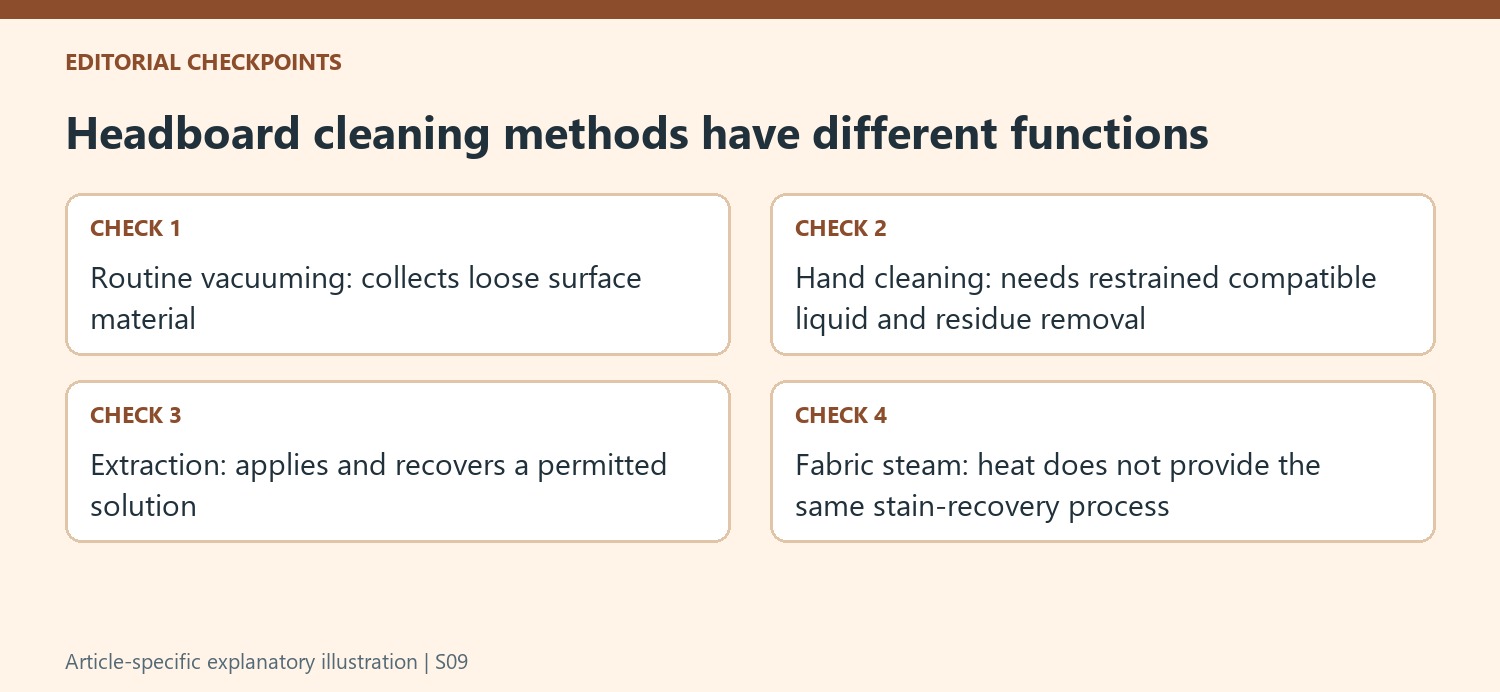
For an identified stain, use the permitted product in a small controlled amount and blot with appropriate white fabric. Avoid scrubbing the material inward or changing its visible surface through force. Remove detergent residue under the supported method rather than allowing it to become a new soil-holding layer. The article's hand-cleaning option is useful as a complete collection-and-removal process, not simply a diluted spray to leave across the upholstery until bedtime.
Plan removal and drying as part of deeper care
An extraction machine applies liquid and then recovers it, while a fabric steamer does not perform that same recovery stage. The source notes that steaming is less effective at stain removal than suitable extraction or hand cleaning. Use this distinction to choose a process for the actual soil rather than expecting heat to carry contamination out of the fabric by itself. Follow the exact appliance's water and solution requirements if the furniture permits its use.
Schedule any approved moisture treatment with enough time for complete drying before pillows and bedding press against the panel. Early active work may help, but room conditions and the amount introduced still determine readiness. Do not infer dryness from improved scent or a lighter-looking surface alone. The final review should consider both appearance and fabric condition, with any suitable texture-restoring vacuum step performed only after drying under the material guidance. A careful routine preserves the headboard instead of relying on repeated heat to produce a generalized freshening effect.
References
- Yes, You Need to Clean Your Upholstered Headboard Regularly—Here's How to Do It. Better Homes & Gardens; Jolie Kerr.
BHG recommends routine dust removal, discreet testing and sufficient drying time for any compatible deeper treatment.


Leave a Comment
Comments (0)