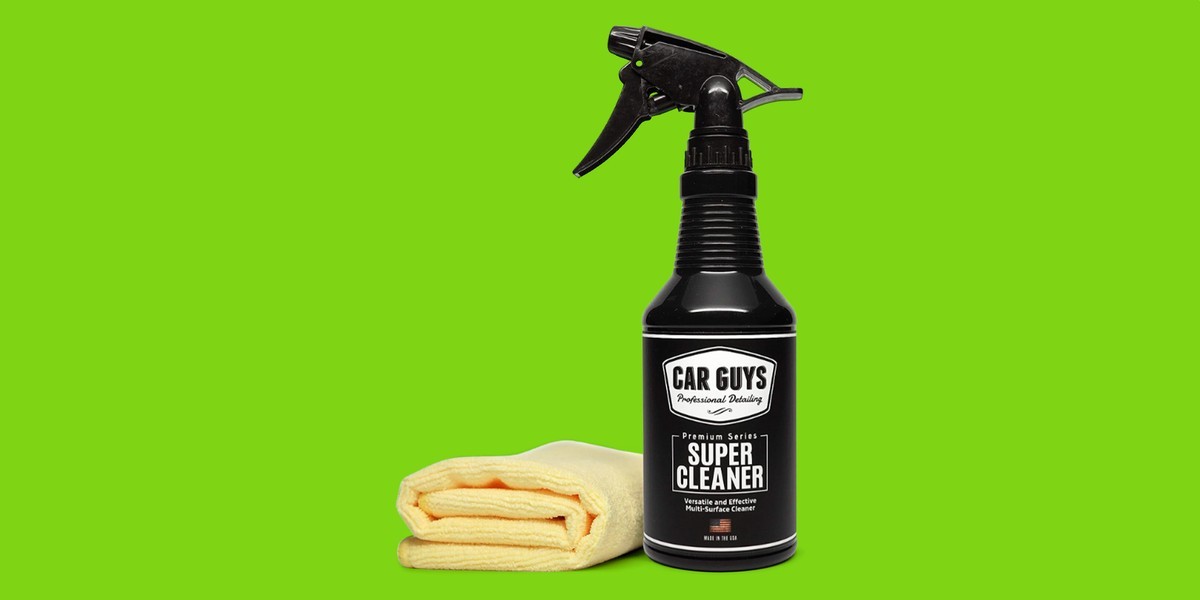
Check Car-Seat Material before Using an Upholstery Cleaner
Car seats face spills, muddy paws, and everyday grime, but cloth and leather require different consideration. The source compares automotive upholstery cleaners and notes that a product suitable for seats may be excluded from glass or delicate controls. Identify the target material first.
Test an approved cleaner discreetly and use a separate towel where the instructions require residue removal. Keep liquid away from sensitive fittings. A product marketed for interiors is not automatically suitable for every part of the cabin or every household upholstery fabric.
Read exclusions for adjacent cabin surfaces
Good Housekeeping notes that CarGuys Super Cleaner can suit specified cloth and leather applications while excluding glass and delicate controls. It also calls for a separate towel to remove suds or lifted grime. Protect neighboring switches and displays, and read the current label before applying a cleaner near them. A broad interior-cleaner claim does not remove these practical boundaries.
Separate odor treatment from soil removal
The comparison distinguishes fabric fresheners from detergents and enzyme treatments. Febreze is presented for compatible fabric odor control, not leather cleaning, while enzyme products require their own contact instructions. Remove accessible debris and identify the actual odor source before choosing a product. A pleasant scent does not demonstrate that spilled material was removed from seams, padding or the carpet below the seat.
Check equipment reach and aftercare
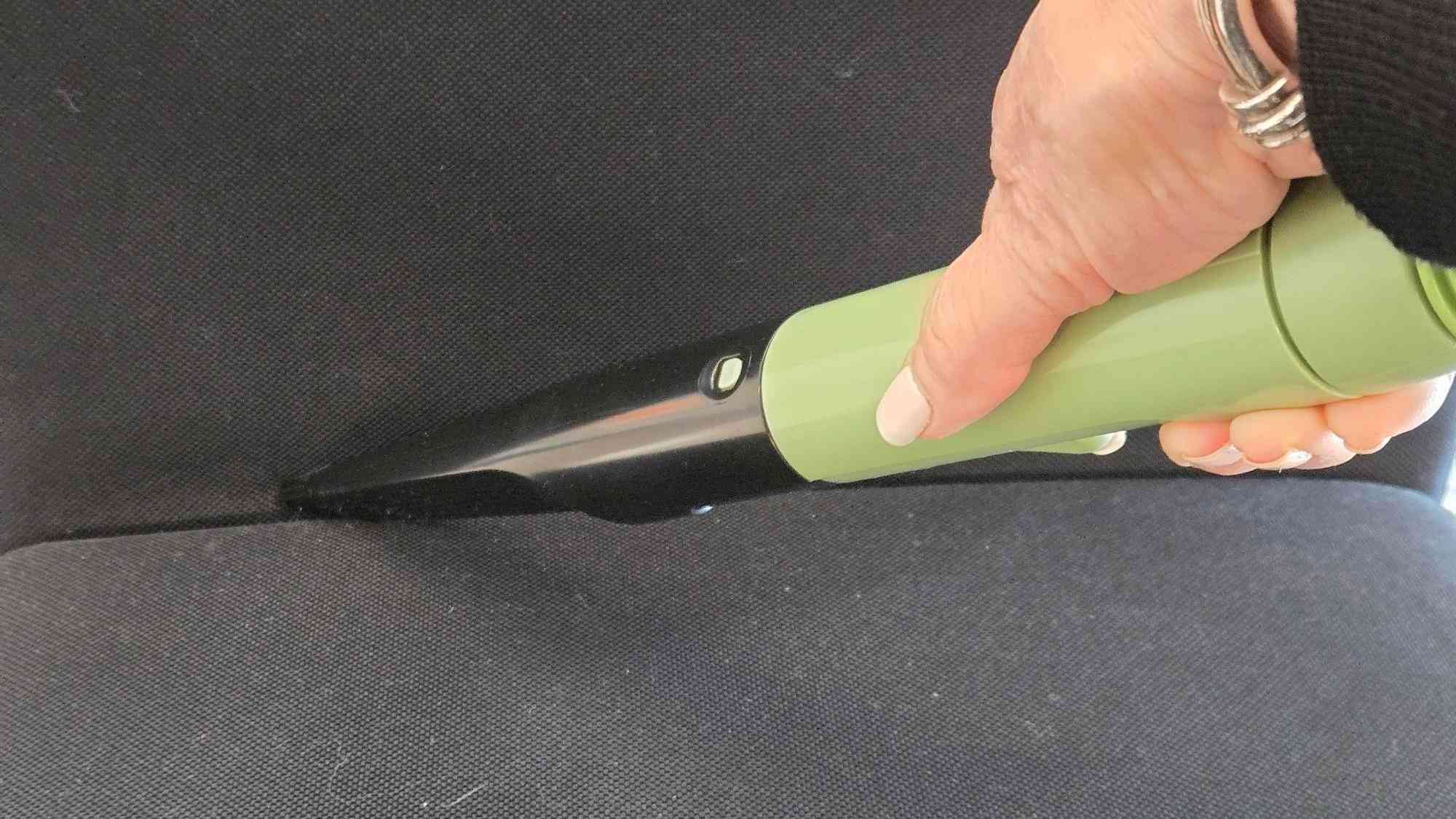
The guide discusses a portable Bissell machine with a hose and crevice tool for awkward spaces, while noting practical concerns such as noise and tank handling. Check outlet access and where the base can safely sit before wetting a seat. After permitted extraction, recover liquid, clean the tool and tank, and allow the upholstery to dry. Do not confuse a useful attachment with permission to soak sensitive fittings.
Map the seat and the neighboring cabin materials
Good Housekeeping distinguishes cloth and leather products while noting that some interior cleaners cover both under specified conditions. Identify the seat covering and check the vehicle maker's care requirements before choosing a bottle. The neighboring display, controls, trim and glass may have different restrictions. A product marketed for automotive interiors should not become a general spray over every surface within the cabin simply because the seat treatment was successful.
The source's CarGuys example explicitly excludes glass and delicate controls and calls for a separate towel after application. Preserve that removal step even when a label says no rinsing is required. No-rinse does not necessarily mean the dirty product is left untouched in the fabric. Read the current package and keep application controlled near fittings so the method cleans the intended material without carrying liquid into components that should remain dry.
Choose the treatment for soil or odor rather than scent alone
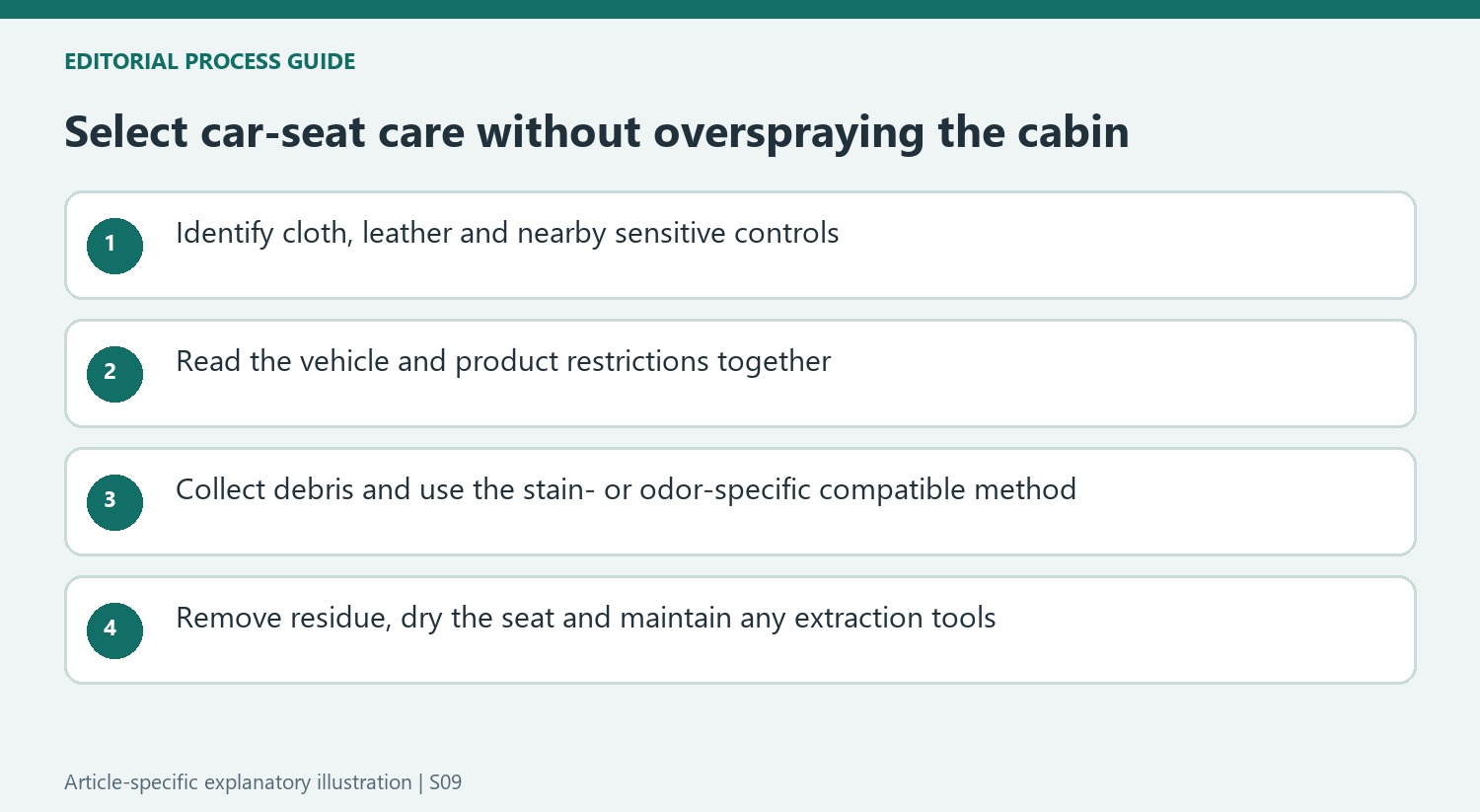
The article compares detergents, enzyme treatments, leather care and fabric odor products. Their targets differ. An odor-focused fabric spray is not a leather cleaner, and a conditioner does not perform the same job as removing spilled material from a cloth seam. Collect accessible loose debris first, inspect the cause of the mark or smell and select the compatible route. A new fragrance is not evidence that a milk spill or pet incident has been removed from deeper material.
Some enzyme products in the guide need substantial contact time to address established odor. Follow the actual formula's directions rather than judging effectiveness solely by the visible stain fading quickly. A hidden test is relevant to both ordinary fabric and treated leather. Use suitable clean cloth faces as soil transfers and perform the required removal stage, protecting nearby controls instead of assuming that a stronger or more generous application improves every interior surface at once.
Plan machine access before wetting an awkward seat area
The portable Bissell example is included partly for its narrow profile and crevice reach, while the guide also notes noise and power-access considerations. Check where the exact machine can sit under its manual and whether the supported hose reaches the target. Establish suitable electrical access before applying solution rather than interrupting a wet treatment to find a new position. A useful attachment improves access only when the vehicle material permits the complete extraction method.
Recover liquid as directed and allow the upholstery to dry fully before ordinary use. Clean the appliance's hose, head and recovery tank afterward, and keep routine vacuuming and prompt spill absorption between deeper jobs. The comparison offers useful questions about format, reach, material and intended odor treatment. It does not make every household upholstery cleaner suitable for every car seat or establish that automotive durability removes the need for restrained moisture and clear product exclusions.
References
- 7 Best Car Upholstery Cleaners for the Freshest Ride. Good Housekeeping; Carolyn Forté.
Durable automotive fabrics still have product and surface restrictions.


Leave a Comment
Comments (0)