
Include the Upholstered Headboard in Bedroom Cleaning
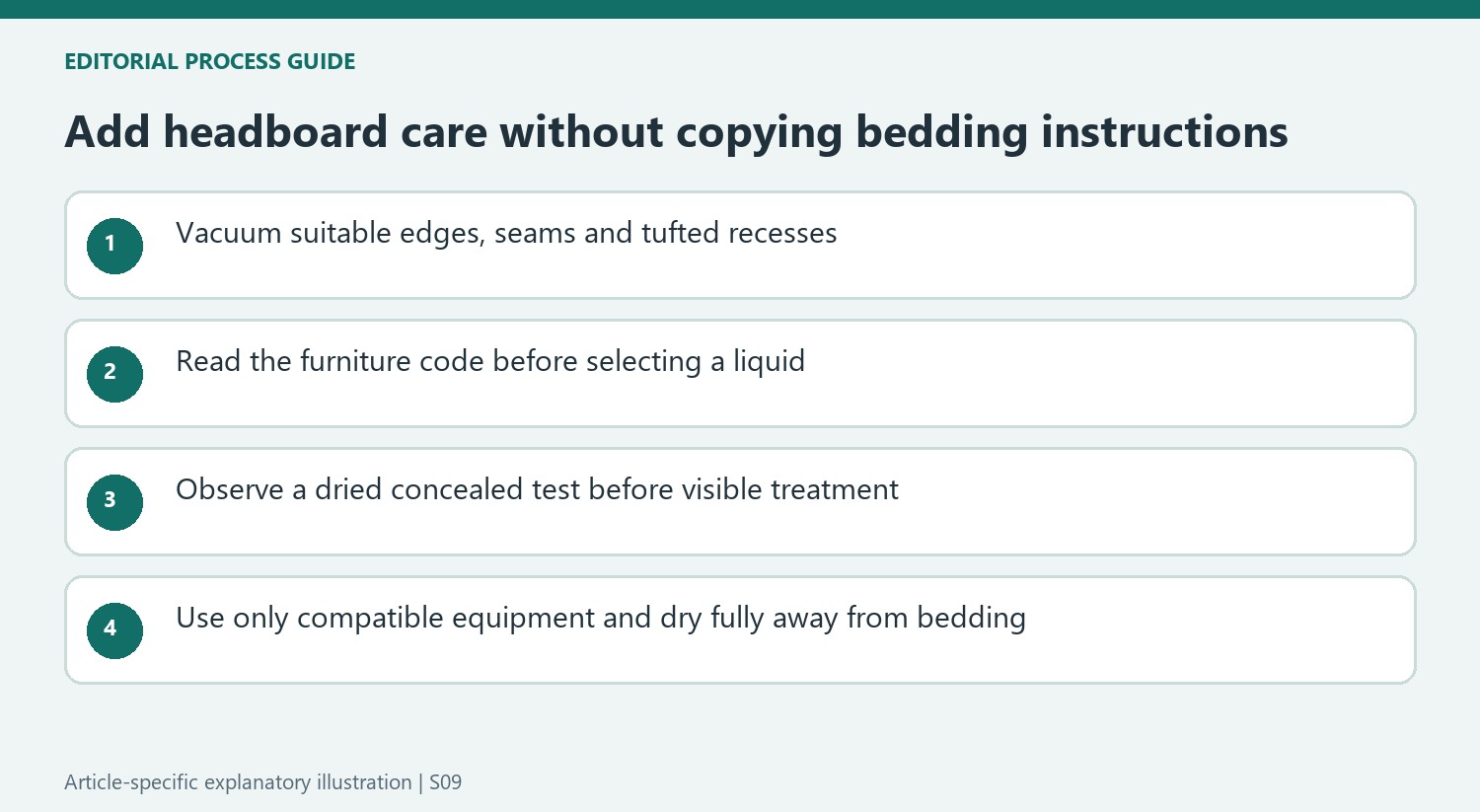
The headboard reference recommends beginning with a vacuum and a soft upholstery attachment. Gentle brushing can loosen debris within tufted areas before suction removes it. Hair and dust need attention around the edges as well as the central upholstered panel.
Check the headboard's care tag before moving beyond dry cleaning. The fabric may require a different treatment from nearby bedding. A controlled routine keeps the sleeping area better maintained without assuming that every bedroom textile can be washed in the same way.
Read the code before the damp wipe
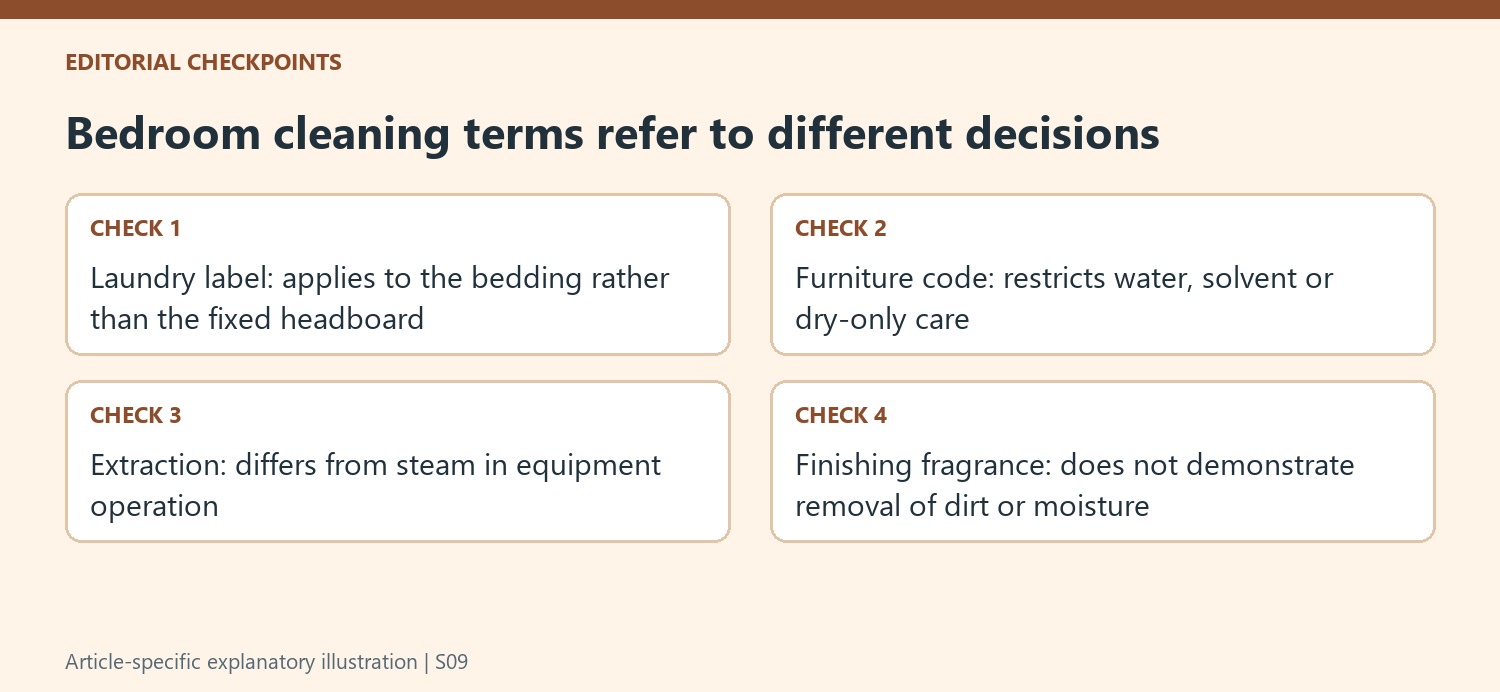
Homes and Gardens lists S for solvent-only treatment, W for water-based cleaning, W/S for either permitted route and X for dry vacuum or brushing only. These codes narrow the choices; they do not remove the need to follow the furniture maker's directions. A headboard that looks like a nearby upholstered chair may still use a different fabric or protective finish.
Treat a stain with a discreet test first
The article recommends a hidden area, such as the back of the headboard, for checking an appropriate stain remover. Observe the result before treating a prominent patch near the pillow. If a damp microfiber wipe is allowed, use gentle consistent movement and avoid saturating padding. Odor-control suggestions in a general guide do not override a solvent-only or vacuum-only restriction on the particular fabric.
Keep deeper cleaning conditional and dry promptly
The source warns that heat can damage some fibers and that any machine method needs checking and a hidden test. Extraction and steam are different processes, so choose the equipment by its approved operation rather than a broad product category. After a permitted wet treatment, use ventilation and circulating air to support drying. Do not push bedding against damp upholstery or treat a fresh fragrance as evidence that moisture has gone.
Give dry preparation a place beside bedding care
Homes & Gardens calls attention to a surface that can be forgotten while sheets and pillowcases are changed. Begin with the appropriate soft upholstery attachment and gentle access to tufts, seams and edges. Loosen accessible debris only with a tool suited to the textile, then collect it with the vacuum. A clean-looking broad panel can still hold hair and dust in those recesses, making the dry pass useful before any decision about stain treatment.
Read the headboard's own tag rather than transferring laundry permission from bedding. The article distinguishes solvent-only, water-based, combined and vacuum-only codes. Those categories set the route, while the furniture instructions provide the practical limits within it. An odor-control suggestion in a broad household guide does not override an X restriction or make water appropriate for a solvent-only covering simply because the room would benefit from a fresher scent.
Keep a concealed test separate from visible treatment
The source recommends a hidden location such as the back for testing a compatible stain product. Use that access only where it can be reached appropriately and wait to observe the dried result. A prominent patch near the pillows should not become the first experiment. Look for color movement, an outline or altered texture before widening treatment, even when the cleaner is sold for upholstery and the headboard fabric appears robust.
If a controlled damp microfiber wipe is permitted, use gentle consistent movement and keep the application restrained. Collect the loosened material instead of leaving dirty liquid in the padding. Change the cloth face as needed and follow the product's residue-removal directions. Optional detergent or fragrance does not create permission for a wetter method. The amount introduced should be governed by the fabric and construction, not by the strength of the smell the operator hopes to remove.
Identify the machine process rather than its marketing category
The guide cautions about heat effects on fibers and the need to check any machine treatment. Distinguish a steamer from an extraction cleaner: their water, solution and recovery requirements are not identical. Read the exact appliance manual alongside furniture guidance before choosing either. A household recommendation using a broad term does not establish that every model or every synthetic covering can tolerate the same operating temperature and moisture exposure.
After any approved damp process, provide suitable circulation and wait until the headboard is fully dry before bedding rests against it. Do not use a scented finishing spray as evidence that hidden moisture has gone. Inspect recurring contact marks and adjust ordinary dry maintenance to actual use rather than relying on an intensive calendar alone. The useful bedroom routine combines accessible dust collection, fabric-specific stain care and complete drying while keeping broader sleep or germ-control promises within the evidence actually available.
References
- How to clean an upholstered headboard – 6 steps to a superior sleep environment. Homes and Gardens; Chiana Dickson.
Tufts and seams can collect dust even though the fabric is not used as seating.


Leave a Comment
Comments (0)