
Do Not Forget Decorative Cushions in the Cleaning Routine
Decorative cushions and throws can accumulate dust and residue even when they are rarely used for sleeping. The source recommends including them in regular household maintenance, particularly around pets or children. Their decorative role does not keep the fabric clean.
Check whether covers and inserts need separate care before washing. Adjust frequency for contact and visible soil, following the item label instead of imposing one treatment on every textile. Allow complete drying before returning cushions to the bed or sofa.
Judge frequency by actual handling
Ideal Home quotes furnishing specialists who suggest monthly attention for decorative cushions and more frequent care when people rest on them daily. The useful distinction is contact: a throw regularly wrapped around someone collects different residue from an accessory rarely touched. Treat the suggested intervals as prompts to inspect the items, while allowing their labels and condition to determine the permitted cleaning process.
Read each textile's instructions separately
The article discusses removable covers, lighter throws and whole cushions, but those are not one washable category. A cover can shrink even when its insert needs a different treatment, and a large throw needs enough washer space to move and rinse. Check the required temperature, detergent and drying method before gathering several decorative pieces into the same load for convenience.

Keep dust removal distinct from disinfection
Vacuuming compatible textiles can remove loose dust between washes. The source also mentions steaming, but that should not become a blanket claim that a quick pass disinfects every cushion. Heat compatibility and any hygiene claim need the relevant product instructions. Address spills promptly with a suitable treatment, remove residue as directed and return the cushion or throw only after it is fully dry.
Schedule attention according to actual handling
Ideal Home distinguishes decorative accessories from the way people actually use them. A cushion may be displayed on a bed yet also support someone's head each evening, while a throw may be wrapped around pets or children. Inspect those contact patterns before deciding how often to clean. A purely decorative role does not prevent loose room dust accumulating, but it also does not make every item require the same intensive wash as a regularly handled textile.
The furnishing experts' suggested intervals are useful reminders rather than universal washing permissions. A delicate cushion can need a restricted process even when frequent use makes it visibly soiled. Keep material guidance and condition together in the decision. A cleaner surface should come from an approved routine, not from forcing a fragile fabric into a stronger cycle because a calendar date has arrived or the rest of the bedding is being laundered.
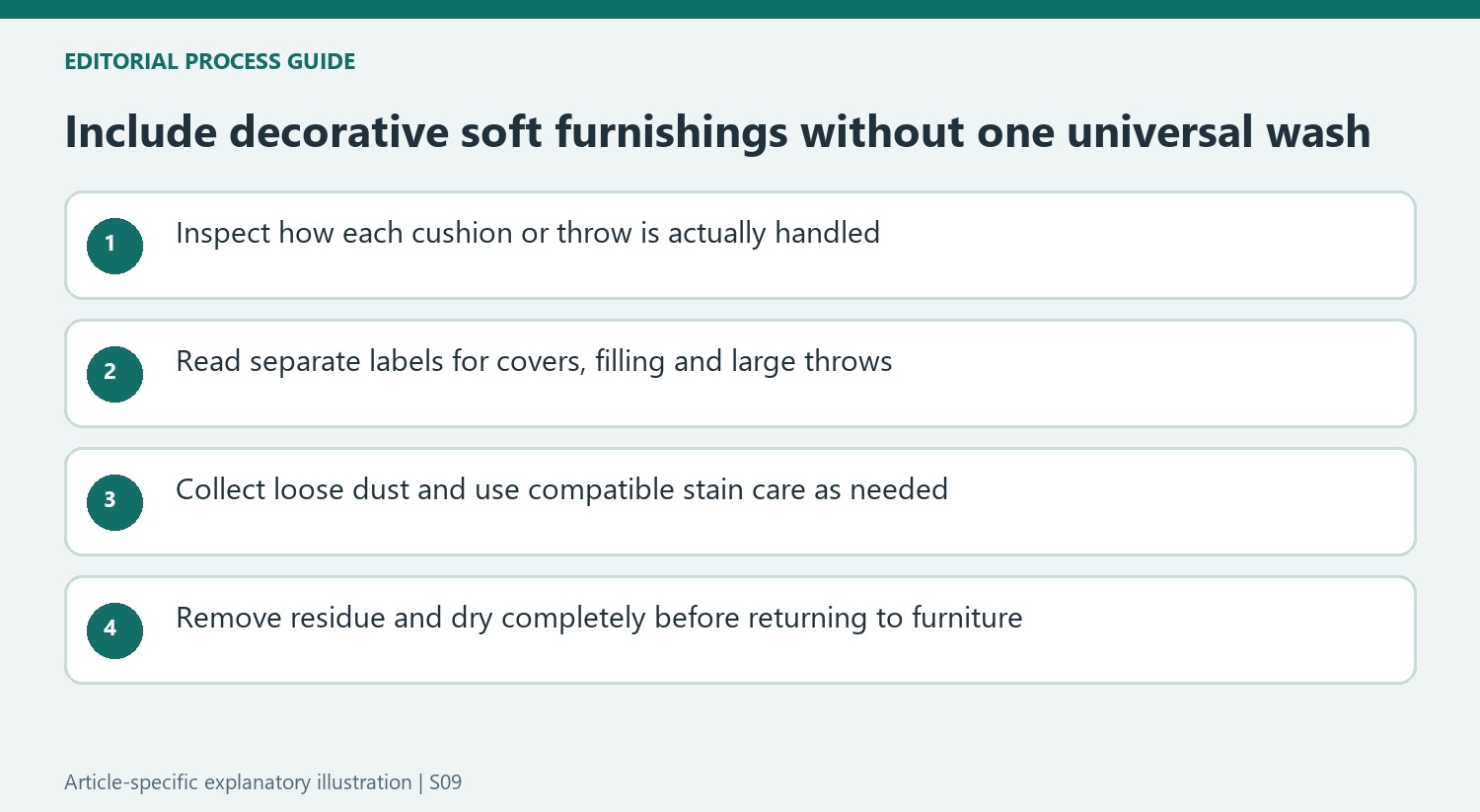
Separate cushions, covers and throws before choosing a method
Read the label on each cover and filling rather than treating soft furnishings as one load. A removable cover can shrink while its insert needs different care, and a whole cushion may retain moisture long after its face appears dry. Check color, trim and construction before any permitted hidden test or local treatment. A zipper makes separation possible but is not itself evidence that either component can enter the washing machine.
A large throw also needs enough space in the washer to move and rinse under the appliance and textile instructions. Follow the recommended detergent and avoid additions excluded by the label. The source cautions about softener buildup on throws, another reason not to assume that a stronger fragrance or softer wet feel proves the fabric is being maintained well. Proper removal of cleaning material matters to how the accessory feels after drying.
Keep loose-dust collection separate from hygiene claims
Suitable vacuuming can collect ordinary dust between fuller cleaning sessions, with the attachment chosen to avoid damaging trim or pile. The article mentions steam as another possibility, but that requires explicit heat compatibility and an appropriate process for any germ-control claim. A brief unspecified pass does not establish that every cushion has been disinfected. Use the actual textile instructions rather than interpreting a general freshening suggestion as permission for universal heat treatment.
Address a new spill promptly through the material's approved method, remove the product residue as directed and allow complete drying before the item returns to a bed or sofa. Review recurring dirt through the accessory's actual use and location. Practical care can include choosing easier-to-maintain coverings for heavily handled places while preserving delicate items elsewhere. The routine succeeds by recognizing that decoration, contact, material, cleaning and drying are separate factors rather than reasons to wash every soft furnishing identically.
References
- How often should you wash your decorative cushions and throws? It’s a lot more than you think, according to experts. Ideal Home; Kezia Reynolds.
Textiles used mainly for display can still collect household dust and dirt.


Leave a Comment
Comments (0)