
Let the Pillow Tag Decide Between Washing and Spot Cleaning
The Spruce distinguishes gentle machine care, hand washing and localized cleaning for decorative pillows.
Separate the pieces when appropriate
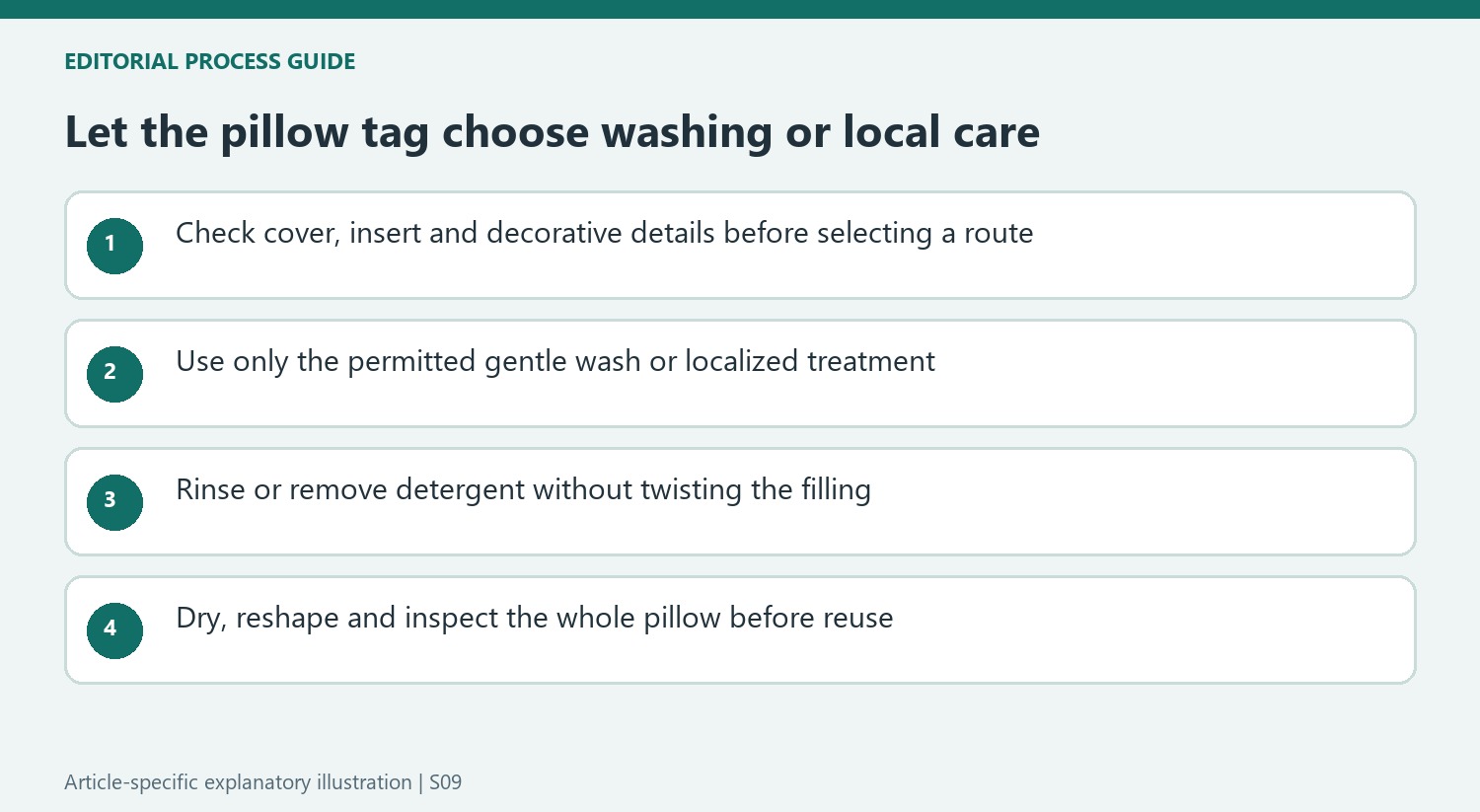
The Spruce recommends checking the pillow's care instructions before deciding whether it can be washed at all. If a removable cover and insert both permit washing, clean them separately according to their requirements. A suitable stain treatment is given time before the wash, while beads or embroidery may need a protective bag. Gentle handling matters more than assuming that every small cushion can take a normal laundry cycle.
Remove residue and dry the filling fully
For a hand-wash method, the guide describes rinsing repeatedly until suds are gone and squeezing rather than twisting the pillow. A towel can help absorb excess moisture before a drying rack is used. Where tumble drying is permitted, low heat and periodic fluffing help protect the filling. Spot-clean-only items need localized treatment and a restrained damp rinse. Regularly removing loose dust also reduces how often a fuller cleaning is needed.
Use gentleness throughout the wash and drying stages
The Spruce's machine method uses a gentle cycle and cool water, with load balancing rather than a lone bulky pillow turning unevenly. Embellished covers may need extra protection, but a mesh bag does not make a prohibited wash acceptable. Its hand-wash route uses repeated fresh rinses until suds have gone. During drying, periodically reshape and fluff permitted fillings instead of leaving a compressed wet mass on the rack. Decorative loops, sequins and beads also affect routine dust removal: a strong vacuum tool can snag them. Choose the least disruptive suitable method, and keep especially difficult textiles away from heavy everyday contact where practical.
Choose the route before arranging the laundry load
The Spruce separates machine washing, hand washing and spot-only care according to the pillow's materials and tag. Start with that choice rather than gathering every decorative cushion into one convenient load. A removable cover and insert can require different methods. Where both are washable, handle them separately under their instructions instead of assuming the fabric's permission also describes the filling and any internal construction.
Beads, embroidery and other details can need extra protection, but a mesh laundry bag does not make a prohibited machine cycle acceptable. Inspect the surface before dry maintenance too, because strong suction can catch loops and sequins. The guide's general freshening suggestions remain conditional on the actual piece tolerating the equipment and settings. Appearance alone cannot tell whether a delicate trim, pile or hidden insert will survive a routine selected for another pillow.
Keep detergent removal as deliberate as application
For permitted machine care, the source discusses a cool gentle cycle and a balanced load. Follow the current item and washer directions rather than treating two pillows as an automatic fit for every drum. Any compatible pretreatment needs its own dose and contact stage before washing. Avoid using extra detergent to compensate for a stain that has not yet been identified; more product can add rinsing work without improving the material-specific treatment.
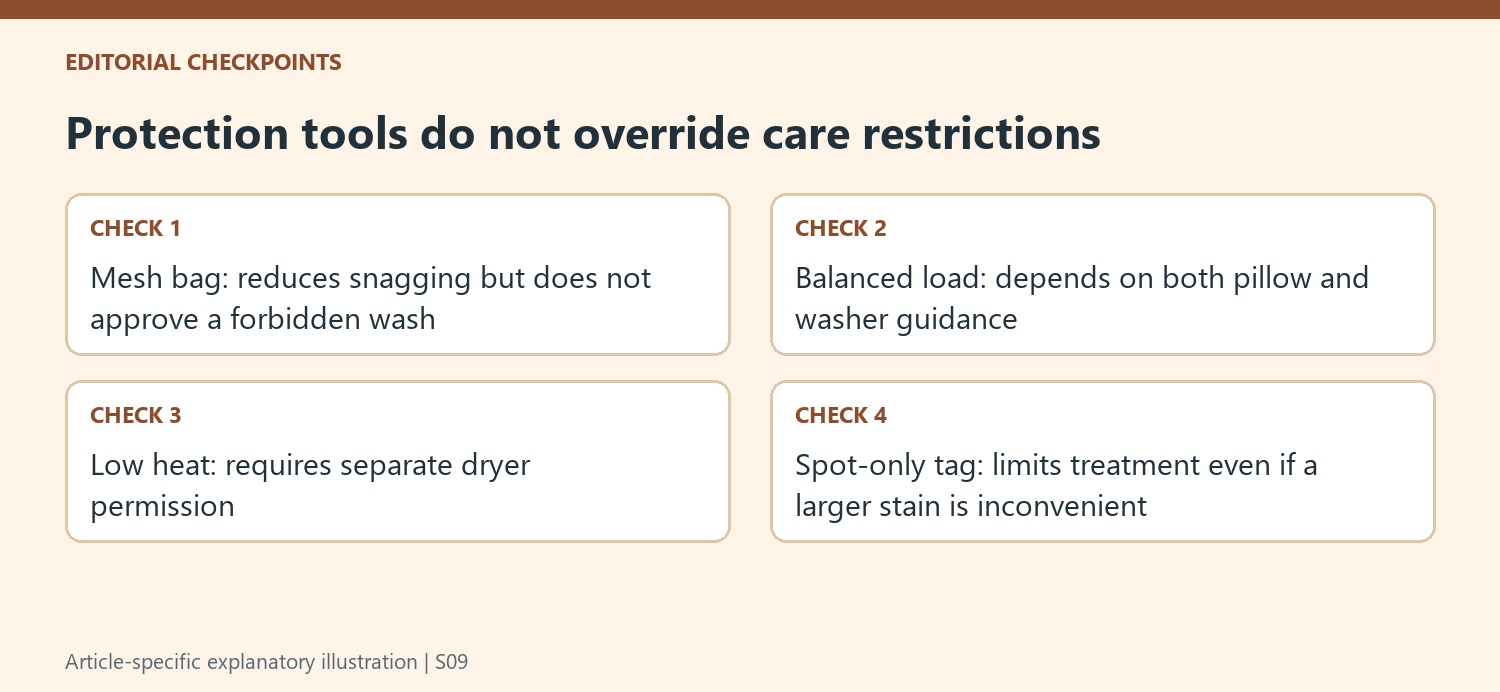
The hand-wash route uses repeated fresh water until suds have gone, with gentle squeezing rather than twisting. This protects shape while removing the cleaning material that would otherwise remain in the textile. For spot-only care, keep treatment local and use the supported controlled-damp removal step. A broad rinse suitable for a washable insert is not appropriate simply because one small mark remains on a pillow whose label permits only surface treatment.
Check the filling through the drying period
The source recommends a towel to absorb excess moisture and a drying surface that supports air movement. Turn and reshape suitable pillows as directed rather than leaving one compressed wet side against an impermeable support. Where low-heat tumbling is explicitly permitted, follow the label and periodically assess the filling under the approved procedure. Do not infer dryer permission only from the fact that the item tolerated a washing machine.
Return the cushion to the furniture only when the cover and filling are fully dry. Keep especially difficult decorative pieces in locations where heavy daily contact is less likely, while continuing appropriate gentle dust removal. The useful routine is not a universal wash recipe; it is a sequence of reading the tag, protecting the particular details, removing detergent and maintaining the fill's condition through complete drying. Those decisions preserve both a clean surface and the shape that made the accessory worth keeping.
References
- This Is the Easiest Way to Wash Your Throw Pillows (and It Won't Ruin Them). The Spruce; Mary Marlowe Leverette.
The Spruce distinguishes gentle machine care, hand washing and localized cleaning for decorative pillows.


Leave a Comment
Comments (0)