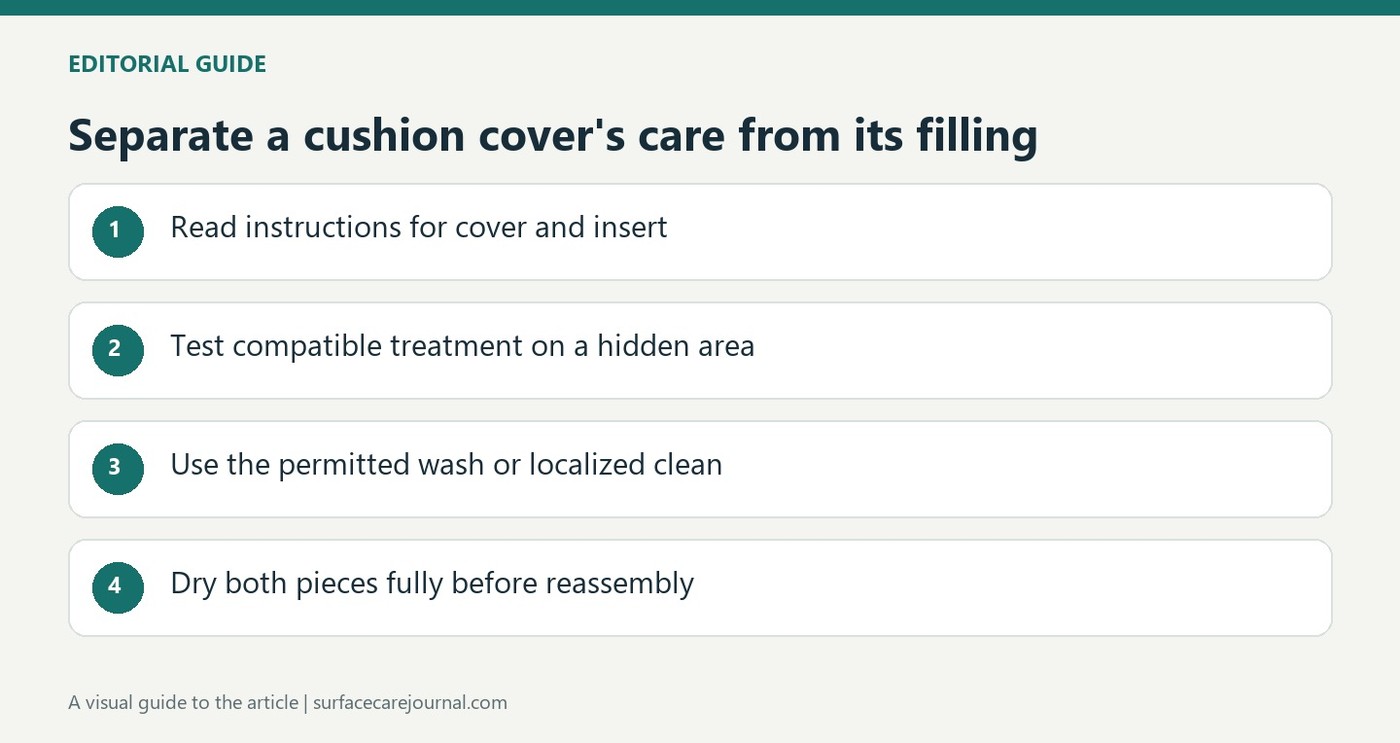
Check Decorative Cushion Covers Separately From Their Inserts
BHG explains why removable covers, filling type, colorfastness and full drying all matter when caring for throw pillows.
Use the labels before choosing a wash
Better Homes and Gardens explains that a throw pillow's outer fabric and inner filling both affect cleaning. A removable cover can have different instructions from the insert, so separating them does not mean both belong in the same wash. Before applying a treatment, check colorfastness in a small area. Delicate textiles need a method suitable for their fabric rather than the routine used on ordinary cotton or polyester.
Do not reassemble a damp pillow
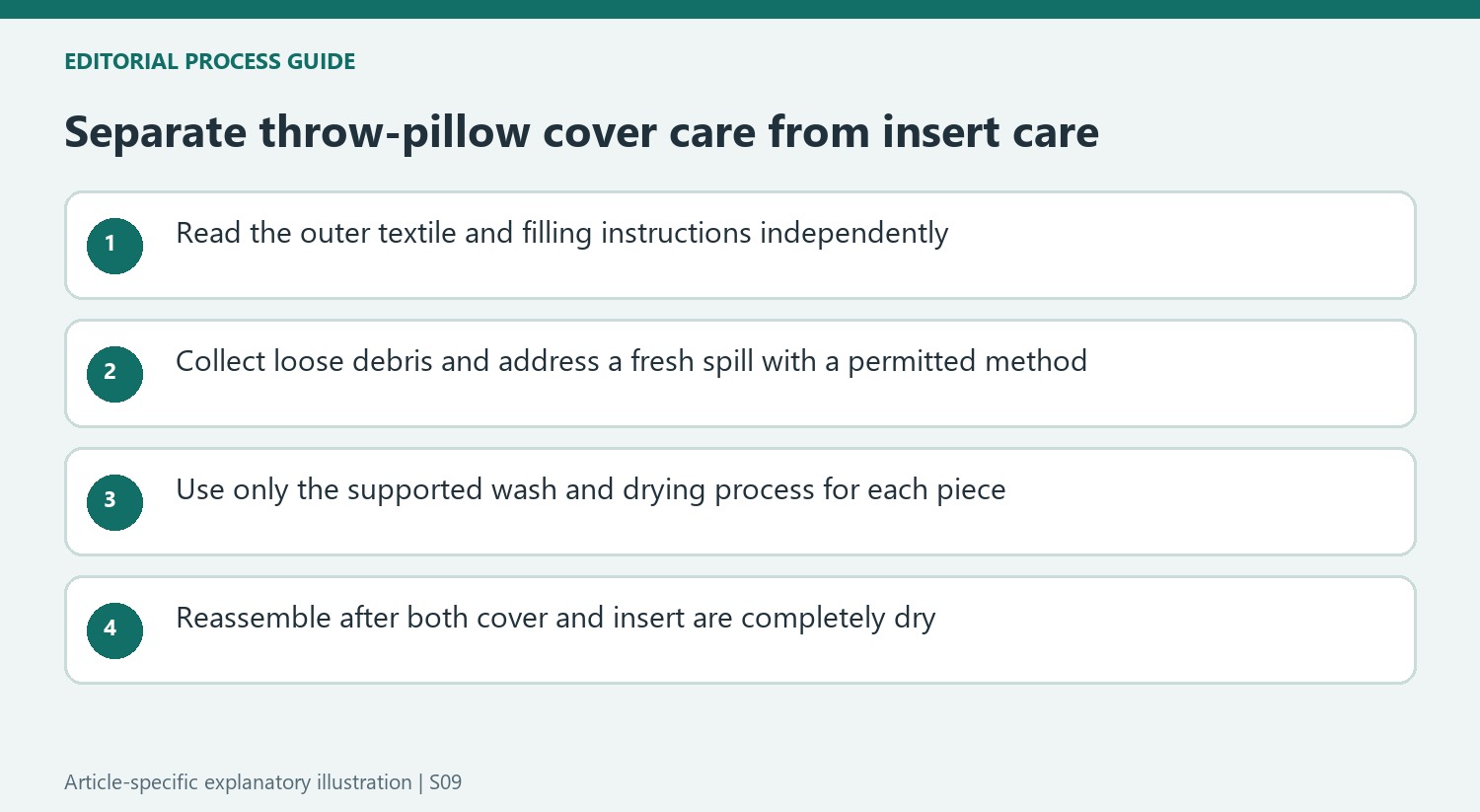
The guide recommends removing loose dust and hair with regular vacuuming and treating new spills promptly. Where washing is permitted, use the specified gentle process and avoid wringing that can distort the item. Covers and inserts must dry fully before they are put together again. The article distinguishes air drying from a label-approved low-heat dryer cycle, with occasional fluffing where appropriate. Dryness matters as much as the initial wash for preventing a musty result.
Plan stain treatment and routine care separately
BHG distinguishes a fresh spill from the dust that accumulates between fuller washes. Blot accessible liquid promptly, then choose a treatment for the actual cover fabric. Its examples contrast common cotton or polyester with delicate satin, silk and suede, which need their own compatible process. A successful hidden test does not override a restrictive care label. For a nonremovable cover, both the surface and the filling remain part of the decision. The guide's suggested cleaning intervals also vary with use: a frequently handled sofa cushion needs different attention from a pillow moved off the bed each night. Check condition rather than washing every accessory identically.
Read two labels when the cover and insert separate
Better Homes & Gardens explains that a decorative pillow's outer textile and inner filling both affect care. Removing a cover is an access advantage, not proof that everything belongs in one laundry load. Read the cover and insert instructions separately, noting their permitted washing and drying methods. A plain polyester cover over a moisture-sensitive filling presents a different task from an embellished delicate cover over a washable insert.
Where the label allows the proposed method, check colorfastness under suitable directions before visible treatment. A favorable hidden test does not cancel a dry-clean-only restriction or establish that a different ingredient is now acceptable. The source mentions common fabrics alongside delicate satin, silk and suede, so maintain those distinctions. Select the actual material's approved route rather than the easiest-looking household recipe for every accessory on the sofa.
Distinguish a new spill from accumulated ordinary dust
Blot an accessible fresh liquid promptly with appropriate clean fabric, then assess the remaining mark for a compatible local treatment. Avoid rubbing the residue through the cover or into the filling. The source recommends observing the dry result before a second treatment, which makes it possible to distinguish a surviving stain from a damp color change. A stain that still looks dark while wet is not automatically a reason for another immediate dose.
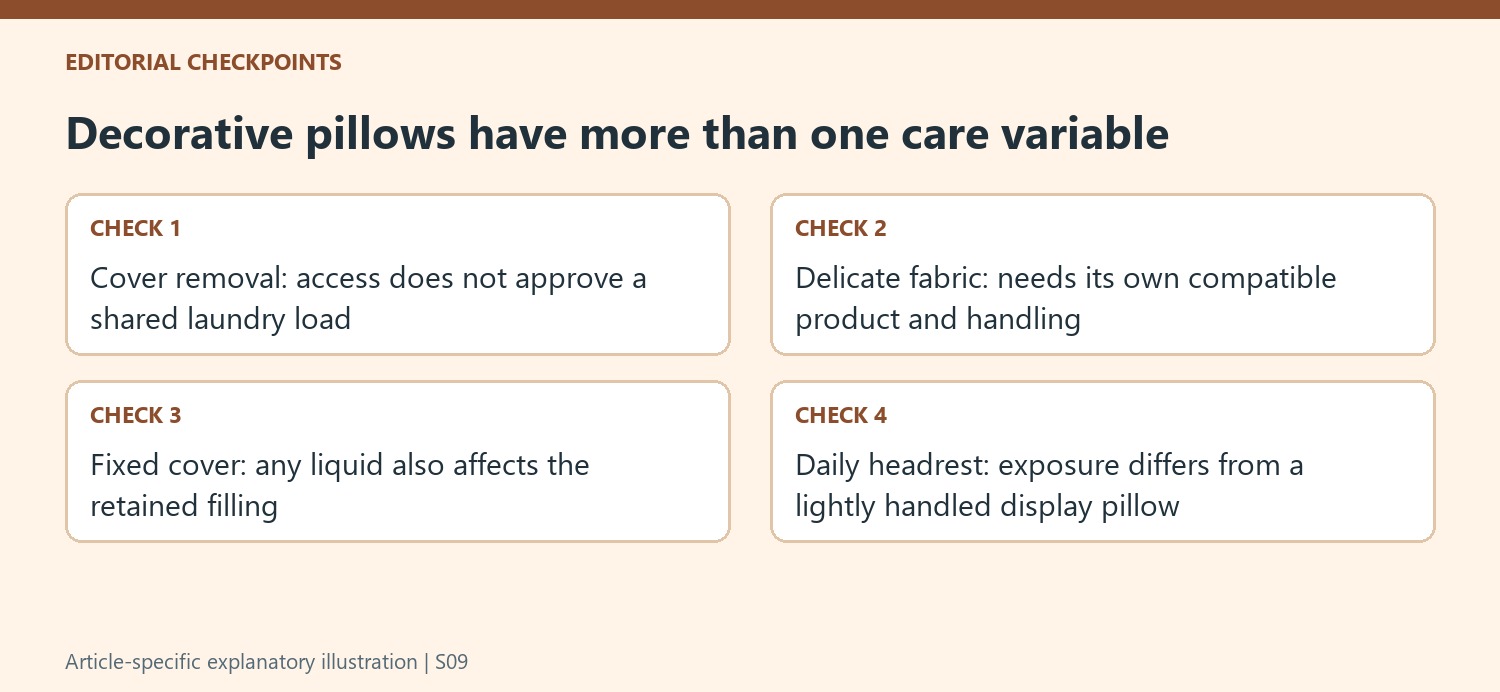
Routine gentle vacuuming removes loose hair and dust between fuller cleans where the design permits it. Check trim, loops and other decorative details before choosing an attachment. A nonremovable cover means the insert remains part of any moisture decision, not simply hidden out of sight while the front is sprayed. Keep the process controlled so ordinary dust collection does not become unnecessary wet work across the entire cushion.
Dry every component before rebuilding the pillow
The guide cautions against wringing and distinguishes air drying from label-approved low-heat tumbling. Use the method specified for the actual piece and handle the filling without twisting it into a distorted wet mass. Where periodic fluffing is supported, it can help assess and maintain the insert during drying. A cover that feels dry does not establish the readiness of an insert that held more water during the wash.
Do not reassemble or return the pillow to its resting place until both components are fully ready under their instructions. Adjust the inspection interval to contact: a sofa cushion used as a headrest collects different soil from an accessory removed from the bed each night. The source's suggested schedules are reminders, while material requirements and actual condition decide what can be washed. A careful routine maintains appearance through separate cover care, filling assessment, gentle residue removal and complete drying.
References
- Yes, You Need to Wash Your Throw Pillows from Time to Time—Here's How. Better Homes & Gardens; Patricia Shannon.
BHG explains why removable covers, filling type, colorfastness and full drying all matter when caring for throw pillows.


Leave a Comment
Comments (0)