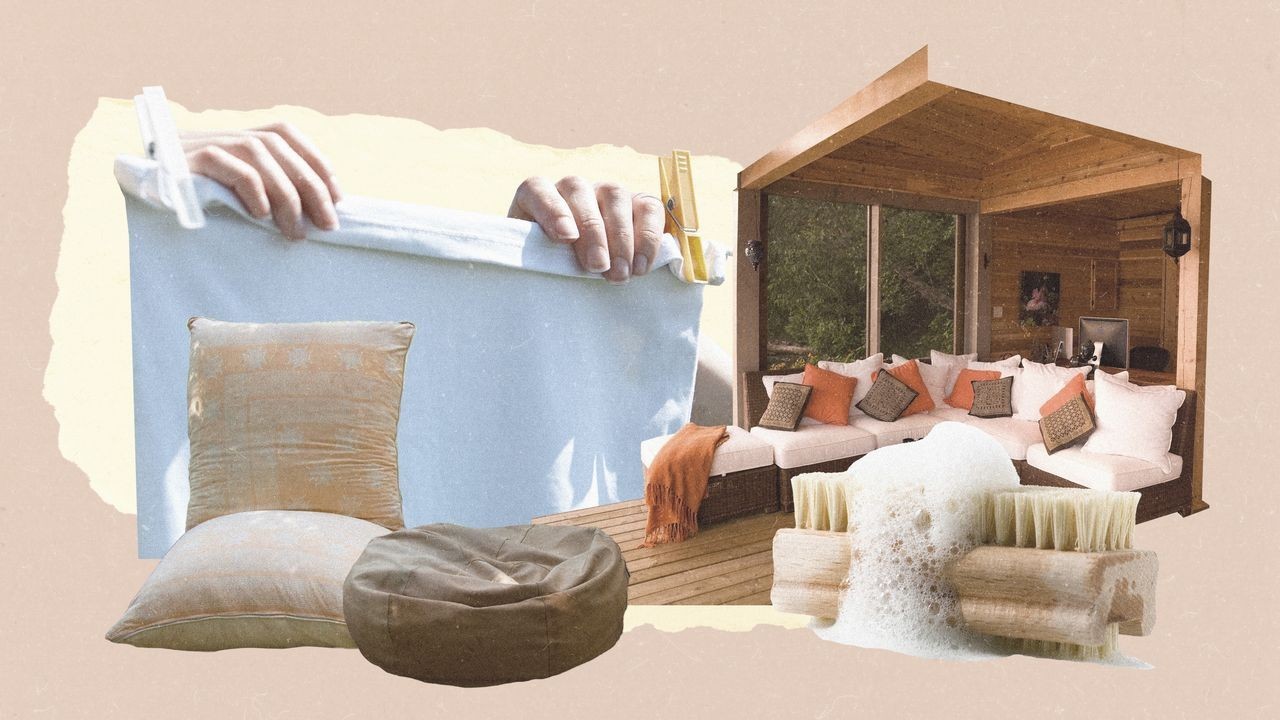
Assess Outdoor-Cushion Contamination before a Deep Clean
The source recounts discovering heavily soiled patio cushions after winter storage, including contamination associated with wildlife. It highlights checking removable covers and clearing surface material before ordinary wet cleaning. The condition of the filling also affects whether a cushion can be restored.
Do not treat animal droppings as ordinary dust or spread them through dry household vacuuming. Follow appropriate contamination guidance and the cushion maker's instructions. Seriously affected items may need specialist handling or replacement, followed by better protection during future storage.
Separate ordinary outdoor dirt from contamination
Architectural Digest recounts a cushion-cleaning problem after wildlife occupied covered furniture over winter. That history changes the first decision: droppings or infestation need appropriate contamination handling, rather than shaking or dry-vacuuming the cushion as if it only held leaves. Inspect the filling and the storage area as well as the removable cover. Seriously affected padding may not be a suitable home-restoration project.
Use the cushion maker's own cleaning route
For ordinary soil on compatible outdoor fabric, the article discusses removing covers where allowed and testing a suitable product discreetly before broad treatment. Sunbrella's quoted advice specifies gentle seam-to-seam cleaning with a soft tool and a thorough rinse. Do not transfer that method to a different material without checking its label, or assume a zipper means machine washing and tumble drying are permitted.
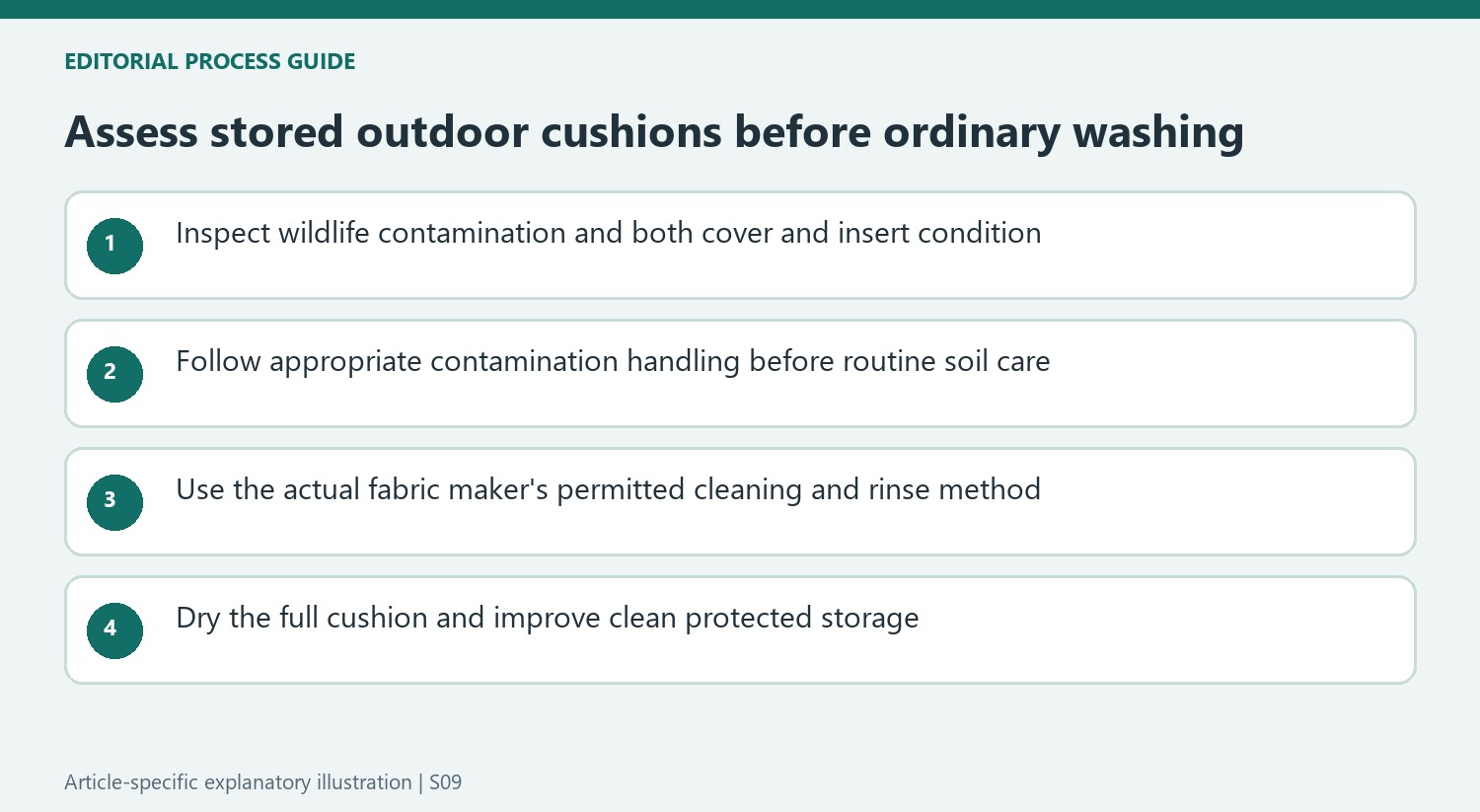
Dry and store for the next season
The source recommends allowing the cover and insert to dry completely, with cushions positioned to support drainage and air drying where appropriate. Do not put a dry-looking cover around a damp core. Its pressure-washing discussion also recognizes risks to seams and filling, so the manufacturer must decide suitability. Clean protective storage and inspections during the off-season help prevent another hidden buildup beneath covers before the furniture is used again.
Separate the storage history from ordinary patio dirt
Architectural Digest's account begins with wildlife occupying covered furniture over winter. That is a different starting point from cushions carrying leaves or light pollen. Inspect for signs of contamination and the condition of both cover and insert before selecting a household cleaning method. Do not copy ordinary shaking or dry-vacuuming preparation where animal droppings are present; appropriate contamination handling takes priority over making the surface appear ready for a soapy wash.
A removable cover can hide a more seriously affected core. Assess whether the padding and storage area can be addressed appropriately, and obtain specialist advice or consider replacement when necessary. Cleaning only the fabric face may leave the original source inside. The source's personal restoration story should not become a guarantee that every wildlife-affected cushion is a suitable home-cleaning project or that one general recipe provides the required contamination control.
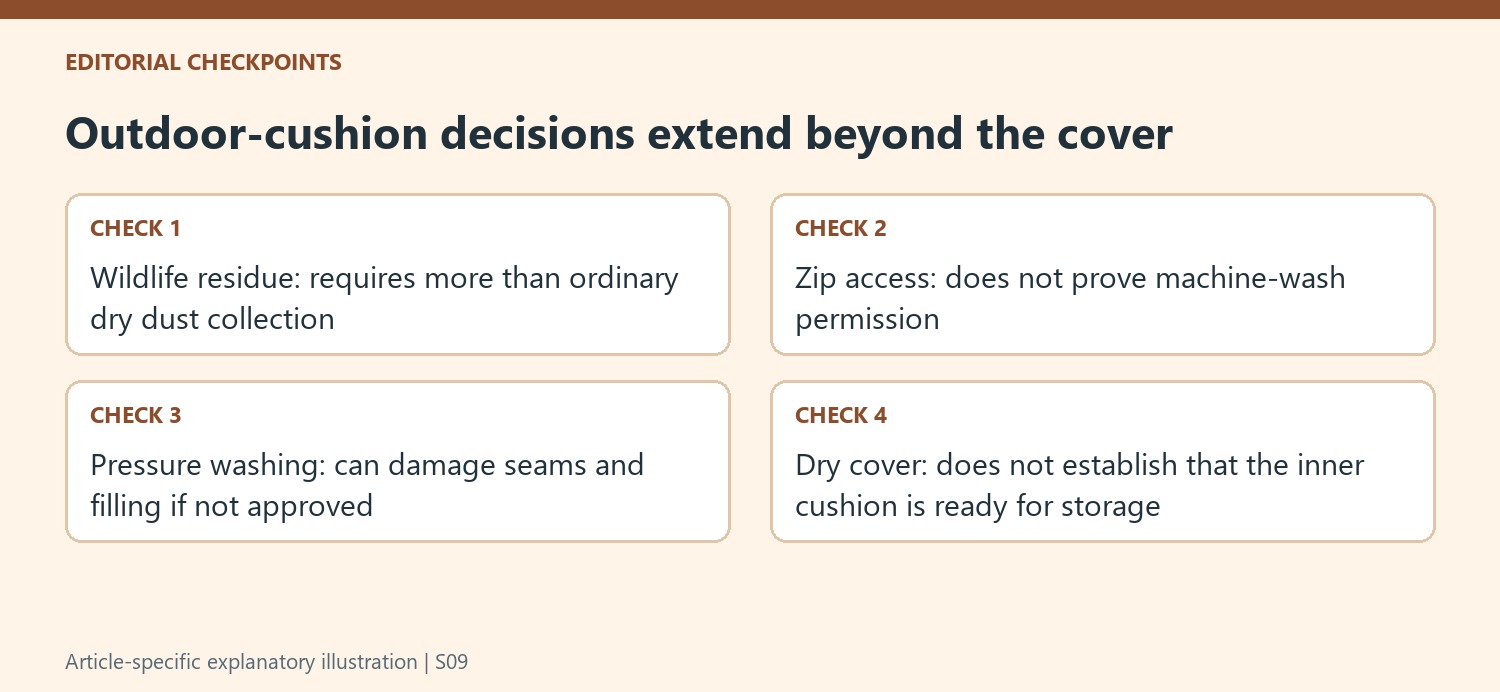
Use material-specific ordinary care once the condition permits it
For compatible fabric carrying ordinary soil, follow the cushion maker's directions on cover removal, hand washing and any machine permission. A zipper provides access without proving that a washing machine or tumble dryer is allowed. The source includes several general recipes, but its quoted Sunbrella guidance uses a gentler seam-to-seam process for that material. Do not merge all the recipes or transfer a brand-specific route to an unidentified outdoor textile.
Test a permitted product in a concealed area and use the tool softness suited to the finish. Remove the cleaning solution thoroughly rather than leaving a detergent film that attracts new dirt. Outdoor use does not make fabric immune to harsh brushes, bleach or pressure. The article acknowledges possible seam and filling damage from pressure washing, so the manufacturer must decide whether that approach belongs on the particular cushion at all.
Finish the insert and storage plan along with the cover
Allow the complete cushion to dry under the approved conditions, positioning it to support drainage where appropriate. Inspect the insert rather than trusting a dry-looking cover. Reassembly and storage around a damp core can preserve the conditions that caused the problem. Avoid adopting one writer's approximate waiting period as a universal drying guarantee, since material thickness, weather and prior moisture vary between cushions and households.
After cleaning or replacement, review the protection used between seasons. Clean suitable storage, sound covers and periodic inspection help reveal debris or wildlife activity before another spring uncovering. Ordinary in-season spot care can then deal with fresh soil without becoming a major restoration each time. Keep contamination, fabric cleaning, complete drying and future storage as separate decisions so a better-looking cushion does not conceal unresolved filling damage or an unchanged storage condition that will repeat the original problem.
References
- How to Clean Outdoor Cushions So They Look Brand New. Architectural Digest; Kathryn O'Shea-Evans; Steven John.
Loose grime, removable covers, and filling condition need separate attention.


Leave a Comment
Comments (0)