
Check the Care Label under Upholstered Dining Chairs
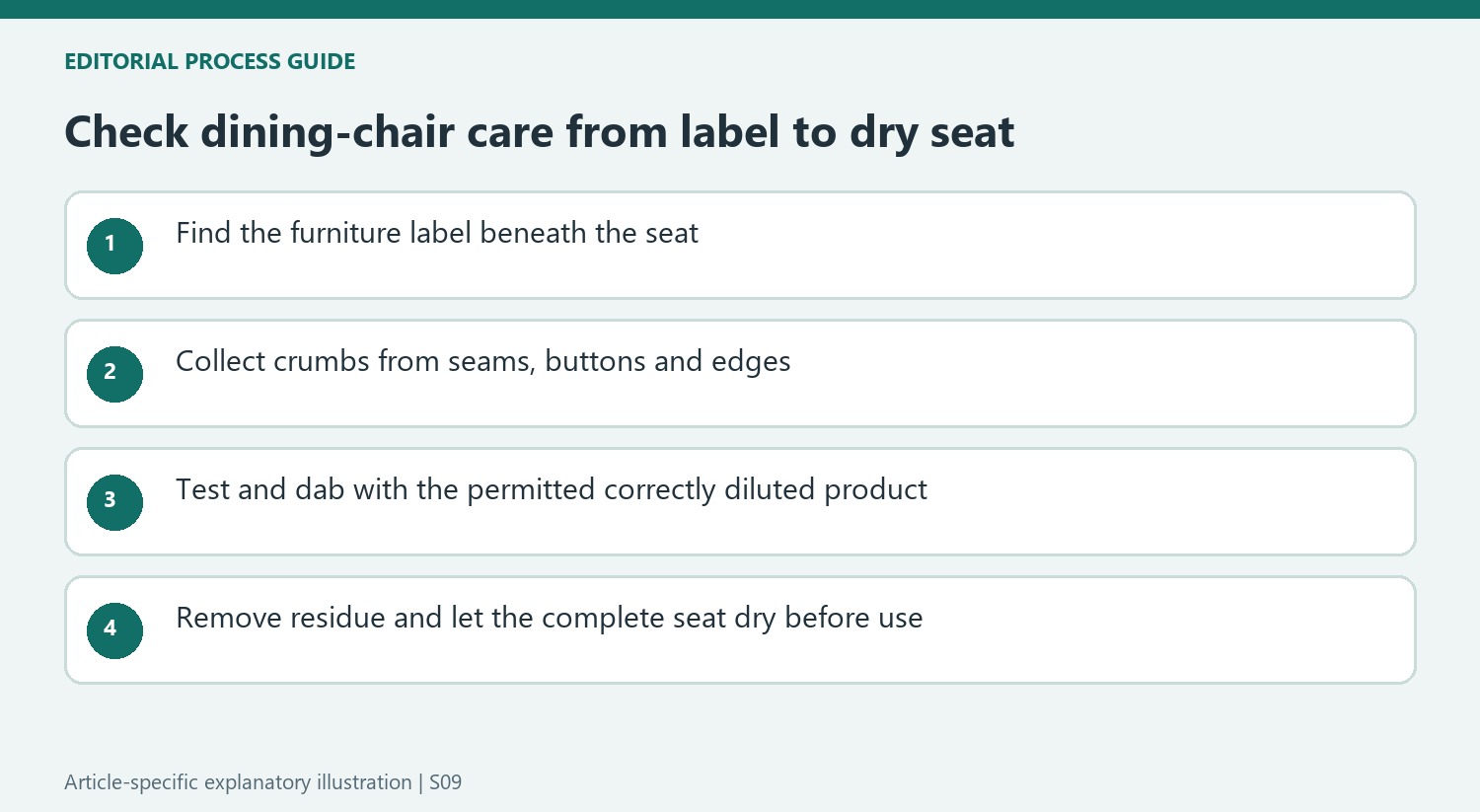
The dining-chair reference recommends checking the label, often beneath the seat, to see whether wet cleaning is permitted. Remove loose crumbs with a cloth and vacuum around buttons or seams before dealing with marks. That preparation prevents debris becoming part of the stain treatment.
Use a suitable diluted upholstery cleaner only where the care guidance allows it. Test a hidden section first. A controlled spot treatment is preferable to soaking the seat or assuming that kitchen use makes the fabric more resistant to cleaning products.
Give food residue a local response
Homes and Gardens recommends collecting crumbs before addressing a stain, including material caught around buttons and seams. For a fabric approved for water-based cleaning, apply the correctly diluted product sparingly to a clean cloth rather than soaking the seat. Dab gently and change to a clean area as soil transfers. The dining room location does not remove the need for a hidden test.
Check the filling as well as the visible fabric
The source cautions that steam compatibility includes the upholstery and the chair's padding. Some fabrics or foams may be affected by heat. Check the care guidance before selecting equipment, and do not infer permission from a water-cleanable label alone. A suitable upholstery attachment still needs an approved method, controlled moisture and enough drying time before someone sits down again.

Use clean plain cloths and complete drying
The experts warn about dye transfer from colored cleaning materials, especially onto pale chairs. Choose an appropriate plain cloth and use a separate one for removing permitted soap residue. Allow airflow around the chair and use a fan if suitable. Follow the maker's limits on sun exposure and heat. Washable seat covers can offer practical protection, but their own labels still govern laundering and drying.
Start beneath the seat before treating the top
Homes & Gardens recommends locating the dining chair's care label, often on its base. Check it before assuming that a piece used near food is designed for frequent wet washing. The covering, padding and frame may each impose limits. Identify whether the permitted route is water-based or requires another form of care, then use the furniture maker's current guidance to select the cleaner rather than a kitchen product chosen only for convenience.
Collect crumbs from the broad seat and around seams or buttons with suitable gentle tools before approaching a visible mark. This prevents loose food material being worked into the textile during treatment. The source distinguishes ordinary debris removal from stain care, so a thorough dry pass is useful even if the label excludes liquids. Check the seat edges as well as the center where someone has just been sitting.
Use a suitable stain product through a clean cloth
Where the covering permits it, the guide describes a correctly diluted mild detergent or upholstery product applied sparingly to suitable fabric or a sponge. Dab the identified area and change to a fresh working face as material transfers. A heavy direct spray can push more moisture toward the filling than a controlled cloth application. Blotting is intended to collect the mark without distorting the visible textile through forceful rubbing.
A hidden test remains important even on an everyday chair. Choose an appropriate plain or white cloth so color from the cleaning tool does not become a second stain on pale upholstery. The article also discusses enzyme-based products for some food residues, but those still need the actual fabric permission and their own label directions. Treat a stain-specific option as a considered choice, not an extra ingredient to add to whatever detergent is already present.
Assess padding and drying before adding heat
The source explicitly extends steam compatibility to the chair's stuffing as well as its fabric. Some foams and textiles can respond badly to heat, so a water-cleanable code alone does not establish permission for a steamer. Check the exact furniture and machine requirements together before selecting equipment. A suitable upholstery attachment improves access but cannot make an incompatible material tolerate a temperature or moisture process it was not designed to receive.
After a permitted wash, remove the cleaning residue as directed and provide suitable airflow until the chair is fully dry. Follow limits on sunlight and heat for both the textile and its frame. Plan seating needs so a recently treated chair is not returned to use prematurely. Washable protective covers may reduce exposure, but their own labels govern laundering. The durable routine combines prompt crumb collection, compatible local care and complete drying rather than repeated soaking after each meal.
References
- How to clean upholstered dining chairs – 6 hacks to banish stains and spills. Homes and Gardens; Chiana Dickson.
The seat's cleaning method depends on its fabric rather than its everyday role at the table.


Leave a Comment
Comments (0)