
Vacuum Headboard Tufts and Seams Before Spot Cleaning
The Spruce's experts recommend a gentle top-to-bottom approach and caution against saturating the fabric.
Start in the places that collect debris
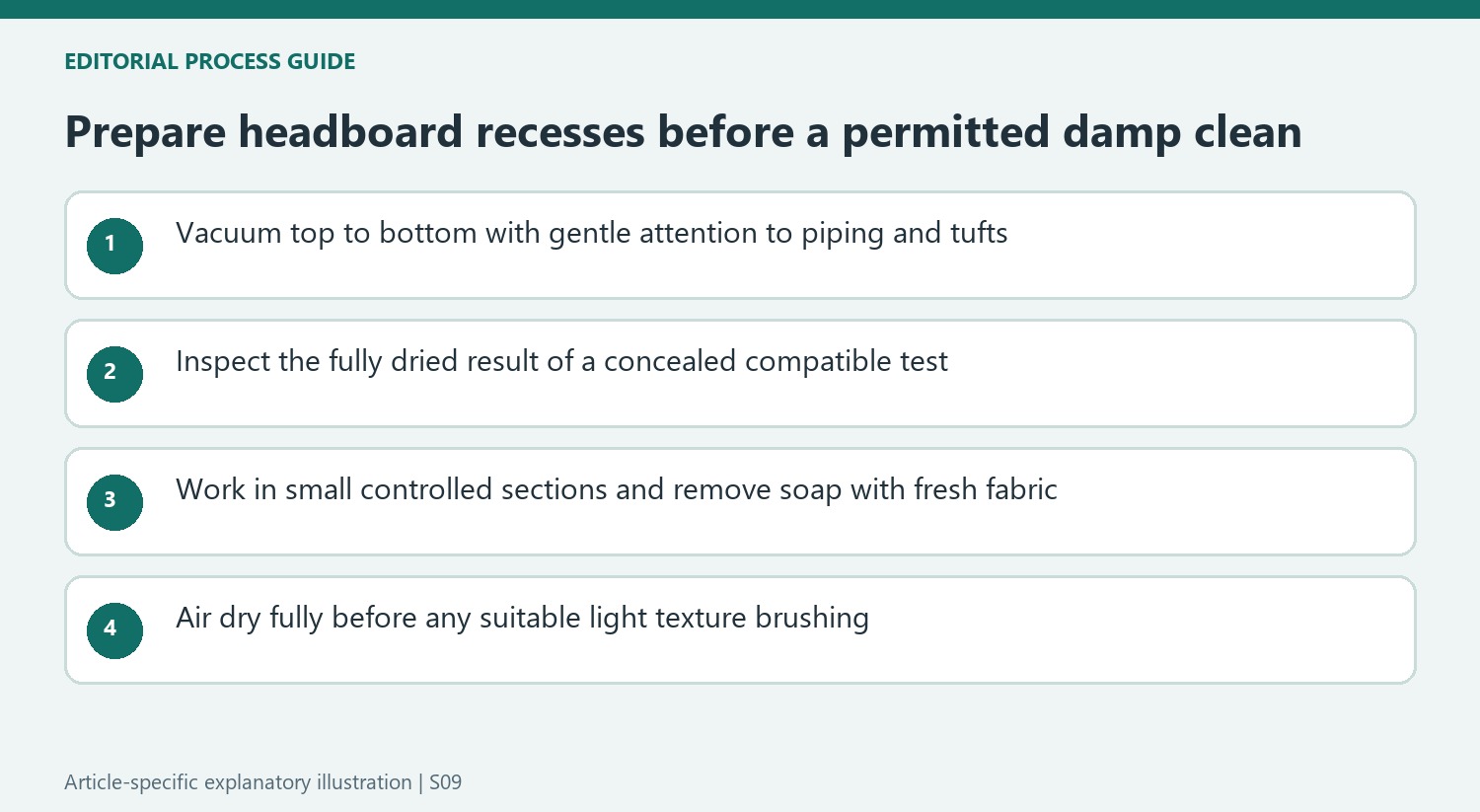
The Spruce recommends a soft brush and upholstery attachment, working from top to bottom and paying attention to piping, seams, button tufts and the area near the wall. Removing this material first prevents it from smearing during a later compatible clean. The experts emphasize routine maintenance rather than waiting for a visible stain or persistent odor to develop.
Check the cleaner after the test has dried
A hidden lower edge or back section provides a place to evaluate a proposed solution. Inspect it for fading or discoloration after drying before proceeding. Where compatible, use gentle small sections rather than soaking or scrubbing the fabric, then remove soap with a fresh barely damp cloth. Blotting with a dry towel and circulating air can help. The article warns against heat guns and hairdryers, which can shrink the textile or leave marks.
Check the texture after the fabric is fully dry
The Spruce recommends a final light brushing where suitable to even out velvet or microfiber after cleaning. That is a separate finishing step from scrubbing a stain while wet. Use a clean soft brush and the fabric's care guidance rather than force. The article also distinguishes recurring vacuuming from fuller cleaning based on contact, pets and conditions in the room. Persistent odor is a reason to inspect for its cause, not to add repeated damp treatment. If a powder deodorizer is considered, check both upholstery and vacuum instructions first; a general household tip does not establish suitability for every fine-powder collection system. Let the surface dry before deciding whether another pass is necessary.
Direct the first pass toward piping and button recesses
The Spruce emphasizes top-to-bottom preparation, including seams, piping and button tufts. Those shapes collect material that a quick sweep over the broad panel can miss. Use the appropriate soft brush and upholstery attachment to loosen and collect accessible debris gently. The purpose is to remove particles before damp work spreads them, not to pull at trim or force the vacuum nozzle against a delicate woven or piled covering.
Include accessible areas near the wall while respecting the headboard's fittings and weight. A cleaning reminder does not establish that a fixed panel should be detached without its assembly guidance. Review the actual contact area near pillows separately from upper-edge dust, because body oils and loose particles may require different levels of attention. Routine dry collection can remain useful even where the label rules out any liquid home cleaning.
Use the dried hidden test as the decision point
The source suggests an inconspicuous lower edge or back area for testing a proposed compatible solution. Inspect only after it has dried so fading or a change in color becomes visible. A wet area that appears evenly dark is not a completed compatibility check. If a product alters the material, do not proceed across the prominent front in the hope that a more thorough application will make the changed appearance blend in.
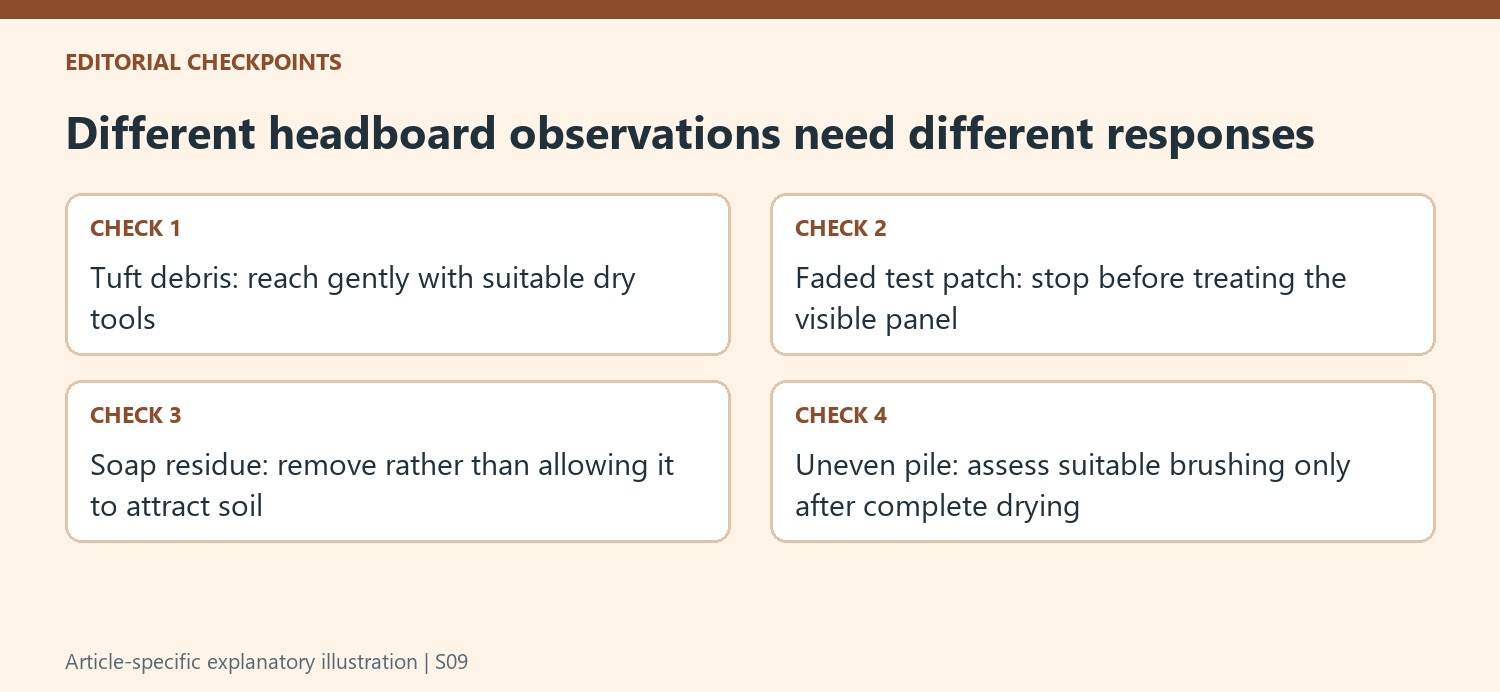
Where the method is approved, work in small sections with restrained gentle contact. The guide cautions against soaking and scrubbing, then calls for a fresh controlled-damp cloth to remove soap. Keep the cleaning and removal cloths distinguishable as their faces become dirty. Detergent residue can attract soil, so leaving the product behind is not a harmless shortcut just because the fabric initially smells or looks better.
Restore suitable texture only after full drying
Blot remaining moisture with appropriate dry fabric and use the supported airflow conditions. Avoid heat guns and hairdryers, which the article associates with shrinking and marks. A machine-free cleaning method can still create too much moisture if the cloth was not controlled. Keep bedding clear until the entire treated area is ready, then inspect the appearance rather than deciding the result while the pile and color are still affected by dampness.
A final light brushing may even suitable velvet or microfiber after drying, but it is a finishing step rather than a reason to scrub a wet stain. Use a clean soft tool and the fabric guidance. Any powder deodorizer needs separate upholstery and vacuum permission, and recurring odor should prompt investigation rather than repeated layering. Adjust the maintenance interval to actual room exposure within the maker's advice, keeping dry collection, stain work, residue removal and texture finishing as distinct purposeful stages.
References
- This Overlooked Bedroom Spot Could Be Full of Dust—Here’s How to Fix It. The Spruce; Kate Van Pelt.
The Spruce's experts recommend a gentle top-to-bottom approach and caution against saturating the fabric.


Leave a Comment
Comments (0)