
Add the Headboard to the Bedroom Cleaning Schedule
Real Simple recommends recurring dust removal and a fabric-compatible fuller clean rather than ignoring the surface behind pillows.
Remember the surface behind the pillows
Real Simple points out that headboards receive contact from hair and skin while often being left out of the cleaning schedule. Its expert recommends a vacuum and soft horsehair brush for recurring dust removal rather than waiting until the surface looks heavily dirty. This maintenance is separate from washing sheets and pillowcases, which does not remove soil from the upholstered panel itself.
Choose a compatible complete process
For deeper work, the article discusses stain treatment and an upholstery cleaner appropriate for the fabric. It notes that treating only a small visible patch can leave uneven water marks, so the overall process needs planning. Any machine, liquid or steam method must first be compatible with the actual material and its care instructions. Allow the piece to dry fully, and treat product suitability and drying as practical requirements rather than assuming all headboards can be handled alike.
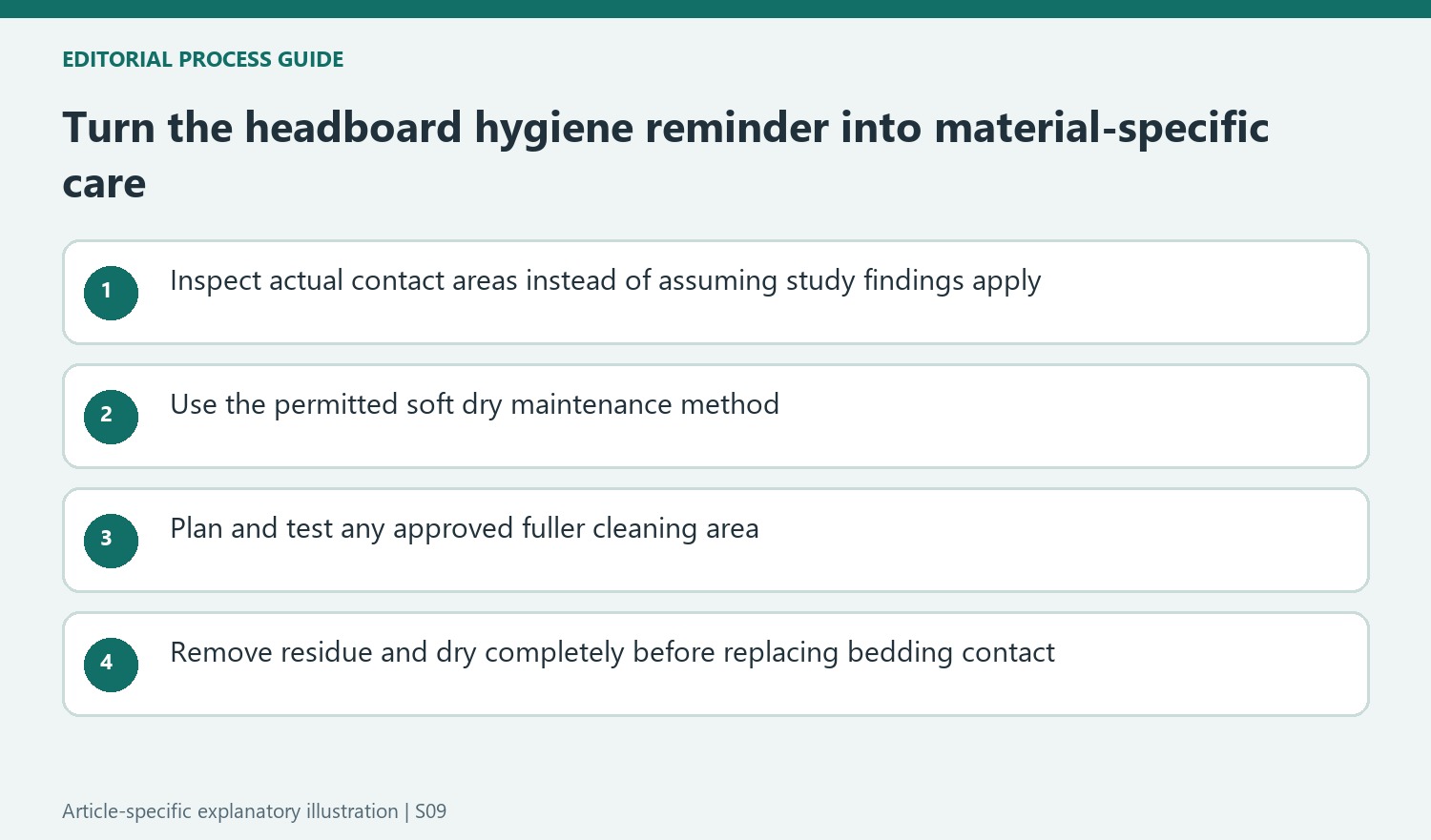
Keep the study headline separate from practical care
Real Simple reports a partnered study of microbes on headboards and then turns to a cleaning expert's maintenance recommendations. The article does not show that every household headboard contains the same organisms or that a quick cleaning step guarantees protection from infection. Its actionable point is that bedding changes leave another regularly touched fabric surface untreated. Choose compatible stain removal and overall cleaning, with a hidden test and complete drying. Disinfection, if needed, requires a method expressly suitable for the fabric and the intended purpose; it is not established by the panel smelling fresh or by any brief pass with an unspecified steamer.
Use the study headline as an inspection prompt
Real Simple describes a partnered study and then gives a cleaning expert's maintenance recommendations. The reported microbial findings do not establish that every reader's headboard contains the same organisms or carries the same exposure. The practical prompt is to inspect a frequently contacted surface that bedding changes leave untouched. Look at accessible edges and pillow-height areas, then choose a care route appropriate to the actual material instead of treating a broad headline as a household diagnosis.
Hair, skin contact and body oils are different from loose room dust, while humidity can change how the fabric stays damp. Review these conditions without assuming that scent or visible brightness measures microbiological cleanliness. A suitable dry routine can remove ordinary debris, but a claim about disinfection requires a permitted process designed for that purpose. A quick unspecified steam pass is not evidence that every germ mentioned in an article has been removed.
Choose a complete compatible cleaning area
The expert recommends recurring vacuuming with a suitable soft brush, including attention to surfaces behind the pillows. Use the furniture's own attachment and care requirements rather than general laundry instructions. This dry maintenance may be the permitted home route for some coverings and can be useful before any compatible stain treatment on others. A clean sheet cannot collect soil held in the upholstered panel, so include it deliberately in the room's inspection plan.
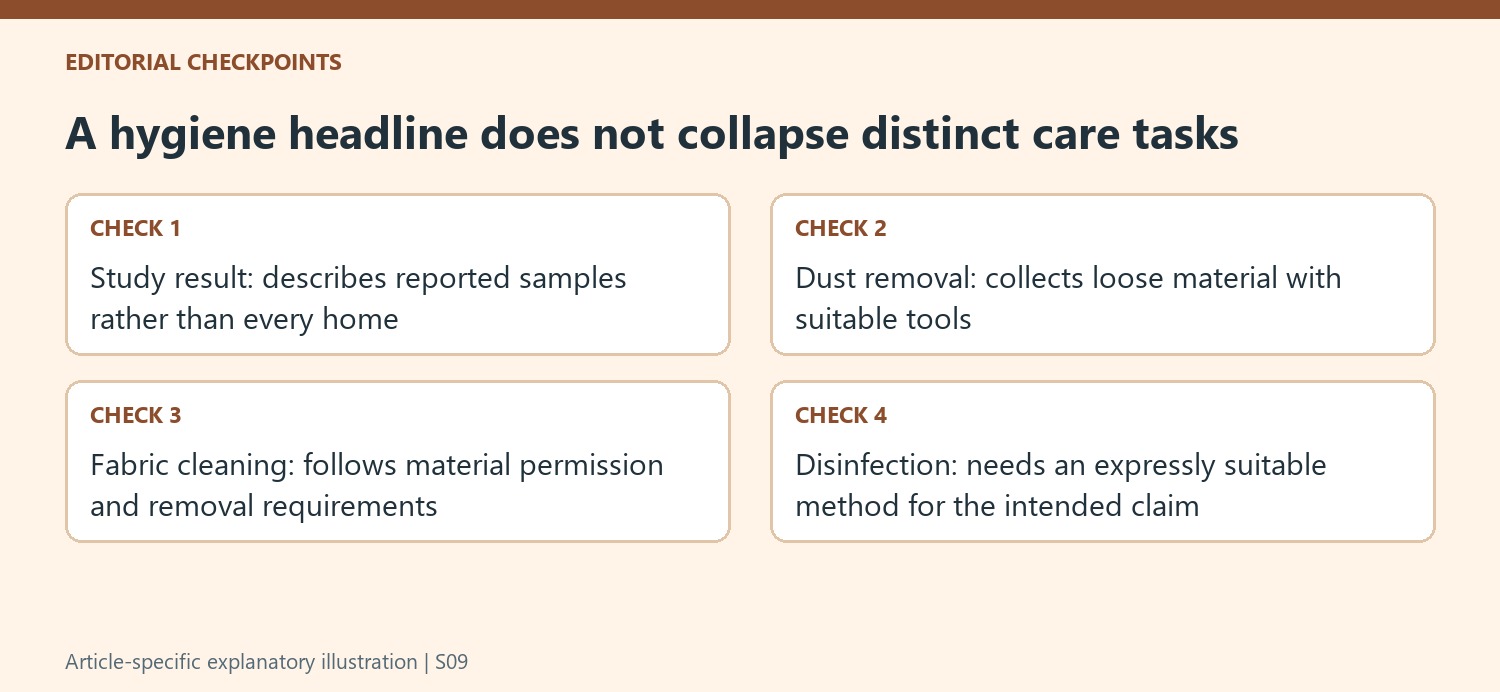
For deeper work, the source warns that treating only an isolated patch can leave uneven water outlines. Plan the approved process and area according to fabric and manufacturer directions, with a concealed test before visible application. Do not interpret whole-panel advice as permission to wet a solvent-only or vacuum-only headboard. The correct area and liquid amount are construction-specific choices, not a reason to broaden an untested treatment until it covers every visible surface.
Keep drying and any germ-control objective explicit
If a compatible cleaner is used, follow its contact and removal requirements, collect residue and provide suitable airflow. Wait for the treated construction to dry fully before pillows or bedding press against it. A fragrant finishing layer does not establish either cleanliness or dryness, and immediate reuse can conceal retained moisture. Assess the fully dried color and texture before deciding whether a remaining mark needs another local approved method or specialist advice.
The article's suggested intervals can help prompt regular attention, but actual use, fabric limits and room conditions still matter. Separate dry collection, stain treatment, fuller cleaning and any specifically required disinfection. Each has its own purpose and evidence of completion. A routine that preserves those distinctions is more useful than repeatedly applying a strong product because of a study headline, especially when the furniture manufacturer offers a narrower method that protects the covering and padding.
References
- Study confirms your headboard is COVERED in germs—here's how often experts say you should clean it. Real Simple; Madeline Bilis.
Real Simple recommends recurring dust removal and a fabric-compatible fuller clean rather than ignoring the surface behind pillows.


Leave a Comment
Comments (0)