
Keep Sofa Powder Treatments Dry and Vacuum-Compatible
The source describes using baking soda as an occasional sofa odor treatment after removing dust and dried debris. It emphasizes starting with dry upholstery. Wet powder can clump and create problems during vacuuming instead of providing a straightforward refresh.
Check the furniture and vacuum guidance before using fine powder, and remove any permitted residue thoroughly. This approach does not wash away deep contamination or repair a stain. Persistent smells need their source identified rather than an indefinite cycle of surface deodorizing.
Preserve the source's limitation on deodorizing
Ideal Home presents the powder method as an occasional refresh between fuller cleans and explicitly says it does not replace proper cleaning. That distinction matters when odor comes from a spill inside the padding or another continuing source. Inspect the sofa before reaching for powder. A recurring smell needs the cause identified rather than merely another application on the visible surface.
Keep dry preparation distinct from wet stain care
The quoted cleaning expert recommends removing dust and dried debris, then checking that the sofa is dry before any permitted powder is added. Damp powder may clump and create difficulties for removal. Follow both the fabric's instructions and the vacuum maker's restrictions on fine dust. A water-compatible sofa does not establish that its ordinary vacuum is suitable for collecting baking soda.

Remove a permitted thin layer completely
The article describes a thin even application and a later vacuuming stage, with timing varying between the reported suggestion and the writer's shorter trial. Neither is a universal requirement for every upholstery. Follow appropriate guidance for the actual fabric and equipment, and inspect seams for remaining powder. Keep pets and children away while treatment is present and return the seat to use only after the material has been removed.
Identify the odor before choosing a dry surface refresh
Ideal Home presents baking soda as an occasional refresh between proper sofa cleans. Preserve that limitation when the smell appears to come from deep padding, a spill or recurring dampness. A surface powder does not wash away internal contamination or repair a stain. Inspect what changed and locate the source before adding another layer. A repeated temporary improvement can otherwise hide the fact that the underlying cause has never been addressed.
Check both the upholstery and vacuum requirements before considering any fine powder. Fabric suitability and equipment collection are separate permissions. A sofa that permits water-based cleaning does not establish that its ordinary household vacuum tolerates baking soda dust. If the machine excludes it or the furniture guidance is unclear, choose the approved alternative rather than assuming an inexpensive kitchen ingredient is automatically appropriate for all parts of the process.
Keep preparation dry and the layer restrained
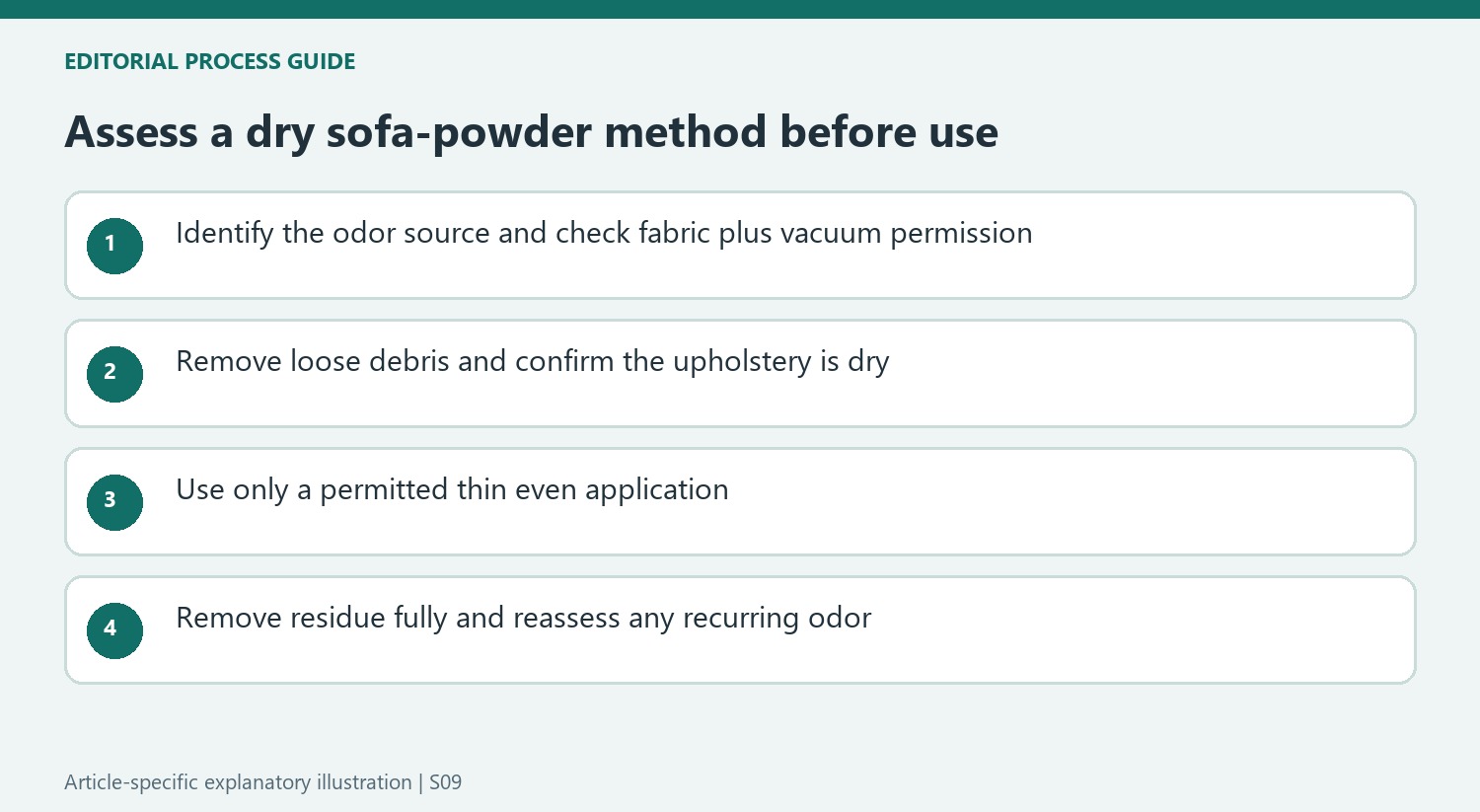
The quoted cleaning expert emphasizes removing loose dust and dried debris first, then confirming that the upholstery is dry. Damp powder can clump and make removal harder. This is a reason to keep the occasional dry refresh separate from a wet stain treatment rather than using both in rapid succession on the same damp cushion. The successful dry process described in the source depends on collection conditions, not merely on sprinkling material over a visible panel.
Where the complete method is permitted, the article favors a thin even layer rather than a thick heap over the area that smells strongest. More powder creates more material that must eventually be removed and does not identify or resolve a deeper source. Keep the treatment away from normal seating use while present, following relevant product and furniture guidance for pets and children. A deodorizing trial should not create an unexamined dust exposure or leave particles in everyday contact areas.
Make full removal the final stage of the trial
The source reports both an overnight suggestion and a shorter household test, so neither period should become a universal rule for every upholstery. Use guidance suitable for the actual fabric and equipment. At the removal stage, inspect seams and folds as well as the broad face, collecting any permitted residue thoroughly. A seat is not ready simply because the center looks clear while powder remains at the cushion edge or in the gap beside the arm.
Evaluate the odor after the supported process is complete rather than masking the result with fragrance immediately afterward. If the smell persists or returns, investigate its source and consider a compatible fuller clean or specialist assessment. Continue ordinary dry debris collection between incidents. The useful distinction is occasional surface refreshing versus proper cleaning: the former may be convenient under the right conditions, while the latter addresses identified soil with a material-approved process and should not be postponed indefinitely by repeated powder applications.
References
- Furniture experts swear by this 75p trick for keeping your sofa smelling fresh. Ideal Home; Jullia Joson.
Moist residue can be difficult to remove from fabric and equipment.


Leave a Comment
Comments (0)